
7 cheapest golden visa programmes in Asia for Indians seeking long-term residency abroad

1/8
Explore these routes offering different ways to establish an overseas base
A second residency in Asia does not necessarily require millions of dollars or buying an expensive overseas property. Several countries offer foreign nationals long-term residence permits or investor visas in exchange for comparatively modest financial commitments. However, what qualifies as a Golden Visa varies considerably across the region. Some programmes require investors to purchase shares, establish businesses or maintain bank deposits, while others offer extended stays through a one-time membership payment.
What is a Golden Visa?
A golden visa is a country's invitation to build a second home abroad through investment. By purchasing approved property, investing in businesses, depositing money in banks or contributing to government-approved funds, foreign nationals can secure residency rights. Depending on the country, these visas may offer stays ranging from a few years to permanent residency, sometimes extending to family members. Essentially, it offers an alternative to traditional migration, allowing financially eligible individuals to establish an overseas base without necessarily taking up local employment.
For Indians considering an overseas move, these options offer different possibilities, from spending several years in Thailand to securing indefinite residency in the Philippines or pursuing permanent residence in Taiwan. The financial requirements, visa validity, investment conditions and rights attached to each programme also differ.
Here are seven comparatively affordable residency-by-investment and investment-linked visa options in Asia, ranked by their minimum financial entry requirements, with the important conditions applicants should understand before committing their money.
2/8
Thailand
Thailand's Privilege Visa offers one of Asia's lowest-cost routes to a five-year stay. Its Bronze membership costs THB 650,000 (approximately US$18,500), paid as a one-time, non-refundable membership fee.
The membership provides a multiple-entry visa with a five-year validity, along with benefits such as airport fast-track services and assistance with 90-day reporting.
However, this is not a conventional investment visa. Applicants do not receive equity in a Thai business or recover their membership payment. The programme also does not automatically lead to permanent residency or citizenship.
Thailand's official Privilege Card website lists Bronze as its entry-level membership. Its availability and promotional pricing should be checked before applying. Members also need separate authorisation to work in Thailand.
3/8
Philippines
The Philippines offers the Special Investor's Resident Visa (SIRV), which allows foreign nationals to reside in the country indefinitely, provided they maintain their qualifying investment.
The minimum investment is US$75,000, which must be remitted to the Philippines and placed in eligible investments. These include qualifying shares in Philippine corporations and businesses operating in approved economic activities.
Applicants must generally be at least 21 years old and satisfy the programme's eligibility requirements. The visa remains valid as long as the investment is maintained and the relevant conditions are met.
Unlike Thailand's membership-based route, the SIRV involves actual investment in the Philippine economy. It is not an automatic citizenship programme, and investors should examine the eligibility of their proposed investment before transferring funds.
4/8
Sri Lanka
Sri Lanka offers a Golden Paradise investor visa with two investment thresholds, making it possible to obtain long-term residency without purchasing property.
Foreign nationals can invest US$ 100,000 for a five-year visa or US$ 200,000 for a 10-year visa. The investment must be transferred through designated banking arrangements, including an Inward Investment Account and a Visa Programme Foreign Currency Account.
The programme permits eligible applicants to bring their spouses and dependants. However, the investment must comply with the permitted investment categories and foreign exchange regulations.
There is also an annual visa fee of US$200 for the principal applicant, spouse and each dependent. The 10-year option is not permanent residency: applicants receive an initial five-year endorsement, followed by an extension for another five years, subject to the programme's conditions.

5/8
Vietnam
Vietnam does not operate a dedicated Golden Visa programme, but its investor visa system provides another route for foreigners seeking to establish a presence in the country.
The DT3 investor visa is available to foreign investors contributing between VND 3 billion and less than VND 50 billion to a Vietnamese company. The minimum threshold works out to approximately US$118,000.
A DT3 visa can be valid for up to three years, making it suitable for investors planning to establish or participate in a local business.
Those investing less than VND 3 billion fall under the DT4 category, which provides a shorter visa validity of up to 12 months. The DT3 route does not automatically provide permanent residency. Applicants must also satisfy the relevant investment registration and immigration requirements.
6/8
Malaysia
Malaysia's My Second Home (MM2H) programme has a special category for its Special Economic Zone and Special Financial Zone, centred on Forest City in Johor.Applicants aged 50 and above need to maintain a US$ 32,000 fixed deposit with a Malaysian financial institution. Those aged 21–49 must maintain US$ 65,000.However, the deposit is not the complete financial commitment. Applicants must also purchase a qualifying residential property directly from a developer in Forest City. Property prices depend on Johor's applicable acquisition rules; a RM500,000 condominium is an indicative entry point, taking the combined initial commitment for an applicant aged 50 or above to approximately US$144,000.The residence permit is valid for 10 years and is renewable. The property cannot be sold for 10 years, while applicants aged 21–49 must meet a 90-day annual stay requirement.

7/8
South Korea
South Korea's Immigrant Investor Scheme for Public Business offers a route to residency through investment in government-designated public interest projects.
The standard investment threshold is KRW 500 million, approximately US$340,000. Under the principal-guaranteed option, applicants deposit the money into a public investment fund operated through the Korea Development Bank. The investment is interest-free, but the principal is returned after five years.
Successful applicants receive an F-2 resident status, which allows economic activities in South Korea. They can subsequently qualify for F-5 permanent residency after maintaining the investment for at least five years and meeting the applicable conditions.
There is also a reduced KRW 300 million investment threshold for retirees aged over 55, subject to additional requirements, including proof of at least KRW 300 million in domestic or overseas assets.
8/8
Indonesia
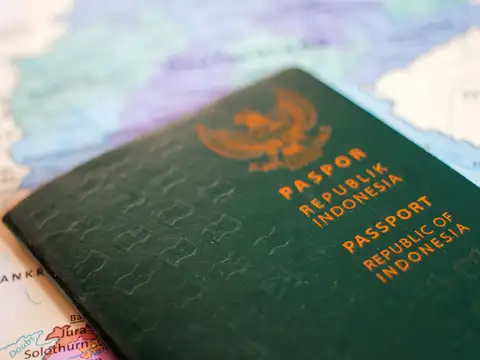
Indonesia's Golden Visa programme offers individual foreign investors a five-year residency option without requiring them to establish a local company.
The individual investor route requires a minimum investment of US$350,000 in Indonesian government bonds, shares in publicly listed Indonesian companies or qualifying mutual funds.
Applicants must provide a commitment to make the investment and fulfil the programme's requirements within the prescribed period. The investment threshold increases to US$700,000 for a 10-year Golden Visa.
Unlike some investor schemes that require a business to create local employment, this particular route allows individuals to invest through eligible financial instruments.