How can the world make immigration work? Ask Canada
Canada's high immigration rates fuel population growth, posing challenges and opportunities. Economic impacts, real estate market effects, and cultural considerations shape the ongoing debate on the sustainability of migration policies in Canada a...
By Bloomberg |
iStock
Canada’s population surpassed 40 million last year, recording its highest growth rate since 1957. The vast majority of this growth — 97.6% — was from international migration, both permanent (almost 500,000 people) and temporary (just more than 800,000). As a cosmopolitan and classical liberal, I applaud this kind of openness. Yet it also worries me.
It’s not just Canada — Ireland, New Zealand and the UK are seeing historically high levels of immigration as well. How long will citizens of these countries continue to accept this trend? Who exactly benefits, and how? Why hasn’t the backlash been stronger?
After all, immigrants do not bring an immediate economic boom. When New Zealand closed its borders during Covid, for example, output did not fall, and the post-pandemic resumption of immigration did not cause a noticeable boost. In the UK, meanwhile, economic stagnation has accompanied a wave of immigration. Whatever the benefits of the migrant arrivals may be, they lie in the more distant future, which does not help its political popularity now.
And yet, for all the cultural and economic adjustments immigration may require, it is hard to avoid the conclusion that, for many countries, high rates of immigration are simply flat-out necessary.
In Canada, for instance, the current fertility rate is about 1.33 children per woman, the lowest on record, and it probably would have been lower yet without recent immigrant arrivals. Canada’s geography also argues for more immigration. It is likely to have much more usable territory, due to global warming, so a much larger population is feasible. If Canada wants to maintain a reasonable balance of power with the US, and have the resources to develop and protect its Arctic and Arctic-adjacent areas, it needs a commensurately large population and economy.
ADVERTISEMENT
Toronto has become one of the most interesting cities in North America, and immigrants deserve much of the credit for that, as well as for the growth of Vancouver. Canada is now also a premier spot for international dining. My point is not to make travel recommendations (though the restaurants in the town of Scarborough remain a particular favorite), but to show how Canada is connected to many global trends that will help keep it vital.
In general, Canada — like Ireland, where the fertility rate is about 1.77, higher than in Canada but still below replacement — faces a choice: Either take in migrants or depopulate. Perhaps one reason voters are tolerating such high migration rates is an intuitive fear of living in an empty, stagnant country. Voters tend to want their country to be able to project influence and defend its interests.
Economic debates about immigration typically focus on the wage effects on domestic workers, and there the impact of immigration is often neutral or marginal. But the more important effects of immigration may be more impressionistic: how it affects people’s views of their own country and what it’s like to live there, as well as its global reputation.
In this sense, Canada is ahead of much of the rest of the world in seeing the importance of these factors and turning it into actionable policy. It is willing to give up some of its present cultural identity to achieve a brighter cultural and political future.
ADVERTISEMENT
This trade-off is much better than it looks at first. For one thing, birth rates for native-born citizens may fall further than they have already. If a country wants to preserve its national culture, it may be better off allowing more migration now, when there is still a critical mass of native-born citizens to ease assimilation.
To put the point more generally: Whatever costs there might be to immigration, successful nations will have to deal with them sooner or later. And the sooner they do, the better off they will be. The choice is not so much between more immigration and less immigration, but rather a lot of immigration now or a lot later. This choice will become all the more pressing as the need to fund national retirement programs requires more tax-paying citizens.
ADVERTISEMENT
One of the most common criticisms of immigrants is that they push up real estate prices. Yet there is a home-grown explanation: Stringent regulations on building make it difficult for the supply of housing to respond when demand increases.
In fact, there is a way immigration can help address this problem. First, immigrants may themselves induce their adopted country to free up its real estate markets. So immigration might increase real estate costs in the short run, but help reduce them in the longer run. Second, immigrants can help lower-tier cities move to the fore. The suburbs of Toronto, for example, have seen much of their growth driven by Asian in-migration, and longer term that will give Canadians more residential (and commercial) options.
These points aside, note that higher real estate prices, to the extent they result from immigrant demands, largely translate into capital gains for homeowners — most of whom are native-born. To be sure, the higher home prices may be bad for many younger Canadians, who may be locked out of housing markets, but eventually many of them will inherit high-valued homes from their parents.
My argument is not that there aren’t short-run transition costs to high levels of immigration — especially in housing, where Canada is seeing some now. In the long term, however, more immigration is better for a country than less. To me, the question is not so much why Canada and similar countries are allowing so much immigration. It is how long voters in these countries will allow this experiment to continue.
Five ways you can immigrate to Canada
1/9
Canada has emerged as one of the top destinations for immigration, especially for Indians.
Here are the top five ways you can immigrate to Canada - whether you want to move as a student, with a job, or with family.
Canada has emerged as one of the top destinations for immigration, especially for Indians.Here are the top five ways you can immigrate to Canada - whether you want to move as a student, with a job, o..
Read More
Express entry is the fastest way to enter Canada. It is used to manage PR applications for three economic class immigration programs: - Federal Skilled Worker Program - Federal Skilled Trades Program - Canadian Experience Class
Express entry is the fastest way to enter Canada. It is used to manage PR applications for three economic class immigration programs:- Federal Skilled Worker Program- Federal Skilled Trades Program- ..
Read More
It follows a point-based grading system - including language, education, work experience, age, job offer, and adaptability. Applicants receive the points based on a Comprehensive Ranking System (CRS).
Applicants scoring equal or above cut-off are awarded an invitation to application (ITA). Though a job offer is not compulsory but it increases points.
It follows a point-based grading system - including language, education, work experience, age, job offer, and adaptability. Applicants receive the points based on a Comprehensive Ranking System (CRS)..
Read More
It is mainly for those candidates who want to live in a particular province or territory. They must have skills, education, and work experience to contribute to the economy of a specific province or territory.
Provinces have their own immigration programs that target certain groups also known as “streams”. Like a particular province may target - students, business people or skilled workers.
It is mainly for those candidates who want to live in a particular province or territory. They must have skills, education, and work experience to contribute to the economy of a specific province or ..
Read More
You can apply via paper-based process, or by the online process through Express Entry.
Under the paper-based process, you have to apply for the province for nomination under a non-Express Entry stream.
Once nominated, you should submit a paper application for permanent residence to Immigration, Refugees and Citizenship Canada (IRCC).
You can apply via paper-based process, or by the online process through Express Entry.Under the paper-based process, you have to apply for the province for nomination under a non-Express Entry stream..
Read More
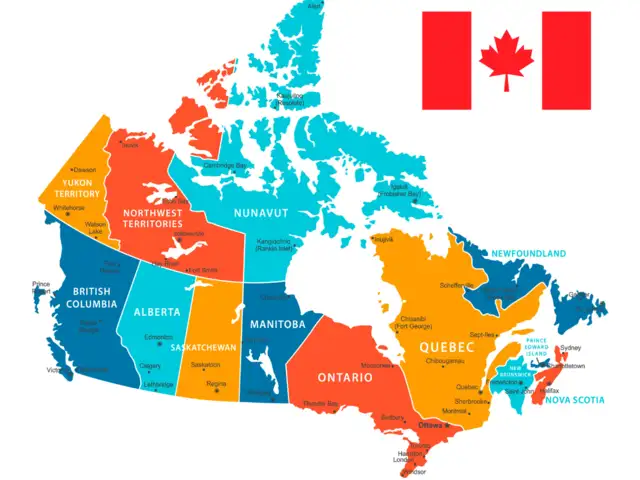
- Alberta - British Columbia - Manitoba - New Brunswick - Newfoundland and Labrador - Northwest Territories - Nova Scotia - Ontario - Prince Edward Island - Saskatchewan - Yukon
*Remember, Quebec does not have a provincial nominee program. It has its own rules for choosing immigrants.
- Alberta- British Columbia- Manitoba- New Brunswick- Newfoundland and Labrador- Northwest Territories- Nova Scotia- Ontario- Prince Edward Island- Saskatchewan- Yukon*Remember, Quebec does not have ..
Read More
Under this, an individual can sponsor his/her family if they are at least 18 years old and a Canadian citizen or a permanent resident of Canada or a person registered in Canada as an Indian under the Canadian Indian Act.
Following are the family members who are eligible
- Spouse, partner, or dependent children - Parents and grandparents - Adopted child - Relatives (With certain conditions)
Under this, an individual can sponsor his/her family if they are at least 18 years old and a Canadian citizen or a permanent resident of Canada or a person registered in Canada as an Indian under the..
Read More
It is for those immigrants who are starting a business in Canada. One can come under this visa on a work permit and apply for a PR visa later, but the work permit must be supported by Canada-based investors.
Eligibility - One must have a qualifying business - Commitment Certificate and Letter of Support from a designated entity showing that business has support - Proficiency in language (English or French) - Sufficient funds for settling in Canada
It is for those immigrants who are starting a business in Canada. One can come under this visa on a work permit and apply for a PR visa later, but the work permit must be supported by Canada-based in..
Read More
Canada provides a study permit, a document that allows foreign nationals to study there. You may need a visitor visa or an electronic travel authorization (eTA) as a study permit is not a visa. This permit is valid for the length of the study program and extra 90 days.
If you live in China, India, Morocco, Pakistan, the Philippines, Senegal, or Vietnam, you can apply online through Student Direct Stream and get a study permit faster. Usually, SDS applications are processed within 20 days.
Canada provides a study permit, a document that allows foreign nationals to study there. You may need a visitor visa or an electronic travel authorization (eTA) as a study permit is not a visa. This ..