Why India bails out its workers from Yemen and other war situations: Remittance lolly
Yet again, India has topped the remittance chart for 2014, pulling in $ 70.38 billion from its global migrant workforce. China follows with $64.14 billion.
By Chidanand Rajghatta, TNN | Updated:

WASHINGTON: If you are wondering why the Government of India expends so much time and resources to rescue its emigrants from crisis- and war situations abroad, the answer in part lies an annual World Bank study that weights annual worldwide remittances of migratory work force -- or simply, the money Indian workers and professionals send back to India.
Yet again, India has topped the remittance chart for 2014, pulling in $ 70.38 billion from its global migrant workforce. China follows with $64.14 billion, and Philippines, Mexico, and Nigeria trail at a distance.
In fact, remittances worldwide plateaued a bit in 2013-2014 because of tough economic conditions in countries where migrants head to, but things are expected to look up in 2015 and beyond. India itself held steady, with remittance increasing only marginally from $ 69.97 in 2013 to $ 70.38 in 2014.
Still, the $ 70 billion windfall constituted a healthy 3.7 per cent of the country's nearly $ 2 trillion GDP. The money often cushions the economy to other shocks.
Because remittances are large and more stable than many other types of capital flows, they can greatly enhance the recipient country's sovereign credit rating, thus lowering borrowing costs and lengthening debt maturity, says the World Bank Brief. In a recent development, rating agencies have started accounting for remittances in country credit ratings, but given data difficulties, it says, there is still room for further improvement.
More importantly, say authors of the report, with new thinking these mega flows can be leveraged to finance development and infrastructure projects. Future inflows of remittances can be used as collateral to facilitate international borrowings by national banks in developing countries. Remittances can also facilitate access to international capital markets by improving sovereign ratings and debt sustainability of recipient countries.
"I would love to see a bullet train system in India, an international airport in Nigeria, another Suez Canal in Egypt, a hydro-project in Pakistan, all financed by mobilizing the power of remittances and diaspora savings," says Dilip Ratha, Lead Economist for Migration and Remittances, at the World Bank's Development Prospects Group and Head of the Global Knowledge Partnership on Migration and Development.
Yet again, India has topped the remittance chart for 2014, pulling in $ 70.38 billion from its global migrant workforce. China follows with $64.14 billion, and Philippines, Mexico, and Nigeria trail at a distance.
In fact, remittances worldwide plateaued a bit in 2013-2014 because of tough economic conditions in countries where migrants head to, but things are expected to look up in 2015 and beyond. India itself held steady, with remittance increasing only marginally from $ 69.97 in 2013 to $ 70.38 in 2014.
Still, the $ 70 billion windfall constituted a healthy 3.7 per cent of the country's nearly $ 2 trillion GDP. The money often cushions the economy to other shocks.
Because remittances are large and more stable than many other types of capital flows, they can greatly enhance the recipient country's sovereign credit rating, thus lowering borrowing costs and lengthening debt maturity, says the World Bank Brief. In a recent development, rating agencies have started accounting for remittances in country credit ratings, but given data difficulties, it says, there is still room for further improvement.
More importantly, say authors of the report, with new thinking these mega flows can be leveraged to finance development and infrastructure projects. Future inflows of remittances can be used as collateral to facilitate international borrowings by national banks in developing countries. Remittances can also facilitate access to international capital markets by improving sovereign ratings and debt sustainability of recipient countries.
ADVERTISEMENT
"I would love to see a bullet train system in India, an international airport in Nigeria, another Suez Canal in Egypt, a hydro-project in Pakistan, all financed by mobilizing the power of remittances and diaspora savings," says Dilip Ratha, Lead Economist for Migration and Remittances, at the World Bank's Development Prospects Group and Head of the Global Knowledge Partnership on Migration and Development.
In fact, Basu points out that the total remittances in 2014 of $583 billion is more than double the overseas developmental assistance in the world. In other words, money repatriated by migrant workers trumps foreign aid and foreign investment.
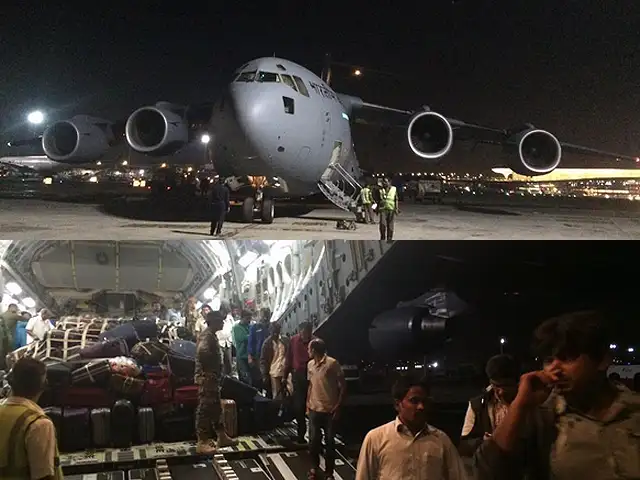
Any wonder than that India deployed its ships and airplane to bail out its workers in Yemen?
Download
The Economic Times Business News App for the Latest News in Business, Sensex, Stock Market Updates & More.
The Economic Times Business News App for the Latest News in Business, Sensex, Stock Market Updates & More.
Related Articles
 Stocks in news: LIC, IRFC, Cummins India, Tata Motors PV, ONGC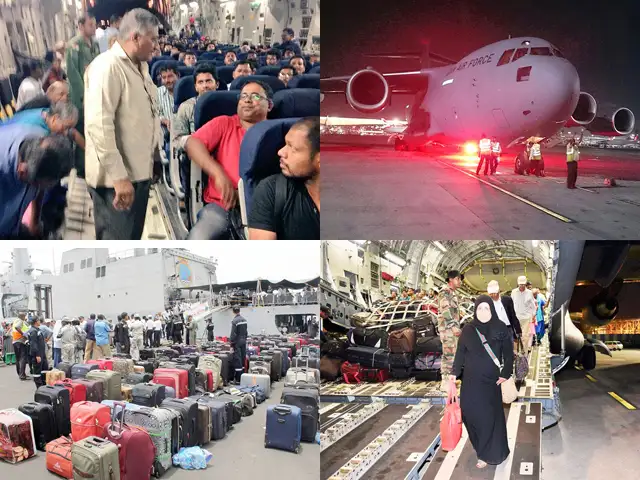
Economictimes.com
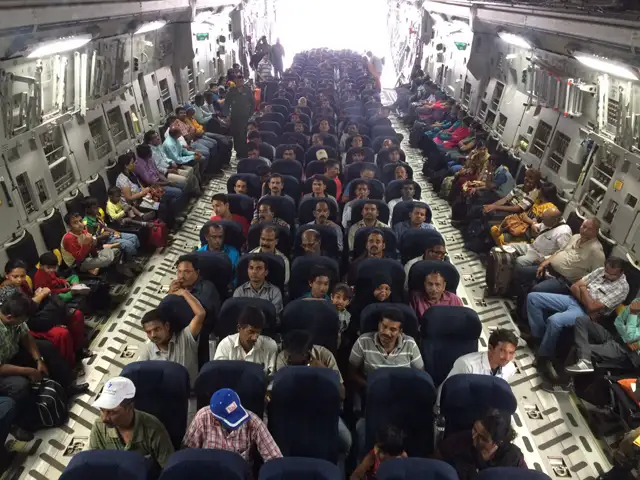
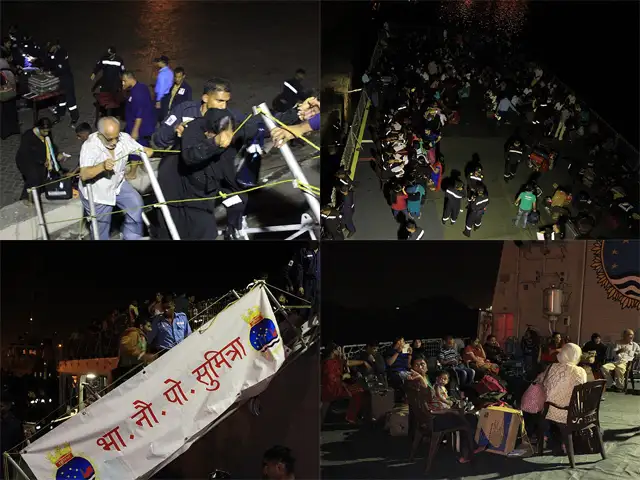
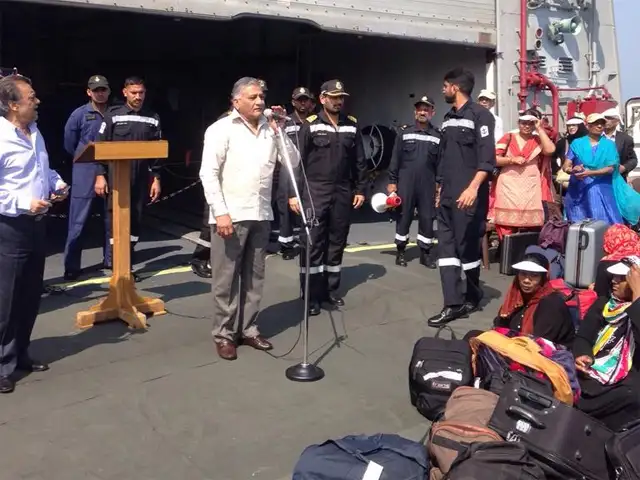
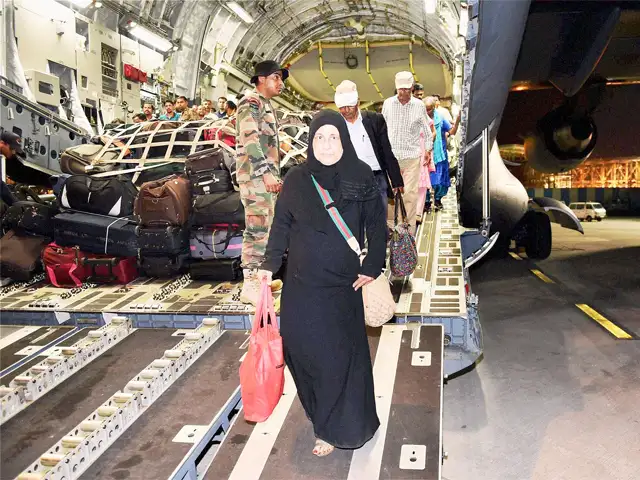
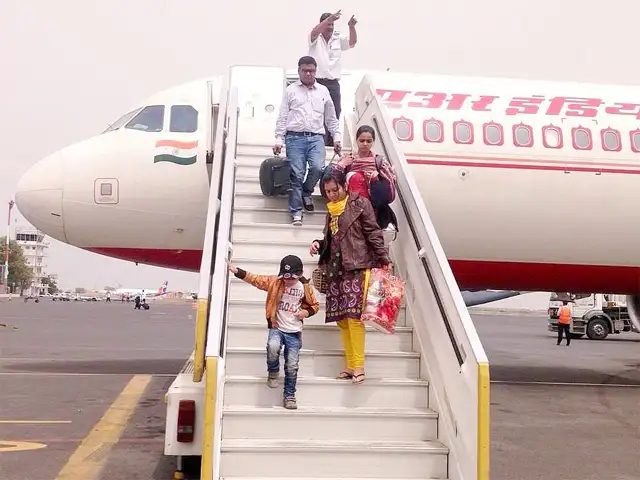
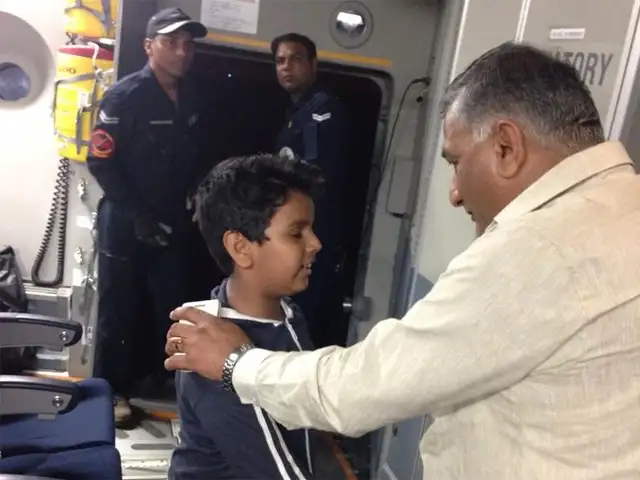
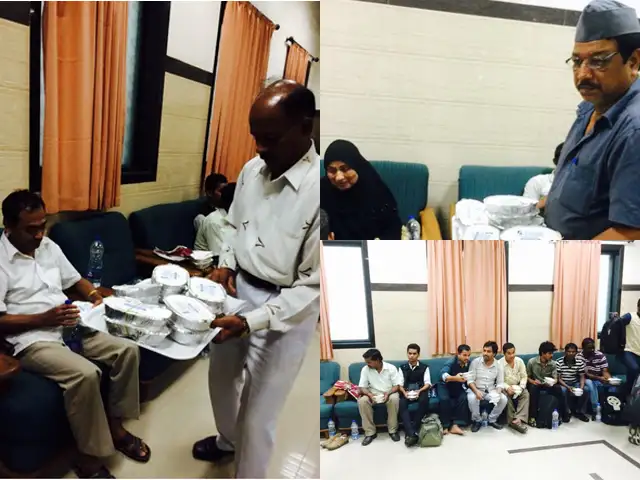
Hundreds of Indian nationals have been evacuated by the government from strife-torn Yemen. In a massive 'Operation Raahat', the government has made use of IAF's C-17 Globemasters and Indian Navy's INS Sumitra to carry out the evacuation. Special Air India flights have also been flown to bring back Indians.
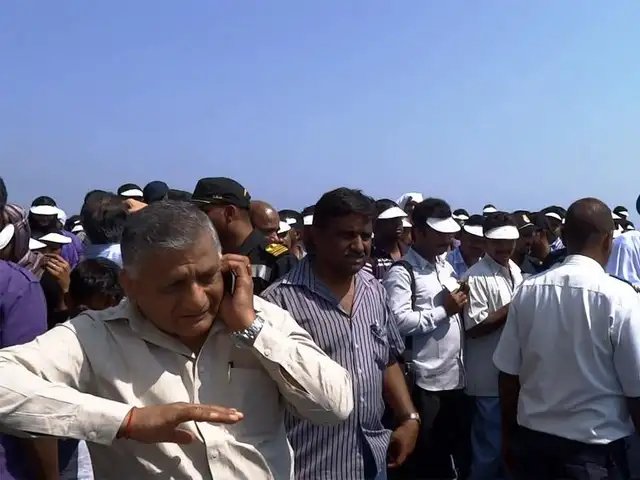
MoS for External Affairs VK Singh went to Djibouti to oversee the evacuation of around 4,000 Indians. Railways played its own role by providing free tickets to evacuees for travel from Mumbai, where they landed, to their destinations across the country.
We take a look at some defining & touching images of the rescue operation:
Hundreds of Indian nationals have been evacuated by the government from strife-torn Yemen. In a massive 'Operation Raahat', the government has made use of IAF's C-17 Globemasters and Indian Navy's INS Sumitra to carry out the evacuation. Special Air India flights have also been flown to bring back Indians.
MoS for External Affairs VK Singh went to Djibouti to oversee the evacuation of around 4,000 Indians. Railways played its own role by providing free tickets to evacuees for travel from Mumbai, where they landed, to their destinations across the country.
We take a look at some defining & touching images of the rescue operation:

ADVERTISEMENT


