What necessitated the positioning of 14 of 20 major Isro Centres in southern states
For those disbelieving kids, the women would point to the night sky and show the occasional ball of fire that disappeared in seconds.
By Arun Ram, TNN | Updated:

In the 1960s, when children of coastal Thiruvananthapuram remained outdoors even after nightfall, mothers employed a scare: "Get in, Maadan would be flying now." Maadan, the not-so-friendly local god would fly with a mace at night, spewing fire and threatening to knock down those who disobeyed parents.
For those disbelieving kids, the women would point to the night sky and show the occasional ball of fire that disappeared in seconds. Later in high school, science teachers called the teachers called the mothers' bluff. The fire ball, they told the students, was the flare of sounding rockets fired from the neighbouring Thumba Equitorial Rocket Launching Station. The 30kg-something rockets would go up to an altitude of 60km, and the tiny payloads, before plunging into the Arabian Sea, would do some atmospheric studies.
From flying tiny sounding rockets gifted by the US, the USSR and France in the 1960s to launching satellites weighing up to a couple of tonnes into geosynchronous transfer orbits from the Satish Dhawan Space Centre in Sriharikota, India has come a long way . With that has grown the Indian Space Research Organisation ( Isro) that today has centres across the country . But the southern peninsula remains the hub of India's rocket-making, testing, flying and tracking.
Sample this: Out of the 20 major Isro centres, 14 are situated in the southern states . While a large majority of these centres handle strategic operations, the others are mostly involved in research, education, training and analysis.
So why this geographical dichotomy? The answer lies not in parochialism, but in a combination of science, history and logistics. To know this concentration of Isro branches, we should look at the roots of India's space programme.
When Jawaharlal Nehru, on the advice of Homi J Bhabha, formed the Indian National Committee for Space Research (Incospar) in 1962, its leader Vikram Sarabhai's first assignment was to identify a place from where India could launch borrowed sounding rockets.
To carry out atmospheric studies, the best place would be somewhere near the magnetic equator of the Earth which ran close to the southern tip of the country . And this led Sarabhai and Bhabha to Kerala, where they zeroed in on Thumba, then a sleepy fishing village. There was not even a proper building in Thumba, but Sarabhai was in a hurry. In 1963, he moved his small team that included H G S Murthy , D Eswar Das, M R Kurup and A P J Abdul Kalam to the St Mary Magdalene's Church.
Murthy, who headed the team, had an office in the Bishop's house. The remaining scientists, later joined by S Nambinarayanan, put together four tables in the church building to mount their drawing boards. A cattle shed doubled up as their laboratory , the coconut palm-fringed beach their test pad.
After experimenting with foreign sounding rockets, when Incospar became Isro in 1969, it was time for indigenous rocket launches. And it needed a bigger launch pad on the eastern coast, for future satellite launches would need an eastward launch to go against the Earth's spin.Sriharikota, 100km north of Chen nai, on the Andhra Pradesh side was identified. The island had Bay of Bengal on one side and the Pulicat lagoon on the other three. This meant that even if a rocket went out of control, it could be destroyed above the sea, with minimum risk to people.
Soon, a liquid propulsion centre came up in Thiruvananthapuram and, after Sarabhai's untimely death in 1971, all the facilities in the Kerala capital became the Vikram Sarabhai Space Centre (VSSC). When Isro wanted a facility to test its rocket engines made in Thiruvananthapuram, Mahendragiri in neigh bouring Tamil Nadu became a natural choice because of the proximity and the hilly topography.
For administrative purposes, Bangalore had become the Isro headquarters, and being equidistant from VSSC and Sriharikota helped. This also led to many auxiliary offices cropping up around Bangalore, including the Isro Telemetry Tracking and Command Network headquarters and the Isro Satellite Centre.When India needed a deep space tracking centre, Byalalu, a remote place in Karnataka was chosen for its sparse population and the result ant low electromagnetic interference.Hyderabad became the nerve centre of remote sensing, probably for its central location.
Isro centres in the northern states provide basic research and payloads.Physical Research Laboratory, Ahmedabad, does high-end studies in astrophysics, while Space Applications Centre in the same city makes satellites and other payloads. Once the satellite is in space, north and south equally count, and hence the regional remote sensing centres and tracking centres across the country .For controlling geostationary satellites, Isro has a master control facility each in Hassan, in Karnataka, and Bhopal.
Still, as India's rockets continue to be made, tested and fired in the south, there remains an open secret that Isro scientists don't tell you. In 1962, when Vikram Sarabhai's search for the perfect place near the Earth's magnetic equator took him to Thumba, the great man wouldn't have suppressed a smile when he realized it was also the farthest point from Pakistan and China.
Maadan, obviously , posed a much lesser risk.
For those disbelieving kids, the women would point to the night sky and show the occasional ball of fire that disappeared in seconds. Later in high school, science teachers called the teachers called the mothers' bluff. The fire ball, they told the students, was the flare of sounding rockets fired from the neighbouring Thumba Equitorial Rocket Launching Station. The 30kg-something rockets would go up to an altitude of 60km, and the tiny payloads, before plunging into the Arabian Sea, would do some atmospheric studies.
From flying tiny sounding rockets gifted by the US, the USSR and France in the 1960s to launching satellites weighing up to a couple of tonnes into geosynchronous transfer orbits from the Satish Dhawan Space Centre in Sriharikota, India has come a long way . With that has grown the Indian Space Research Organisation ( Isro) that today has centres across the country . But the southern peninsula remains the hub of India's rocket-making, testing, flying and tracking.
Sample this: Out of the 20 major Isro centres, 14 are situated in the southern states . While a large majority of these centres handle strategic operations, the others are mostly involved in research, education, training and analysis.
So why this geographical dichotomy? The answer lies not in parochialism, but in a combination of science, history and logistics. To know this concentration of Isro branches, we should look at the roots of India's space programme.
When Jawaharlal Nehru, on the advice of Homi J Bhabha, formed the Indian National Committee for Space Research (Incospar) in 1962, its leader Vikram Sarabhai's first assignment was to identify a place from where India could launch borrowed sounding rockets.
ADVERTISEMENT
To carry out atmospheric studies, the best place would be somewhere near the magnetic equator of the Earth which ran close to the southern tip of the country . And this led Sarabhai and Bhabha to Kerala, where they zeroed in on Thumba, then a sleepy fishing village. There was not even a proper building in Thumba, but Sarabhai was in a hurry. In 1963, he moved his small team that included H G S Murthy , D Eswar Das, M R Kurup and A P J Abdul Kalam to the St Mary Magdalene's Church.
Murthy, who headed the team, had an office in the Bishop's house. The remaining scientists, later joined by S Nambinarayanan, put together four tables in the church building to mount their drawing boards. A cattle shed doubled up as their laboratory , the coconut palm-fringed beach their test pad.
After experimenting with foreign sounding rockets, when Incospar became Isro in 1969, it was time for indigenous rocket launches. And it needed a bigger launch pad on the eastern coast, for future satellite launches would need an eastward launch to go against the Earth's spin.Sriharikota, 100km north of Chen nai, on the Andhra Pradesh side was identified. The island had Bay of Bengal on one side and the Pulicat lagoon on the other three. This meant that even if a rocket went out of control, it could be destroyed above the sea, with minimum risk to people.
Soon, a liquid propulsion centre came up in Thiruvananthapuram and, after Sarabhai's untimely death in 1971, all the facilities in the Kerala capital became the Vikram Sarabhai Space Centre (VSSC). When Isro wanted a facility to test its rocket engines made in Thiruvananthapuram, Mahendragiri in neigh bouring Tamil Nadu became a natural choice because of the proximity and the hilly topography.
ADVERTISEMENT
For administrative purposes, Bangalore had become the Isro headquarters, and being equidistant from VSSC and Sriharikota helped. This also led to many auxiliary offices cropping up around Bangalore, including the Isro Telemetry Tracking and Command Network headquarters and the Isro Satellite Centre.When India needed a deep space tracking centre, Byalalu, a remote place in Karnataka was chosen for its sparse population and the result ant low electromagnetic interference.Hyderabad became the nerve centre of remote sensing, probably for its central location.
Isro centres in the northern states provide basic research and payloads.Physical Research Laboratory, Ahmedabad, does high-end studies in astrophysics, while Space Applications Centre in the same city makes satellites and other payloads. Once the satellite is in space, north and south equally count, and hence the regional remote sensing centres and tracking centres across the country .For controlling geostationary satellites, Isro has a master control facility each in Hassan, in Karnataka, and Bhopal.
ADVERTISEMENT
Still, as India's rockets continue to be made, tested and fired in the south, there remains an open secret that Isro scientists don't tell you. In 1962, when Vikram Sarabhai's search for the perfect place near the Earth's magnetic equator took him to Thumba, the great man wouldn't have suppressed a smile when he realized it was also the farthest point from Pakistan and China.
Maadan, obviously , posed a much lesser risk.
Download
The Economic Times Business News App for the Latest News in Business, Sensex, Stock Market Updates & More.
The Economic Times Business News App for the Latest News in Business, Sensex, Stock Market Updates & More.
Download
The Economic Times News App for Quarterly Results, Latest News in ITR, Business, Share Market, Live Sensex News & More.
The Economic Times News App for Quarterly Results, Latest News in ITR, Business, Share Market, Live Sensex News & More.
Related Articles
 N Jayan appointed Director of ISRO's Liquid Propulsion Systems Centre2026-06-27T10:42:05Z
- ISRO fires up advanced rocket engine, marking key milestone in development of new propulsion system2026-06-27T06:22:22Z
- ISRO invites proposals from Indian researchers to study XPoSat Mission data2026-06-22T14:00:48Z
Text: PTI
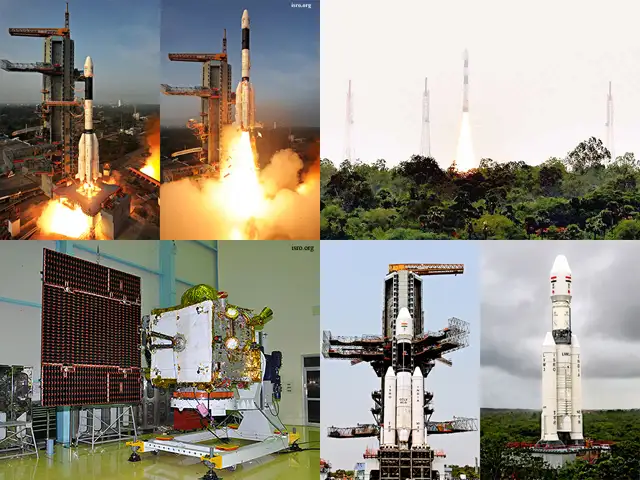
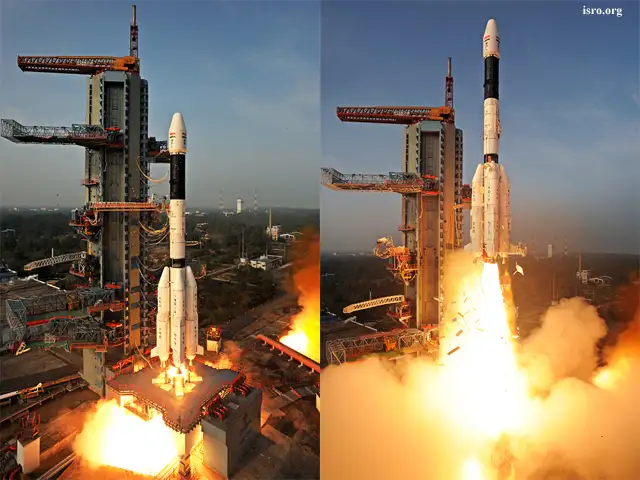
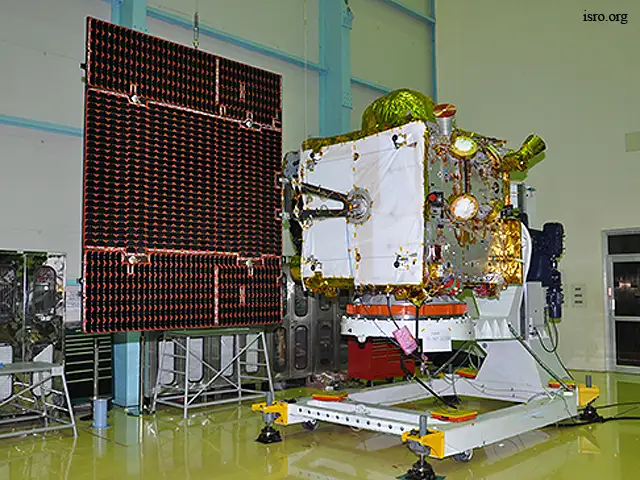
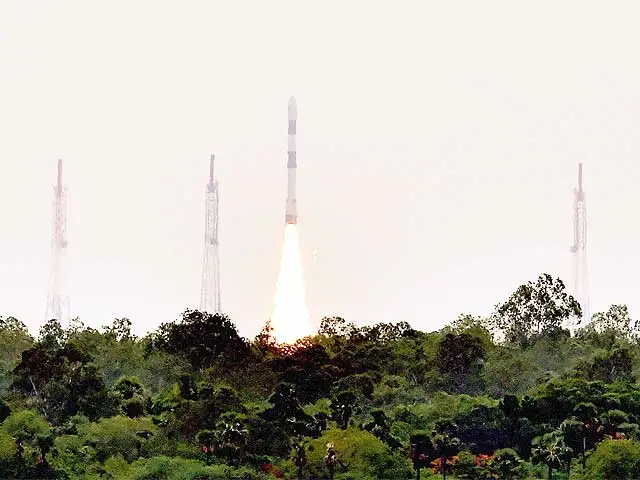
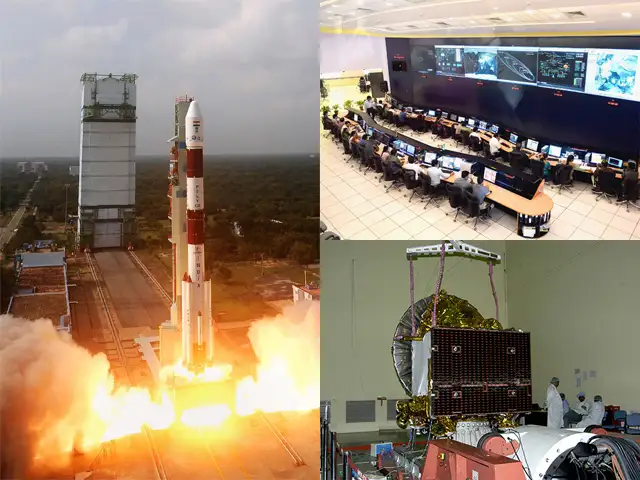
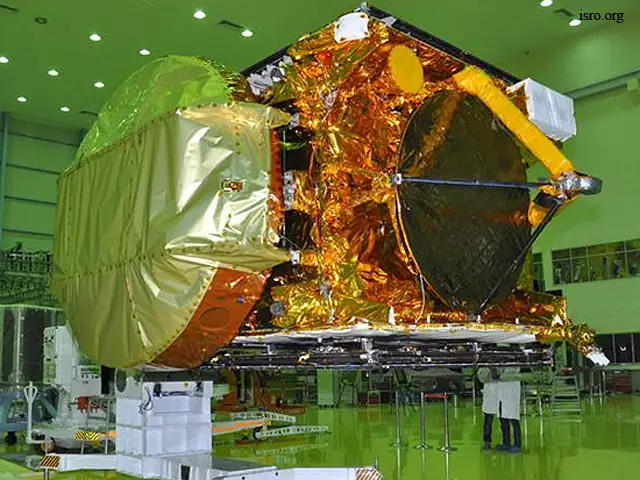
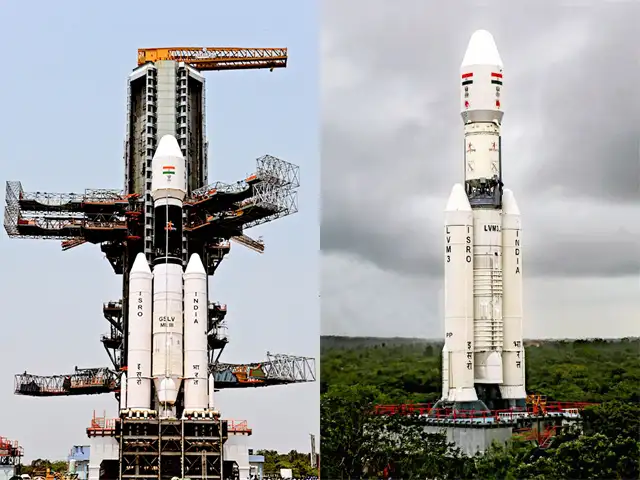
With IRSO succeeding in its first inter-planetary Mars Orbiter Mission making India the only country to achieve this feat in its maiden attempt, 2014 was not only momentous but a very busy year for the space sector.
We take a look at six special milestones that ISRO achieved:
With IRSO succeeding in its first inter-planetary Mars Orbiter Mission making India the only country to achieve this feat in its maiden attempt, 2014 was not only momentous but a very busy year for the space sector.
We take a look at six special milestones that ISRO achieved:

ADVERTISEMENT


