Very important day, say astronomers on Aditya-L1 solar mission
ISRO's Aditya-L1 mission, set to launch today, will study the corona of the Sun, according to astronomer and Professor RC Kapoor. The spacecraft will be placed in a halo orbit around the Lagrange point 1 (L1) of the Sun-Earth system, allowing cont...
By ANI | Updated:

ANI
Ahead of the launch of ISRO's first space venture to study the sun astronomer and Profesor RC Kapoor on Saturday said that the most important instrument on the Aditya-L1 mission launch will study the corona of the Sun.
In Bengaluru, speaking to ANI, Kapoor said, "This is a very important day. The most important instrument on Aditya L1 will study the Corona of the Sun. Normally, which can only be studied during full solar eclipse..."
Watch Aditya-L1 mission launch Live Updates
In Chennai former ISRO scientist Mylswamy Annadurai, a Padma Shree awardee said, "...It is technically very challenging to acquire the L1 point and have an orbit around that and to survive for the five years with very accurate finding requirements... This is scientifically going to be rewarding because seven instruments will try to understand the dynamics and phenomena of what's happening there..."
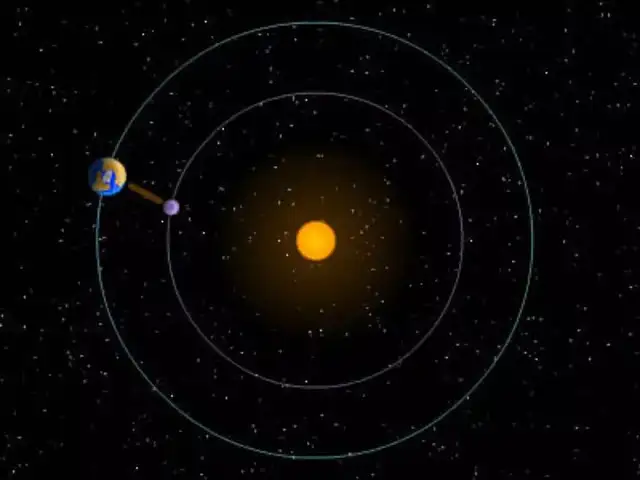
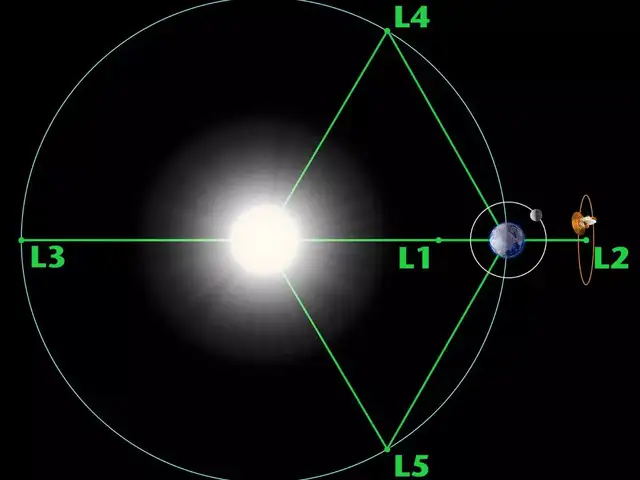
The spacecraft will be placed in a halo orbit around the Lagrange point 1 (L1) of the Sun-Earth system, allowing continuous viewing of the sun without any eclipses or obstructions.
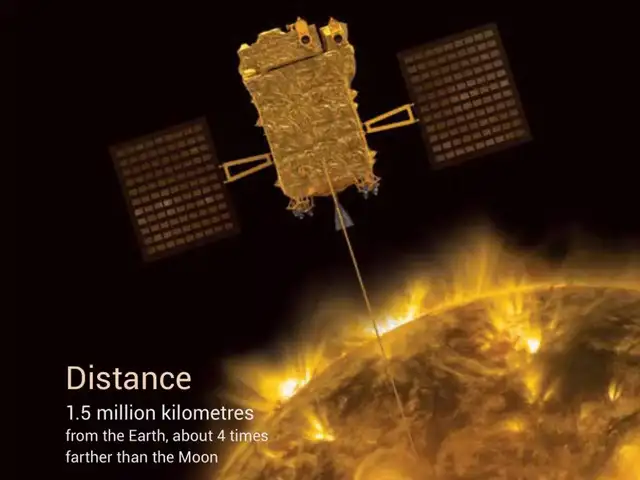
L1 is 1.5 million km away from the Earth in the direction of the sun. It is expected to cover the distance in four months' time.
Major objectives of India's solar mission include the study of the physics of solar corona and its heating mechanism, the solar wind acceleration, coupling and dynamics of the solar atmosphere, solar wind distribution and temperature anisotropy, and origin of Coronal Mass Ejections (CME) and flares and near-earth space weather.
The Aditya-L1 mission holds the promise of significantly advancing our understanding of the Sun's behaviour and its interactions with Earth and the space environment.
On August 23, India took a giant leap as the Chandrayaan-3 lander module successfully landed on the moon's South Pole, making it the first country to have achieved the historic feat and bringing to an end the disappointment over the crash landing of the Chandrayaan-2, four years ago. Overall, India became the fourth country - after the US, China, and Russia - to have successfully landed on the moon's surface.
In Bengaluru, speaking to ANI, Kapoor said, "This is a very important day. The most important instrument on Aditya L1 will study the Corona of the Sun. Normally, which can only be studied during full solar eclipse..."
Watch Aditya-L1 mission launch Live Updates
In Chennai former ISRO scientist Mylswamy Annadurai, a Padma Shree awardee said, "...It is technically very challenging to acquire the L1 point and have an orbit around that and to survive for the five years with very accurate finding requirements... This is scientifically going to be rewarding because seven instruments will try to understand the dynamics and phenomena of what's happening there..."
The spacecraft will be placed in a halo orbit around the Lagrange point 1 (L1) of the Sun-Earth system, allowing continuous viewing of the sun without any eclipses or obstructions.
ADVERTISEMENT
The country's maiden solar mission -- Aditya-L1 is all set to be launched today at 11:50 am from the launch pad at Sriharikota in Andhra Pradesh. It will carry seven different payloads to have a detailed study of the sun, four of which will observe the light from the sun and the other three will measure in-situ parameters of the plasma and magnetic fields.L1 is 1.5 million km away from the Earth in the direction of the sun. It is expected to cover the distance in four months' time.
Major objectives of India's solar mission include the study of the physics of solar corona and its heating mechanism, the solar wind acceleration, coupling and dynamics of the solar atmosphere, solar wind distribution and temperature anisotropy, and origin of Coronal Mass Ejections (CME) and flares and near-earth space weather.
The Aditya-L1 mission holds the promise of significantly advancing our understanding of the Sun's behaviour and its interactions with Earth and the space environment.
ADVERTISEMENT
On August 23, India took a giant leap as the Chandrayaan-3 lander module successfully landed on the moon's South Pole, making it the first country to have achieved the historic feat and bringing to an end the disappointment over the crash landing of the Chandrayaan-2, four years ago. Overall, India became the fourth country - after the US, China, and Russia - to have successfully landed on the moon's surface.
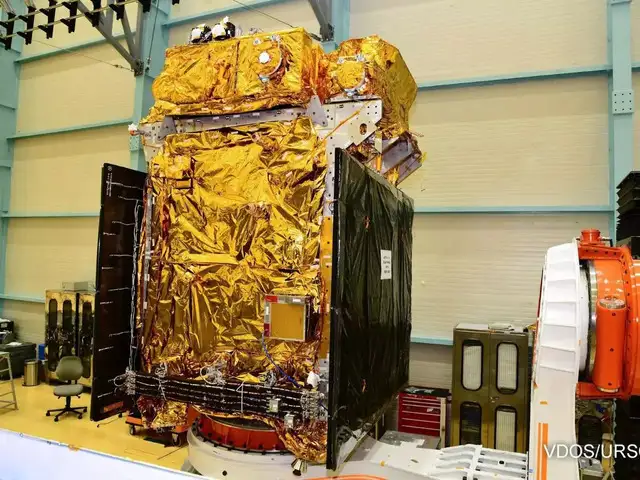
After the successful Chandrayaan-3 mission to the Moon, ISRO has announced that India's first solar mission Aditya-L1 to study the Sun will be launched on September 2 at 11.50 am from Sriharikota spaceport. Aditya-L1 spacecraft is designed to provide remote observations of the solar corona and in-situ observations of the solar wind. (Image: ISRO)

ADVERTISEMENT
Download
The Economic Times Business News App for the Latest News in Business, Sensex, Stock Market Updates & More.
The Economic Times Business News App for the Latest News in Business, Sensex, Stock Market Updates & More.
Download
The Economic Times News App for Quarterly Results, Latest News in ITR, Business, Share Market, Live Sensex News & More.
The Economic Times News App for Quarterly Results, Latest News in ITR, Business, Share Market, Live Sensex News & More.
ADVERTISEMENT


