
UAE's Hope Mars Mission snaps detailed pictures of 'discrete nightside auroras'
1/5
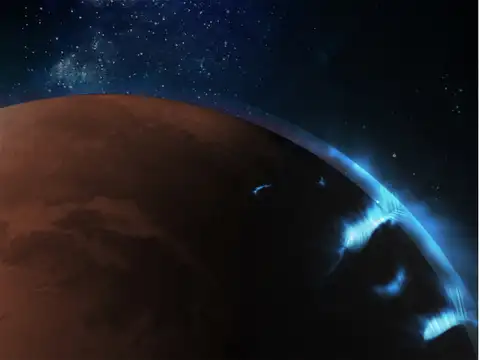
Discrete nightside auroras
According to an IANS report, The United Arab Emirates' Hope Mars Mission has snapped the most detailed pictures yet of the 'discrete nightside auroras' of the Red Planet, which scientists have struggled to study for decades.
2/5
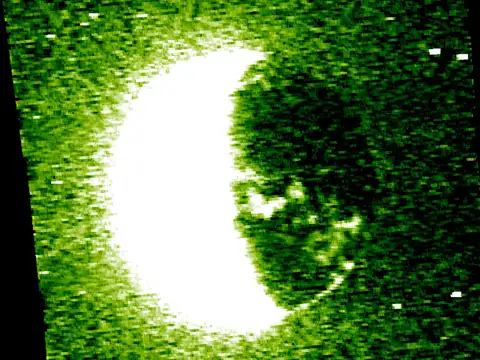
Planetary glow
The ultraviolet emissions arise when solar wind runs into magnetic fields that emanate from Mars's crust. Charged particles then collide with oxygen in the upper atmosphere, causing it to glow, Nature reported.

3/5
UAE’s space foray
The mission, also called the Emirates Mars Mission, is the first uncrewed, interplanetary satellite by the UAE. The auroras were spotted by the Emirates Mars Ultraviolet Spectrometer, or EMUS, which is designed to study the thin, vast halo of hydrogen and oxygen surrounding Mars, not on its magnetism, so the aurora images came as a bonus.
Amazon Top Deals
POWERED BY

Crompton Ozone 75 Litres Desert Air Cooler for home | Large & Easy Clean Ice Chamber | 4-Way Air Deflection | High Density Honeycomb Pads | Everlast Pump | Auto Fill| 3 Year Brand Warranty
₹9,798Buy Now43%
OFF

LG 32 L Convection Microwave Oven (MC3286BRUM, Black, 360° Motorised Rotisserie for Bar-be-queing, 301 Auto Cook Menu, Stainless steel cavity, Indian Cuisine, Tandoor Se, Steam Clean & Diet Fry)
₹19,340Buy Now19%
OFF
4/5
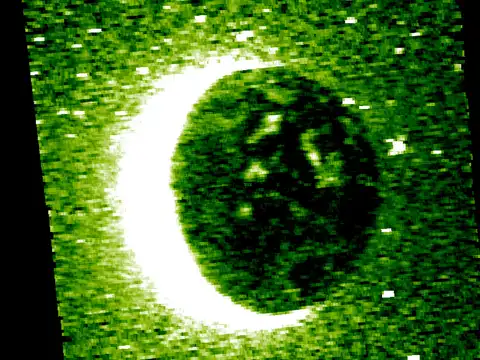
Better pictures
The European Space Agency's Mars Express spacecraft and NASA's MAVEN orbiter have both observed the discrete aurora, but they are not as detailed compared to Hope. But the EMM took "spectacular images", Nick Schneider, a planetary scientist at the University of Colorado Boulder, who is part of the MAVEN team, was quoted as saying to Nature.
5/5
Clues to a lost atmosphere
"From my work on the topic, I immediately recognised the way the aurorae draw an outline around the last vestiges of Mars' decaying magnetic field. These images really capture the fact that Mars has lost its global field, the suspected cause of the disappearance of its earlier thick atmosphere," Schneider said.