Third of Milky Way's most common planets could harbour life: Study
A study based on latest telescope data and published by the journal Proceedings of the National Academy of Sciences showed that one-third of the planets that orbit the most common stars in the Milky Way galaxy are capable of supporting life. The ...
By PTI | Updated:

PTI
New Delhi, One-third of the planets orbiting the most common stars across the Milky Way galaxy may hold onto liquid water and possibly harbour life, according to a study based on latest telescope data. The most common stars in our galaxy are considerably smaller and cooler, sporting just half the mass of the Sun at most. Billions of planets orbit these common dwarf stars.
The analysis, published in the journal Proceedings of the National Academy of Sciences, shows that two-thirds of the planets around these ubiquitous small stars could be roasted by tidal extremes, sterilising them.
However, that leaves one-third of the planets-hundreds of millions across the galaxy-that could be in a goldilocks orbit close enough, and gentle enough, to be possibly habitable.
"I think this result is really important for the next decade of exoplanet research, because eyes are shifting towards this population of stars," said Sheila Sagear, a doctoral student at the University of Florida (UF) in the US.
"These stars are excellent targets to look for small planets in an orbit where it's conceivable that water might be liquid and therefore the planet might be habitable," Sagear said in a statement.
Sagear and UF astronomy professor Sarah Ballard measured the eccentricity of a sample of more than 150 planets around M dwarf stars, which are about the size of Jupiter.
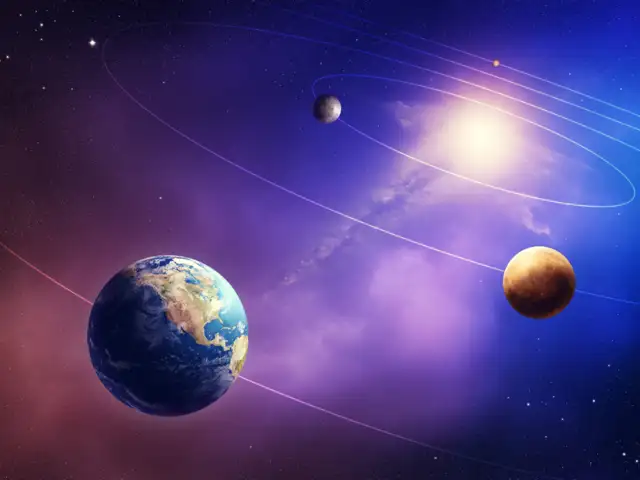
The more oval shaped an orbit, the more eccentric it is. If a planet orbits close enough to its star, at about the distance that Mercury orbits the Sun, an eccentric orbit can subject it to a process known as tidal heating.
As the planet is stretched and deformed by changing gravitational forces on its irregular orbit, friction heats it up. At the extreme end, this could bake the planet, removing all chance for liquid water.
"It's only for these small stars that the zone of habitability is close enough for these tidal forces to be relevant," Ballard said.
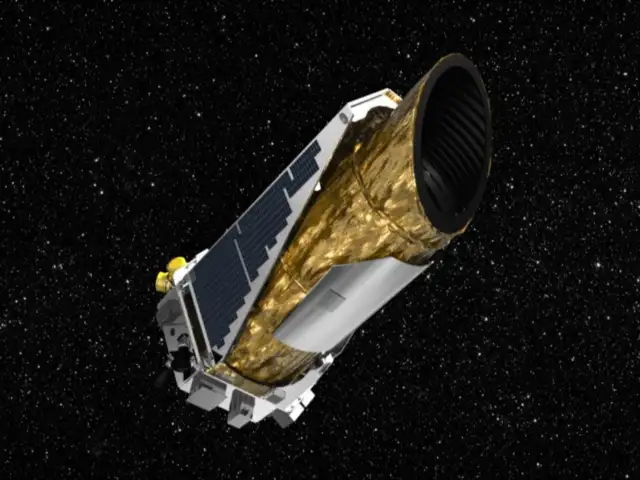
The researchers used data from NASA's Kepler telescope, which captures information about exoplanets as they move in front of their host stars.
To measure the planets' orbits, they focused especially on how long the planets took to move across the face of the stars. Their study also relied on new data from the Gaia telescope, which has measured the distance to billions of stars in the galaxy.
"The distance is really the key piece of information we were missing before that allows us to do this analysis now," Sagear said.
The team found that stars with multiple planets were the most likely to have the kind of circular orbits that allow them to retain liquid water.
Stars with only one planet were the most likely to see tidal extremes that would sterilise the surface, according to the researchers.
Since one-third of the planets in this small sample had gentle enough orbits to potentially host liquid water, that likely means that the Milky Way has hundreds of millions of promising targets to probe for signs of life outside our solar system, they added.
The analysis, published in the journal Proceedings of the National Academy of Sciences, shows that two-thirds of the planets around these ubiquitous small stars could be roasted by tidal extremes, sterilising them.
However, that leaves one-third of the planets-hundreds of millions across the galaxy-that could be in a goldilocks orbit close enough, and gentle enough, to be possibly habitable.
"I think this result is really important for the next decade of exoplanet research, because eyes are shifting towards this population of stars," said Sheila Sagear, a doctoral student at the University of Florida (UF) in the US.
"These stars are excellent targets to look for small planets in an orbit where it's conceivable that water might be liquid and therefore the planet might be habitable," Sagear said in a statement.
Sagear and UF astronomy professor Sarah Ballard measured the eccentricity of a sample of more than 150 planets around M dwarf stars, which are about the size of Jupiter.
ADVERTISEMENT
The more oval shaped an orbit, the more eccentric it is. If a planet orbits close enough to its star, at about the distance that Mercury orbits the Sun, an eccentric orbit can subject it to a process known as tidal heating.
As the planet is stretched and deformed by changing gravitational forces on its irregular orbit, friction heats it up. At the extreme end, this could bake the planet, removing all chance for liquid water.
"It's only for these small stars that the zone of habitability is close enough for these tidal forces to be relevant," Ballard said.
The researchers used data from NASA's Kepler telescope, which captures information about exoplanets as they move in front of their host stars.
ADVERTISEMENT
To measure the planets' orbits, they focused especially on how long the planets took to move across the face of the stars. Their study also relied on new data from the Gaia telescope, which has measured the distance to billions of stars in the galaxy.
"The distance is really the key piece of information we were missing before that allows us to do this analysis now," Sagear said.
ADVERTISEMENT
The team found that stars with multiple planets were the most likely to have the kind of circular orbits that allow them to retain liquid water.
Stars with only one planet were the most likely to see tidal extremes that would sterilise the surface, according to the researchers.
Since one-third of the planets in this small sample had gentle enough orbits to potentially host liquid water, that likely means that the Milky Way has hundreds of millions of promising targets to probe for signs of life outside our solar system, they added.
Download
The Economic Times Business News App for the Latest News in Business, Sensex, Stock Market Updates & More.
The Economic Times Business News App for the Latest News in Business, Sensex, Stock Market Updates & More.
Download
The Economic Times News App for Quarterly Results, Latest News in ITR, Business, Share Market, Live Sensex News & More.
The Economic Times News App for Quarterly Results, Latest News in ITR, Business, Share Market, Live Sensex News & More.
Related Articles
 Scientists trace latest interstellar comet's home to a cold, isolated corner of the Milky Way2026-04-23T09:26:35Z
- Milky Way Season begins: Best Time, dates and tips to spot the galaxy in the night sky2026-03-06T13:51:52Z
- 3I/Atlas has 10 anomalies - What does Avi Loeb say about it being an alien technology from another civilization in Milky-Way galaxy; Interstellar object's true nature to be revealed around December 192025-11-07T06:37:26Z



ADVERTISEMENT


