Solar mission 'Aditya' will be ready for launch in September: ISRO chief Somanath sets next goal
As the country rejoiced the successful placement of the ISRO lander - Vikram - on the moon's uncharted South Pole, the agency's chairman S Somanath on Thursday confirmed that its maiden solar mission 'Aditya' is in the works and will be ready for...
By ANI | Updated:
Chandrayaan-3: ISRO chief on why Lunar South Pole was chosen for landing
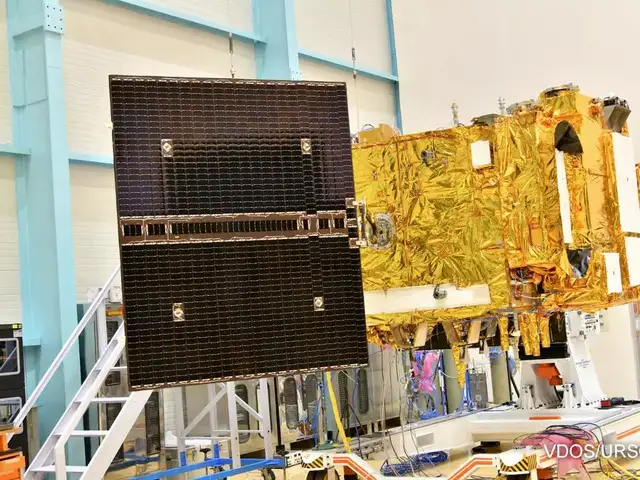
Bengaluru: As the country rejoiced the successful placement of the ISRO lander - Vikram - on the moon's uncharted South Pole, the agency's chairman S Somanath on Thursday confirmed that its maiden solar mission 'Aditya' is in the works and will be ready for launch in September.
In a brief address to the nation after the lander touched down on the moon's dark side on Wednesday, Prime Minister Narendra Modi alluded to future missions to the Sun and Venus.
Speaking to a day after the ISRO put India in an elite club of nations with the successful conduct of its maiden lunar landing mission, the ISRO chief said, "Mission 'Aditya' is in the works and will be ready for launch in the first week of September. We are also planning a mission by the end of September or October to demonstrate our crew module and crew escape capability, which will be followed by many test missions until we launch our first manned mission to space (Gaganyaan), possibly by 2025."
On the flawless touchdown of the 'Vikram' lander on the moon's south face, Somanath said the gamut of emotions he ran as the lander closed in on the lunar surface was hard to put in words.
"It was a mix of joy, a feeling of accomplishment and gratefulness for all fellow scientists, who contributed to the success of this mission," Somanath told ANI.
He added that the moon's South Pole has the potential for human settlement, which is why the agency made it the preferred landing site for the lander.
"We have gone closer to the (lunar) South Pole, which lies almost 70 degrees from where the lander has been placed. The South Pole has a specific advantage with respect to being less illuminated by the Sun. There is potential (for human settlement) because of more scientific content (on the south side of the moon). The scientists, who were working on this project, showed a lot of interest in the South Pole as the larger objective is for human beings to set up colonies on the moon and travel beyond. We were looking for the best landing spot, where we could set up colonies in the distant future, and the lunar South Pole fitted the bill," the ISRO chief said.
Speaking on the 'Pragyan' rover, which rolled out of the lander after the successful touchdown on the lunar southside, Somanath said a team will soon start work on a robotic path planning exercise, which will be the key to future explorations into deep space.
"Pragyan Rover has two instruments, both of which are related to the elemental composition findings on the moon as well as its chemical compositions. It will also rove the lunar surface. We will also do a robotic path planning exercise, which is important for future explorations into deep space," the ISRO chief said.
The 'Pragyaan' rover, on Thursday morning, rolled out of the landing module to begin its exploration of the uncharted lunar south face, ISRO informed on its official handle on X, formerly Twitter.
The agency, earlier on Thursday, said the lander made a historic touchdown on the lunar south pole, taking India where no other country has gone before.
"The Ch-3 Rover ramped down from the Lander and India took a walk on the moon. More updates soon," the ISRO posted on X.
The first picture of the six-wheeled robotic vehicle Pragyan rolling out of Vikram was shared by Pawan K Goenka, the chairman of the Indian National Space Promotion and Authorisation Centre, a single-window, independent, nodal agency that functions as an autonomous agency in the Department of Space (DOS).
After a 40-day journey into space, the 'Vikram' lander touched down on the lunar South Pole on Wednesday evening.
India also became only the fourth nation after the US, Russia and China to successfully conduct a lunar landing mission.
The Chandrayaan-3 spacecraft put down the Vikram lander on the lunar surface, tilting to a horizontal position ahead of landing.
The spacecraft was launched from the Satish Dhawan Space Centre in Andhra Pradesh's Sriharikota on July 14.
In a brief address to the nation after the lander touched down on the moon's dark side on Wednesday, Prime Minister Narendra Modi alluded to future missions to the Sun and Venus.
Speaking to a day after the ISRO put India in an elite club of nations with the successful conduct of its maiden lunar landing mission, the ISRO chief said, "Mission 'Aditya' is in the works and will be ready for launch in the first week of September. We are also planning a mission by the end of September or October to demonstrate our crew module and crew escape capability, which will be followed by many test missions until we launch our first manned mission to space (Gaganyaan), possibly by 2025."
On the flawless touchdown of the 'Vikram' lander on the moon's south face, Somanath said the gamut of emotions he ran as the lander closed in on the lunar surface was hard to put in words.
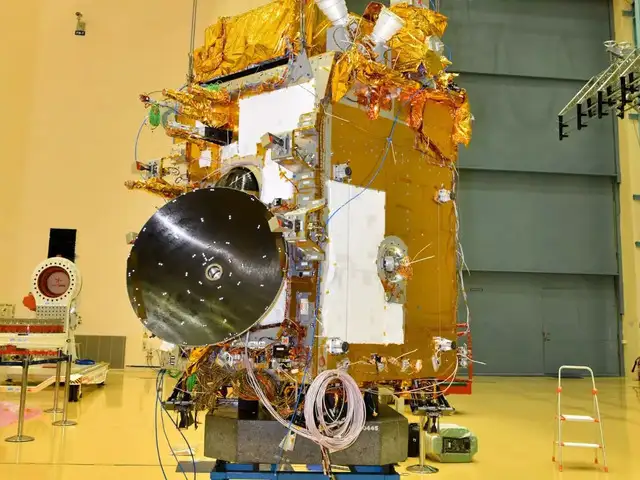
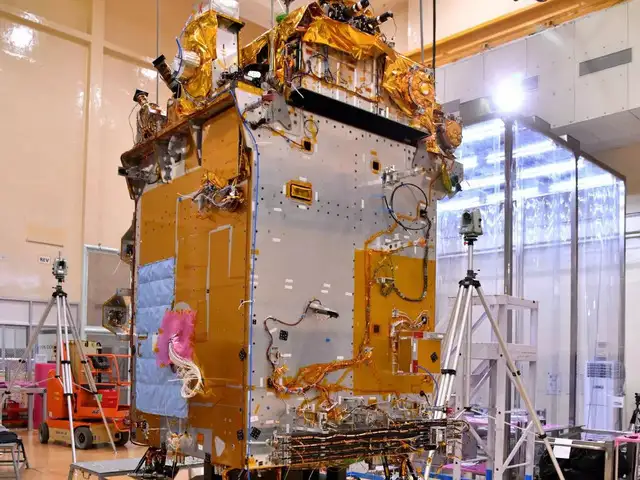
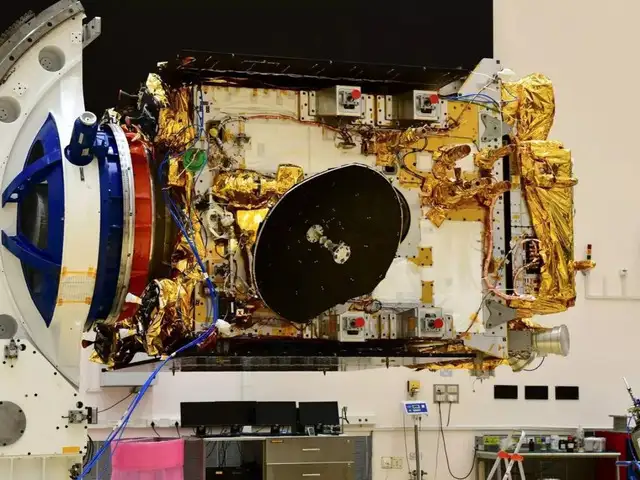
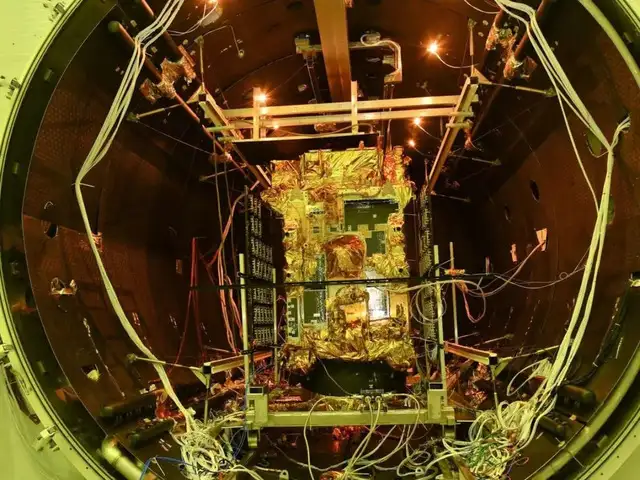
Aditya-L1, the first space-based Indian observatory to study the Sun, is getting ready for its launch soon, ISRO said on Monday. In a tweet with photos, ISRO said, "Aditya-L1, the first space-based Indian observatory to study the Sun, is getting ready for the launch. The satellite realised at the U R Rao Satellite Centre (URSC), Bengaluru has arrived at SDSC-SHAR, Sriharikota."

"It was a mix of joy, a feeling of accomplishment and gratefulness for all fellow scientists, who contributed to the success of this mission," Somanath told ANI.
ADVERTISEMENT
He added that the moon's South Pole has the potential for human settlement, which is why the agency made it the preferred landing site for the lander.
"We have gone closer to the (lunar) South Pole, which lies almost 70 degrees from where the lander has been placed. The South Pole has a specific advantage with respect to being less illuminated by the Sun. There is potential (for human settlement) because of more scientific content (on the south side of the moon). The scientists, who were working on this project, showed a lot of interest in the South Pole as the larger objective is for human beings to set up colonies on the moon and travel beyond. We were looking for the best landing spot, where we could set up colonies in the distant future, and the lunar South Pole fitted the bill," the ISRO chief said.
Speaking on the 'Pragyan' rover, which rolled out of the lander after the successful touchdown on the lunar southside, Somanath said a team will soon start work on a robotic path planning exercise, which will be the key to future explorations into deep space.
"Pragyan Rover has two instruments, both of which are related to the elemental composition findings on the moon as well as its chemical compositions. It will also rove the lunar surface. We will also do a robotic path planning exercise, which is important for future explorations into deep space," the ISRO chief said.
ADVERTISEMENT
The 'Pragyaan' rover, on Thursday morning, rolled out of the landing module to begin its exploration of the uncharted lunar south face, ISRO informed on its official handle on X, formerly Twitter.
The agency, earlier on Thursday, said the lander made a historic touchdown on the lunar south pole, taking India where no other country has gone before.
ADVERTISEMENT
"The Ch-3 Rover ramped down from the Lander and India took a walk on the moon. More updates soon," the ISRO posted on X.
The first picture of the six-wheeled robotic vehicle Pragyan rolling out of Vikram was shared by Pawan K Goenka, the chairman of the Indian National Space Promotion and Authorisation Centre, a single-window, independent, nodal agency that functions as an autonomous agency in the Department of Space (DOS).
After a 40-day journey into space, the 'Vikram' lander touched down on the lunar South Pole on Wednesday evening.
India also became only the fourth nation after the US, Russia and China to successfully conduct a lunar landing mission.
The Chandrayaan-3 spacecraft put down the Vikram lander on the lunar surface, tilting to a horizontal position ahead of landing.
The spacecraft was launched from the Satish Dhawan Space Centre in Andhra Pradesh's Sriharikota on July 14.
Download
The Economic Times Business News App for the Latest News in Business, Sensex, Stock Market Updates & More.
The Economic Times Business News App for the Latest News in Business, Sensex, Stock Market Updates & More.
Download
The Economic Times News App for Quarterly Results, Latest News in ITR, Business, Share Market, Live Sensex News & More.
The Economic Times News App for Quarterly Results, Latest News in ITR, Business, Share Market, Live Sensex News & More.
Related Articles
 HMT revival plan likely to focus on self-reliance in new-age manufacturing for ISRO2026-06-16T19:09:47Z
- How ISRO’s AI-powered coastal safety systems are helping detect dangerous rip currents in real time2026-06-16T06:18:35Z
- Centre signs agreement with ISRO, rolls out new water research initiatives2026-06-01T08:34:36Z
ADVERTISEMENT


