Recipe for Earth-like planets found
The "test kitchen" of Earth has given us a detailed recipe, but it was not clear whether other planetary systems would follow the same formula, researchers said.
By PTI | Updated:

WASHINGTON: The same basic ingredients and mixing process that went to make Earth could go in to building exoplanets around distant stars, astronomers have found.
The "test kitchen" of Earth has given us a detailed recipe, but it was not clear whether other planetary systems would follow the same formula, researchers said.
"Our solar system is not as unique as we might have thought," said lead author Courtney Dressing of the Harvard-Smithsonian Centre for Astrophysics (CfA).
"It looks like rocky exoplanets use the same basic ingredients," said Dressing.
The key to the discovery was the HARPS-North instrument on the 3.6-meter Telescopio Nazionale Galileo in the Canary Islands.
HARPS is designed to accurately measure the masses of small, Earth-sized worlds. Those measurements are crucial to determine densities and therefore compositions.
"Our strategy for using HARPS-North over the past year has been to focus on planets less than two times the diameter of Earth and to study a few planets really well," said Harvard astronomer David Charbonneau, who currently heads up the HARPS-North Science Team.
Most recently the team targeted Kepler-93b, a planet 1.5 times the size of Earth in a tight, 4.7-day orbit around its star.
The mass and composition of this world were uncertain. HARPS-North nailed the mass at 4.02 times Earth, meaning that the planet has a rocky composition.
The researchers then compared all ten known exoplanets with a diameter less than 2.7 times Earth's that had accurately measured masses.
They found that the five planets with diameters smaller than 1.6 times Earth showed a tight relationship between mass and size.
Moreover, Venus and Earth fit onto the same line, suggesting that all these worlds have similar rock-iron compositions, researchers said.
As for the larger and more massive exoplanets, their densities proved to be significantly lower, meaning that they include a large fraction of water or other volatiles, hydrogen and/or helium.
They also showed more diverse compositions rather than fitting into a single group like the smaller terrestrial worlds.
The team also noted that not all planets less than six times the mass of Earth are rocky. Some low-mass worlds with very low densities are known (such as the planets in the Kepler-11 system). But for typical close-in small planets, the chances are high that they share an Earth-like composition.
"To find a truly Earth-like world, we should focus on planets less than 1.6 times the size of Earth, because those are the rocky worlds," said Dressing.
The "test kitchen" of Earth has given us a detailed recipe, but it was not clear whether other planetary systems would follow the same formula, researchers said.
"Our solar system is not as unique as we might have thought," said lead author Courtney Dressing of the Harvard-Smithsonian Centre for Astrophysics (CfA).
"It looks like rocky exoplanets use the same basic ingredients," said Dressing.
The key to the discovery was the HARPS-North instrument on the 3.6-meter Telescopio Nazionale Galileo in the Canary Islands.
HARPS is designed to accurately measure the masses of small, Earth-sized worlds. Those measurements are crucial to determine densities and therefore compositions.
ADVERTISEMENT
"Our strategy for using HARPS-North over the past year has been to focus on planets less than two times the diameter of Earth and to study a few planets really well," said Harvard astronomer David Charbonneau, who currently heads up the HARPS-North Science Team.
Most recently the team targeted Kepler-93b, a planet 1.5 times the size of Earth in a tight, 4.7-day orbit around its star.
The mass and composition of this world were uncertain. HARPS-North nailed the mass at 4.02 times Earth, meaning that the planet has a rocky composition.
The researchers then compared all ten known exoplanets with a diameter less than 2.7 times Earth's that had accurately measured masses.
ADVERTISEMENT
They found that the five planets with diameters smaller than 1.6 times Earth showed a tight relationship between mass and size.
Moreover, Venus and Earth fit onto the same line, suggesting that all these worlds have similar rock-iron compositions, researchers said.
ADVERTISEMENT
As for the larger and more massive exoplanets, their densities proved to be significantly lower, meaning that they include a large fraction of water or other volatiles, hydrogen and/or helium.
They also showed more diverse compositions rather than fitting into a single group like the smaller terrestrial worlds.
The team also noted that not all planets less than six times the mass of Earth are rocky. Some low-mass worlds with very low densities are known (such as the planets in the Kepler-11 system). But for typical close-in small planets, the chances are high that they share an Earth-like composition.
"To find a truly Earth-like world, we should focus on planets less than 1.6 times the size of Earth, because those are the rocky worlds," said Dressing.
Download
The Economic Times Business News App for the Latest News in Business, Sensex, Stock Market Updates & More.
The Economic Times Business News App for the Latest News in Business, Sensex, Stock Market Updates & More.
Download
The Economic Times News App for Quarterly Results, Latest News in ITR, Business, Share Market, Live Sensex News & More.
The Economic Times News App for Quarterly Results, Latest News in ITR, Business, Share Market, Live Sensex News & More.
Related Articles
 SatSure bags $2.6 million grant to build AI-powered Earth observation models2026-06-11T11:05:30Z
- JSW–The Times of India Earth Care Awards Recognises Champions of Climate Action and Sustainability2026-06-11T09:38:52Z
- Reliance, Vedanta, Adani join India's drive to cut China rare earth dependence, sources say2026-06-11T09:36:39Z
Text: PTI
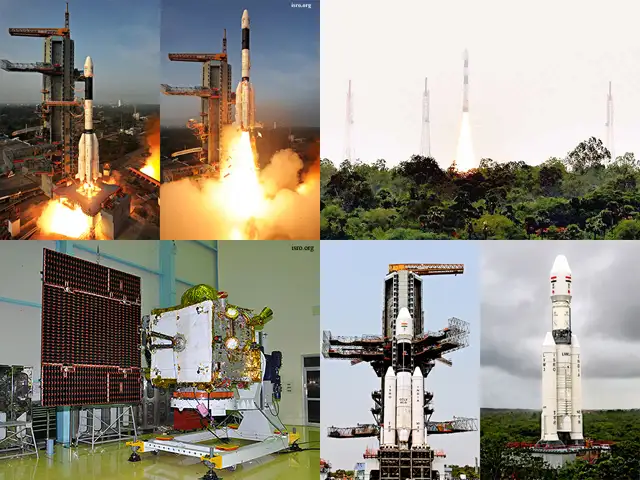
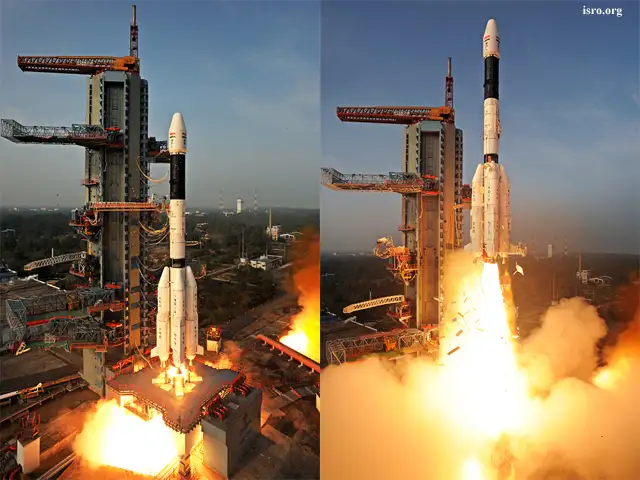
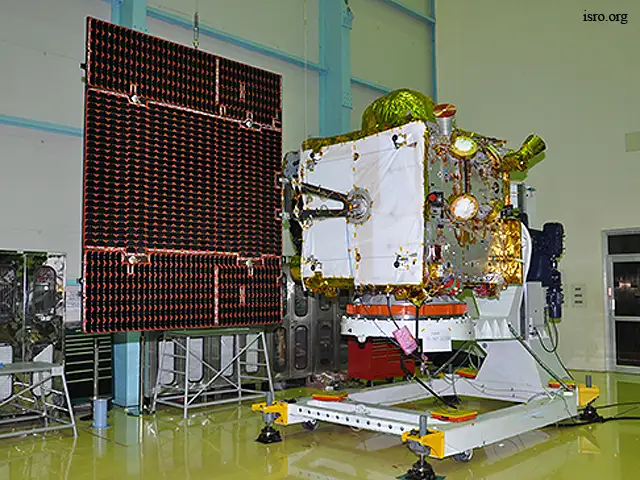
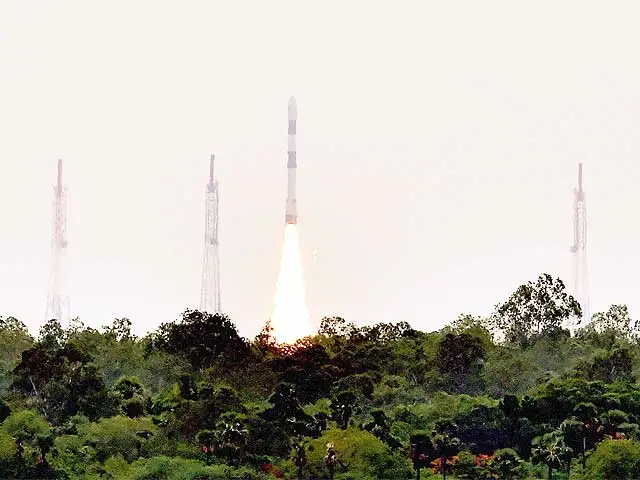
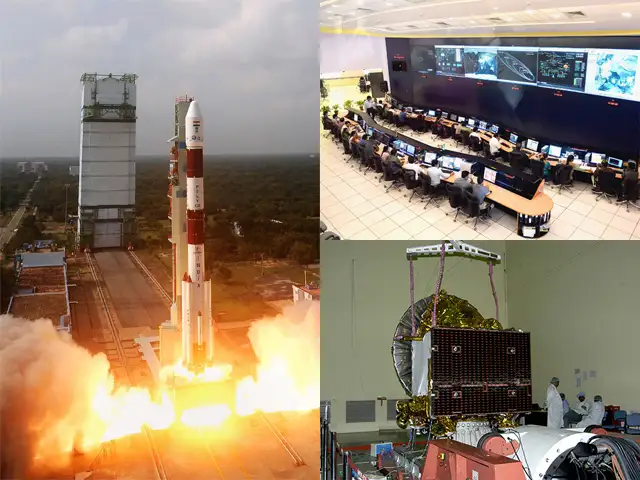
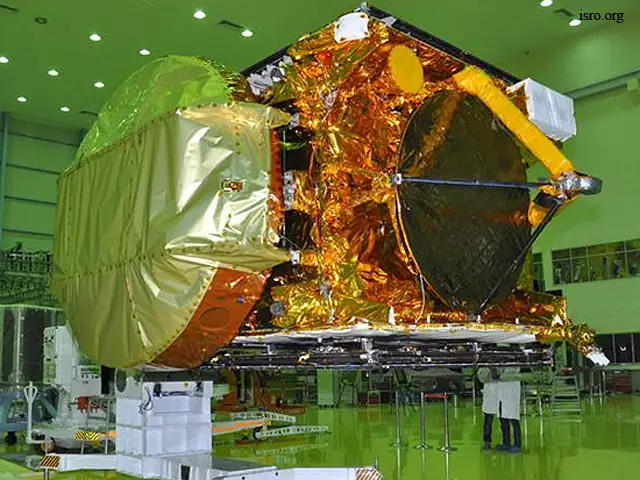
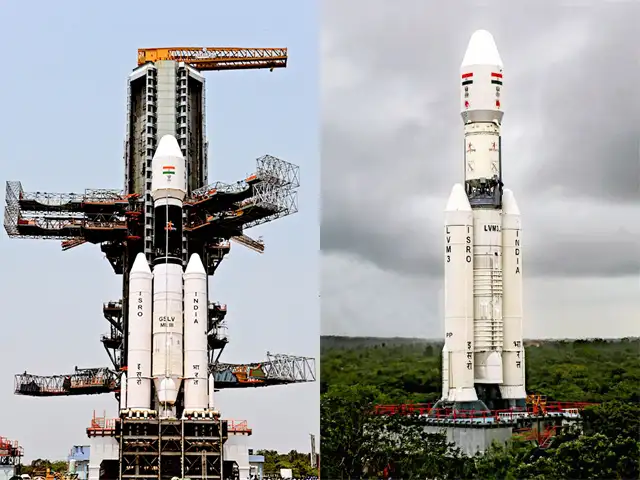
With IRSO succeeding in its first inter-planetary Mars Orbiter Mission making India the only country to achieve this feat in its maiden attempt, 2014 was not only momentous but a very busy year for the space sector.
We take a look at six special milestones that ISRO achieved:
With IRSO succeeding in its first inter-planetary Mars Orbiter Mission making India the only country to achieve this feat in its maiden attempt, 2014 was not only momentous but a very busy year for the space sector.
We take a look at six special milestones that ISRO achieved:

ADVERTISEMENT


