PSLV-C30 successfully launches ASTROSAT into the orbit
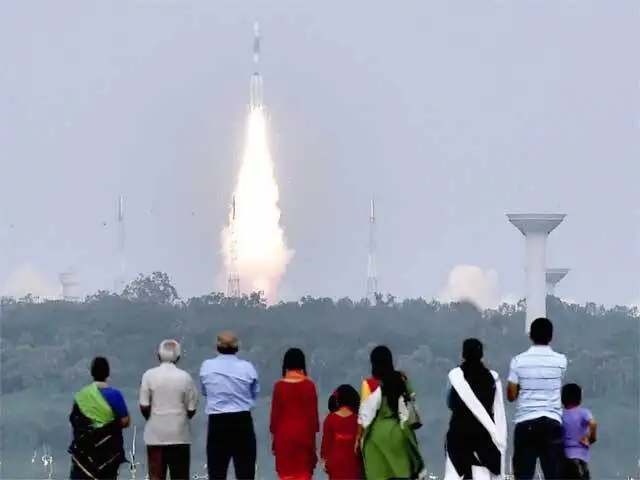
A rocket, carrying seven satellites, including India's first space observatory, blasted off from Sriharikota.
By PTI | Updated:

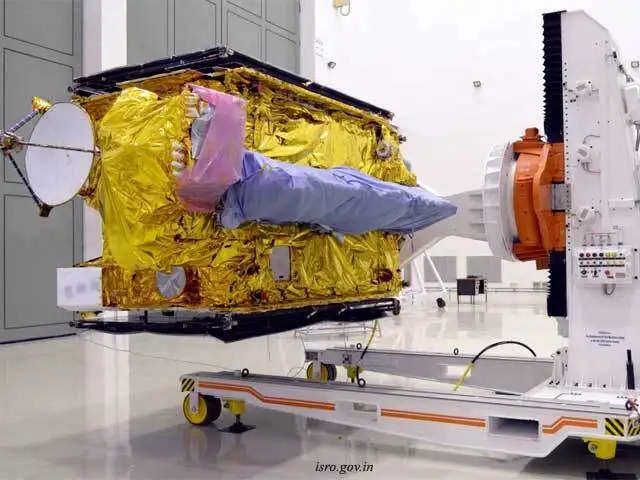
SRIHARIKOTA: Joining an elite group of nations, India today successfully launched its first space research observatory ASTROSAT that will help in a detailed understanding of the universe and also put into orbit six foreign satellites including the first from the US.
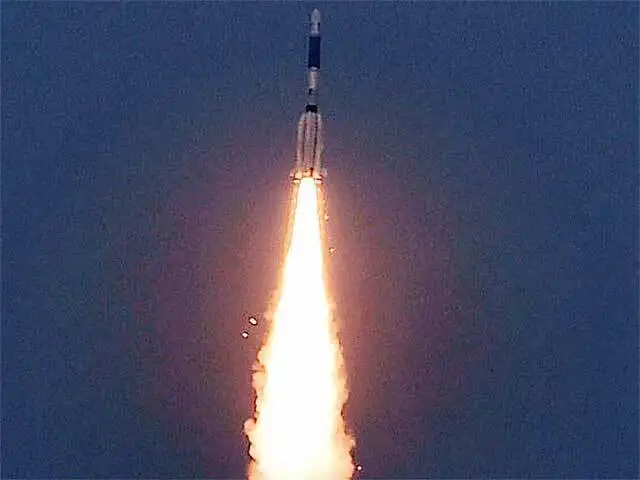
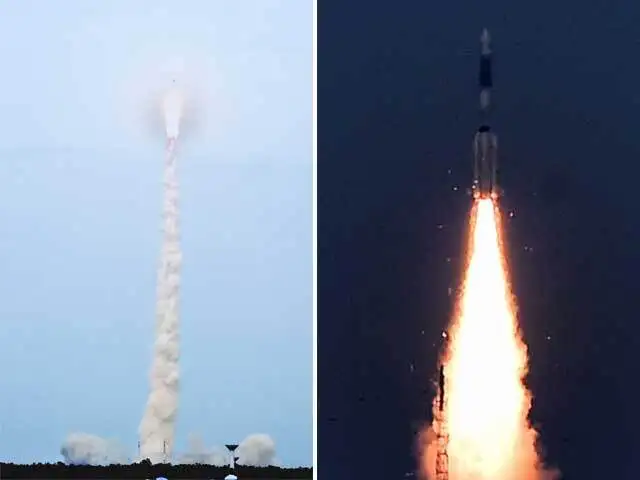
Taking another major step in its ambitious and low-cost space programme, ISRO's trusted workhorse Polar Satellite Launch Vehicle (PSLV), in its 31st flight, injected ASTROSAT and the six co-passengers into orbit about 25 minutes after a perfect lift-off from the Satish Dhawan Space Centre here.
Launched in its maiden attempt, ASTROSAT, which includes a telescope that uses x-ray, has been dubbed as a mini-Hubble telescope launched by US' NASA in 1990 and a one-stop shop for studying astronomical sources. So far, only the US, Japan, Russia and Europe have launched a space observatory.
"Well done @isro. This is one more grand accomplishment for Indian science & our scientists," Prime Minister Narendra Modi, who is now on a visit to the US, said in a tweet.
Declaring the launch successful amid cheers from the assembled scientists, a beaming ISRO Chairman A S Kiran Kumar said PSLV had put in an astronomy mission which is being looked at not only within the country but also globally to bring in new information to scientific community.
"I congratulate the entire ISRO community for the wonderful job they have done," he said addressing the gathering at the Mission Control Centre. ASTROSAT has reportedly cost USD 27 million to build.
It was for the first time that India launched US satellites--four in all--belonging to a San Francisco-based company, under an agreement signed with Antrix Corporation Ltd, the commercial arm of Indian Space Research Organisation (ISRO).
With a lift-off mass of about 1,513 kg, ASTROSAT was first injected into a 650 km orbit by PSLV-C30, followed by the other six satellites in the space of about three minutes.
International customer satellites that piggybacked the polr rocket were the LAPAN-A2 of Indonesia meant for maritime surveillance using Automatic Identification System (AIS), and maritime monitoring nanosatellite from Canada, NLS-14 (Ev9), which uses 'next generation' AIS.
The rocket, one of world's most reliable launch vehicles which clocked its 30th successful mission in a row today, also carried four identical LEMUR nano satellites of a Spire Global Inc., San Fransisco, US, that were non-visual remote sensing satellites 'focusing primarily on maritime intelligence through vessel tracking via' the AIS, ISRO said.
With this, a total of 51 satellites belonging to global customers from 20 countries, including Germany, France, Japan, Canada, U.K, have been launched successfully by ISRO so far.
Post the successful injection of ASTROSAT into the orbit, ASTROSAT Project Director K S Sarma said it was "healthy and doing well". It has a mission life of five years.
"This satellite is very unique as we have sophisticated and sensitive astronomical equipment", he added.
ASTROSAT will observe the universe in optical,ultraviolet low and high energy X-ray regions of the electromagnetic spectrum, while most other scientific satellites are capable of observing a narrow range of wavelength band. It will send back data and study parts of the universe including black holes and the magnetic fields of stars.
Taking another major step in its ambitious and low-cost space programme, ISRO's trusted workhorse Polar Satellite Launch Vehicle (PSLV), in its 31st flight, injected ASTROSAT and the six co-passengers into orbit about 25 minutes after a perfect lift-off from the Satish Dhawan Space Centre here.
Launched in its maiden attempt, ASTROSAT, which includes a telescope that uses x-ray, has been dubbed as a mini-Hubble telescope launched by US' NASA in 1990 and a one-stop shop for studying astronomical sources. So far, only the US, Japan, Russia and Europe have launched a space observatory.
"Well done @isro. This is one more grand accomplishment for Indian science & our scientists," Prime Minister Narendra Modi, who is now on a visit to the US, said in a tweet.
Declaring the launch successful amid cheers from the assembled scientists, a beaming ISRO Chairman A S Kiran Kumar said PSLV had put in an astronomy mission which is being looked at not only within the country but also globally to bring in new information to scientific community.
"I congratulate the entire ISRO community for the wonderful job they have done," he said addressing the gathering at the Mission Control Centre. ASTROSAT has reportedly cost USD 27 million to build.
ADVERTISEMENT
It was for the first time that India launched US satellites--four in all--belonging to a San Francisco-based company, under an agreement signed with Antrix Corporation Ltd, the commercial arm of Indian Space Research Organisation (ISRO).
With a lift-off mass of about 1,513 kg, ASTROSAT was first injected into a 650 km orbit by PSLV-C30, followed by the other six satellites in the space of about three minutes.
International customer satellites that piggybacked the polr rocket were the LAPAN-A2 of Indonesia meant for maritime surveillance using Automatic Identification System (AIS), and maritime monitoring nanosatellite from Canada, NLS-14 (Ev9), which uses 'next generation' AIS.
The rocket, one of world's most reliable launch vehicles which clocked its 30th successful mission in a row today, also carried four identical LEMUR nano satellites of a Spire Global Inc., San Fransisco, US, that were non-visual remote sensing satellites 'focusing primarily on maritime intelligence through vessel tracking via' the AIS, ISRO said.
ADVERTISEMENT
With this, a total of 51 satellites belonging to global customers from 20 countries, including Germany, France, Japan, Canada, U.K, have been launched successfully by ISRO so far.
Post the successful injection of ASTROSAT into the orbit, ASTROSAT Project Director K S Sarma said it was "healthy and doing well". It has a mission life of five years.
ADVERTISEMENT
"This satellite is very unique as we have sophisticated and sensitive astronomical equipment", he added.
ASTROSAT will observe the universe in optical,ultraviolet low and high energy X-ray regions of the electromagnetic spectrum, while most other scientific satellites are capable of observing a narrow range of wavelength band. It will send back data and study parts of the universe including black holes and the magnetic fields of stars.
Download
The Economic Times Business News App for the Latest News in Business, Sensex, Stock Market Updates & More.
The Economic Times Business News App for the Latest News in Business, Sensex, Stock Market Updates & More.
Download
The Economic Times News App for Quarterly Results, Latest News in ITR, Business, Share Market, Live Sensex News & More.
The Economic Times News App for Quarterly Results, Latest News in ITR, Business, Share Market, Live Sensex News & More.
Related Articles
 NASA and AstroSat capture explosive eruptions from stellar remnants near massive black hole2024-10-11T07:56:57Z
- India's AstroSat and NASA's Space observatories capture dramatic eruptions from stellar wreckage around a massive black hole2024-10-10T17:50:25Z
- AstroSat, Nasa capture black hole eruption stills2024-10-10T17:50:00Z
Text: PTI
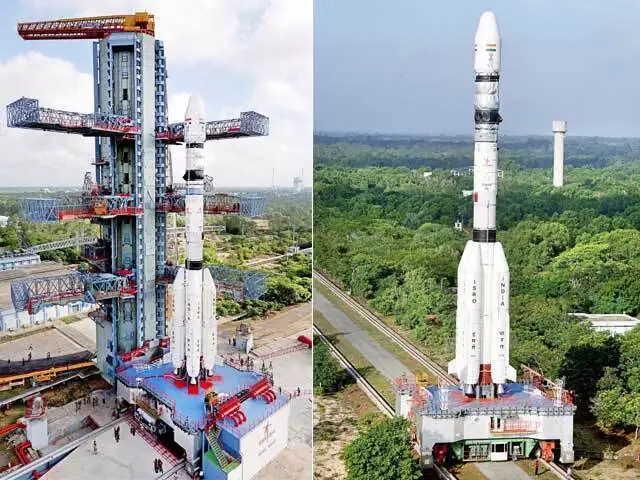
India successfully launched its latest communication satellite GSAT-6.
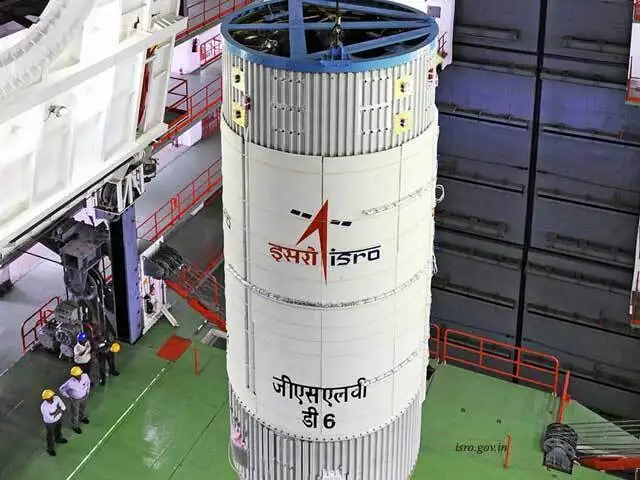
In pic: Geo-synchronous Satellite Launch Vehicle (GSLV) D6 carrying GSAT-6, lifts off from Satish Dhawan Space Centre in Sriharikota, Andhra Pradesh.
Here are 6 things to know about the launch.
India successfully launched its latest communication satellite GSAT-6.
In pic: Geo-synchronous Satellite Launch Vehicle (GSLV) D6 carrying GSAT-6, lifts off from Satish Dhawan Space Centre in Sriharikota, Andhra Pradesh.
Here are 6 things to know about the launch.

ADVERTISEMENT


