PM Narendra Modi congratulates ISRO on successful launch of GSLV Mark-III
ISRO today successfully tested the atmospheric re-entry of a crew module after its heaviest launch vehicle GSLV Mk-III blasted off.
By PTI | Updated:

SRIHARIKOTA: Prime Minister Narendra Modi today congratulated Indian scientists for the successful launch of GSLV Mark-III experimental vehicle.
"Successful launch of GSLV Mk-III is yet another triumph of brilliance & hardwork of our scientists. Congrats to them for the efforts. @isro," Modi tweeted.
ISRO today successfully tested the atmospheric re-entry of a crew module after its heaviest launch vehicle GSLV Mk-III blasted off from here.
"Successful launch of GSLV Mk-III is yet another triumph of brilliance & hardwork of our scientists. Congrats to them for the efforts. @isro," Modi tweeted.
ISRO today successfully tested the atmospheric re-entry of a crew module after its heaviest launch vehicle GSLV Mk-III blasted off from here.
Download
The Economic Times Business News App for the Latest News in Business, Sensex, Stock Market Updates & More.
Download
The Economic Times News App for Quarterly Results, Latest News in ITR, Business, Share Market, Live Sensex News & More.
Related Articles

PM Narendra Modi lines up middle-power talks ahead of Trump meeting at G72026-06-16T10:38:53Z
Human-centric technology at heart of India's AI ambitions: PM Narendra Modi at Bharat Innovates 20262026-06-14T15:47:10Z
Donald Trump, Narendra Modi look to repair ties in shadow of new US strikes2026-06-12T06:24:58Z
GSLV Mk-III: ISRO successfully test flies its heaviest rocket with crew module
1/10
Text: PTI
Taking its baby steps towards realising India's ambition to send humans into space, ISRO has successfully tested the atmospheric re-entry of a crew module after its heaviest launch vehicle GSLV Mk-III blasted off from Sriharikota.
We take a look at some important facts about ISRO's experiment:
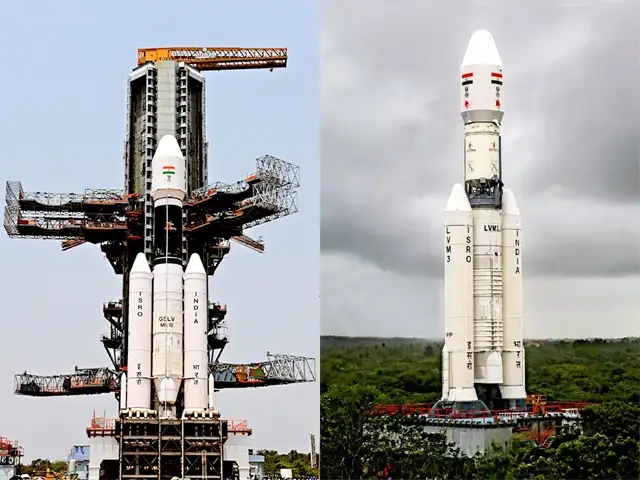
In pic: ISRO's most powerful launcher ever, GSLV Mk-III being rolled out from the Vehicle Assembly Building to the launch pad for its Experimental Flight.
Taking its baby steps towards realising India's ambition to send humans into space, ISRO has successfully tested the atmospheric re-entry of a crew module after its heaviest launch vehicle GSLV Mk-III blasted off from Sriharikota.
We take a look at some important facts about ISRO's experiment:
In pic: ISRO's most powerful launcher ever, GSLV Mk-III being rolled out from the Vehicle Assembly Building to the launch pad for its Experimental Flight.
Text: PTI
Taking its baby steps towards realising India's ambition to send humans into space, ISRO has successfully tested the atmospheric re-entry of a crew module after its heaviest l..
Read More
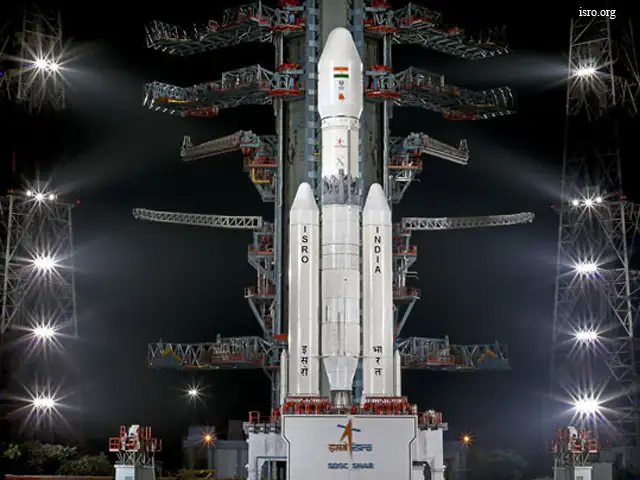
The LVM3-X flight with active S200 and L110 propulsion stages and a passive C25 stage with dummy engine, carried CARE (Crew Module Atmospheric Re-entry Experiment) as its payload.
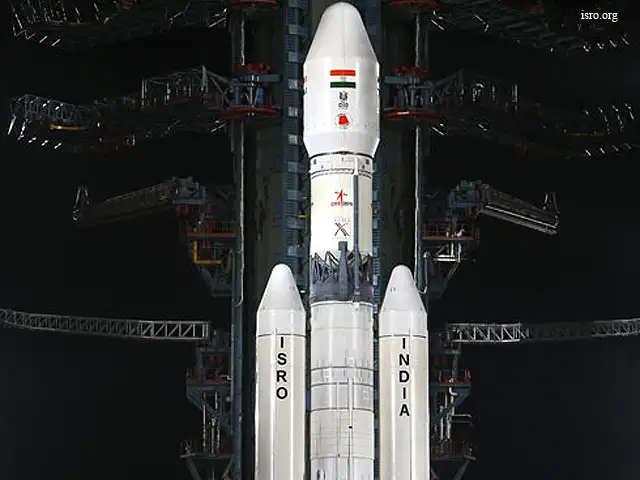
In pic: GSLV Mk-III integrated with CARE at Second Launch Pad - View III
The LVM3-X flight with active S200 and L110 propulsion stages and a passive C25 stage with dummy engine, carried CARE (Crew Module Atmospheric Re-entry Experiment) as its payload.
In pic: G..
In pic: G..
Read More
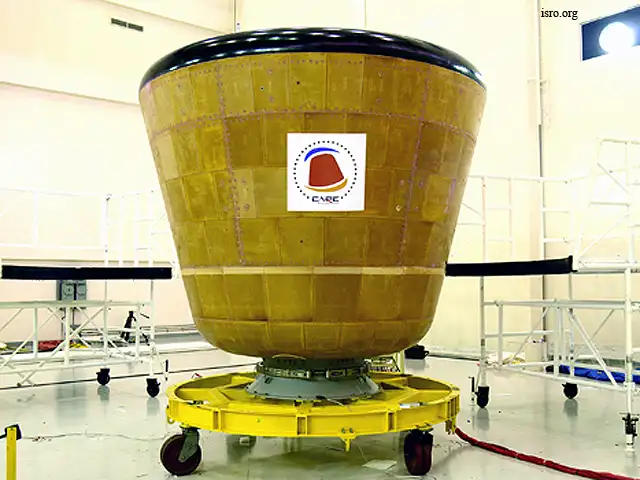
Weighing over three tonnes, the 2.7-metre tall cup cake shaped crew module with a diameter of 3.1 metres, which features aluminium alloy internal structure with composite panels and ablative thermal protection systems, was made to safely drop down into the sea by specially-made parachutes.
These parachutes were made at the Agra-based DRDO lab Aerial Delivery Research and Development Establishment.
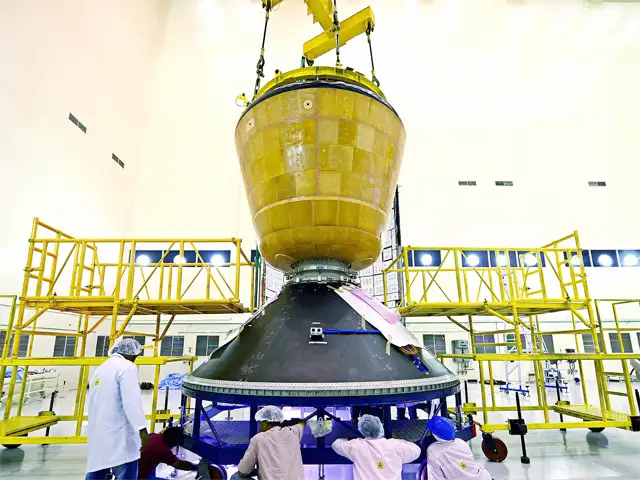
In pic: CARE at clean room before its launch
These parachutes were made at the Agra-based DRDO lab Aerial Delivery Research and Development Establishment.
In pic: CARE at clean room before its launch
Weighing over three tonnes, the 2.7-metre tall cup cake shaped crew module with a diameter of 3.1 metres, which features aluminium alloy internal structure with composite panels and ablative thermal ..
Read More
The crew module, which can carry up to two to three astronauts, withstood a heat of around 1,600 degree Celsius, while it travelled towards the surface of the Earth attracted by gravity.
The module would be tracked by Indian Coast Guard ships and then taken to Kamarajar Port in Ennore near Chennai, from where it would be shited to Vikram Sarabhai Space Centre at Thiruvananthapuram in Kerala for further study.
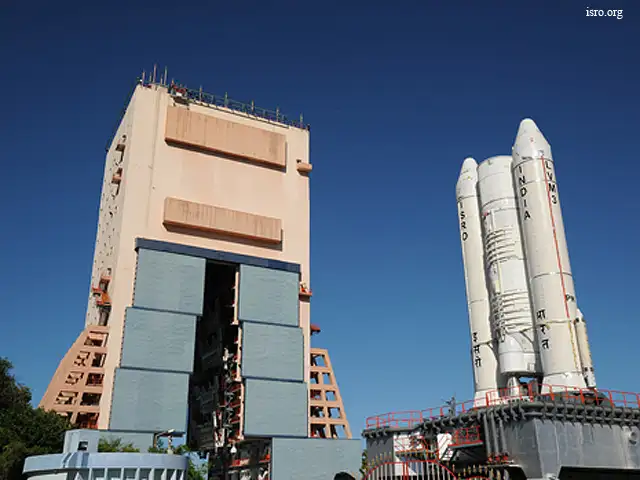
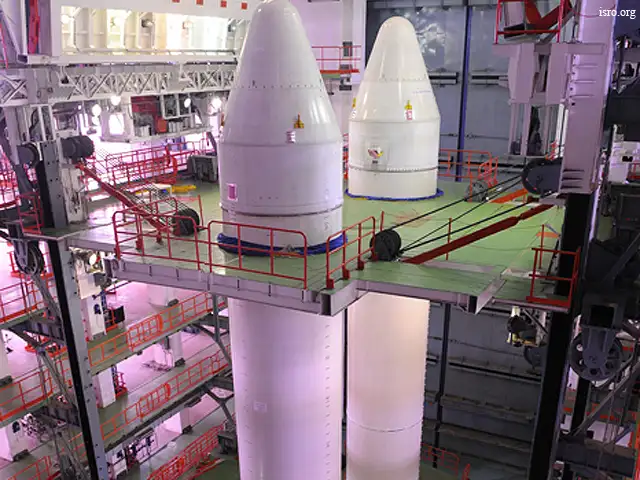
In pic: The partially integrated vehicle with S200 Strap-ons and L110 Core Stage outside the Vehicle Assembly Building
The module would be tracked by Indian Coast Guard ships and then taken to Kamarajar Port in Ennore near Chennai, from where it would be shited to Vikram Sarabhai Space Centre at Thiruvananthapuram in Kerala for further study.
In pic: The partially integrated vehicle with S200 Strap-ons and L110 Core Stage outside the Vehicle Assembly Building
The crew module, which can carry up to two to three astronauts, withstood a heat of around 1,600 degree Celsius, while it travelled towards the surface of the Earth attracted by gravity.
The m..
The m..
Read More
This experimental mission has helped ISRO with two primary lessons -- to study the flight validation of the complex atmospheric flight regime of LVM3 vehicle and study the re-entry characteristics of CARE crew module.
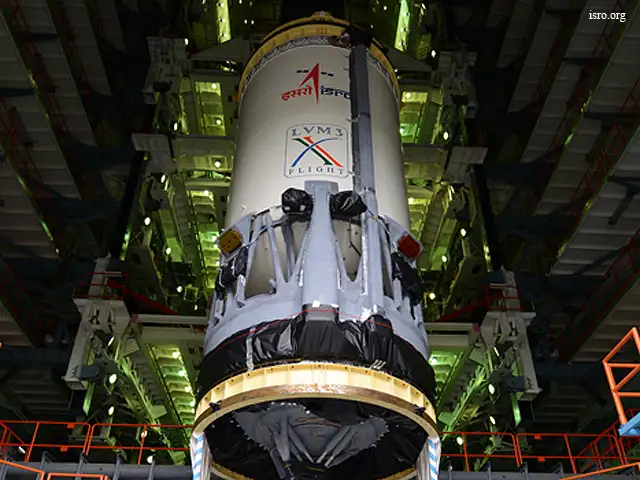
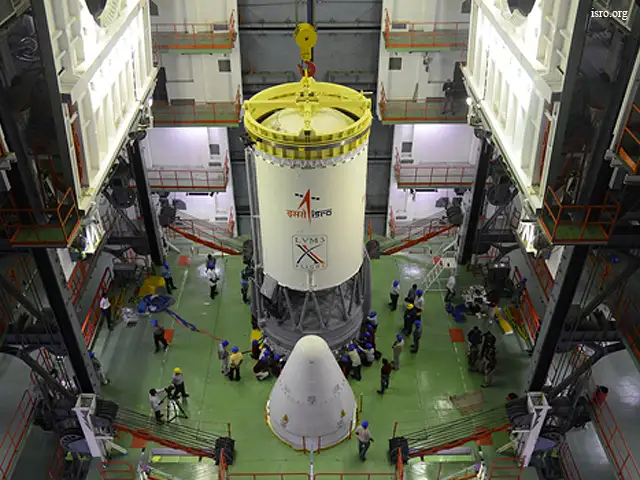
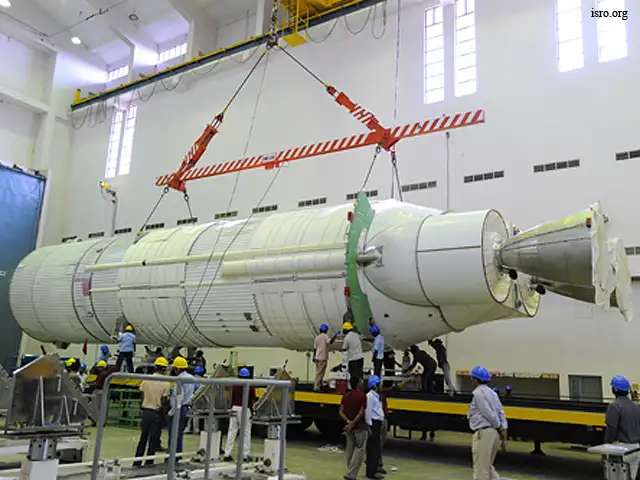
In pic: The passive C25 Cryogenic Upper Stage being hoisted at Vehicle Assembly Building
This experimental mission has helped ISRO with two primary lessons -- to study the flight validation of the complex atmospheric flight regime of LVM3 vehicle and study the re-entry characteristics of..
Read More
This is the first time ISRO was carrying a payload weighing over three tonne.
The national space agency's first space recovery experiment (SRE-1) module, launched by a PSLV rocket in January 2007, weighed only 555 kg and that too was not a crew module.
In pic: Integration of the passive C25 Cryogenic Upper Stage with L110 liquid Core Stage in Progress at Vehicle Assembly Building
The national space agency's first space recovery experiment (SRE-1) module, launched by a PSLV rocket in January 2007, weighed only 555 kg and that too was not a crew module.
In pic: Integration of the passive C25 Cryogenic Upper Stage with L110 liquid Core Stage in Progress at Vehicle Assembly Building
This is the first time ISRO was carrying a payload weighing over three tonne.
The national space agency's first space recovery experiment (SRE-1) module, launched by a PSLV rocket in January ..
Read More
Though it would take at least 10 years for India to send humans into space, this experiment has helped the space agency to test the module for safe return of humans from space, according to ISRO.
While the heavy duty cryogenic engine is still under development in one of the ISRO labs at Mahendragiri in Tamil Nadu, this attempt was to primarily study the atmospheric performance of GSLV Mk III in the first two stages.
In pic: ISRO's crew module (seen in the picture) or CARE.
While the heavy duty cryogenic engine is still under development in one of the ISRO labs at Mahendragiri in Tamil Nadu, this attempt was to primarily study the atmospheric performance of GSLV Mk III in the first two stages.
In pic: ISRO's crew module (seen in the picture) or CARE.
Though it would take at least 10 years for India to send humans into space, this experiment has helped the space agency to test the module for safe return of humans from space, according to ISRO.
..
..
Read More
Once ISRO masters its GSLV Mk III, the country can save a massive amount of the foreign exchange it presently is spending to send its heavy communication satellites through other space agencies aboard.
The heavy launch vehicle would also help India earn considerable foreign exchange by sending heavy satellites for other countries, in addition to the revenue PSLV rockets are already securing for ISRO's commercial arm Antrix Corporation Limited.
In pic: L110 Liquid Core Stage being prepared at Stage Preparation Facility
The heavy launch vehicle would also help India earn considerable foreign exchange by sending heavy satellites for other countries, in addition to the revenue PSLV rockets are already securing for ISRO's commercial arm Antrix Corporation Limited.
In pic: L110 Liquid Core Stage being prepared at Stage Preparation Facility
Once ISRO masters its GSLV Mk III, the country can save a massive amount of the foreign exchange it presently is spending to send its heavy communication satellites through other space agencies aboar..
Read More
This CARE module is expected to enhance ISRO's understanding on re-entry and parachute phases of crew module.
The total budget of the experimental mission was Rs 155 crore, including the crew module, which cost Rs 15 crore.
In pic: The two S200 Strap-ons during the integration of the vehicle
The total budget of the experimental mission was Rs 155 crore, including the crew module, which cost Rs 15 crore.
In pic: The two S200 Strap-ons during the integration of the vehicle
This CARE module is expected to enhance ISRO's understanding on re-entry and parachute phases of crew module.
The total budget of the experimental mission was Rs 155 crore, including the crew ..
Read More
Exactly 5.4 minutes after lift off at 9.30 AM from the Second Launch Pad of Satish Dhawan Space Centre here, the module separated from the rocket at an altitude of 126 km and re-entered Earth's atmosphere (about 80 km from sea level).
It descended in a ballistic mode and splashed down into the Bay of Bengal, some 180 km from Indira Point, the southern tip of the Andaman and Nicobar Islands.
In pic: GSLV Mk-III integrated with CARE at Second Launch Pad - View II
It descended in a ballistic mode and splashed down into the Bay of Bengal, some 180 km from Indira Point, the southern tip of the Andaman and Nicobar Islands.
In pic: GSLV Mk-III integrated with CARE at Second Launch Pad - View II
Exactly 5.4 minutes after lift off at 9.30 AM from the Second Launch Pad of Satish Dhawan Space Centre here, the module separated from the rocket at an altitude of 126 km and re-entered Earth's atmos..
Read More
READ MORE
ADVERTISEMENT