
One-third of planets orbiting common stars may have liquid water: Study

1/6
One-third of planets may have liquid water
One-third of the planets orbiting the most common stars across the Milky Way galaxy may hold onto liquid water and possibly harbour life, according to a study based on latest telescope data. The analysis was published in the journal Proceedings of the National Academy of Sciences.

2/6
Possibly habitable
Two-thirds of the planets around the common dwarf stars could be roasted by tidal extremes, sterilising them, the study shows. This means that one-third of the planets could be in a goldilocks orbit close enough, and gentle enough, to be possibly habitable.
3/6
Important results
"I think this result is really important for the next decade of exoplanet research, because eyes are shifting towards this population of stars," said Sheila Sagear, a doctoral student at the University of Florida (UF) in the US. "These stars are excellent targets to look for small planets in an orbit where it's conceivable that water might be liquid and therefore the planet might be habitable," Sagear said in a statement.
Amazon Top Deals
POWERED BY

Crompton Ozone 75 Litres Desert Air Cooler for home | Large & Easy Clean Ice Chamber | 4-Way Air Deflection | High Density Honeycomb Pads | Everlast Pump | Auto Fill| 3 Year Brand Warranty
₹9,798Buy Now43%
OFF
LG 32 L Convection Microwave Oven (MC3286BRUM, Black, 360° Motorised Rotisserie for Bar-be-queing, 301 Auto Cook Menu, Stainless steel cavity, Indian Cuisine, Tandoor Se, Steam Clean & Diet Fry)
₹18,780Buy Now22%
OFF
4/6
Measuring eccentricity
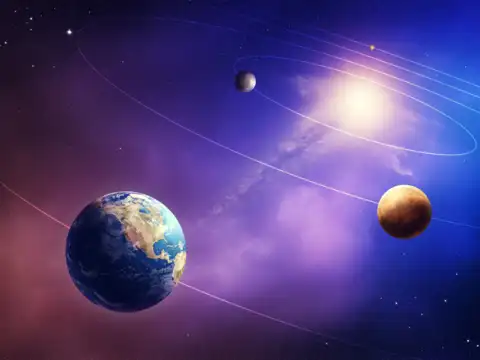
Sagear and UF astronomy professor Sarah Ballard measured the eccentricity of a sample of more than 150 planets around M dwarf stars, which are about the size of Jupiter. The more oval shaped an orbit, the more eccentric it is. If a planet orbits close enough to its star, at about the distance that Mercury orbits the Sun, an eccentric orbit can subject it to a process known as tidal heating.
5/6
Kepler and Gaia telescopes used for data
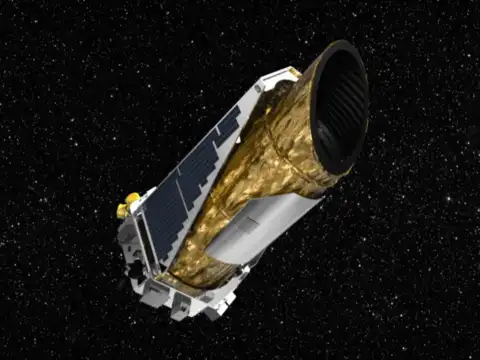
The researchers used data from NASA's Kepler telescope, which captures information about exoplanets as they move in front of their host stars. Their study also relied on new data from the Gaia telescope, which has measured the distance to billions of stars in the galaxy.
6/6
Hundreds of millions of promising targets for life
Since one-third of the planets in this small sample had gentle enough orbits to potentially host liquid water, that likely means that the Milky Way has hundreds of millions of promising targets to probe for signs of life outside our solar system, they added.