NASA Europa mission to search for alien life
NASA is planning a mission to Jupiter's moon Europa to search for signs of alien life on the icy, ocean-harbouring world.
By PTI | Updated:

WASHINGTON: NASA is planning a mission to Jupiter's moon Europa to search for signs of alien life on the icy, ocean-harbouring world.
NASA has asked scientists to consider ways that a Europa mission could search for evidence of alien life in the plumes of water vapour that apparently blast into space from Europa's south polar region.
These plumes, which NASA's Hubble Space Telescope spotted in December 2012, provide a possible way to sample Europa's ocean of liquid water, which is buried beneath the moon's icy shell, researchers said.
NASA is zeroing in on a flyby mission design, something along the lines of a long-studied concept called the Europa Clipper.
As currently envisioned, Clipper would travel to Jupiter orbit, then make 45 flybys of Europa over 3.5 years, at altitudes ranging from 25 km to 2,700 km.
The USD 2.1 billion mission would study Europa's subsurface ocean, giving researchers a better understanding of the water's depth, salinity and other characteristics.
NASA also wants to add plume sampling to the Europa mission's task list, if possible.
During a Europa plume workshop at the Ames Research Center in Silicon Valley earlier this week, NASA science chief John Grunsfeld urged attendees to "think outside the box" and come up with feasible ways to study the moon's plumes.
Researchers would want to analyse bits of Europa material in well-equipped labs here on Earth, but bringing samples back is likely beyond the scope of the flyby mission currently under consideration.
However, it may be possible to detect biomolecules onsite, using gear aboard a Clipper-like probe, researchers said.
Spotting a set of amino acids that all display the same chirality, or handedness, in plume material would be strong evidence of Europan life, astrobiologist Chris McKay, of NASA Ames, said at the workshop.
Collecting enough plume material to perform such analyses will likely prove extremely challenging, 'SPACE.com' reported.
It may require flying so low and so slowly that it makes more sense to send a lander down to the Europa surface through the plume, said astrobiologist Kevin Hand of NASA's Jet Propulsion Laboratory in Pasadena, California.
However, first the spacecraft should be able to find the water vapour when it gets to Europa.
At the moment, the plume remains unconfirmed; scientists have pointed Hubble at Europa repeatedly since the initial 2012 detection, but have come up empty in attempts to spot it again.
So, if the plume exists, it is apparently sporadic or episodic, not continuous like the powerhouse geysers that erupt from the south pole of Saturn's icy moon Enceladus, researchers said.
NASA has asked scientists to consider ways that a Europa mission could search for evidence of alien life in the plumes of water vapour that apparently blast into space from Europa's south polar region.
These plumes, which NASA's Hubble Space Telescope spotted in December 2012, provide a possible way to sample Europa's ocean of liquid water, which is buried beneath the moon's icy shell, researchers said.
NASA is zeroing in on a flyby mission design, something along the lines of a long-studied concept called the Europa Clipper.
As currently envisioned, Clipper would travel to Jupiter orbit, then make 45 flybys of Europa over 3.5 years, at altitudes ranging from 25 km to 2,700 km.
The USD 2.1 billion mission would study Europa's subsurface ocean, giving researchers a better understanding of the water's depth, salinity and other characteristics.
ADVERTISEMENT
NASA also wants to add plume sampling to the Europa mission's task list, if possible.
During a Europa plume workshop at the Ames Research Center in Silicon Valley earlier this week, NASA science chief John Grunsfeld urged attendees to "think outside the box" and come up with feasible ways to study the moon's plumes.
Researchers would want to analyse bits of Europa material in well-equipped labs here on Earth, but bringing samples back is likely beyond the scope of the flyby mission currently under consideration.
However, it may be possible to detect biomolecules onsite, using gear aboard a Clipper-like probe, researchers said.
ADVERTISEMENT
Spotting a set of amino acids that all display the same chirality, or handedness, in plume material would be strong evidence of Europan life, astrobiologist Chris McKay, of NASA Ames, said at the workshop.
Collecting enough plume material to perform such analyses will likely prove extremely challenging, 'SPACE.com' reported.
ADVERTISEMENT
It may require flying so low and so slowly that it makes more sense to send a lander down to the Europa surface through the plume, said astrobiologist Kevin Hand of NASA's Jet Propulsion Laboratory in Pasadena, California.
However, first the spacecraft should be able to find the water vapour when it gets to Europa.
At the moment, the plume remains unconfirmed; scientists have pointed Hubble at Europa repeatedly since the initial 2012 detection, but have come up empty in attempts to spot it again.
So, if the plume exists, it is apparently sporadic or episodic, not continuous like the powerhouse geysers that erupt from the south pole of Saturn's icy moon Enceladus, researchers said.
Download
The Economic Times Business News App for the Latest News in Business, Sensex, Stock Market Updates & More.
The Economic Times Business News App for the Latest News in Business, Sensex, Stock Market Updates & More.
Download
The Economic Times News App for Quarterly Results, Latest News in ITR, Business, Share Market, Live Sensex News & More.
The Economic Times News App for Quarterly Results, Latest News in ITR, Business, Share Market, Live Sensex News & More.
Related Articles
 NASA is training AI on billions of Earth observations and the results could change climate research2026-06-15T13:19:50Z
- Snake dance in space? NASA astronaut captures mesmerising view across Earth from SpaceX spacecraft2026-06-11T07:30:44Z
- NASA's Artemis III crew: A test pilot, an Italian, a record-holder and a first-timer2026-06-10T01:33:26Z
Hari Pulakkat, ET Bureau
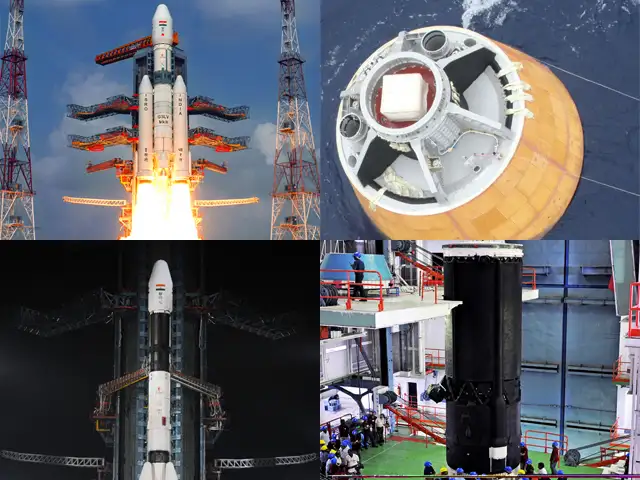
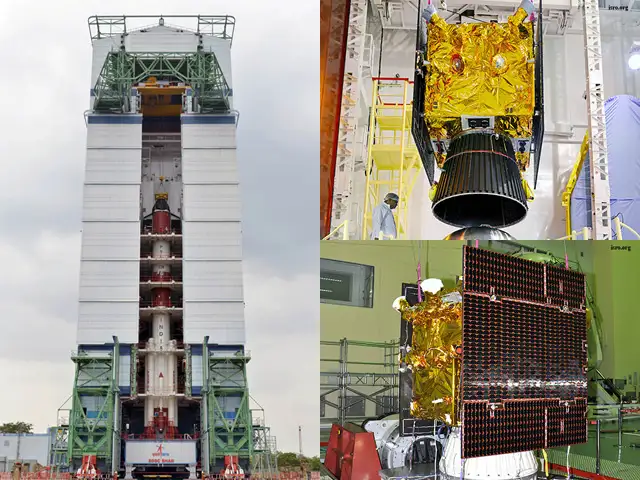
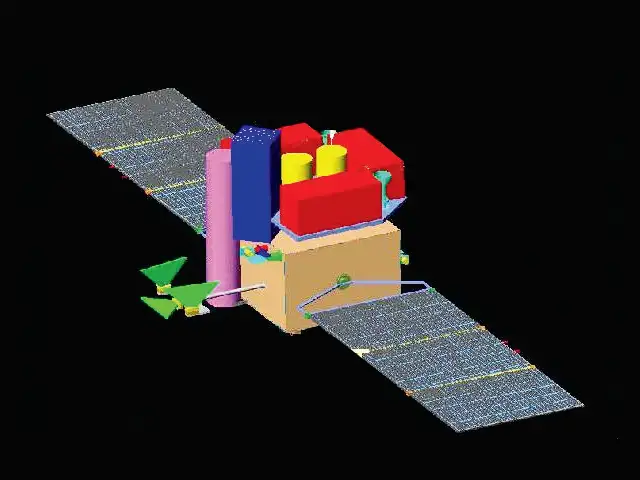
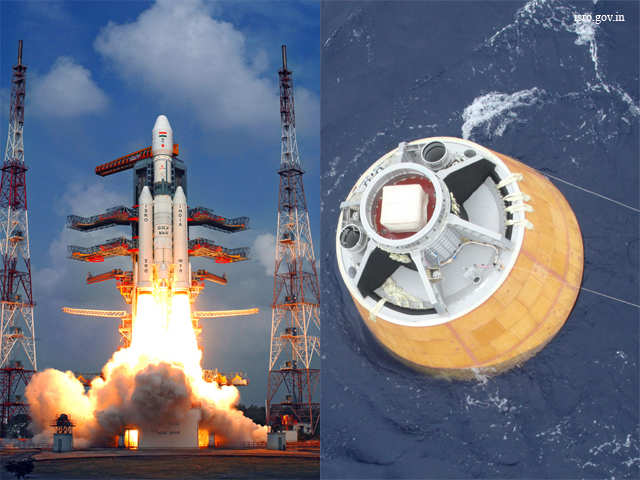
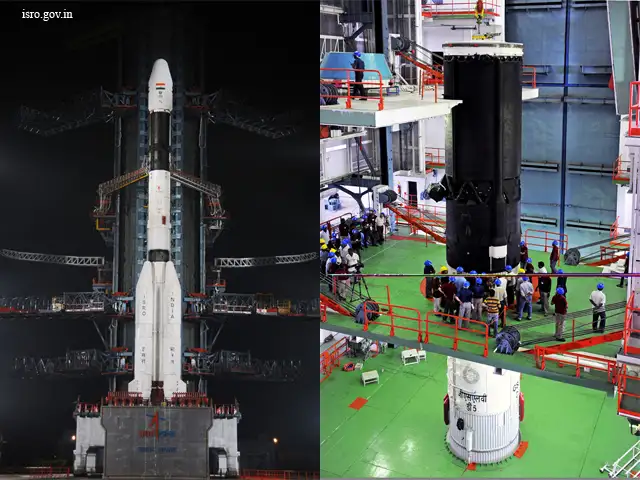
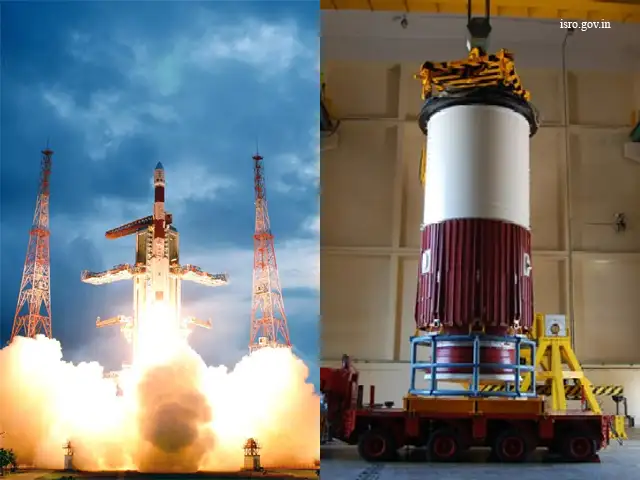
ISRO has its hands full with new projects, some of which pushing up the potential use of space technology significantly. These include new heavy launch vehicles, cryogenic and semi-cryogenic engines, a moon and a solar mission and, if there is enough government support, human space missions as well.
Plus, you have air-breathing and reusable launch vehicles. And the turnaround seems to be complete...
ISRO has its hands full with new projects, some of which pushing up the potential use of space technology significantly. These include new heavy launch vehicles, cryogenic and semi-cryogenic engines, a moon and a solar mission and, if there is enough government support, human space missions as well.
Plus, you have air-breathing and reusable launch vehicles. And the turnaround seems to be complete...

ADVERTISEMENT


