NASA data suggests Mercury's atmosphere as almost four billion years old
Mercury's magnetic field is almost four billion years old, suggest data from NASA's MESSENGER spacecraft that reached the planet a week ago.
By PTI | Updated:

TORONTO: Mercury's magnetic field is almost four billion years old, according to new data from NASA's MESSENGER spacecraft that smashed into the planet a week ago.
The discovery helps scientists piece together the history of Mercury, the closest planet to the Sun and one about which very little was known before the MESSENGER mission.
NASA's MESSENGER probe left Earth in 2004, flew by Mercury for the first time in 2008 and has orbited the planet since 2011, sending valuable data back to scientists.
In the new study, researchers used data obtained by MESSENGER in the fall of 2014 and early 2015 when the probe flew incredibly close to the planet's surface - at altitudes as low as 15 kilometres.
In the years prior, MESSENGER's lowest altitudes were between 200 and 500 kilometres.
"The mission was originally planned to last one year; no one expected it to go for four," said Catherine Johnson, a University of British Columbia planetary scientist and lead author of the study.
"The science from these recent observations is really interesting and what we've learned about the magnetic field is just the first part of it," Johnson said.
Scientists have known for some time that Mercury has a magnetic field similar to Earth's, but much weaker. The motion of liquid iron deep inside the planet's core generates the field.
Mercury is the only other planet besides Earth in the inner solar system with such a magnetic field. There is evidence that Mars once had a magnetic field but it disappeared at some point more than 3 billion years ago.
When MESSENGER flew close to the planet, its magnetometer collected data on the magnetism of rocks in Mercury's surface.
Those tiny signals revealed that Mercury's magnetic field is very ancient, at least 3.7 to 3.9 billion years old. The planet itself formed around the same time as Earth, just over 4.5 billion years ago.
"If we didn't have these recent observations, we would never have known how Mercury's magnetic field evolved over time," said Johnson.
NASA's Messenger spacecraft crashed into the surface of Mercury a week ago, ending its 11-year mission that provided valuable data and thousands of images of the planet.
The discovery helps scientists piece together the history of Mercury, the closest planet to the Sun and one about which very little was known before the MESSENGER mission.
NASA's MESSENGER probe left Earth in 2004, flew by Mercury for the first time in 2008 and has orbited the planet since 2011, sending valuable data back to scientists.
In the new study, researchers used data obtained by MESSENGER in the fall of 2014 and early 2015 when the probe flew incredibly close to the planet's surface - at altitudes as low as 15 kilometres.
In the years prior, MESSENGER's lowest altitudes were between 200 and 500 kilometres.
"The mission was originally planned to last one year; no one expected it to go for four," said Catherine Johnson, a University of British Columbia planetary scientist and lead author of the study.
ADVERTISEMENT
"The science from these recent observations is really interesting and what we've learned about the magnetic field is just the first part of it," Johnson said.
Scientists have known for some time that Mercury has a magnetic field similar to Earth's, but much weaker. The motion of liquid iron deep inside the planet's core generates the field.
Mercury is the only other planet besides Earth in the inner solar system with such a magnetic field. There is evidence that Mars once had a magnetic field but it disappeared at some point more than 3 billion years ago.
When MESSENGER flew close to the planet, its magnetometer collected data on the magnetism of rocks in Mercury's surface.
ADVERTISEMENT
Those tiny signals revealed that Mercury's magnetic field is very ancient, at least 3.7 to 3.9 billion years old. The planet itself formed around the same time as Earth, just over 4.5 billion years ago.
"If we didn't have these recent observations, we would never have known how Mercury's magnetic field evolved over time," said Johnson.
ADVERTISEMENT
NASA's Messenger spacecraft crashed into the surface of Mercury a week ago, ending its 11-year mission that provided valuable data and thousands of images of the planet.
Download
The Economic Times Business News App for the Latest News in Business, Sensex, Stock Market Updates & More.
The Economic Times Business News App for the Latest News in Business, Sensex, Stock Market Updates & More.
Download
The Economic Times News App for Quarterly Results, Latest News in ITR, Business, Share Market, Live Sensex News & More.
The Economic Times News App for Quarterly Results, Latest News in ITR, Business, Share Market, Live Sensex News & More.
Related Articles
 Snake dance in space? NASA astronaut captures mesmerising view across Earth from SpaceX spacecraft2026-06-11T07:30:44Z
- NASA's Artemis III crew: A test pilot, an Italian, a record-holder and a first-timer2026-06-10T01:33:26Z
- NASA reverses evacuation alert order for astronauts aboard space station2026-06-05T17:21:52Z
Text: TNN
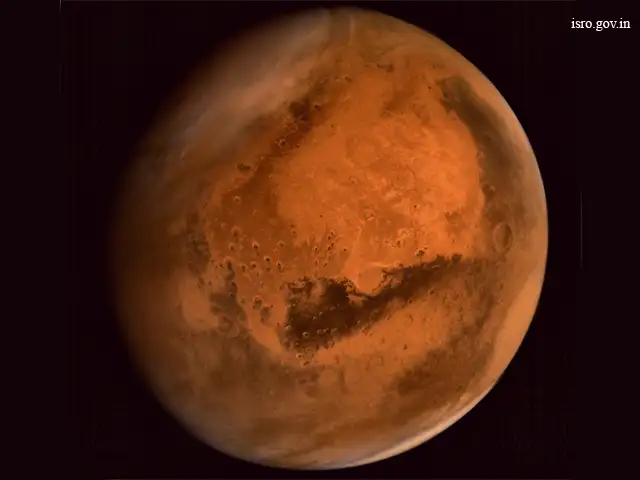
Mangalyaan or Mars Orbiter Mission on March 23, 2015 completed six months in the Red Planet. The Rs 450-crore ($70 million) ambitious Mars mission was launched on November 5, 2013 on board a polar rocket from spaceport Sriharikota off Bay of Bengal, about 80 km of Chennai.
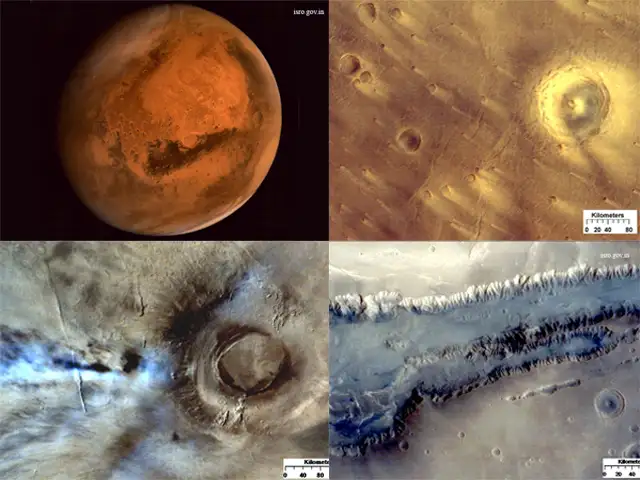
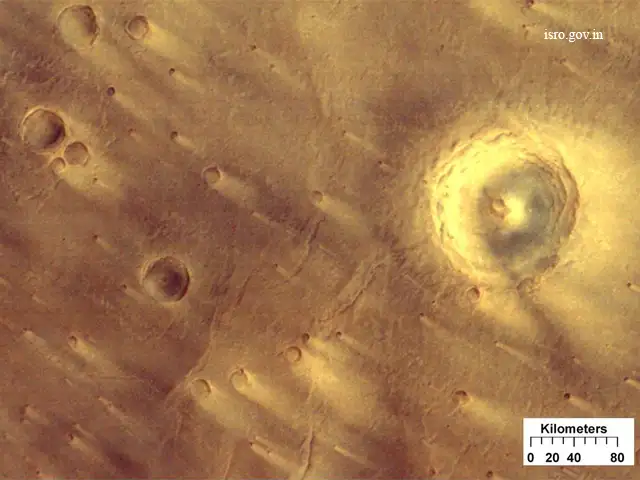
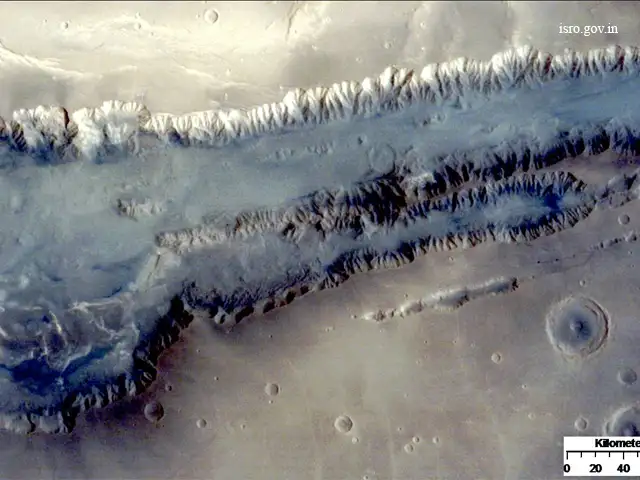
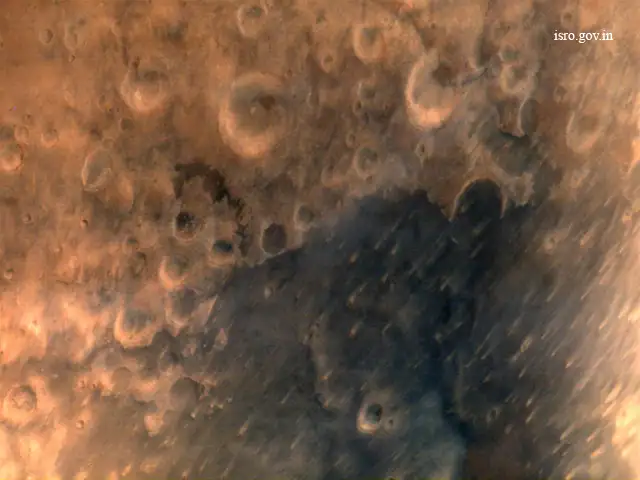
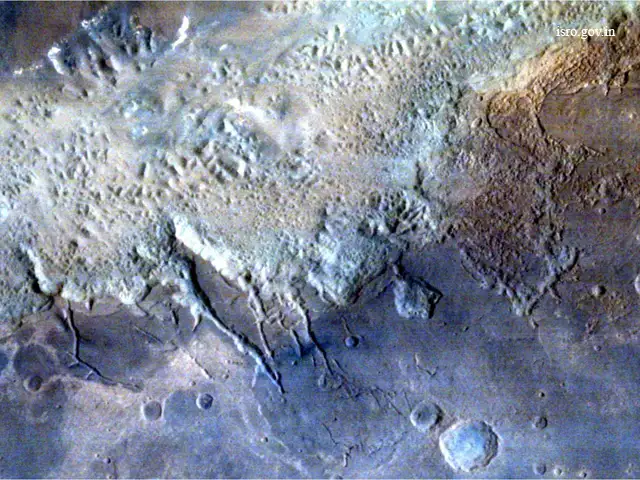
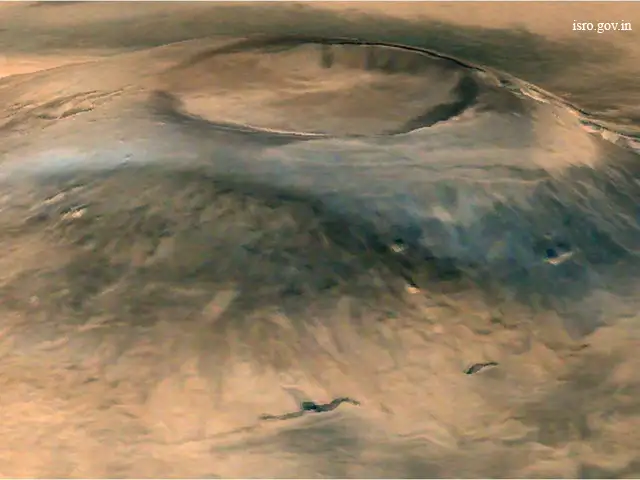
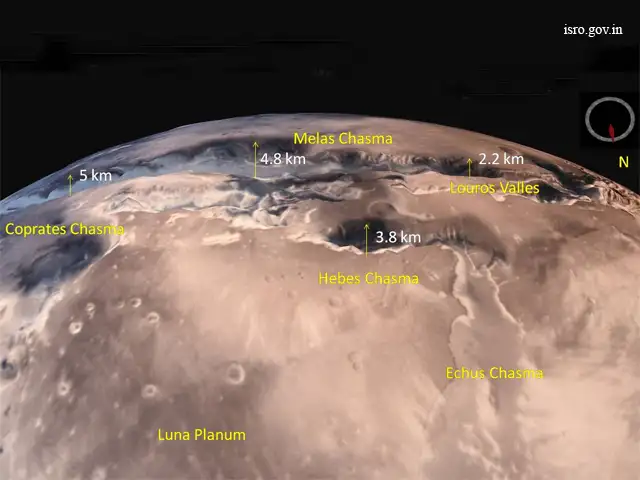
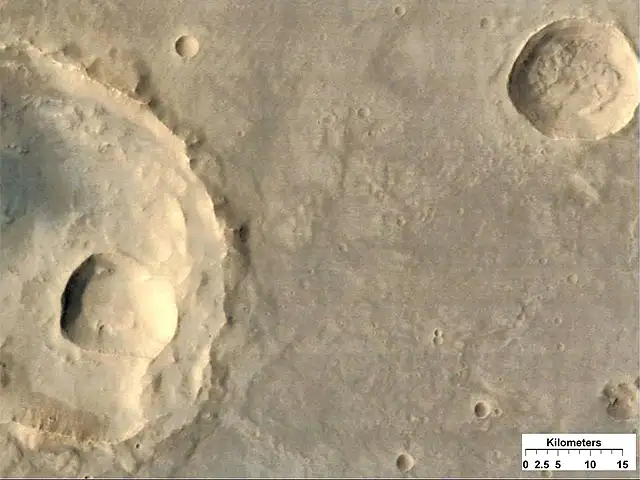
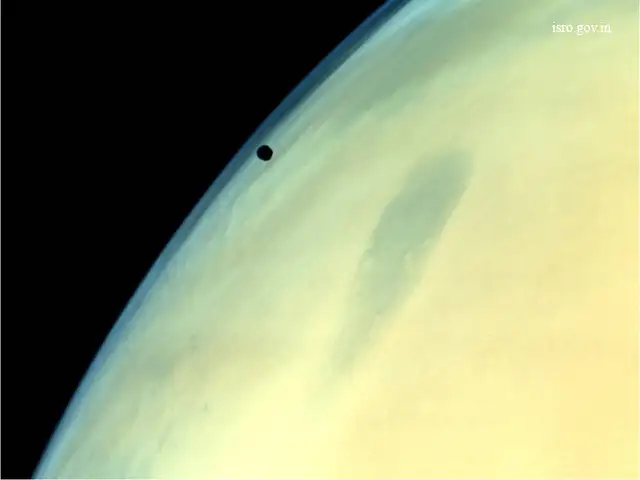
Mars Colour Camera (MCC) aboard India's Mars Orbiter Mission has sent in images of the Red Planet, showing a volcano, and a canyon on the surface and one of Mars' natural satellite Phobos.
Click through to view the magnificient images of the Red Planet released by ISRO in recent times...
Image: isro.gov.in
Mangalyaan or Mars Orbiter Mission on March 23, 2015 completed six months in the Red Planet. The Rs 450-crore ($70 million) ambitious Mars mission was launched on November 5, 2013 on board a polar rocket from spaceport Sriharikota off Bay of Bengal, about 80 km of Chennai.
Mars Colour Camera (MCC) aboard India's Mars Orbiter Mission has sent in images of the Red Planet, showing a volcano, and a canyon on the surface and one of Mars' natural satellite Phobos.
Click through to view the magnificient images of the Red Planet released by ISRO in recent times...
Image: isro.gov.in

ADVERTISEMENT


