Lunar Eclipse 2018 NASA's livestream: Watch rare super blue blood moon's spectacular show
First super blue blood moon in 35 years: NASA is calling it a lunar trifecta: the first super blue blood moon since 1982. That combination won't happen again until 2028.

It's the first time in 35 years a blue moon has synced up with a supermoon and a total lunar eclipse. In India, the eclipse was seen by the people of North-East between 4:21 PM and 5:18 PM.
Rest part of India got a glimpse of this Super Blue Blood moon between 5:18 PM and 6:21 PM. The west coast and parts of Rajasthan saw the celestial event from 6:21 PM to 7:37 PM.

The eclipse lasted for more than an hour in the country.
Why is it called a #SuperBlueBloodMoon? ��Supermoon – When the Moon is at or near its closest point to Earth ��Blue M… https://t.co/IVPHLTBgdY
— NASA (@NASA) 1517408007000NASA has called it a lunar trifecta: the first super blue blood moon since 1982. That combination won't happen again until 2028 and the other one in 2037.
Here is how to watch the livestream:
NASA is providing a live stream of the moon from ground telescopes, throughout the eclipse.
* Go to NASA's Youtube or Twitter channel
* The first post you will see there is the livestream
* Click on the livestream to watch the lunar eclipse live
Or, you can watch it here as well:
LIVE NOW: Watch views of the #SuperBlueBloodMoon from multiple telescopes. Take a look: https://t.co/a5ScGDXhQu
— NASA (@NASA) 1517394704000Check out this view of the partial lunar eclipse from @NASAArmstrong! The Earth is currently moving out from betwee… https://t.co/dt7Xlua85V
— NASA (@NASA) 1517408906000A lunar eclipse occurs when the sun, Earth and moon line up perfectly, casting Earth's shadow on the moon.
The celestial show was the result of the Sun, Earth, and Moon lining up perfectly for a lunar eclipse just as the Moon is near its closest orbit point to Earth, making it appear "super" large.
We’re not usually ones to throw shade – unless, of course, there’s a #lunareclipse. �� �� ☀️ Sorry, @NASAMoon! Read… https://t.co/AcmHC2Hmrl
— NASA Earth (@NASAEarth) 1517403603000The "blood" in the name comes from the reddish brown color the Moon takes on when Earth enters between it and the Sun, cutting off the light rays that usually brighten the lunar surface.
I'm on standby during the #SuperBlueBloodMoon since I get my energy from the Sun. If I was taking pictures, this is… https://t.co/5do4ttS8uj
— NASA Lunar Reconnaissance Orbiter (@LRO_NASA) 1517402532000NASA came up with the live video streaming to enable people outside the path of totality, or whose view is obstructed by cloudy weather, to take a look of the rare phenomenon.
(With Agency inputs)
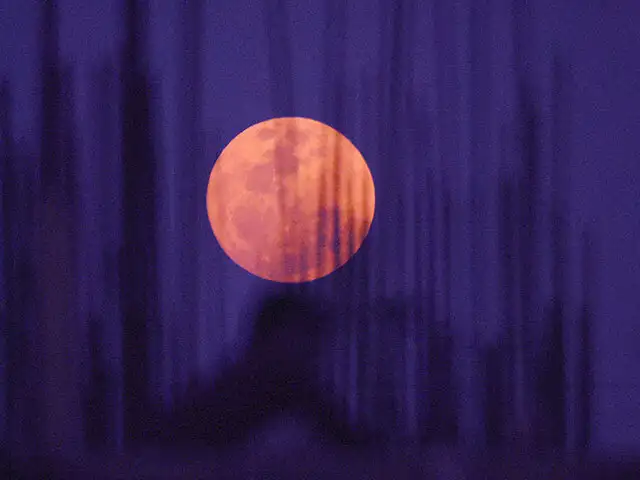
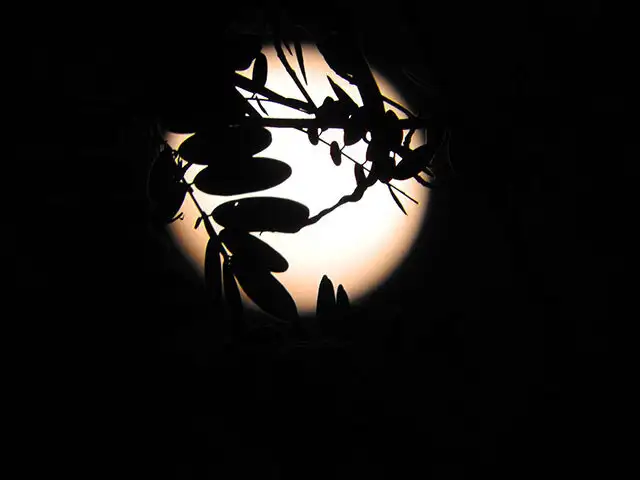
The phenomenon can be observed with the naked eye. Binoculars or a telescope will enhance the viewing experience.

The Economic Times Business News App for the Latest News in Business, Sensex, Stock Market Updates & More.
The Economic Times News App for Quarterly Results, Latest News in ITR, Business, Share Market, Live Sensex News & More.
Related Articles
 Whatever it takes: Leaving nothing to chance, India delay practice due to a lunar eclipse ahead of Thursday’s semi-final against England2026-03-03T19:26:33Z
- What to Do During a Lunar Eclipse: 5 Astrology-Based Remedies That Work2026-03-03T13:05:07Z
- Blood Moon March 3 Horoscope: Which zodiac signs will be blessed with wealth and good fortune during total Lunar Eclipse2026-03-03T09:42:19Z


