ISRO working to have critical technologies for human space mission
A S Kirankumar said ISRO was currently working on an environmentally controlled chamber so that the chamber is habitable for human being for long periods.
By PTI | Updated:

AHMEDABAD: ISRO today said that it is working to achieve critical technologies for human space mission.
"We are working for critical technologies for human space programmes. Currently we are working on environmentally controlled chamber so that the chamber is habitable for human being for long period," ISRO Chairman A S Kirankumar said on a question if the space organisation is working for building capsule for human space programme.
"We have make sure that various oxygen level and carbon dioxide level is conducive for human being for weeks together in the capsule. The methods of controlling the environment ensuring that whether inside the capsule is comfortable for astronauts, those experiments are going on," he said.
"When capsule came back from the space it traverse through the atmosphere and outer tiles sustain the enormous heat that is generated. So there are some heat retardant paints which can be useful. Even in case of accidental fire, so these kind of fire retardant paints will be used," he said.
The chairman said ISRO is also providing help in Prime Minister Narendra Modi's ambitious Ganga Mission by providing real-time data on water quality.
"On Clean Ganga Mission we are providing some real-time information layers. Information is being collected through various satellite data and also using satellite data for monitoring quality of water is being done," he said.
The ISRO chief stressed on students learning space sciences through recently launched software FEAST.
"We want students to work in space programme through FEAST (Finite Element Software for Structure Analysis) software. This is part of the the software which was developed by Vikram Sarabhai Space Centre for doing our structure development activities," he said.
"We have certain capabilities of using these softwares for designing structures and various mechanical parts. Now we are making it available, one version is made available free to academic institutions," he said.
He said that ISRO is planning to launch GSLV Mark-II by March next year.
He also said India's indigenous radar system to trace the debris in space has also become operational.
"We have an operation unit called multi-object tracking radar at Sriharikota. This is a fully indigenous design realised through Indian industry and it is operational now. It can simultaneously track more than 10 objects and then point five square metre object at a distance of thousand kms," he said.
Kirankumar said Mangalyaan is incommunicado for some days at present as Mars, Earth and Sun have come in one line but it will start communication in next couple of days.
"Mangalyaan is not communicating with us. So it is on silent mode as far as we are concerned and this situation is likely to be there till 18 or 19th after that just couple of days more. We start expecting it to communicate again," the ISRO chief said.
When asked about Chandrayan-2 and Aditya project (to study Sun's corona), Kirankumar said, "Chandrayan -2 will commence in 2017. While, Aaditya will be about four years from now roughly."
"We have a mission on which we are working on what is called NISAR (Nasa-ISRO Synthetic Aperture Radar) and this is scheduled for 20-21 (the year 2020-21)," Kirankumar said on ISRO's project with NASA.
"One portion of payload will be done by NASA. A part of the payload will be done at Space Application Centre now these payloads will be integrated with the Satellite built at Bangalore then this satellite will be launched by us using GSLV," Kirankumar added.
On India's collaboration with South Korea in space research programmes, he said the deal will be mutually advantageous for both the countries.
"Many times it is not about help its about mutual advantage. Currently they are engaging us with Lunar mission data. They want some information on radius level and also some information on lunar surface," Kirankumar said.
"We are working for critical technologies for human space programmes. Currently we are working on environmentally controlled chamber so that the chamber is habitable for human being for long period," ISRO Chairman A S Kirankumar said on a question if the space organisation is working for building capsule for human space programme.
"We have make sure that various oxygen level and carbon dioxide level is conducive for human being for weeks together in the capsule. The methods of controlling the environment ensuring that whether inside the capsule is comfortable for astronauts, those experiments are going on," he said.
"When capsule came back from the space it traverse through the atmosphere and outer tiles sustain the enormous heat that is generated. So there are some heat retardant paints which can be useful. Even in case of accidental fire, so these kind of fire retardant paints will be used," he said.
The chairman said ISRO is also providing help in Prime Minister Narendra Modi's ambitious Ganga Mission by providing real-time data on water quality.
"On Clean Ganga Mission we are providing some real-time information layers. Information is being collected through various satellite data and also using satellite data for monitoring quality of water is being done," he said.
ADVERTISEMENT
The ISRO chief stressed on students learning space sciences through recently launched software FEAST.
"We want students to work in space programme through FEAST (Finite Element Software for Structure Analysis) software. This is part of the the software which was developed by Vikram Sarabhai Space Centre for doing our structure development activities," he said.
"We have certain capabilities of using these softwares for designing structures and various mechanical parts. Now we are making it available, one version is made available free to academic institutions," he said.
He said that ISRO is planning to launch GSLV Mark-II by March next year.
ADVERTISEMENT
He also said India's indigenous radar system to trace the debris in space has also become operational.
"We have an operation unit called multi-object tracking radar at Sriharikota. This is a fully indigenous design realised through Indian industry and it is operational now. It can simultaneously track more than 10 objects and then point five square metre object at a distance of thousand kms," he said.
ADVERTISEMENT
Kirankumar said Mangalyaan is incommunicado for some days at present as Mars, Earth and Sun have come in one line but it will start communication in next couple of days.
"Mangalyaan is not communicating with us. So it is on silent mode as far as we are concerned and this situation is likely to be there till 18 or 19th after that just couple of days more. We start expecting it to communicate again," the ISRO chief said.
When asked about Chandrayan-2 and Aditya project (to study Sun's corona), Kirankumar said, "Chandrayan -2 will commence in 2017. While, Aaditya will be about four years from now roughly."
"We have a mission on which we are working on what is called NISAR (Nasa-ISRO Synthetic Aperture Radar) and this is scheduled for 20-21 (the year 2020-21)," Kirankumar said on ISRO's project with NASA.
"One portion of payload will be done by NASA. A part of the payload will be done at Space Application Centre now these payloads will be integrated with the Satellite built at Bangalore then this satellite will be launched by us using GSLV," Kirankumar added.
On India's collaboration with South Korea in space research programmes, he said the deal will be mutually advantageous for both the countries.
"Many times it is not about help its about mutual advantage. Currently they are engaging us with Lunar mission data. They want some information on radius level and also some information on lunar surface," Kirankumar said.
Download
The Economic Times Business News App for the Latest News in Business, Sensex, Stock Market Updates & More.
The Economic Times Business News App for the Latest News in Business, Sensex, Stock Market Updates & More.
Download
The Economic Times News App for Quarterly Results, Latest News in ITR, Business, Share Market, Live Sensex News & More.
The Economic Times News App for Quarterly Results, Latest News in ITR, Business, Share Market, Live Sensex News & More.
Related Articles
 IN-SPACe picks Astrobase, SatSure and TM2SPACE for first funding under Technology Adoption Fund2026-06-11T06:25:29Z
- Why is US stock market down today? Dow Jones, S&P 500 and Nasdaq fall as inflation hits three-year high and Iran tensions shake Wall Street - Nvidia, Amazon and technology stocks leading today's decline2026-06-10T15:06:31Z
- Goldman Sachs buys CMR Green Technologies shares on listing day after strong debut2026-06-10T13:52:43Z
Hari Pulakkat, ET Bureau
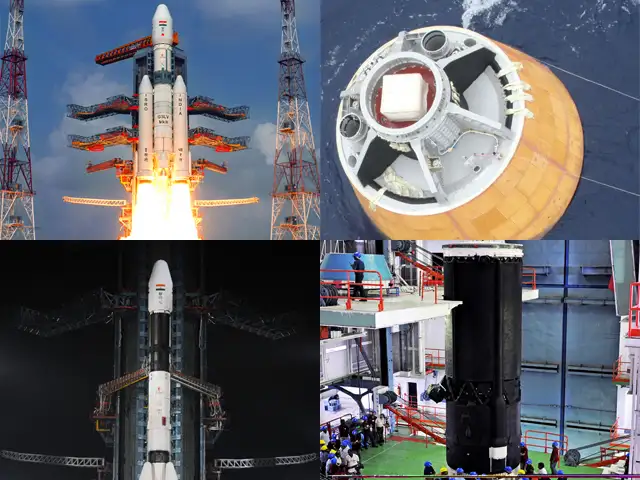
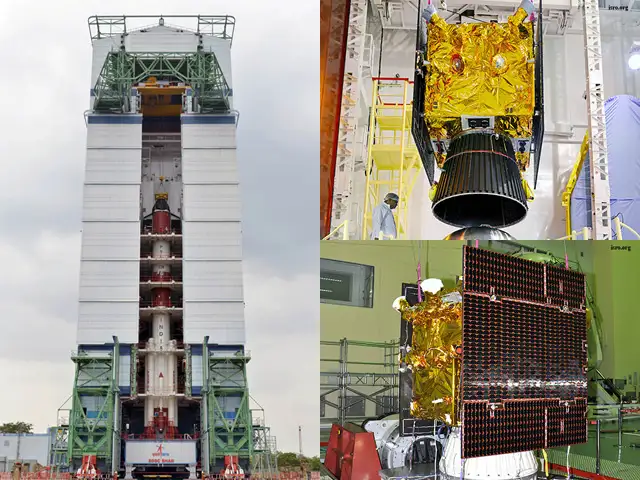
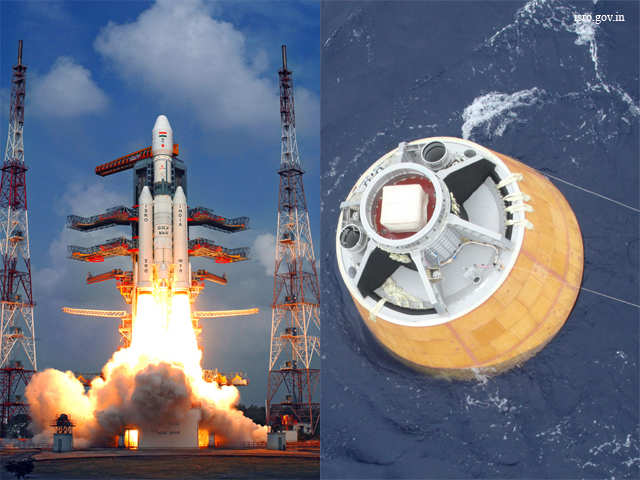
ISRO has its hands full with new projects, some of which pushing up the potential use of space technology significantly. These include new heavy launch vehicles, cryogenic and semi-cryogenic engines, a moon and a solar mission and, if there is enough government support, human space missions as well.
Plus, you have air-breathing and reusable launch vehicles. And the turnaround seems to be complete...
ISRO has its hands full with new projects, some of which pushing up the potential use of space technology significantly. These include new heavy launch vehicles, cryogenic and semi-cryogenic engines, a moon and a solar mission and, if there is enough government support, human space missions as well.
Plus, you have air-breathing and reusable launch vehicles. And the turnaround seems to be complete...

ADVERTISEMENT


