ISRO planning next inter-planetary mission
The ISRO Chairman's response came in reply to a question on media reports about ISRO's next inter-planetary mission to Venus in about two-and-a-half years.
By PTI | Updated:

BENGALURU: After India's much hailed successful missions to the Moon and Mars that boosted its global standing in space, the next inter-planetary expedition to be launched is under discussion, according to ISRO.
"Currently, discussions are going on...on Venus, Mars, any planetary system," Indian Space Research Organisation Chairman A S Kiran Kumar told reporters, adding, an advisory committee headed by renowned space scientist U R Rao was looking into the issue.
Scripting space history, India had on September 24 last year placed its low-cost Mars spacecraft in orbit around the red planet, making it the first country to succeed in the very maiden attempt.
India's first lunar mission, Chandrayaan-1, was launched in 2008 and it helped confirm the existence of water on the Moon. A second lunar exploration mission - Chandrayaan-2, is being planned for launch during the next two to three years.
"We have an advisory committee on Science with Professor U R Rao as the Chairman, so that committee will decide what should be our priority, what planets we should be doing, what science studies we should be doing," Kumar said.
The ISRO Chairman's response came in reply to a question on media reports about ISRO's next inter-planetary mission to Venus in about two-and-a-half years.
Speaking to reporters on the sidelines of World Metrology Day here, he said, "Once they (the committee) come up with a finalised plan, we have to approve that..."
World Metrology Day was today organised here by Metrology Society of India, Southern Region, in association with Central Manufacturing Technology Institute.
Kumar said ISRO was also in the process of indigenously developing atomic clock for its next generation navigation satellites. Currently, it is procuring atomic clocks from Europe.
"Atomic clock gives you accurate frequency and time measurement capability and stability; IRNSS satellites, each of those satellites carry an accurate clock and that clock should have a stability....because using that clock you determine what is the distance between the satellite and the ground receiver...," he said.
"Right now the prototypes are getting developed; we have to make it into qualified version and then flight worthy version. Our next generation navigation satellite will carry our own atomic clock," he added.
"Currently, discussions are going on...on Venus, Mars, any planetary system," Indian Space Research Organisation Chairman A S Kiran Kumar told reporters, adding, an advisory committee headed by renowned space scientist U R Rao was looking into the issue.
Scripting space history, India had on September 24 last year placed its low-cost Mars spacecraft in orbit around the red planet, making it the first country to succeed in the very maiden attempt.
India's first lunar mission, Chandrayaan-1, was launched in 2008 and it helped confirm the existence of water on the Moon. A second lunar exploration mission - Chandrayaan-2, is being planned for launch during the next two to three years.
"We have an advisory committee on Science with Professor U R Rao as the Chairman, so that committee will decide what should be our priority, what planets we should be doing, what science studies we should be doing," Kumar said.
The ISRO Chairman's response came in reply to a question on media reports about ISRO's next inter-planetary mission to Venus in about two-and-a-half years.
ADVERTISEMENT
Speaking to reporters on the sidelines of World Metrology Day here, he said, "Once they (the committee) come up with a finalised plan, we have to approve that..."
World Metrology Day was today organised here by Metrology Society of India, Southern Region, in association with Central Manufacturing Technology Institute.
Kumar said ISRO was also in the process of indigenously developing atomic clock for its next generation navigation satellites. Currently, it is procuring atomic clocks from Europe.
"Atomic clock gives you accurate frequency and time measurement capability and stability; IRNSS satellites, each of those satellites carry an accurate clock and that clock should have a stability....because using that clock you determine what is the distance between the satellite and the ground receiver...," he said.
ADVERTISEMENT
"Right now the prototypes are getting developed; we have to make it into qualified version and then flight worthy version. Our next generation navigation satellite will carry our own atomic clock," he added.
Download
The Economic Times Business News App for the Latest News in Business, Sensex, Stock Market Updates & More.
The Economic Times Business News App for the Latest News in Business, Sensex, Stock Market Updates & More.
Download
The Economic Times News App for Quarterly Results, Latest News in ITR, Business, Share Market, Live Sensex News & More.
The Economic Times News App for Quarterly Results, Latest News in ITR, Business, Share Market, Live Sensex News & More.
Related Articles
 Centre signs agreement with ISRO, rolls out new water research initiatives2026-06-01T08:34:36Z
- ISRO detects possible subsurface ice on moon using Chandrayaan-2 data2026-05-27T15:39:01Z
- ISRO, Roscosmos discuss delivery of semi-cryogenic engines in Moscow; draft contract under approval2026-05-02T07:48:28Z
Hari Pulakkat, ET Bureau
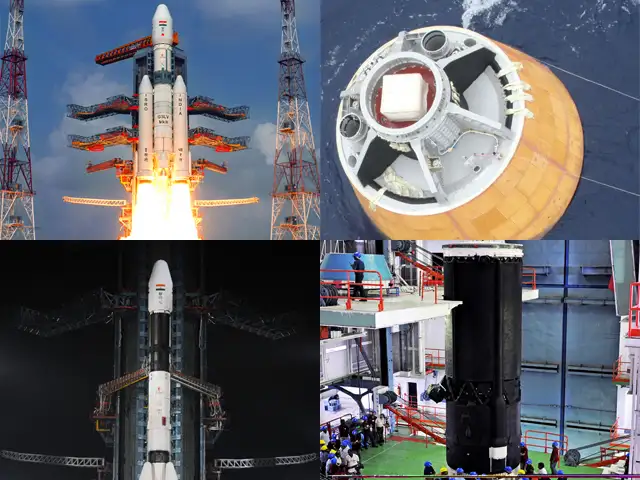
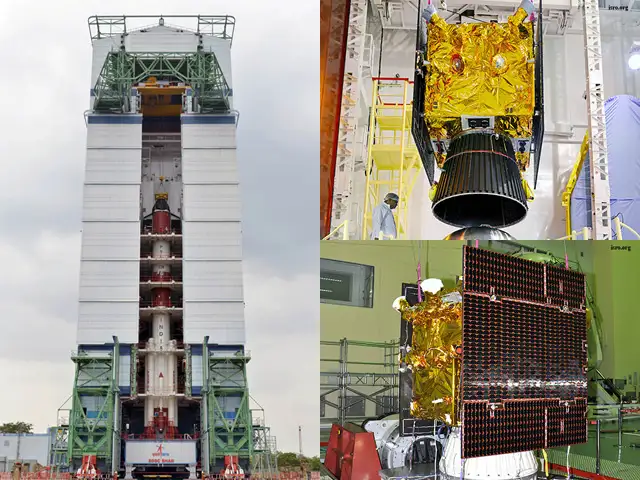
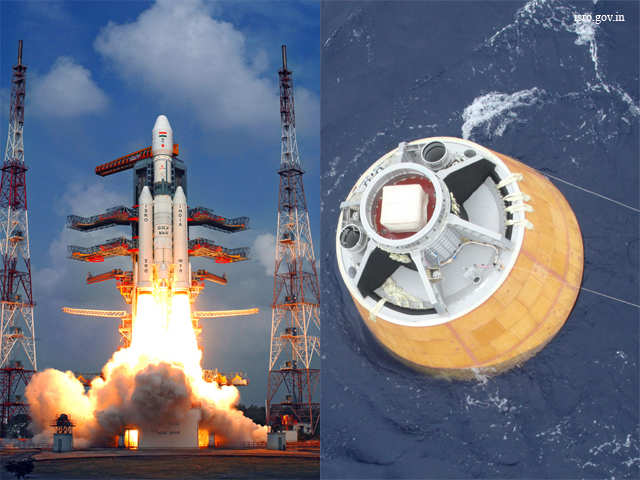
ISRO has its hands full with new projects, some of which pushing up the potential use of space technology significantly. These include new heavy launch vehicles, cryogenic and semi-cryogenic engines, a moon and a solar mission and, if there is enough government support, human space missions as well.
Plus, you have air-breathing and reusable launch vehicles. And the turnaround seems to be complete...
ISRO has its hands full with new projects, some of which pushing up the potential use of space technology significantly. These include new heavy launch vehicles, cryogenic and semi-cryogenic engines, a moon and a solar mission and, if there is enough government support, human space missions as well.
Plus, you have air-breathing and reusable launch vehicles. And the turnaround seems to be complete...

ADVERTISEMENT


