India's Moonshot Successful: Chandrayaan-3 successfully makes soft landing on Moon
India's Chandrayaan-3 spacecraft successfully landed on the Moon on August 23, 2023, making India the fourth nation to achieve a soft lunar landing. The mission comes after an unsuccessful attempt in 2019 and shortly after Russia's own failed Moon...
By ET Online | Updated:
Chandrayaan 3: ISRO makes history with first soft landing on Moon's South Pole
Fulfilling the dream of 140 crore Indians, the Chandrayaan-3 spacecraft on Wednesday touched down on the surface of the Moon after its 41-day odyssey. Chandrayaan-3 is the most ambitious project of Indian Space Research Organisation (ISRO) so far.
With this landing, India has scripted a history and joined the ranks of the United States, China, and the former Soviet Union (now Russia) as the fourth nation to master the technology of soft lunar landing.
While congratulating and addressing the citizens, Prime Minister Narendra Modi said, "India is the first country in the world to reach the lunar south pole."
Following an unsuccessful Indian lunar mission in 2019, this latest endeavor comes merely days after Russia's first Moon mission in nearly half a century tragically ended in a crash within the same lunar region.
Also read: India on Moon: Milestones in Chandrayaan-3's 41-day odyssey
Back in September 2019, India's Prime Minister Narendra Modi was seen hugging and patting K Sivan, the former chief of Indian Space Research Organisation as the scientist could not hold back his tears after the space agency lost contact with Chandrayaan 2 lander ‘Vikram’ just when its descent to the Moon was initiated.
The Prime Minister too was emotional.
However, what was taking birth amid the tears and pin-drop silence in ISRO's controlling room was perhaps the determination to fight back and rise again.
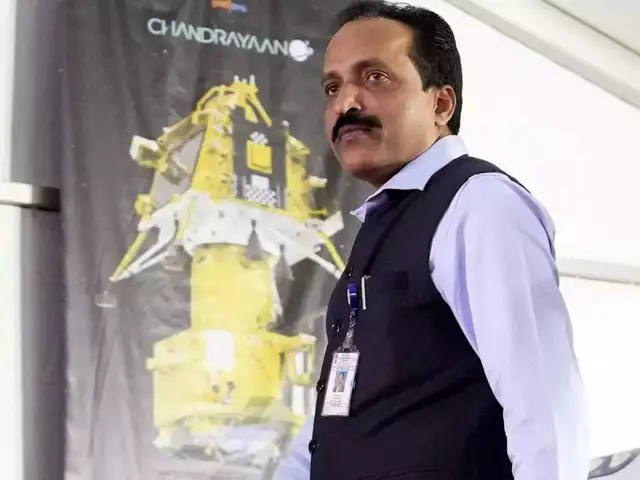
Former head of the Indian space program, K. Sivan, drew encouragement from the latest photos transmitted by the lander, instilling confidence in the successful culmination of the mission's final leg.
"It is giving some encouragement that we will be able to achieve the landing mission without any problem," AFP quoted him as saying.
Launched nearly six weeks back amid the cheers of thousands of spectators, the mission's journey to the Moon substantially contrasts with the swift transits of the Apollo missions in the 1960s and 1970s, which reached their lunar destination within days.
Employing rockets significantly less potent than those utilised by the United States during that era, India's approach involved multiple orbits around Earth to gather momentum before embarking on its month-long trajectory toward the Moon.
'15-mins of terror'
In a crucial technical maneuver which occurred on August 23, the Chandrayaan-3 lander faced a pivotal moment in its mission to achieve a soft lunar landing. During the final 15 minutes of its descent onto the Moon's surface, the lander was under the process of transition from a high-speed horizontal position to a vertical one.
The success of this maneuver was most crucial to determine the mission's outcome. Ex-ISRO chief Sivan had once referred to this phase as "15 minutes of terror."
Also read: Chandrayaan-3 must undergo '15 minutes of terror' for a successful landing. Here's all you need to know about it
Former ISRO chairman G Madhavan Nair on August 21, 2023, had called Chandrayaan-3 mission's planned landing on the Moon a "very complex manoeuvre."
"It's a very complex manoeuvre. We narrowly missed it (soft landing on the Moon in Chandrayaan-2 mission) in the last two kms (above the lunar surface). So there are a host of things that have to work in unison....thrusters, sensors, altimeters, computer software and all those things. Any glitch happening anywhere...we can be in trouble," he further added.
"We have to be really cautious and watch. Of course, I understand that ISRO has done enough simulations and also redundancies have been built in so that chances of such failure are remote. Still, we have to keep our fingers crossed," he had further added.
What next?
After Chandrayaan-3's successful landing, the plan for it is to deploy a rover on the Moon and explore the lunar south pole. The rover will imprint Indian flag and ISRO logo on the lunar regolith (soil) as it rolls. It also has instruments configured with payloads to provide data related to the Moon's surface.
The rover will gather data on elemental composition of the Moon’s atmosphere and send data to the lander. The Lander will then measure near-surface plasma (ions and electrons) density, carry out measurements of thermal properties of the lunar surface, measure seismicity around the landing site and delineate the structure of the lunar crust and mantle.
It will take two weeks for the lander and rover to complete research. As there is no direct communication between the rover and the national space agency, Chandrayaan-2 orbiter can also be used as a contingency communications relay.
With this landing, India has scripted a history and joined the ranks of the United States, China, and the former Soviet Union (now Russia) as the fourth nation to master the technology of soft lunar landing.
While congratulating and addressing the citizens, Prime Minister Narendra Modi said, "India is the first country in the world to reach the lunar south pole."
Following an unsuccessful Indian lunar mission in 2019, this latest endeavor comes merely days after Russia's first Moon mission in nearly half a century tragically ended in a crash within the same lunar region.
Also read: India on Moon: Milestones in Chandrayaan-3's 41-day odyssey
Back in September 2019, India's Prime Minister Narendra Modi was seen hugging and patting K Sivan, the former chief of Indian Space Research Organisation as the scientist could not hold back his tears after the space agency lost contact with Chandrayaan 2 lander ‘Vikram’ just when its descent to the Moon was initiated.
ADVERTISEMENT
The Prime Minister too was emotional.
However, what was taking birth amid the tears and pin-drop silence in ISRO's controlling room was perhaps the determination to fight back and rise again.
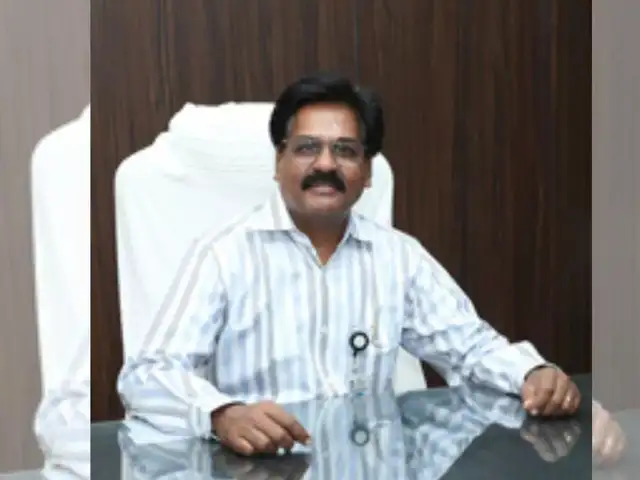
ISRO chief Dr. S. Somanath did his B. Tech in Mechanical Engineering from TKM College of Engineering, Kollam and Masters in Aerospace Engineering from Indian Institute of Science, Bangalore with specialisation in Structures, Dynamics and Control. He joined GSLV MkIII Project during 2003 and was the Deputy Project Director responsible for overall design and integration of India’s heaviest and most powerful rocket. He was the Project Director of GSLV Mk-III (now LVM-3) from June 2010 to 2014. Prior to becoming ISRO Chairman, Somanath headed VSSC as its Director.
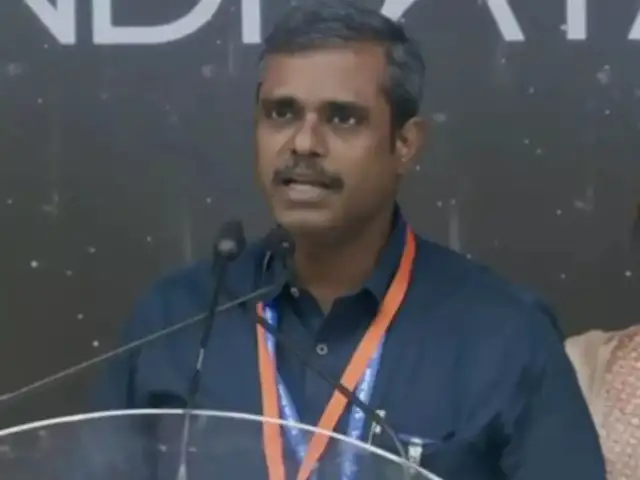
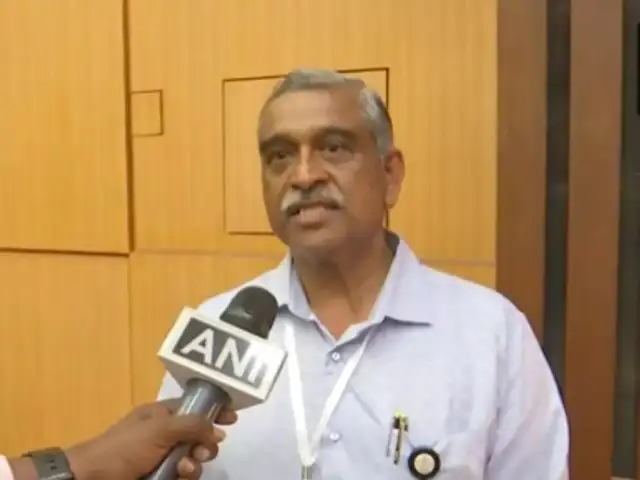
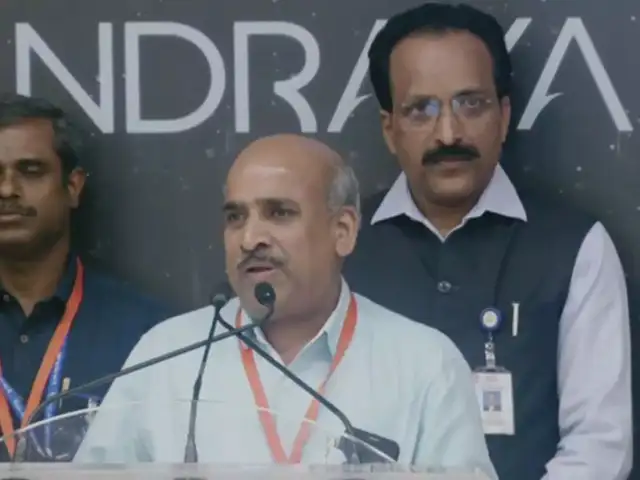

Former head of the Indian space program, K. Sivan, drew encouragement from the latest photos transmitted by the lander, instilling confidence in the successful culmination of the mission's final leg.
ADVERTISEMENT
"It is giving some encouragement that we will be able to achieve the landing mission without any problem," AFP quoted him as saying.
Launched nearly six weeks back amid the cheers of thousands of spectators, the mission's journey to the Moon substantially contrasts with the swift transits of the Apollo missions in the 1960s and 1970s, which reached their lunar destination within days.
ADVERTISEMENT
Employing rockets significantly less potent than those utilised by the United States during that era, India's approach involved multiple orbits around Earth to gather momentum before embarking on its month-long trajectory toward the Moon.
'15-mins of terror'
In a crucial technical maneuver which occurred on August 23, the Chandrayaan-3 lander faced a pivotal moment in its mission to achieve a soft lunar landing. During the final 15 minutes of its descent onto the Moon's surface, the lander was under the process of transition from a high-speed horizontal position to a vertical one.
The success of this maneuver was most crucial to determine the mission's outcome. Ex-ISRO chief Sivan had once referred to this phase as "15 minutes of terror."
Also read: Chandrayaan-3 must undergo '15 minutes of terror' for a successful landing. Here's all you need to know about it
Former ISRO chairman G Madhavan Nair on August 21, 2023, had called Chandrayaan-3 mission's planned landing on the Moon a "very complex manoeuvre."
"It's a very complex manoeuvre. We narrowly missed it (soft landing on the Moon in Chandrayaan-2 mission) in the last two kms (above the lunar surface). So there are a host of things that have to work in unison....thrusters, sensors, altimeters, computer software and all those things. Any glitch happening anywhere...we can be in trouble," he further added.
"We have to be really cautious and watch. Of course, I understand that ISRO has done enough simulations and also redundancies have been built in so that chances of such failure are remote. Still, we have to keep our fingers crossed," he had further added.
What next?
After Chandrayaan-3's successful landing, the plan for it is to deploy a rover on the Moon and explore the lunar south pole. The rover will imprint Indian flag and ISRO logo on the lunar regolith (soil) as it rolls. It also has instruments configured with payloads to provide data related to the Moon's surface.
The rover will gather data on elemental composition of the Moon’s atmosphere and send data to the lander. The Lander will then measure near-surface plasma (ions and electrons) density, carry out measurements of thermal properties of the lunar surface, measure seismicity around the landing site and delineate the structure of the lunar crust and mantle.
It will take two weeks for the lander and rover to complete research. As there is no direct communication between the rover and the national space agency, Chandrayaan-2 orbiter can also be used as a contingency communications relay.
Download
The Economic Times Business News App for the Latest News in Business, Sensex, Stock Market Updates & More.
The Economic Times Business News App for the Latest News in Business, Sensex, Stock Market Updates & More.
Download
The Economic Times News App for Quarterly Results, Latest News in ITR, Business, Share Market, Live Sensex News & More.
The Economic Times News App for Quarterly Results, Latest News in ITR, Business, Share Market, Live Sensex News & More.
ADVERTISEMENT


