How ISRO is safeguarding India’s space assets in orbit
Though ISRO's main objective is to make satellites functional once placed in orbit, protecting them from space debris is also the top priority of the agency.
By Surendra Singh, TNN | Updated:

NEW DELHI: With Indian Space Research Organisation ( Isro) set to launch another bunch of satellites — Cartosat along with 30 nano satellites — from the Sriharikota launchpad on Friday, the number of spacecraft missions launched by the space agency till now will go up to 90. However, not all these spacecrafts are operational now but are still in space.
Though Isro's main objective is to make satellites functional once placed in orbit, protecting them from space debris is also the top priority of the agency.
Space debris is the collection of defunct man-made objects in space — old satellites, spent rocket stages and fragments from disintegration and collisions.
These space debris can really be dangerous as they travel at a speed of up to 30,000 km an hour, which turns even tiny pieces of junk into deadly shrapnel that can damage satellites, space shuttles and even space stations.
However, Isro relies on a slew of methods to safeguard its assets in space. The agency is a member of Inter-Agency Space Debris Coordination Committee (IADC), which makes global efforts to reduce man-made and natural space debris. The primary objective of IADC is to exchange information on space debris among member space agencies, to facilitate opportunities for cooperation in space debris research and identify debris mitigation options.
Tapan Misra, director of Ahmedabad-based Space Applications Centre (SAC), said, "IADC alerts a respective space agency when any satellite of that space agency is in danger due to space debris."
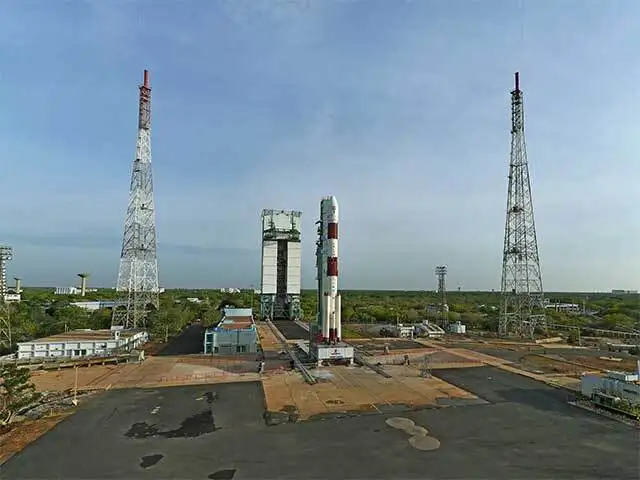
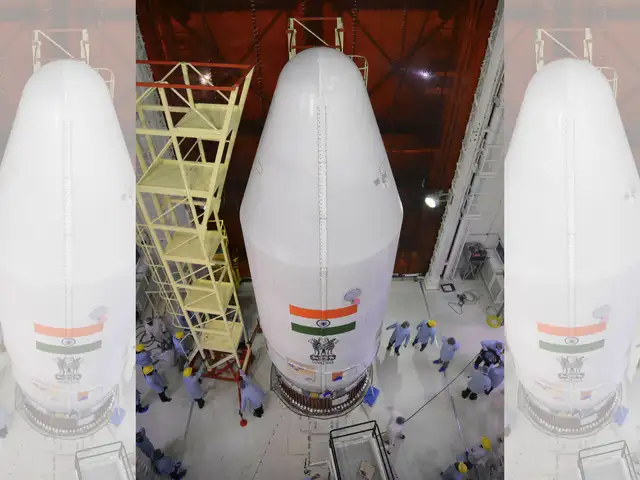
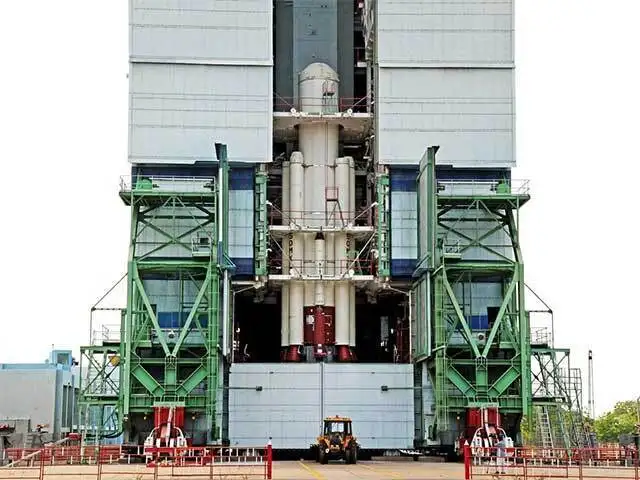
The space agency is also making efforts to reduce space debris by going for mass satellite launches. After the successful launch of a record 104 satellites in one go on February 15, Isro is gearing up to launch 31 satellites, all packed in PSLV-C38, from Sriharikota on Friday.
The SAC director said, "With use of one rocket for multiple satellites, Isro is actually helping reduce space debris", as each rocket spent in space adds to space junk.
Explaining the process of rockets becoming space debris, Dr K Sivan, director of Thiruvananthapuram-based Vikram Sarabhai Space Centre, said, "The fourth stage of rocket once launches a satellite into its respective orbit becomes useless. This fourth stage, which contains some propellant, could be dangerous as it could explode and add to space debris. But we ensure this stage doesn't explode as we have fitted a mechanism whereby this stage automatically deactivates and de-pressurises itself after it places a satellite in its orbit and completes its mission."
Isro has been tracking its spacecrafts 24x7 to eliminate the danger of space debris hitting them.

Though Isro's main objective is to make satellites functional once placed in orbit, protecting them from space debris is also the top priority of the agency.
Space debris is the collection of defunct man-made objects in space — old satellites, spent rocket stages and fragments from disintegration and collisions.
These space debris can really be dangerous as they travel at a speed of up to 30,000 km an hour, which turns even tiny pieces of junk into deadly shrapnel that can damage satellites, space shuttles and even space stations.
However, Isro relies on a slew of methods to safeguard its assets in space. The agency is a member of Inter-Agency Space Debris Coordination Committee (IADC), which makes global efforts to reduce man-made and natural space debris. The primary objective of IADC is to exchange information on space debris among member space agencies, to facilitate opportunities for cooperation in space debris research and identify debris mitigation options.
Tapan Misra, director of Ahmedabad-based Space Applications Centre (SAC), said, "IADC alerts a respective space agency when any satellite of that space agency is in danger due to space debris."
ADVERTISEMENT
Isro also banks on its sophisticated Multi-Object Tracking Radar (MOTR), operational since 2015, to track space debris. Tapan Misra said, "The state-of-the-art radar, developed at our centre, can track 10 objects simultaneously of size 30cm by 30cm at a distance of 800km. In case of objects of 50cm by 50cm size, the radar can track at a range of 1,000km."The space agency is also making efforts to reduce space debris by going for mass satellite launches. After the successful launch of a record 104 satellites in one go on February 15, Isro is gearing up to launch 31 satellites, all packed in PSLV-C38, from Sriharikota on Friday.
The SAC director said, "With use of one rocket for multiple satellites, Isro is actually helping reduce space debris", as each rocket spent in space adds to space junk.
Explaining the process of rockets becoming space debris, Dr K Sivan, director of Thiruvananthapuram-based Vikram Sarabhai Space Centre, said, "The fourth stage of rocket once launches a satellite into its respective orbit becomes useless. This fourth stage, which contains some propellant, could be dangerous as it could explode and add to space debris. But we ensure this stage doesn't explode as we have fitted a mechanism whereby this stage automatically deactivates and de-pressurises itself after it places a satellite in its orbit and completes its mission."
ADVERTISEMENT
As of July 5, 2016, the United States Strategic Command had tracked a total of 17,852 artificial objects in orbit, including 1,419 operational satellites. As of July 2013, over 170 million debris smaller than 1 cm, about 670,000 debris 1-10 cm, and around 29,000 larger debris were estimated to be in orbit.Isro has been tracking its spacecrafts 24x7 to eliminate the danger of space debris hitting them.
ADVERTISEMENT
Download
The Economic Times Business News App for the Latest News in Business, Sensex, Stock Market Updates & More.
The Economic Times Business News App for the Latest News in Business, Sensex, Stock Market Updates & More.
Download
The Economic Times News App for Quarterly Results, Latest News in ITR, Business, Share Market, Live Sensex News & More.
The Economic Times News App for Quarterly Results, Latest News in ITR, Business, Share Market, Live Sensex News & More.
Related Articles
 Indian armed forces used domestic strategic space assets, foreign commercial satellites for Operation Sindoor: Report2025-05-13T07:10:20Z
- Preparing for future warfare, Indian defence forces looking to expand space assets, manpower2024-12-17T15:15:13Z
- ISRO releases ISSAR 2023 report on vulnerability of space assets to collisions2024-04-29T14:54:59Z
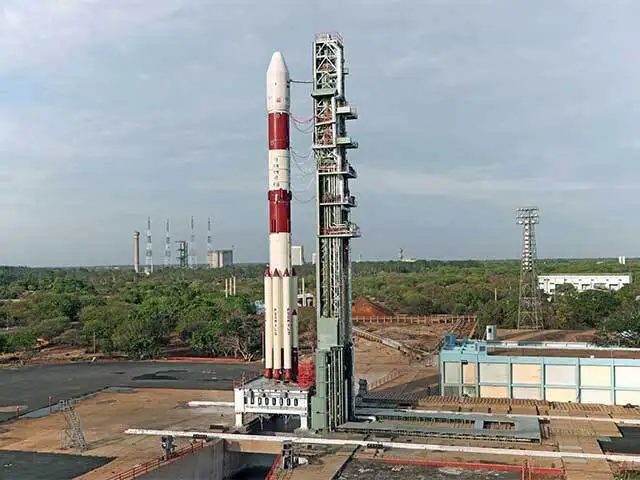
In pic: Fully integrated PSLV-C38
Image: ISRO

ADVERTISEMENT


