GSLV Mk-III: ISRO successfully test flies its heaviest rocket
The 24-and-a-half hour countdown for the GSLV Mk III, also carrying the CARE, began at the Satish Dhawan Space Centre at Sriharikota yesterday.
By ET Bureau & Agencies |

NEW DELHI: In yet another flawless operation, the Indian Space Research Organisation (ISRO) on Thursday demonstrated its growing technical prowess by conducting a textbook launch of a completely new vehicle. The rocket was the experimental Geostationary Launch Vehicle (GSLV) Mark III, the heavy lifter ISRO is developing to put 4-tonne class satellites into geostationary orbit.
The first two stages of the rocket were tested on Thursday, and it also tested a crew module that splashed down near the Andaman islands. The GSLV Mark III has been under development for the last 10 years. Its first two stages were completely new, and its path through the atmosphere was the most critical part of the mission. The recovery of the crew module was yet another key experiment, as it was being prepared to launch humans into space.
“The precision of the vehicle as well as the crew module splash down was excellent,” said ISRO chairman K Radhakrishnan. The first two stages consisted of two powerful solid motors and a liquid engine.
The solid motors are the most powerful ISRO has developed, and are the third most powerful in the world. The liquid engine ignited while the solid motors were still functioning. The strap-ons were separated through a new and complex mechanism — consisting of 18 motors — that ISRO developed and tested for the first time. GSLV Mark III flew with a passive upper stage. ISRO is developing a powerful cryogenic engine for this vehicle, and its officials expect the full GSLV Mark III to be ready in two years. It would then give ISRO the capability to launch all kinds of satellites into geostationary orbit. Future versions of the GSLV Mark III can also launch a human crew module into earth orbit and beyond if required.
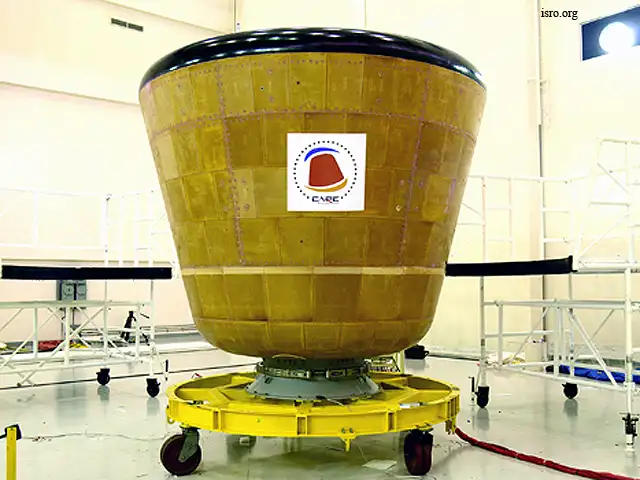
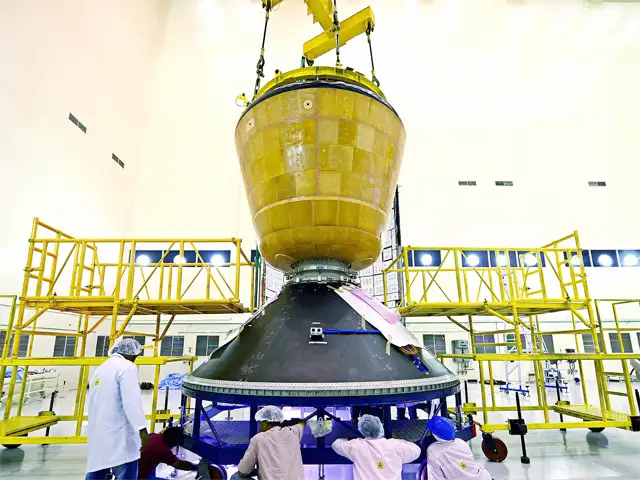
The 3,775 kg Crew Module Atmospheric Re-entry Experiment (CARE) separated from the upper stage of GSLV Mark-III at a height of 126 km. It re-entered the atmosphere and landed in the Bay of Bengal with the help of its parachutes about 20 minutes 43 seconds after lift-off. It was collected by ships and will reach Ennore port within two to three days, and will then be the taken to ISRO and analysed. All current data indicates that it performed exactly according to expectations.
It slowed as expected and seems to have withstood the rigours of re-entry well. ISRO has got the first set of pictures as well. “From the pictures it looks like the thermal protection worked well,” said S Unnikrishnan Nair, project director, human space programme. “There was no charring on the surface.”
Former ISRO chairman K Kasturirangan, who was present at the Mission Control Centre, said, “It is a proud moment. I really came to see the launch. A lot of engineers have really worked extremely hard for this. More than 10 years of hard work has gone behind this success today.”
Though it would take at least 10 years for India to send humans into space, this experiment has helped the space agency to test the module for safe return of humans from space, according to ISRO.
The Indian government has not approved any human mission to space so far. While the heavy duty cryogenic engine is still under development in one of the ISRO labs at Mahendragiri in Tamil Nadu, this attempt was to primarily study the atmospheric performance of this rocket in the first two stages. Once ISRO masters its GSLV Mark III, the country can save a massive amount of foreign exchange it is now spending to launch its heavy communication satellites through other space agencies overseas.
The vehicle will also help India earn considerable foreign exchange by sending into orbit heavy satellites for other countries.
The first two stages of the rocket were tested on Thursday, and it also tested a crew module that splashed down near the Andaman islands. The GSLV Mark III has been under development for the last 10 years. Its first two stages were completely new, and its path through the atmosphere was the most critical part of the mission. The recovery of the crew module was yet another key experiment, as it was being prepared to launch humans into space.
“The precision of the vehicle as well as the crew module splash down was excellent,” said ISRO chairman K Radhakrishnan. The first two stages consisted of two powerful solid motors and a liquid engine.
The solid motors are the most powerful ISRO has developed, and are the third most powerful in the world. The liquid engine ignited while the solid motors were still functioning. The strap-ons were separated through a new and complex mechanism — consisting of 18 motors — that ISRO developed and tested for the first time. GSLV Mark III flew with a passive upper stage. ISRO is developing a powerful cryogenic engine for this vehicle, and its officials expect the full GSLV Mark III to be ready in two years. It would then give ISRO the capability to launch all kinds of satellites into geostationary orbit. Future versions of the GSLV Mark III can also launch a human crew module into earth orbit and beyond if required.
The 3,775 kg Crew Module Atmospheric Re-entry Experiment (CARE) separated from the upper stage of GSLV Mark-III at a height of 126 km. It re-entered the atmosphere and landed in the Bay of Bengal with the help of its parachutes about 20 minutes 43 seconds after lift-off. It was collected by ships and will reach Ennore port within two to three days, and will then be the taken to ISRO and analysed. All current data indicates that it performed exactly according to expectations.
It slowed as expected and seems to have withstood the rigours of re-entry well. ISRO has got the first set of pictures as well. “From the pictures it looks like the thermal protection worked well,” said S Unnikrishnan Nair, project director, human space programme. “There was no charring on the surface.”
ADVERTISEMENT
Former ISRO chairman K Kasturirangan, who was present at the Mission Control Centre, said, “It is a proud moment. I really came to see the launch. A lot of engineers have really worked extremely hard for this. More than 10 years of hard work has gone behind this success today.”
Though it would take at least 10 years for India to send humans into space, this experiment has helped the space agency to test the module for safe return of humans from space, according to ISRO.
The Indian government has not approved any human mission to space so far. While the heavy duty cryogenic engine is still under development in one of the ISRO labs at Mahendragiri in Tamil Nadu, this attempt was to primarily study the atmospheric performance of this rocket in the first two stages. Once ISRO masters its GSLV Mark III, the country can save a massive amount of foreign exchange it is now spending to launch its heavy communication satellites through other space agencies overseas.
The vehicle will also help India earn considerable foreign exchange by sending into orbit heavy satellites for other countries.
ADVERTISEMENT
Download
The Economic Times Business News App for the Latest News in Business, Sensex, Stock Market Updates & More.
The Economic Times Business News App for the Latest News in Business, Sensex, Stock Market Updates & More.
Download
The Economic Times News App for Quarterly Results, Latest News in ITR, Business, Share Market, Live Sensex News & More.
The Economic Times News App for Quarterly Results, Latest News in ITR, Business, Share Market, Live Sensex News & More.
Related Articles
 Centre signs agreement with ISRO, rolls out new water research initiatives2026-06-01T08:34:36Z
- ISRO detects possible subsurface ice on moon using Chandrayaan-2 data2026-05-27T15:39:01Z
- ISRO, Roscosmos discuss delivery of semi-cryogenic engines in Moscow; draft contract under approval2026-05-02T07:48:28Z
Text: PTI
Taking its baby steps towards realising India's ambition to send humans into space, ISRO has successfully tested the atmospheric re-entry of a crew module after its heaviest launch vehicle GSLV Mk-III blasted off from Sriharikota.
We take a look at some important facts about ISRO's experiment:
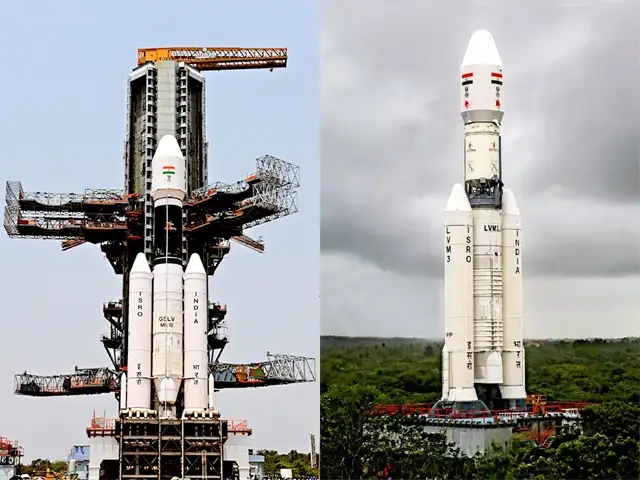
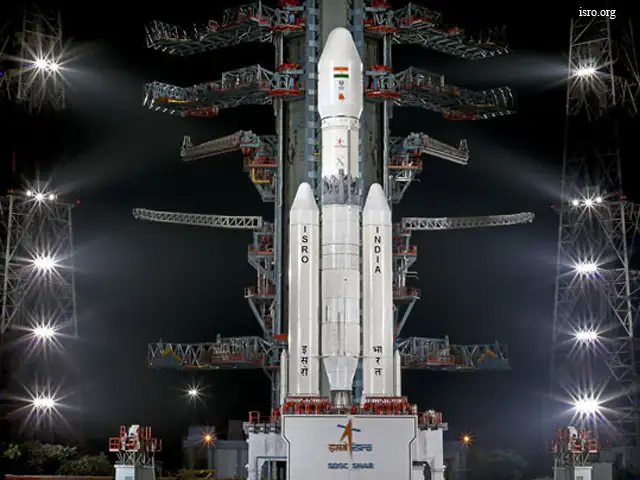
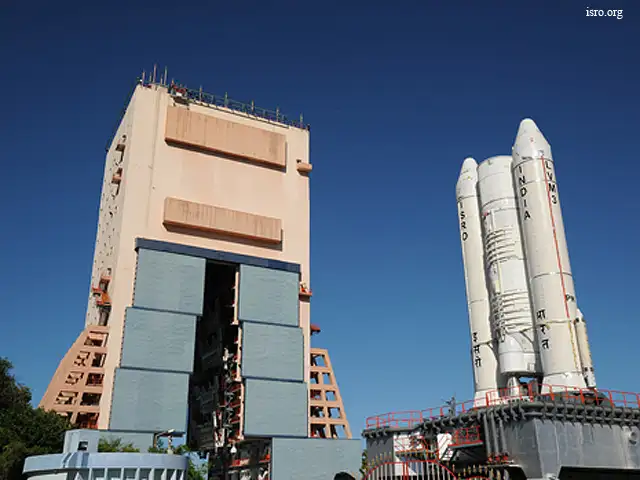
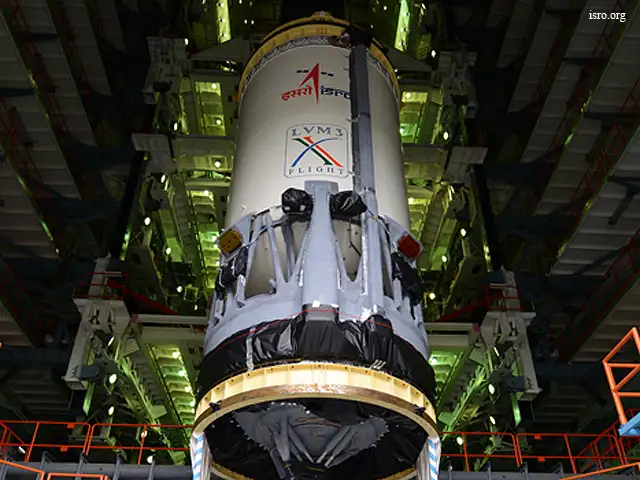
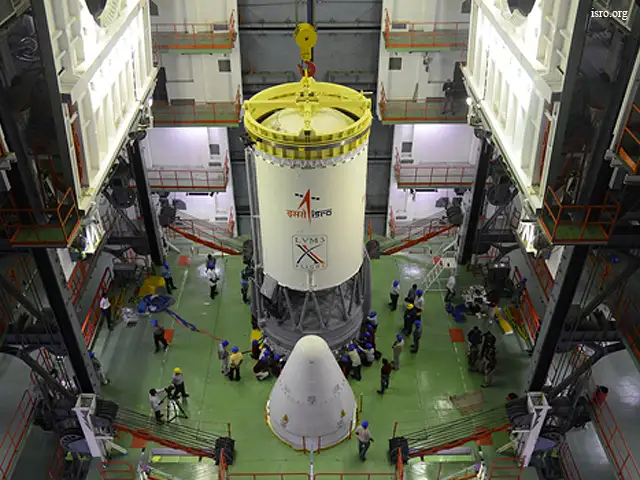
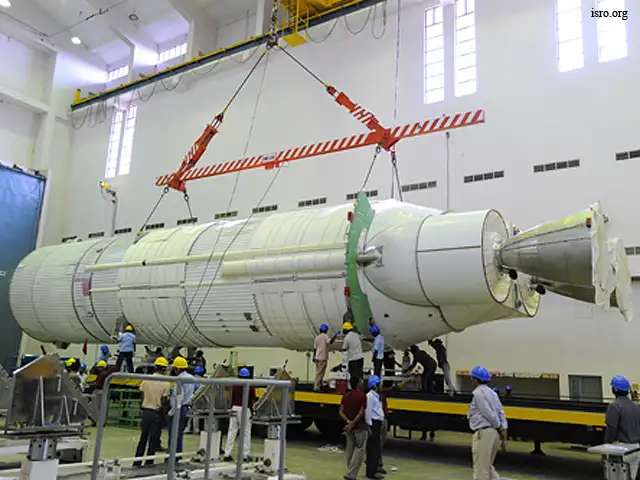
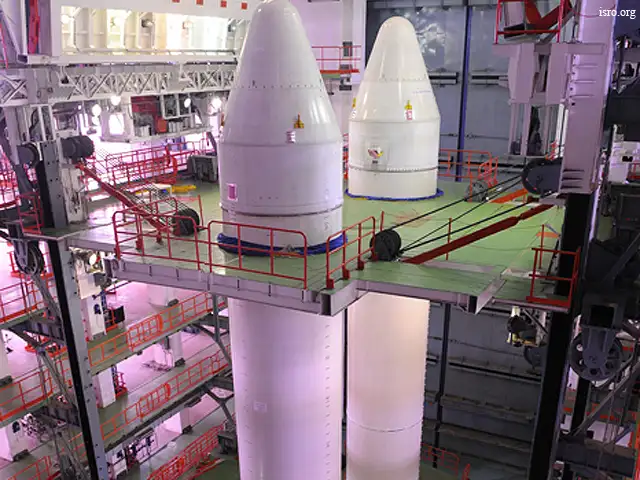
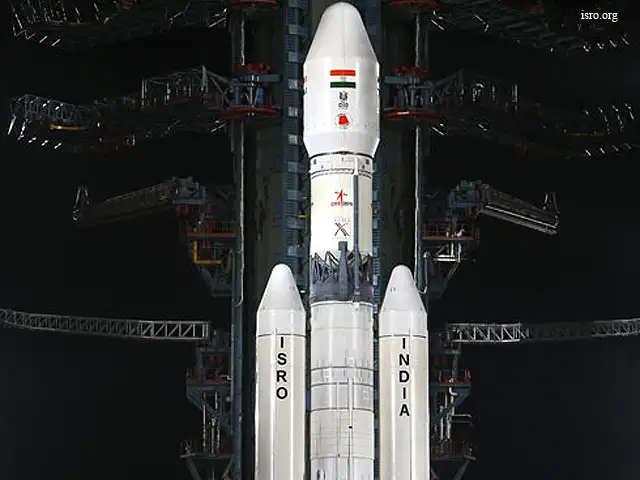
In pic: ISRO's most powerful launcher ever, GSLV Mk-III being rolled out from the Vehicle Assembly Building to the launch pad for its Experimental Flight.
Taking its baby steps towards realising India's ambition to send humans into space, ISRO has successfully tested the atmospheric re-entry of a crew module after its heaviest launch vehicle GSLV Mk-III blasted off from Sriharikota.
We take a look at some important facts about ISRO's experiment:
In pic: ISRO's most powerful launcher ever, GSLV Mk-III being rolled out from the Vehicle Assembly Building to the launch pad for its Experimental Flight.

ADVERTISEMENT


