Chandrayaan - 3: Here's why ISRO's lunar ambitions are critical for Indian economy

India will attempt a Moon landing this week, with its Chandrayaan-3 mission. This third mission from the Indian Space Research Organisation aims to become the first to conclusively discover evidence of water on the Moon, as well as explore the lun...

More than national pride will be on the line when India undertakes its second attempt to land on the Moon later this week.

On August 23, India's Chandrayaan-3 will attempt to land on the Moon - an event with the potential to unlock real economic benefits.

Chandrayaan-3 is the third lunar exploration mission by the Indian Space Research Organisation and if it's successful, India will become the fourth country after the United States, the former Soviet Union (now Russia) and China to achieve a soft landing on the lunar surface.


Crash landings - like what happened with Chandrayaan-2 - don't count.

After Chandrayaan-3 lands, the plan is for it to then deploy a rover on the Moon and explore the lunar south pole.

But it's not just national pride on the line for this spacefaring nation: the success of Chandrayaan-3 could have a very real impact on India's economy.
ADVERTISEMENT

The world has already seen everyday benefits from previous space efforts like accessibility to clean drinking water with water recycling on the International Space Station, near-global internet access provided by Starlink for education, advances in solar power generation and health technologies.

With an increasing demand for global data of satellite imaging, positioning and navigation, multiple reports indicate the world is already in an exponential growth phase of the space economy.

A report by Deloitte highlights how since 2013, over USD 272 billion has been raised by private equity into 1,791 companies.

In their annual report, the Space Foundation noted the global space economy has already reached a value of USD 546 billion in the second quarter of 2023. This represents a 91 percent increase in value over the past decade.
ADVERTISEMENT

For many countries, participating in the nascent space economy has the potential to have huge downstream benefits for their own economies, as well as inspiring their citizens to engage in the new space age.

India's space economy is expected to be worth USD 13 billion by 2025.
ADVERTISEMENT

By comparison, the Australian Civil Space Strategy 2019-2028 aims to triple the sector's contribution to GDP to AUD 12 billion and create an additional 20,000 jobs by 2030.

A successful Moon landing will also speak to India's technological prowess.
To Sun and the Stars: Upcoming missions of ISRO
1/6

As per ISRO's websote, Aditya L1 will be the first space based Indian mission to study the Sun, where the placed in a halo orbit around the Lagrange point 1 (L1) of the Sun-Earth system, which is about 1.5 million km from the Earth. A satellite placed in the halo orbit around the L1 point has the major advantage of continuously viewing the Sun without any occultation/ eclipse. This will provide a greater advantage of observing the solar activities continuously. The launch is scheduled for August 26.
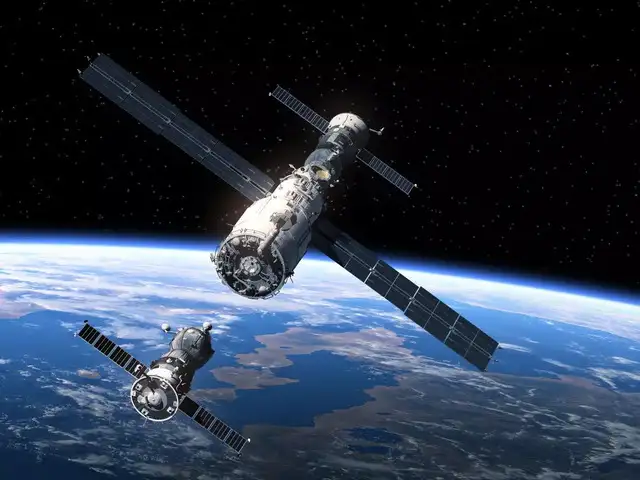
As per ISRO's websote, Aditya L1 will be the first space based Indian mission to study the Sun, where the placed in a halo orbit around the Lagrange point 1 (L1) of the Sun-Earth system, which is abo..
Read More

A collaboration between ISRO and NASA, the NISAR mission is scheduled for January 2024. NISAR is a low-earth orbit observatory mission, which will map the earth once every 12 days. With an estimated project cost of $1.5 billion, the mission will provide data for "understanding changes in Earth’s ecosystems, ice mass, vegetation biomass, sea level rise, ground water and natural hazards including earthquakes, tsunamis, volcanoes and landslides."

A collaboration between ISRO and NASA, the NISAR mission is scheduled for January 2024. NISAR is a low-earth orbit observatory mission, which will map the earth once every 12 days. With an estimated ..
Read More

A short form of space docking experiment, the Spadex project of ISRO is a twin spacecraft mission to mature technologies related to orbital rendezvous, docking, formation flying, with scope of applications in human spaceflight, in-space satellite servicing and other proximity operations. The mission cost is projected at Rs 124.47 crore. The launch is scheduled for the third quarter of 2024.

A short form of space docking experiment, the Spadex project of ISRO is a twin spacecraft mission to mature technologies related to orbital rendezvous, docking, formation flying, with scope of applic..
Read More

The second mission to Mars, Mangalyaan 2, also called the Mars Orbiter Mission 2, will be an inter-planetary mission by ISRO with a planned launch date in 2024. The spacecraft will carry "a hyperspectral camera, a high resolution panchromatic camera and a radar to understand early Martian crust, recent basalts and boulder falls."

The second mission to Mars, Mangalyaan 2, also called the Mars Orbiter Mission 2, will be an inter-planetary mission by ISRO with a planned launch date in 2024. The spacecraft will carry "a hyperspec..
Read More

Gaganyaan project envisages demonstration of human spaceflight capability by launching crew of 3 members to an orbit of 400 km for a 3 days mission and bring them back safely to earth, by landing in Indian sea waters. Gaganyaan 3 would be India's first human space mission. This mission is scheduled for a 2024 launch.

Gaganyaan project envisages demonstration of human spaceflight capability by launching crew of 3 members to an orbit of 400 km for a 3 days mission and bring them back safely to earth, by landing in ..
Read More

Shukrayaan is a planned orbiter to Venus to study the surface and atmosphere of the planet. It has a projected launch date of 2024-end. ISRO is also working on its very own space tourism project, where one can explore the space by purchasing a single ticket worth Rs 6 crore. The project is estimated to open by 2030.

Shukrayaan is a planned orbiter to Venus to study the surface and atmosphere of the planet. It has a projected launch date of 2024-end. ISRO is also working on its very own space tourism project, whe..
Read More


Although NASA did successfully put humans on the Moon during the Apollo Programme more than 50 years ago, many seem to have forgotten the incremental steps and huge amounts of money it took to get there.

There were also many unknowns, including real worries that the lunar surface was so soft and dusty due to billions of years of meteorite bombardments that spacecraft would sink into the surface like quicksand - a concern that luckily proved unfounded.

But even with 21st century advanced computing and cutting-edge technology, the difficulties of spaceflight remain the same - can your system maintain stable communications and operate autonomously under a wide variety of extreme conditions?

India's first attempt to reach the Moon with Chandrayaan-1 succeeded in almost all of its mission objectives and scientific goals, including detecting evidence of water on the lunar surface for the first time.

But the Indian Space Research Organisation lost contact with the spacecraft after only 312 days of its intended two-year mission.

Nonetheless, Chandrayaan-1 is considered by many to be a phenomenal success, having achieved awards from the National Space Society and the American Institute of Aeronautics and Astronautics.

On September 6, 2019, India again attempted to reach the Moon with the Vikram lander carrying the Pragyan rover as part of the Chandrayaan-2 mission.

However, 2.1km above the lunar surface contact with the lander was lost, and images taken by NASA later confirmed it had crashed into the surface.

Issues associated with onboard coordination of the five engines and orientation of the lander during the camera coast and final braking phase of its descent have been attributed to the spacecraft's failure.

Issues with onboard software and autonomous landing sequences have also resulted in the failure of two other countries' attempts to land on the Moon in the past three years.

On April 11, 2019 the Israeli Beresheet lander attempted a soft landing in the northern part of the Mare Serenitatis, but an Inertial Measurement Unit gyroscope failed during the braking procedure resulting in the loss of communications 2.1km above the surface.

If it had been successful, Beresheet would have been the first successful privately-funded mission and Israel's first mission to the Moon.
All you need to know about Aditya L1, ISRO's mission to Sun
1/5

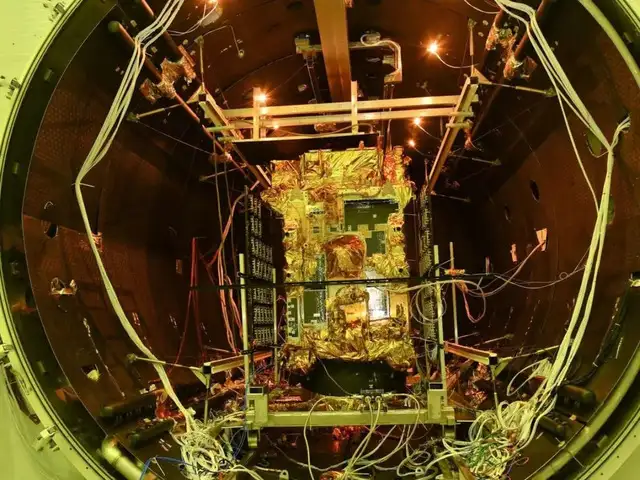
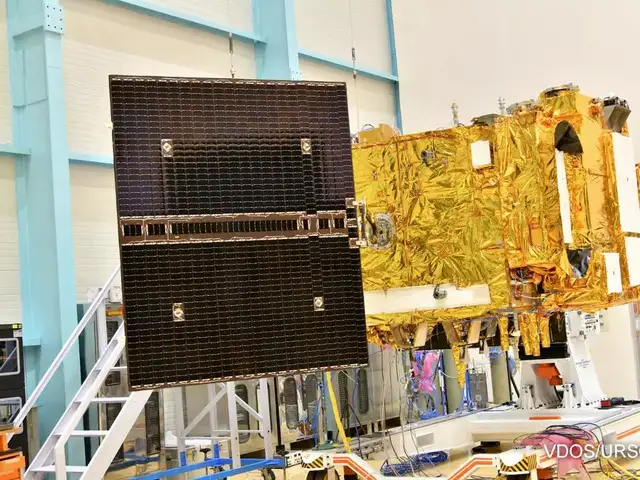
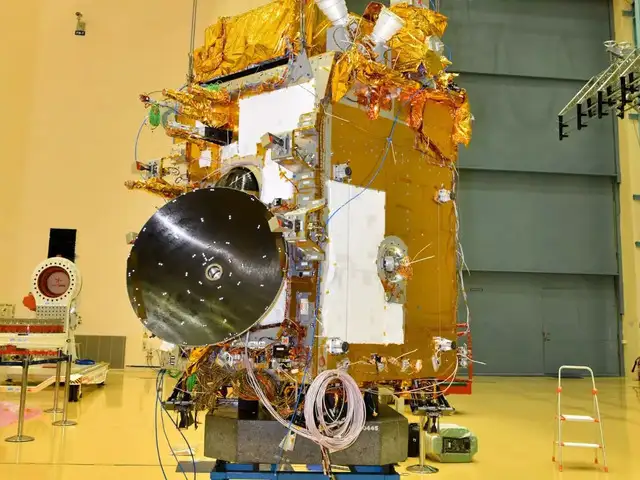
Aditya-L1, the first space-based Indian observatory to study the Sun, is getting ready for its launch soon, ISRO said on Monday. In a tweet with photos, ISRO said, "Aditya-L1, the first space-based Indian observatory to study the Sun, is getting ready for the launch. The satellite realised at the U R Rao Satellite Centre (URSC), Bengaluru has arrived at SDSC-SHAR, Sriharikota."
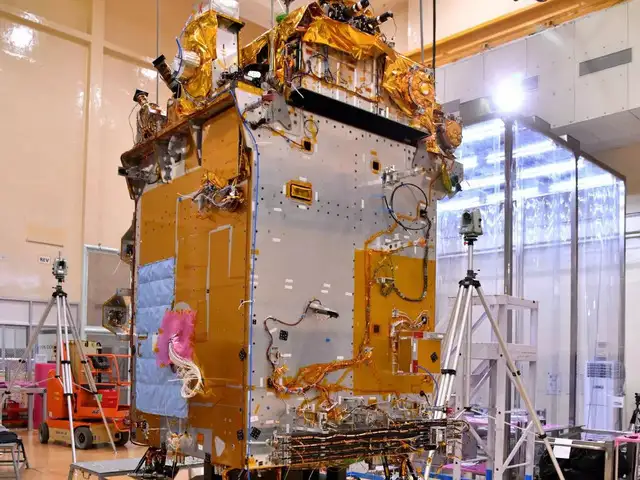
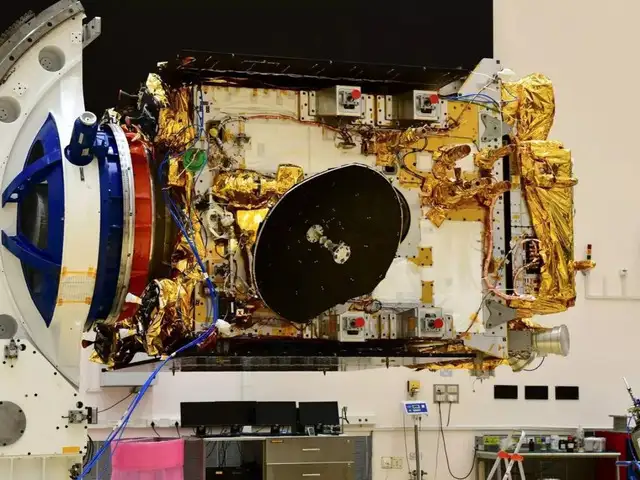
Aditya-L1, the first space-based Indian observatory to study the Sun, is getting ready for its launch soon, ISRO said on Monday. In a tweet with photos, ISRO said, "Aditya-L1, the first space-based I..
Read More

As mentioned before, Aditya L1 will be the first space based Indian mission to study the Sun. "The sun is the nearest star and therefore can be studied in much more detail as compared to other stars. By studying the sun we can learn much more about stars in our Milky Way as well as about stars in various other galaxies," ISRO said on its website.

As mentioned before, Aditya L1 will be the first space based Indian mission to study the Sun. "The sun is the nearest star and therefore can be studied in much more detail as compared to other stars...
Read More

The spacecraft carries seven payloads to observe the photosphere, chromosphere and the outermost layers of the Sun (the corona) using electromagnetic and particle and magnetic field detectors. Using the special vantage point L1, four payloads will directly view the Sun and the remaining three payloads would carry out in-situ studies of particles and fields at the L1, thus providing important scientific studies of the propagatory effect of solar dynamics in the interplanetary medium.

The spacecraft carries seven payloads to observe the photosphere, chromosphere and the outermost layers of the Sun (the corona) using electromagnetic and particle and magnetic field detectors. Using ..
Read More

The major study objectives include:

  • ​Study of Solar upper atmospheric (chromosphere and corona) dynamics.
  • Study of chromospheric and coronal heating, physics of the partially ionized plasma, initiation of the coronal mass ejections, and flares
  • Observe the in-situ particle and plasma environment providing data for the study of particle dynamics from the Sun.
  • Physics of solar corona and its heating mechanism.
  • Diagnostics of the coronal and coronal loops plasma: Temperature, velocity and density.
  • Development, dynamics and origin of CMEs.
  • Identify the sequence of processes that occur at multiple layers (chromosphere, base and extended corona) which eventually leads to solar eruptive events.
  • Drivers for space weather (origin, composition and dynamics of solar wind .


The major study objectives include:​Study of Solar upper atmospheric (chromosphere and corona) dynamics.Study of chromospheric and coronal heating, physics of the partially ionized plasma, initiation..
Read More

"Mostly September first week," an ISRO official told PTI when asked about the date of the launch. The spacecraft is expected to be placed in a halo orbit around the Lagrange point 1 (L1) of the Sun-Earth system, which is about 1.5 million kilometres from the Earth. A satellite placed in the halo orbit around the L1 point has a major advantage of continuously viewing the Sun without any occultation/eclipses, ISRO noted. "This will provide a greater advantage of observing the solar activities and its effect on space weather in real time," it said.

"Mostly September first week," an ISRO official told PTI when asked about the date of the launch. The spacecraft is expected to be placed in a halo orbit around the Lagrange point 1 (L1) of the Sun-E..
Read More


On April 25, 2023, the privately funded Japanese company iSpace attempted a soft landing of their Hakuto-R lander carrying the United Arab Emirates Rashid rover.

Analysis by iSpace engineers later confirmed that the onboard computer was programmed to ignore the laser radar altimeter if it conflicted with the predicted position of the spacecraft.

Due to a last-minute change of the intended landing zone, a sudden change in altitude as the spacecraft crested the lip of a crater was interpreted as a mistake, causing the spacecraft to hover 5km above the lunar surface before it exhausted its fuel and plummeted to the surface.

Together, the failures of Chandrayaan-2, Beresheet and Hakuto-R highlight the difficulties of modern spaceflight and the importance of software redundancy, systems engineering and change management, even in an age of advanced sensing and high processing power.

Taking the lessons learned from Chandrayaan-2, Chandrayaan-3 has several improvements from its predecessor.

The intended landing zone has been increased to an area of 4.2km long and 2.5km wide, meaning the spacecraft has a higher margin of error rather than the risk of choosing a single point and drifting, as occurred with Chandrayaan-2.

Chandrayaan-3 will also have four engines with adjustable throttle and slew (orientation) as well as a Laser Doppler Velocimeter, meaning it can control its attitude and orientation in all phases of descent - unlike Chandrayaan-2.

The Vikram lander is carrying more sensitive versions of instruments already on the lunar surface including a seismometer to detect moonquakes, a Langmuir plasma probe to measure the behaviour of charged particles from the Sun at the lunar surface, and a NASA-contributed retroreflector like the one left by Apollo 11.

A thermal probe will also be inserted 10cm into the ground and provide measurements of the temperature gradient throughout the day, which can improve scientists' knowledge of stability zones for resources like water ice at the poles of the Moon.

The Vikram lander is also carrying a six-wheeled 26kg lunar rover called Pragyan, about the size of a golden retriever.

It is carrying two payloads: an Alpha Particle X-Ray Spectrometer and a Laser Induced Breakdown Spectroscope to measure the composition of lunar rocks and soil.

Although these instruments have previously been used by NASA on several of its Mars rovers as well as by the China National Space Administration on its Yutu rovers on the Moon, Pragyan will explore new regions.

If Chandrayaan-3 is successful, it will highlight how space is becoming more accessible, and demonstrate India's continued perseverance and tenacity in achieving difficult missions.

It also bodes well for India's participation in the new space race to build permanent infrastructure on the Moon. In 2021, China and Russia announced they'll be building a Moon base together and invited others to join their International Lunar Research Station, as an alternative to the American Artemis program. India became a signatory to the Artemis Accords in July 2023.

With each successful mission, humanity's knowledge of the lunar surface and environment continues to grow, meaning the risks associated with getting to, and staying on the Moon are reduced.
Mysteries of the moon that are still waiting to be decoded
1/9

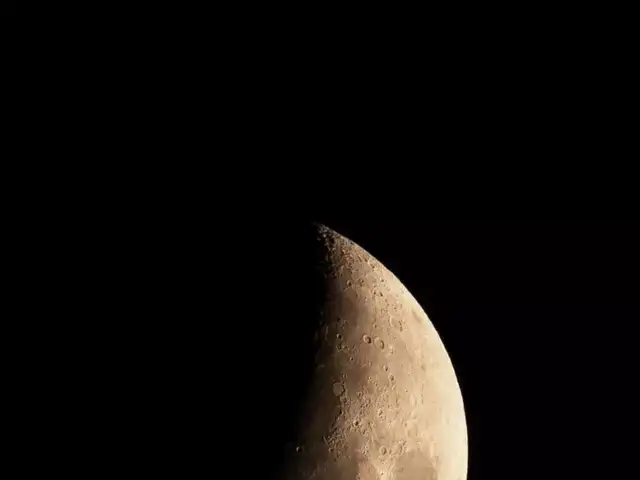
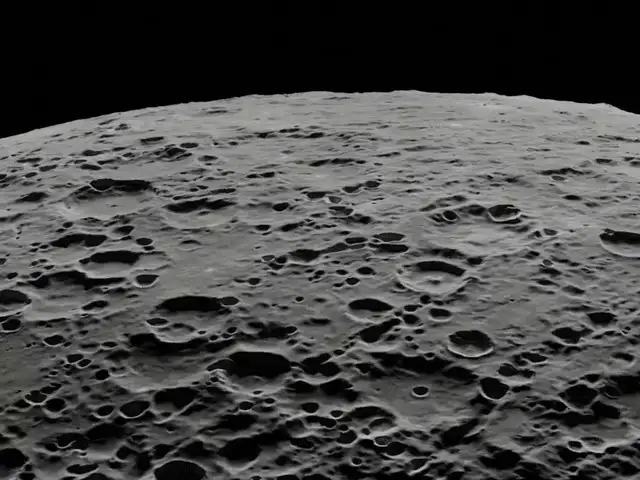
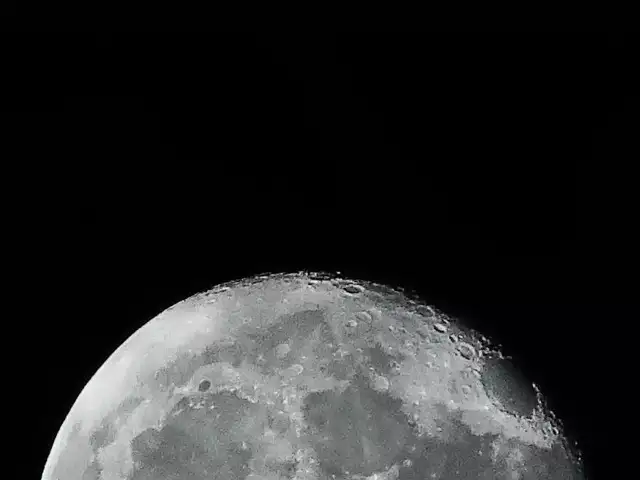
Over the years, numerous missions from earth have been sent to the moon, to study the satellite - the latest being India's Chandrayaan 3 and Russia's Luna 25.

Over the years, numerous missions from earth have been sent to the moon, to study the satellite - the latest being India's Chandrayaan 3 and Russia's Luna 25.

While scientists have found out numerous things about the moon in all these years, a few still remain. Here are some of them

While scientists have found out numerous things about the moon in all these years, a few still remain. Here are some of them

One of the most enigmatic lunar mystery is the moon's origin. The "giant impact hypothesis," suggests that a Mars-sized object crashed into the earth during its early stages, debris of which formed the moon. However, there are other theories too.

One of the most enigmatic lunar mystery is the moon's origin. The "giant impact hypothesis," suggests that a Mars-sized object crashed into the earth during its early stages, debris of which formed t..
Read More

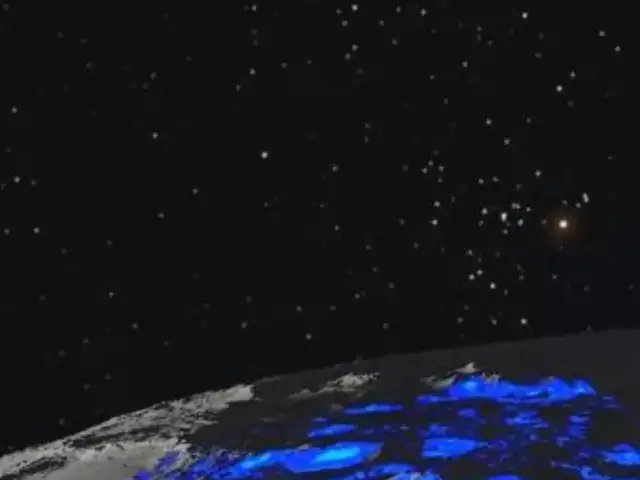
Scientists have made striking discoveries about lunar water reservoirs. But how did it get there? Was it there from the beginning? Understanding this will be a gamechanger. (Image: MIT)

Scientists have made striking discoveries about lunar water reservoirs. But how did it get there? Was it there from the beginning? Understanding this will be a gamechanger. (Image: MIT)

Around 4.5 million years ago, the moon is thought to have had water, heat, and was volcanically active. If these scenarios were true, it may be possible that the moon once had life.

Around 4.5 million years ago, the moon is thought to have had water, heat, and was volcanically active. If these scenarios were true, it may be possible that the moon once had life.

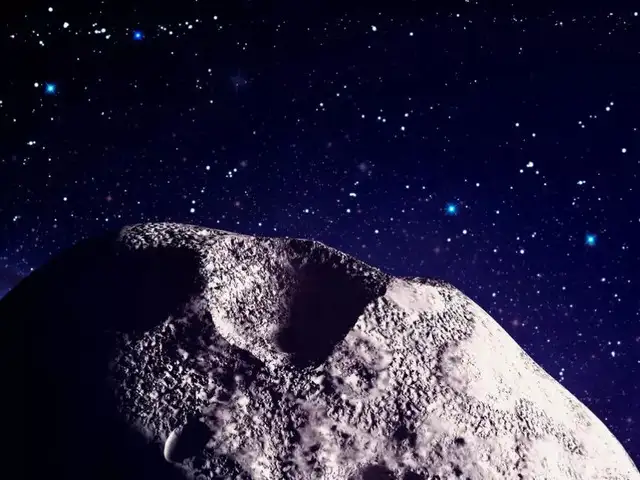
Data from two NASA programs, lRO and GRAIN, suggests that something strange is going on at the Moon's South Pole-Aitken basin, which scientists think is the result of a buried asteroid.

Data from two NASA programs, lRO and GRAIN, suggests that something strange is going on at the Moon's South Pole-Aitken basin, which scientists think is the result of a buried asteroid.

When Apollo astronauts brought back samples from the moon, scientists discovered that some of the moon rocks were magnetic, meaning that the moon may have had a magnetic field. (Image: NASA)

When Apollo astronauts brought back samples from the moon, scientists discovered that some of the moon rocks were magnetic, meaning that the moon may have had a magnetic field. (Image: NASA)

While it is evident that the moon also has moonquakes, the reason behind it is not known yet. (Image: NASA)

While it is evident that the moon also has moonquakes, the reason behind it is not known yet. (Image: NASA)


(The author is from Swinburne University of Technology in Melbourne)
(This article is syndicated by PTI from 360info.org)
Download
The Economic Times Business News App
for the Latest News in Business, Sensex, Stock Market Updates & More.
Download
The Economic Times News App
for Quarterly Results, Latest News in ITR, Business, Share Market, Live Sensex News & More.
READ MORE
ADVERTISEMENT

READ MORE:

LOGIN & CLAIM

50 TIMESPOINTS

More from our Partners

Loading next story
Business News › News › Science › Chandrayaan - 3: Here's why ISRO's lunar ambitions are critical for Indian economy
Text Size:AAA
Success
This article has been saved

*

+