Chandrayaan-2, India's second moon mission launched, to land on lunar soil on September 7
The launch was aborted last Monday, after a pressure drop in one of the tanks in the upper stage of the rocket.
By Bharani Vaitheesvaran, ET Bureau | Updated:
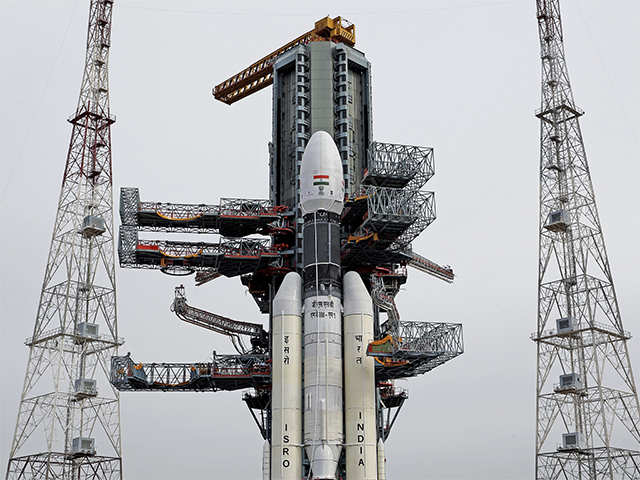
ISRO launches Chandrayaan-2 from Sriharikota
SRIHARIKOTA, ANDHRA PRADESH: India's rocket carrying an orbiter, lander and a rover in a stepped up moon mission to uncover lunar secrets launched into space successfully in its second bid from the Sriharikota launch pad on Monday.
The launch, originally slated for the early hours of last Monday, was aborted after a pressure drop in one of the tanks in the upper stage of the rocket.
The Chandrayaan-2, a Rs 978-crore project, is on course to place the country in a niche league of nations populated by the US, Russia and China that have successfully conducted a moon-landing. Beyond that, the lander will touch in the region of the south pole of the moon, an unexplored territory, according to ISRO.
Track the historic journey here
The target is find more evidence of water, clues about the moon’s evolution and work the natural satellite as a test bed for more space missions concerning the solar system.
Chandrayaan-II will primarily study the elements on the moon, map its topography through high-resolution pictures, study its minerals and most importantly, confirm sub-surface water/ice presence.
“Advanced synthetic aperture radar in Chandrayaan-2 has the ability to look for water—identify the presence of water rise at depths of a few meters: an important input for sustaining a future human presence on the moon,” said P Sreekumar, Director-SSPO, ISRO, in an official video from the space research organisation.
From launch till moon-landing, there will be several spots of complex manoeuvre. From the earth's orbit, it will be tranferred to a lunar trajectory that will sling-shot the spacecraft towards the moon through a series of complex operational changes. Later, thrusters on-board will enable descent of the spacecraft into a lunar orbit; the lander will detach from the orbiter and choose a right spot for landing even as its applies brakes to soften the landing.
The Chandrayaan-II had many risk-intensive areas in its course; its technology and software capabilities are also indigenously developed.
The launch vehicle, the GSLV Mk-3, is the country’s most powerful rocket to date. The 640-tonne rocket, capable of carrying 4-tonne satellites, will place the mooncraft in the Earth Transfer Orbit approximately 16.2 minutes after take-off.
This will be the first operational flight of GSLV-Mk-3.
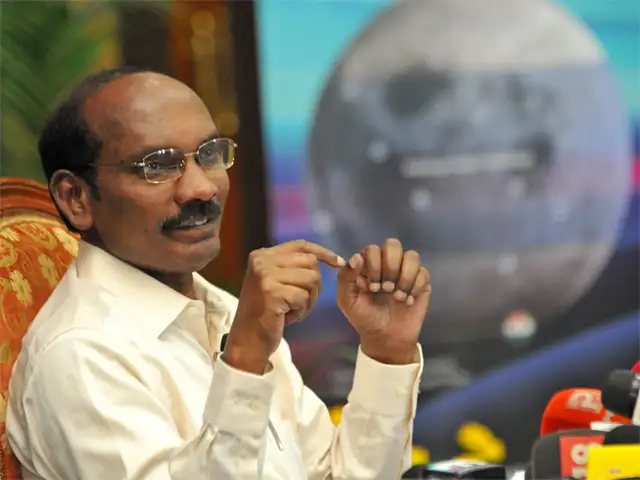
According to ISRO Chief K Sivan, its most crucial moment arrives in a soft-landing on the surface of the moon, a feat few nations have managed so far. The 1.4-tonne Lander, Vikram, will be alive for 14 earth days, or one day in the moon. It can communicate with the orbiter 100 km from the surface of the moon, and ISRO's earth station near Bengaluru.
When Chandrayaan-II soft-lands successfully in early September on the lunar surface, it would 53 years since the first time it was done by a Soviet mission called Luna 9 in January 1966, according to NASA's web site. A soft landing means igniting an engine at the right altitude and angle to the moon to begin a “retrofire,” in order to decelerate the lander upon the moon. Once landed, the rover will roll out and perform experiments.
The orbiter will continue its mission for a year.
For scientists at the ISRO, the seconds before and during the launch of the rocket are full of challenges they have been working for years. India launched its first moon mission in 2008, a 1.3-tonne project launched in October 2008 that orbited the lunar body, equipped with terrain mapping cameras to make remote observations.
The mission, which carried scientific instruments from eleven nations including the US, the UK and Germany, had an impact probe crash on the moon's surface and end prematurely but gave India some clues about water presence on the moon.
The chandrayaan -I programme ended under a year from launch: but left behind a baton for India to take forward. While Chandrayaan-I put India in a space league, its successor has taken the country to frontline of the race in tapping lunar clues for more space missions.
The launch, originally slated for the early hours of last Monday, was aborted after a pressure drop in one of the tanks in the upper stage of the rocket.
The Chandrayaan-2, a Rs 978-crore project, is on course to place the country in a niche league of nations populated by the US, Russia and China that have successfully conducted a moon-landing. Beyond that, the lander will touch in the region of the south pole of the moon, an unexplored territory, according to ISRO.
Track the historic journey here
The target is find more evidence of water, clues about the moon’s evolution and work the natural satellite as a test bed for more space missions concerning the solar system.
Chandrayaan-II will primarily study the elements on the moon, map its topography through high-resolution pictures, study its minerals and most importantly, confirm sub-surface water/ice presence.
ADVERTISEMENT
“Advanced synthetic aperture radar in Chandrayaan-2 has the ability to look for water—identify the presence of water rise at depths of a few meters: an important input for sustaining a future human presence on the moon,” said P Sreekumar, Director-SSPO, ISRO, in an official video from the space research organisation.
According to ISRO, fueling of the second stage/engine with unsymmetrical dimethylhydrazine (UDMH) and nitrogen tetroxide (N2O4) has been completed.
The GSLV-Mk III rocket with Chandrayaan-2 spacecraft was originally scheduled for flight at 2.51 a.m. on July 15. However, the flight was postponed after a technical snag was detected an hour prior to the rocket lift-off.
The ISRO later rectified the fault in its 44-metre Geosynchronous Satellite Launch Vehicle-Mark III (GSLV-Mk III). Weighing about 640-tonne, the GSLV-Mk III rocket is nicknamed 'Bahubali' after the hero of a successful film of the same name.
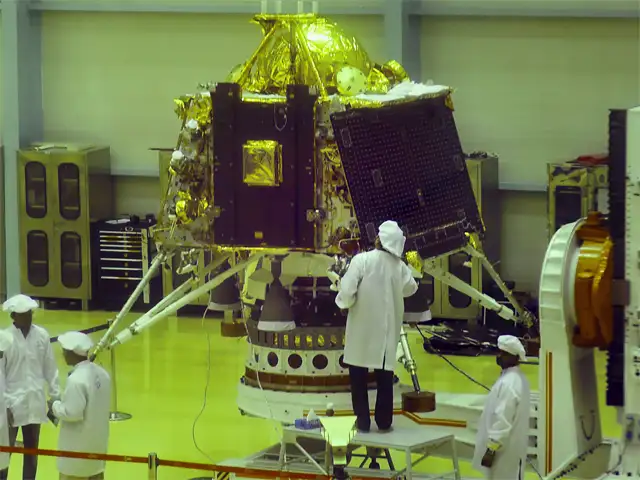
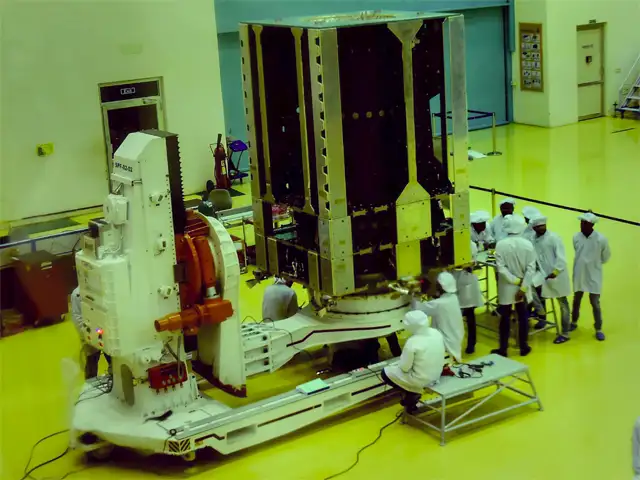

From launch till moon-landing, there will be several spots of complex manoeuvre. From the earth's orbit, it will be tranferred to a lunar trajectory that will sling-shot the spacecraft towards the moon through a series of complex operational changes. Later, thrusters on-board will enable descent of the spacecraft into a lunar orbit; the lander will detach from the orbiter and choose a right spot for landing even as its applies brakes to soften the landing.
The Chandrayaan-II had many risk-intensive areas in its course; its technology and software capabilities are also indigenously developed.
ADVERTISEMENT
The launch vehicle, the GSLV Mk-3, is the country’s most powerful rocket to date. The 640-tonne rocket, capable of carrying 4-tonne satellites, will place the mooncraft in the Earth Transfer Orbit approximately 16.2 minutes after take-off.
This will be the first operational flight of GSLV-Mk-3.
ADVERTISEMENT
According to ISRO Chief K Sivan, its most crucial moment arrives in a soft-landing on the surface of the moon, a feat few nations have managed so far. The 1.4-tonne Lander, Vikram, will be alive for 14 earth days, or one day in the moon. It can communicate with the orbiter 100 km from the surface of the moon, and ISRO's earth station near Bengaluru.
When Chandrayaan-II soft-lands successfully in early September on the lunar surface, it would 53 years since the first time it was done by a Soviet mission called Luna 9 in January 1966, according to NASA's web site. A soft landing means igniting an engine at the right altitude and angle to the moon to begin a “retrofire,” in order to decelerate the lander upon the moon. Once landed, the rover will roll out and perform experiments.
The orbiter will continue its mission for a year.
For scientists at the ISRO, the seconds before and during the launch of the rocket are full of challenges they have been working for years. India launched its first moon mission in 2008, a 1.3-tonne project launched in October 2008 that orbited the lunar body, equipped with terrain mapping cameras to make remote observations.
The mission, which carried scientific instruments from eleven nations including the US, the UK and Germany, had an impact probe crash on the moon's surface and end prematurely but gave India some clues about water presence on the moon.
The chandrayaan -I programme ended under a year from launch: but left behind a baton for India to take forward. While Chandrayaan-I put India in a space league, its successor has taken the country to frontline of the race in tapping lunar clues for more space missions.
Download
The Economic Times Business News App for the Latest News in Business, Sensex, Stock Market Updates & More.
The Economic Times Business News App for the Latest News in Business, Sensex, Stock Market Updates & More.
Download
The Economic Times News App for Quarterly Results, Latest News in ITR, Business, Share Market, Live Sensex News & More.
The Economic Times News App for Quarterly Results, Latest News in ITR, Business, Share Market, Live Sensex News & More.
ADVERTISEMENT


