All 7 IRNSS satellites to be in orbit by March 2016: ISRO
ISRO also aims to make signals available not only to India and surrounding countries, but also to the entire globe, ISRO Chairman Kiran Kumar said.
By PTI | Updated:

BENGALURU: All the seven satellites of Indian Regional Navigation Satellite System ( IRNSS) are expected to be in orbit by March 2016, Indian Space Research Organisation said today.
ISRO also aims to make signals available not only to India and surrounding countries, but also to the entire globe, ISRO Chairman Kiran Kumar said.
GSAT-15 satellite with GAGAN payload is slated for launch by November 10, he said.
"Today we have two of the GAGAN systems in operation also providing service and four of the navigation satellites are up in the space and providing the data. The next GAGAN payload is going up on GSAT-15 which is at the launch pad right now. We expect by March 2016 all the seven constellation of IRNSS to be in orbit," he said.
The space agency chief said "in this backdrop the activities are going on the way we need to take forward the objective of self-reliance. Not only self-reliance, but also trying to provide, extend the process of making this signals available not only within and surrounding our country, but also looking around the globe is also one of the important aspect we will be looking at."
Kiran Kumar was speaking after inaugurating the Global Navigation Satellite System (GNSS) User Meet 2015, at ISRO Satellite Centre (ISAC) here, that was jointly organised by ISRO and Airports Authority of India (AAI).
He also complemented AAI and Civil Aviation Department for their efforts in helping ISRO provide navigation service to the country, making it only the fourth in the world to provide such service.
"....already we are having within the country provisions of providing it, we are also looking at how we can extend it to SAARC countries and in the near future gradually extend it over the entire globe," he added.
India has entered into the realm of satellite-based navigation with its two "pioneering" projects GAGAN and IRNSS, officials said.
Speaking on the sidelines, Kiran Kumar said, "...after completing the constellation we are also looking at how we can make it global, what are the different aspects. We are also looking at working with other countries, neighbouring countries and then extend the range and then we are seeing whether we can take it to totally global mode also."
Asked how global, he said "set of regional things you add it becomes global, it is a thought process on which we are now working with few of the countries...right now we are doing 1500 km beyond the border, so we can keep adding regions to those things and get global."
Stating that discussions are on with Korea and Gulf counties, he said "slowly we will extend beyond that, it is a matter of less than a decade."
ISRO and AAI have established GAGAN as a Satellite Based Augmentation System (SBAS) for civil aviation and safety of life applications. The GAGAN signal in space is broadcast to users by two spacecrafts GSAT-8 and GSAT-10. In addition, the soon to be launched GSAT-15 will provide on orbit redundancy to safety of life service.
IRNSS is ISRO's initiative to build an independent satellite navigation system to provide precise position, velocity and time to the users of Indian region. The system is designed with a constellation of seven spacecrafts and a vast network of ground systems.
With the addition of fourth spacecraft IRNSS-1D in March 2015, the minimum satellite requirement is met and independent positioning is now possible for the first time using an Indian satellite-based navigation system.
He said "as we make it global, global users will be able to take advantage. Otherwise now only regional users can take advantage of IRNSS."
He said GAGAN is already a part of the global system and any aircraft enabled with satellite-based receiver can make use of it.
Asked about GSAT-15 launch, he said "originally it was on 5th (November), but we had some problem of cargo reaching, so there is about a week's delay. It could be around November 10."
Responding to a question on international tribunal ruling asking ISRO's commercial arm - Antrix Corporation to pay damages worth USD 672 million (Rs 4,432 crore) to Devas Multimedia for scrapping a deal four years ago, Kiran Kumar said "...we are taking the legal recourse that is available. We are working on that."
ISRO also aims to make signals available not only to India and surrounding countries, but also to the entire globe, ISRO Chairman Kiran Kumar said.
GSAT-15 satellite with GAGAN payload is slated for launch by November 10, he said.
"Today we have two of the GAGAN systems in operation also providing service and four of the navigation satellites are up in the space and providing the data. The next GAGAN payload is going up on GSAT-15 which is at the launch pad right now. We expect by March 2016 all the seven constellation of IRNSS to be in orbit," he said.
The space agency chief said "in this backdrop the activities are going on the way we need to take forward the objective of self-reliance. Not only self-reliance, but also trying to provide, extend the process of making this signals available not only within and surrounding our country, but also looking around the globe is also one of the important aspect we will be looking at."
Kiran Kumar was speaking after inaugurating the Global Navigation Satellite System (GNSS) User Meet 2015, at ISRO Satellite Centre (ISAC) here, that was jointly organised by ISRO and Airports Authority of India (AAI).
ADVERTISEMENT
He also complemented AAI and Civil Aviation Department for their efforts in helping ISRO provide navigation service to the country, making it only the fourth in the world to provide such service.
"....already we are having within the country provisions of providing it, we are also looking at how we can extend it to SAARC countries and in the near future gradually extend it over the entire globe," he added.
India has entered into the realm of satellite-based navigation with its two "pioneering" projects GAGAN and IRNSS, officials said.
Speaking on the sidelines, Kiran Kumar said, "...after completing the constellation we are also looking at how we can make it global, what are the different aspects. We are also looking at working with other countries, neighbouring countries and then extend the range and then we are seeing whether we can take it to totally global mode also."
ADVERTISEMENT
Asked how global, he said "set of regional things you add it becomes global, it is a thought process on which we are now working with few of the countries...right now we are doing 1500 km beyond the border, so we can keep adding regions to those things and get global."
Stating that discussions are on with Korea and Gulf counties, he said "slowly we will extend beyond that, it is a matter of less than a decade."
ADVERTISEMENT
ISRO and AAI have established GAGAN as a Satellite Based Augmentation System (SBAS) for civil aviation and safety of life applications. The GAGAN signal in space is broadcast to users by two spacecrafts GSAT-8 and GSAT-10. In addition, the soon to be launched GSAT-15 will provide on orbit redundancy to safety of life service.
IRNSS is ISRO's initiative to build an independent satellite navigation system to provide precise position, velocity and time to the users of Indian region. The system is designed with a constellation of seven spacecrafts and a vast network of ground systems.
With the addition of fourth spacecraft IRNSS-1D in March 2015, the minimum satellite requirement is met and independent positioning is now possible for the first time using an Indian satellite-based navigation system.
He said "as we make it global, global users will be able to take advantage. Otherwise now only regional users can take advantage of IRNSS."
He said GAGAN is already a part of the global system and any aircraft enabled with satellite-based receiver can make use of it.
Asked about GSAT-15 launch, he said "originally it was on 5th (November), but we had some problem of cargo reaching, so there is about a week's delay. It could be around November 10."
Responding to a question on international tribunal ruling asking ISRO's commercial arm - Antrix Corporation to pay damages worth USD 672 million (Rs 4,432 crore) to Devas Multimedia for scrapping a deal four years ago, Kiran Kumar said "...we are taking the legal recourse that is available. We are working on that."
Download
The Economic Times Business News App for the Latest News in Business, Sensex, Stock Market Updates & More.
The Economic Times Business News App for the Latest News in Business, Sensex, Stock Market Updates & More.
Download
The Economic Times News App for Quarterly Results, Latest News in ITR, Business, Share Market, Live Sensex News & More.
The Economic Times News App for Quarterly Results, Latest News in ITR, Business, Share Market, Live Sensex News & More.
Related Articles
 How ISRO’s AI-powered coastal safety systems are helping detect dangerous rip currents in real time2026-06-16T06:18:35Z
- Centre signs agreement with ISRO, rolls out new water research initiatives2026-06-01T08:34:36Z
- ISRO detects possible subsurface ice on moon using Chandrayaan-2 data2026-05-27T15:39:01Z
Text: PTI
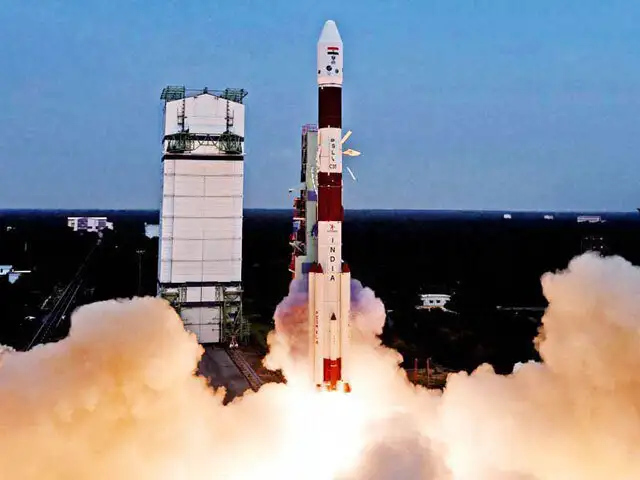
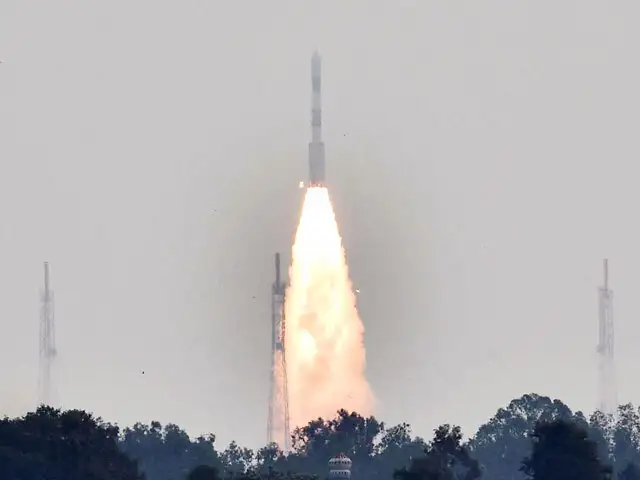
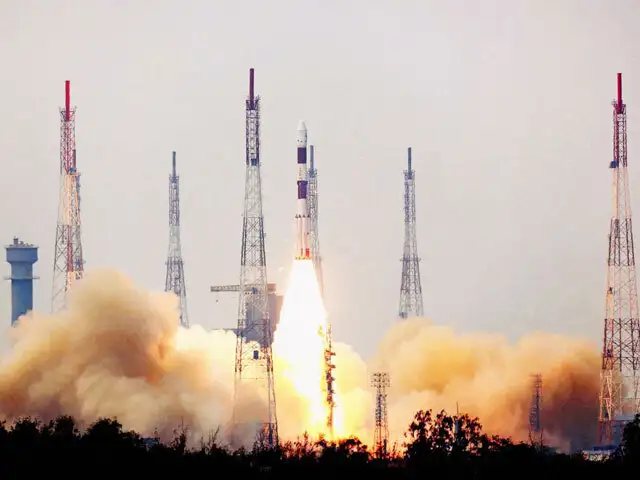
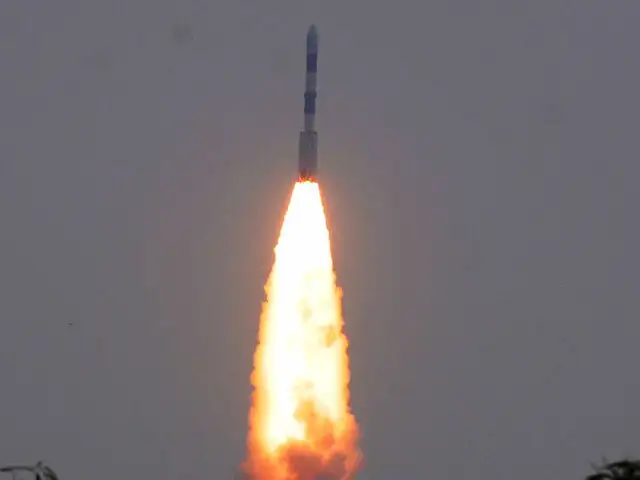
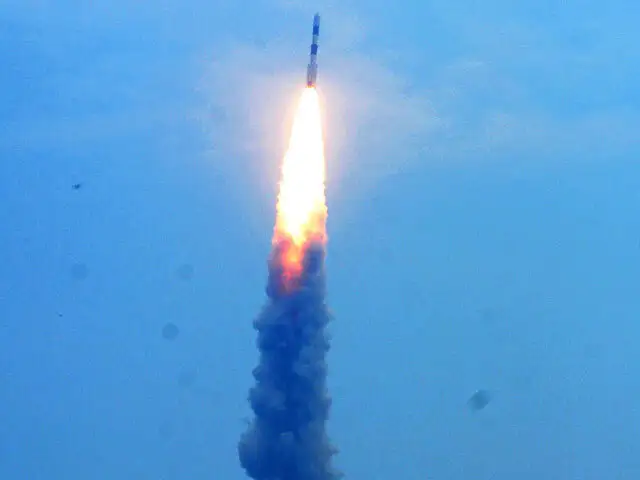
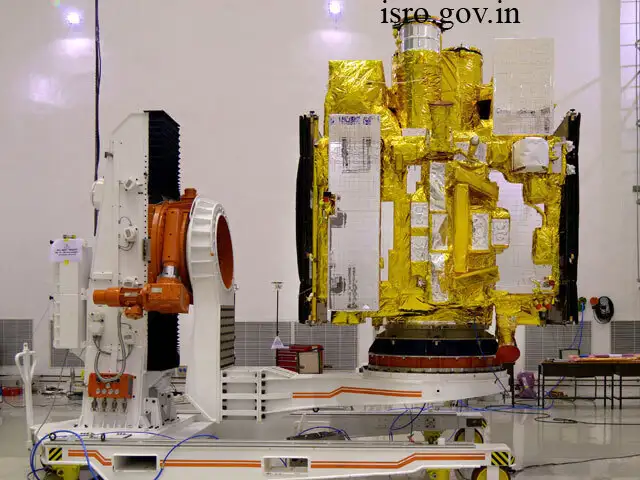
Joining an elite group of nations, India today successfully launched its first space research observatory ASTROSAT that will help in a detailed understanding of the universe and also put into orbit six foreign satellites including the first from the US.
Joining an elite group of nations, India today successfully launched its first space research observatory ASTROSAT that will help in a detailed understanding of the universe and also put into orbit six foreign satellites including the first from the US.

ADVERTISEMENT


