Why there is a compelling need to implement a sound legislation to protect Western Ghats
Western Ghats, a Unesco Heritage site, is one of the world's 8 most important biodiversity hotspots. It is hailed as a "cradle of biological evolution."

In the latter half of this January, areas around Gudalur in the Nilgiris in Tamil Nadu were aflutter. A man eater was on the prowl and it had killed three people already. Angry residents torched government vehicles demanding that the big cat be killed.
On January 21, forest department officials got a break — the tiger was sighted, and identified as a 10-year-old adult male called WT_ MD_41_M from Wayanad in Kerala, weighing over 200 kg (the ID is an acronym identifying the original location of the tiger — for instance W stands for Wayanad, M stands for Muthanga, and 41_M denotes the serial number of the tiger and its gender.
Forest officials use these IDs for wild beasts while those in zoos are given names like Bheemaa and Thaaraa). A vain attempt to tranquillise it was followed by the Special Task Force being called in and the tiger was shot dead at Kundachappai village near Gudalur.
 |
Nilgiris district collector P Shankar remarked at the time that it was a “big relief”.
But in 2014 too a similar drama had played out, with another maneater being shot. Environment experts say such incidents of man-animal conflict will become more frequent in the near future, with tigers and elephants wreaking havoc on human habitations.
“The natural habitat of the tigers is not increasing although their numbers are,” says C Badrasamy, district forest officer of Nilgiris south division, who was part of the team that went after the maneater.
“The tiger was searching for food and entered a tea estate close to the forest area and being weak with hunger, killed a human, who was a soft target,” he adds.
Alarm Bells
The alarm bells are already sounding loud and clear, according to environmental scientists working in the Western Ghats. Seemingly unconnected dots, when joined, paint a picture of a haven of biodiversity in crisis.
Recurring floods in the Nilgiris, increasing instances of mananimal conflict, changes in rainfall pattern especially in the western and southern states, all point to one cause — the destruction of the Western Ghats (see Key Features… and Danger to…).
“In Maharashtra, I have seen that a number of perennial rivers have dried up,” says professor Madhav Gadgil, ecologist and chairman of the first committee set up in 2010 to recommend a comprehensive legislation to protect the Ghats. “I was in Marathwada recently and some perennial tributaries of Godavari run through there.
Now, they have dried up. We are in danger of our rivers drying up,” he warns. Ecologist Ranjith Daniels of Care Earth Trust, an environmental NGO, says when one destroys forests, first order streams (smallest ones) dry up. “This puts our rivers in danger. Perennial rivers will become seasonal.
Apart from this, local extinctions will happen — local species of plants and animals will become extinct in pockets. So, a continuous population of a species will get fragmented. Fragmented species are more vulnerable to complete extinction,” he says.
The Ghats determine the rainfall of the country as their towering peaks force clouds to release rain. The forests of the Ghats soak in heavy rainfall and become the fount for a number of perennial rivers flowing east and south — the Godavari, Cauvery and the Krishna rivers, to name a few.
Rapid and unchecked destruction of the Ghats due to deforestation, mining and industrialisation means that India could go the Brazil way — an already thirsty country on the verge of getting parched. And this will mean that the water tower of peninsular India will dry the throats of the 245 million people it serves.
But the numbers to back these claims simply do not exist because no efforts have been taken to quantify depletion of river water, for instance. And experts say this is being used as an excuse to turn a blind eye to the inconvenient truth of a crisis reaching a tipping point. “There are serious problems with proper data being available,” says Gadgil.
| |
“A very large number of perennial springs have not been mapped in the country. In Goa, for instance, water resources available outside the area of mining have been mapped but not those within the areas being mined. It strikes one as almost deliberate,” he says.
In each zone, depending on the ecological sensitivity, only certain activities would be allowed. Further, locals inhabiting the forest areas of the Ghats would have the right to decide which industries they wanted to allow. A Western Ghats Ecology Authority was also recommended, which would grant permissions for industries and monitor the Ghats. But the report soon ran into trouble.
“A deliberate misinformation campaign was started by vested interests,” alleges Gadgil. “There are narrow vested interests working in the Western Ghats and making money. All governments are not aware of local situations and they are allowing this to take place. Shareholders in this have no say in the activities of corporates,” he adds.
The UPA government decided against making the report public, but following an order from the Delhi High Court, put up the report on its website in May 2012. Fear of displacement amongst people living in the Ghats led to a public backlash while Gadgil rushed to clarify that no one would be displaced. Kerala witnessed high-voltage drama, with violent protests being organised by the Left parties and the Syro Malabar Catholic Church, which has the largest following in the area.
In December 2013, a young man Anoop staging a sit-in demanding implementation of the Gadgil report, was killed. He succumbed to head injuries when a mob threw crude bombs and stones at the group. In August 2012 a nervous UPA, under pressure from the powerful mining and industrial lobbies as well as from a misinformed public, junked the Gadgil report and created another committee, chaired by space expert K Kasturirangan, to look into the recommendations made by the Gadgil committee. Kasturirangan’s team submitted its report in April 2013. It reduced the ESA to 43% of that recommended by Gadgil, an area of about 60,000 hectares.
Sunita Narain of the Centre for Science and Environment, who was part of the Kasturirangan committee, explained that they had excluded areas of the Ghats already under cash crop plantation, agriculture and settlements (see Gadgil Vs Kasturirangan). “The purpose was to remove already modified areas under private control from the protection regime, since governing these areas through permit and fiat systems would lead to unnecessary conflict,” she says. The Kasturirangan report also suggested a monitoring agency rather than a new body to oversee the Ghats itself. “We have submitted the report to government, now it is up to them to take action on it,” Sunita Narain told ET Magazine.
Costs of Dilution
In March 2014, the UPA government in its last days issued a draft notification asking the state governments of Gujarat, Maharashtra, Goa, Karnataka and Tamil Nadu to conduct physical verification and demarcate their own ESAs (see State-wise area…). It was clarified that this is a purely voluntary exercise by the states and not binding. The deadline to submit this to the Centre is April 15 this year.
| |
“Major disturbances in the Western Ghats are due to tourism and pilgrimage,” says ecologist Ranjit Daniels. “The pressures of tourism and industry are pushing towards the periphery of the forest. We will continue to see increased man-animal conflict. There will increasingly be islands of protection surrounded by hostile area, which will just not work,” he adds. Officials at the ministry of environment and forests did not respond to ET Magazine’s queries despite repeated requests.
As far as development related decision-making is concerned, they are not allowed to participate. The people are the stakeholders — they must make their own decisions about what industry or plantations to allow or disallow in their areas,” he says.
Others feel that any action has to be taken with a long-term view of sustainable ecology and industrial development. “The immediate need is for the Gadgil report to be disseminated for a wider understanding and studied for merits,” says Daniels. “It needs to be reconsidered for adoption.” Until then, he says, more tigers like WT_ MD_41_M will become maneaters or will perish without food, as a result of the destruction of their natural habitat. And India will almost certainly be parched in the near future.
The Economic Times Business News App for the Latest News in Business, Sensex, Stock Market Updates & More.
The Economic Times News App for Quarterly Results, Latest News in ITR, Business, Share Market, Live Sensex News & More.
Related Articles
 Meet one of nature’s rarest ‘joyful’ creatures spotted in the Western Ghats. Internet calls it a 'beauty'2026-05-13T06:29:45Z
- Madhav Gadgil, legendary ecologist who transformed Western Ghats conservation, passes away at 832026-01-08T04:18:59Z
- Centre puts Sharavathy project on hold, warns of 'enormous damage' to biodiversity in Western Ghats2025-11-08T17:40:24Z
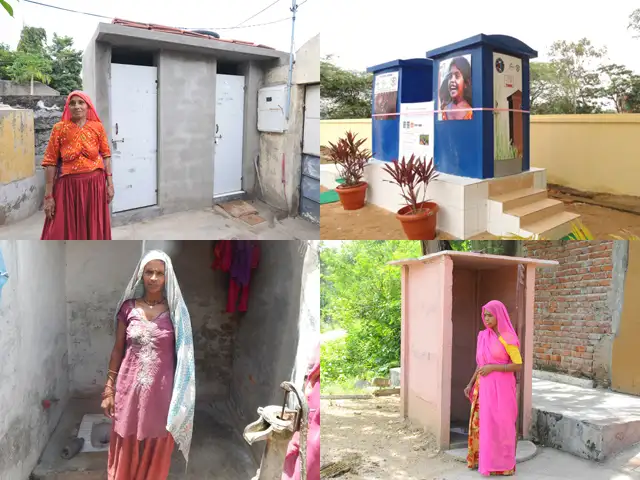
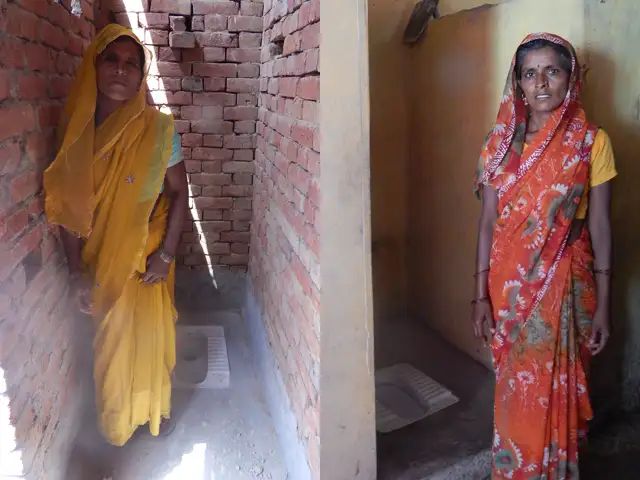
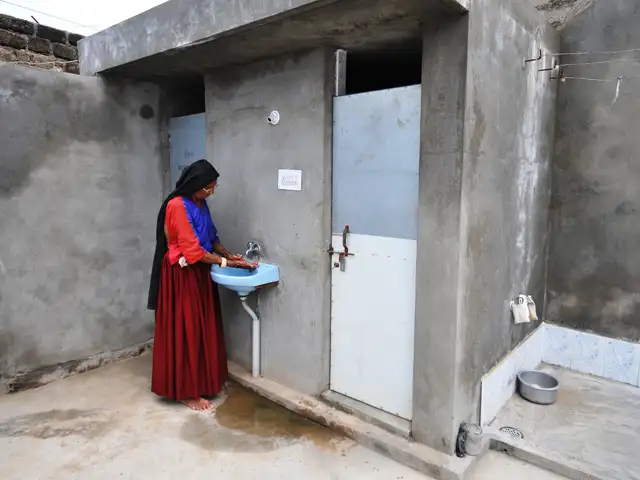
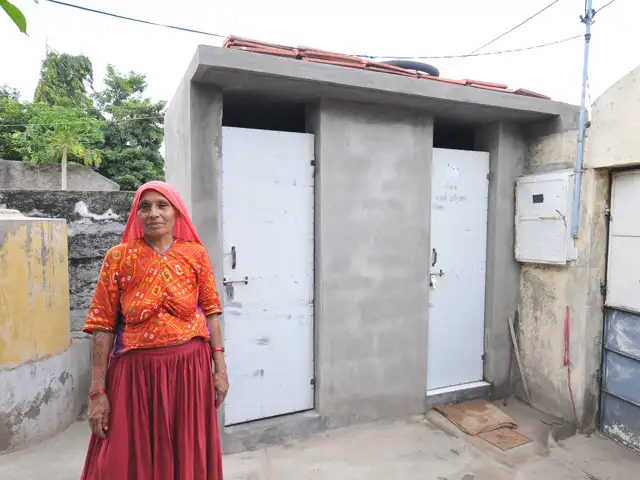
PM Narendra Modi's 'Swachh Bharat' dream, and his appeal to corporates to invest in building toilets as a part of their CSR has met with a positive response from India Inc, with many companies promising to spend big money to 'clean up' India.
While some companies have announced fresh plans to lay emphasis on building toilets, there are others that have been actively in involved in the process in various parts of the country.
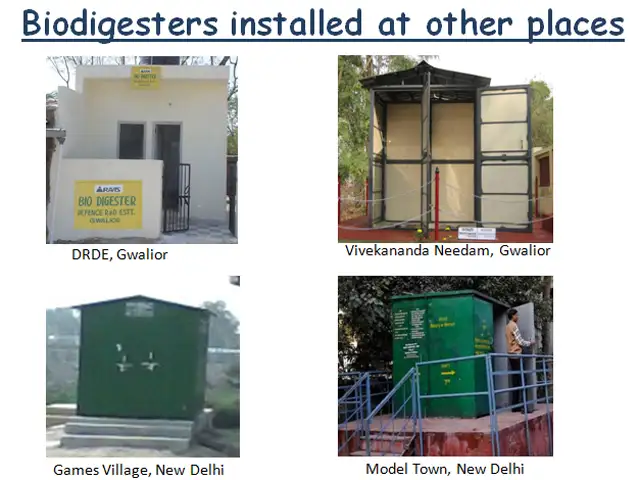
We take a look at some corporates who have already built toilets and some exemplary models, such as DRDO's bio-toilets, that can be adopted on a pan-India scale.