Why demonetisation will be revolutionary in India’s fight against corruption
The clamour for action against the menace of black money in the economy can be understood by examining some crucial statistics.
By Krishnamurthy Subramanian, TNN | Updated:

Many of us grew up despising politicians for feathering their own nests, compromising on issues of national importance and dragging their feet on bold decisions. Against this backdrop, the demonetisation effort launched Tuesday night is a refreshing change. In a rare instance, the government has taken an action that resonates well with the sentiment among common, law-abiding citizens on the one hand, and with recommendations from several experts on the other.
The clamour for action against the menace of black money in the economy can be understood by examining some crucial statistics. First, based on March 2016 figures, the currency held in cash by the public is at an all-time high of Rs 15,93,896 crore. This is not surprising.
Following the government’s determined efforts to unearth black money and force individuals to report their unaccounted income, some came forward to report their unaccounted income by the September deadline. However, many others have been stashing away the cash hoping that a change in government in 2019 would release this pressure and enable them to bring back such unaccounted income in circulation.
Currency held in cash being at an all-time high is due to non-compliance with the government’s efforts by such individuals. Second, over the period 2004-14, the circulation of notes of Rs 1,000 and Rs 500 denominations increased at an annual rate of about 30% and 20% respectively. In contrast, during the same period, the amount in circulation of notes of Rs 100 denomination remained unchanged while those of Rs 50 declined.
To increase the efficacy of the bold move, deposits of old Rs 500 and Rs 1,000 notes by traders of real assets – such as jewellers and gem merchants, real estate developers and real estate agents – will have to be carefully tracked by the tax authorities. To understand the critical importance of this follow-up measure, suppose Mr Dishonest has Rs 10 crore in black money. He would approach one of the traders of real assets to convert this black money into real assets.
The trader of the real asset takes the risk of converting Mr Dishonest’s black money into white with the banks and having to explain the sudden spurt in income to the tax authorities. And the trader will charge a significant premium for assuming this risk. However, Mr Dishonest would be happy to pay a premium because he avoids getting caught and converts his black money into a real asset.
If the trader’s sales in November and December are much higher than his reported sales tax return for the previous year or his advance tax payment in September, then that would suggest clearly that the trader has been a conduit for conversion of black money into white. If banks and tax authorities implement the 200% penalty scrupulously for deposits above Rs 2.5 lakh, then the trader would have to pay a penalty much more than the fat gain he has made. In that case, the trader would risk a huge loss.
A trader is likely to take this risk only if he has the confidence that he could bribe his way through the bank and/or tax officer. To avoid such ingenious methods being used by Mr Dishonest, higher tax authorities and banks will have to ensure a system for “monitoring the monitor” over the next two months. This will ensure that traders of real assets do not become the conduit for unscrupulous individuals to get away.
The move, however, already seems to have had a significant effect. We collected information on stock market responses on Wednesday because the stock market serves as a leading indicator of economic activity. After opening down by about 6%, the Nifty closed only 0.99% lower on Wednesday. And the stock market has been trending up on Thursday.
So, the market is capturing the high probability that the move will be good for the economy. The realty index fell, however, by 12.5%. This sector, which is notorious for use of black money, will be negatively affected till the real estate industry cleans up its act. Similarly, listed companies that are connected with Panama Swiss Leaks fell by 2.35% on Wednesday, which is more than double the fall in the index. Recall that companies connected with Panama Swiss Leaks have also been associated with possible use of black money. So, this is a clear indicator that sectors employing black money are more drastically affected.
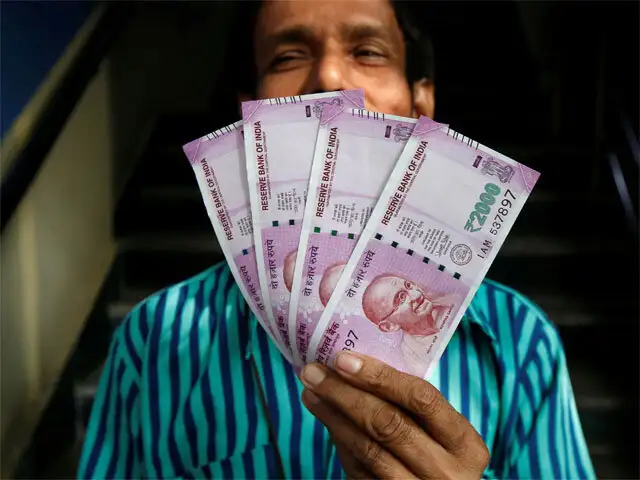
Some may fear that the introduction of high denomination Rs 2,000 and Rs 500 notes may bring back black money into the system. But, this is less likely for two reasons. First, the current situation resulted from several years of tax evasion under governments that turned a Nelson’s eye to this problem. In fact, the genesis of the current problem dates back to the late 1970s and early 1980s when marginal tax rates were 97%. Current tax rates do not provide such perverse incentives to hide income.
Second, current checks and balances against tax evasion are far tighter. Relatedly, the government’s move reflects popular angst against corruption and unaccounted wealth. The presence of such factors in the voting population is unlikely to provide future governments the luxury of relaxing their efforts to fight corruption. Thus, Tuesday’s action may be revolutionary in the annals of the country’s fight against corruption.
The clamour for action against the menace of black money in the economy can be understood by examining some crucial statistics. First, based on March 2016 figures, the currency held in cash by the public is at an all-time high of Rs 15,93,896 crore. This is not surprising.
Following the government’s determined efforts to unearth black money and force individuals to report their unaccounted income, some came forward to report their unaccounted income by the September deadline. However, many others have been stashing away the cash hoping that a change in government in 2019 would release this pressure and enable them to bring back such unaccounted income in circulation.
Currency held in cash being at an all-time high is due to non-compliance with the government’s efforts by such individuals. Second, over the period 2004-14, the circulation of notes of Rs 1,000 and Rs 500 denominations increased at an annual rate of about 30% and 20% respectively. In contrast, during the same period, the amount in circulation of notes of Rs 100 denomination remained unchanged while those of Rs 50 declined.
To increase the efficacy of the bold move, deposits of old Rs 500 and Rs 1,000 notes by traders of real assets – such as jewellers and gem merchants, real estate developers and real estate agents – will have to be carefully tracked by the tax authorities. To understand the critical importance of this follow-up measure, suppose Mr Dishonest has Rs 10 crore in black money. He would approach one of the traders of real assets to convert this black money into real assets.
The trader of the real asset takes the risk of converting Mr Dishonest’s black money into white with the banks and having to explain the sudden spurt in income to the tax authorities. And the trader will charge a significant premium for assuming this risk. However, Mr Dishonest would be happy to pay a premium because he avoids getting caught and converts his black money into a real asset.
ADVERTISEMENT
If the trader’s sales in November and December are much higher than his reported sales tax return for the previous year or his advance tax payment in September, then that would suggest clearly that the trader has been a conduit for conversion of black money into white. If banks and tax authorities implement the 200% penalty scrupulously for deposits above Rs 2.5 lakh, then the trader would have to pay a penalty much more than the fat gain he has made. In that case, the trader would risk a huge loss.
A trader is likely to take this risk only if he has the confidence that he could bribe his way through the bank and/or tax officer. To avoid such ingenious methods being used by Mr Dishonest, higher tax authorities and banks will have to ensure a system for “monitoring the monitor” over the next two months. This will ensure that traders of real assets do not become the conduit for unscrupulous individuals to get away.
The move, however, already seems to have had a significant effect. We collected information on stock market responses on Wednesday because the stock market serves as a leading indicator of economic activity. After opening down by about 6%, the Nifty closed only 0.99% lower on Wednesday. And the stock market has been trending up on Thursday.
So, the market is capturing the high probability that the move will be good for the economy. The realty index fell, however, by 12.5%. This sector, which is notorious for use of black money, will be negatively affected till the real estate industry cleans up its act. Similarly, listed companies that are connected with Panama Swiss Leaks fell by 2.35% on Wednesday, which is more than double the fall in the index. Recall that companies connected with Panama Swiss Leaks have also been associated with possible use of black money. So, this is a clear indicator that sectors employing black money are more drastically affected.
ADVERTISEMENT
Some may fear that the introduction of high denomination Rs 2,000 and Rs 500 notes may bring back black money into the system. But, this is less likely for two reasons. First, the current situation resulted from several years of tax evasion under governments that turned a Nelson’s eye to this problem. In fact, the genesis of the current problem dates back to the late 1970s and early 1980s when marginal tax rates were 97%. Current tax rates do not provide such perverse incentives to hide income.
Second, current checks and balances against tax evasion are far tighter. Relatedly, the government’s move reflects popular angst against corruption and unaccounted wealth. The presence of such factors in the voting population is unlikely to provide future governments the luxury of relaxing their efforts to fight corruption. Thus, Tuesday’s action may be revolutionary in the annals of the country’s fight against corruption.
Download
The Economic Times Business News App for the Latest News in Business, Sensex, Stock Market Updates & More.
The Economic Times Business News App for the Latest News in Business, Sensex, Stock Market Updates & More.
Download
The Economic Times News App for Quarterly Results, Latest News in ITR, Business, Share Market, Live Sensex News & More.
The Economic Times News App for Quarterly Results, Latest News in ITR, Business, Share Market, Live Sensex News & More.
Related Articles
 Cash is king again? India’s withdrawals surge 12% in early April, highest since post-demonetisation2026-05-05T05:38:57Z
- US-based son gets tax notice in India over Rs 11 lakh cash deposit made on behalf of parents during demonetisation; ITAT Delhi cancels notice for this reason2026-05-04T06:02:07Z
- 'Magician has lost his tricks': Rahul Gandhi takes a jibe at 'PM Modi', calls 'Op Sindoor, demonetisation' failed tricks2026-04-17T09:53:11Z
About 3.5 billion new currency notes need to be infused into the system. The government estimates that the situation will ease into a comfort zone by November 30.
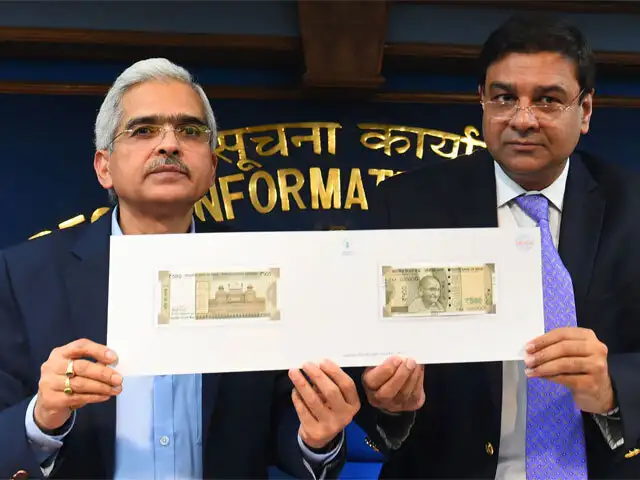
Who knew and who didn't Since the information was shared on a need-to-know basis, Urjit Patel got to know about the move from the “system“ only after he was declared to take over as RBI governor. Raghuram Rajan and his deputy R Gandhi, who heads currency management, were the only ones aware of the moves.
Who knew and who didn't Since the information was shared on a need-to-know basis, Urjit Patel got to know about the move from the “system“ only after he was declared to take over as RBI governor. Raghuram Rajan and his deputy R Gandhi, who heads currency management, were the only ones aware of the moves.

ADVERTISEMENT


