Unsewered areas in new Yamuna clean-up plan, experts happy
The residents are wondering why they have to pay for the government agencies' failures when they are already paying sewerage charges.
By Jayashree Nandi, TNN | Updated:

NEW DELHI: After thousands of crores have been washed away in the Centre's Yamuna Action Plans (YAPs) I and II, the National Green Tribunal on Friday directed that the residents of Delhi pay an "environmental compensation" to fund a new plan—Mailey Se Nirmal Yamuna Revitalisation Project 2017. The new plan, like the YAPs, aims to address pollution in Yamuna and Delhi's ineffective sewage treatment infrastructure. However, the residents are wondering why they have to pay for the government agencies' failures, especially when most of them are already paying sewerage charges.
The new plan is very different from the YAPs though, say experts. The ongoing YAP III, for instance, focuses on improving the "operational efficiency of the existing sewage facilities in NCT of Delhi through improvement and construction of new facilities for treated sewage recycle to provide recycled water" but doesn't propose sewage treatment in the unsewered parts of the city, which constitutes 40% of the area, or in addressing sewage in stormwater drains that lead up to the river.
Whereas, the new plan proposes that the sewage from unsewered areas be treated before letting into the river. Laying primary sewer lines for these areas is impossible within a couple of years; in fact, DJB estimates it may take about 20 years. What the plan suggests instead is to intercept sewage from these areas into proposed STPs. "The phase I will focus on south west and north west villages that are unsewered where 15 small STPs will be set up to treat the water in a decentralized manner," explained a DJB official.
While experts found merit in the idea of raising the money from people, residents TOI spoke to about the "environmental compensation", said addressing sanitation and pollution are the responsibilities of the government.
"YAPs are a diffused plan, which is why they have not shown improvement. The new plan will address the sewage from Delhi's unsewered colonies and will first treat sewage falling into Najafgarh drain which is responsible for 63% of pollution in Yamuna," said C R Babu, professor emeritus, DU. On the "polluter pays" principle, "I think the time has come when residents start valuing environment. They will take interest only when they contribute to the river's restoration. Funds to the state governments from Centre have also been trimmed recently and such urgent projects need to be funded by all possible sources," he added.
Babu said the water quality in the Najafgarh drain can be monitored, which will be a proof if the plan is effective.
Professor Brij Gopal, former JNU professor, said, "Even if the government was to take a loan for this, it would have been indirectly repaid by us. The implementation of the project within the next three years is important."
The new plan is very different from the YAPs though, say experts. The ongoing YAP III, for instance, focuses on improving the "operational efficiency of the existing sewage facilities in NCT of Delhi through improvement and construction of new facilities for treated sewage recycle to provide recycled water" but doesn't propose sewage treatment in the unsewered parts of the city, which constitutes 40% of the area, or in addressing sewage in stormwater drains that lead up to the river.
Whereas, the new plan proposes that the sewage from unsewered areas be treated before letting into the river. Laying primary sewer lines for these areas is impossible within a couple of years; in fact, DJB estimates it may take about 20 years. What the plan suggests instead is to intercept sewage from these areas into proposed STPs. "The phase I will focus on south west and north west villages that are unsewered where 15 small STPs will be set up to treat the water in a decentralized manner," explained a DJB official.
While experts found merit in the idea of raising the money from people, residents TOI spoke to about the "environmental compensation", said addressing sanitation and pollution are the responsibilities of the government.
"YAPs are a diffused plan, which is why they have not shown improvement. The new plan will address the sewage from Delhi's unsewered colonies and will first treat sewage falling into Najafgarh drain which is responsible for 63% of pollution in Yamuna," said C R Babu, professor emeritus, DU. On the "polluter pays" principle, "I think the time has come when residents start valuing environment. They will take interest only when they contribute to the river's restoration. Funds to the state governments from Centre have also been trimmed recently and such urgent projects need to be funded by all possible sources," he added.
Babu said the water quality in the Najafgarh drain can be monitored, which will be a proof if the plan is effective.
ADVERTISEMENT
Professor Brij Gopal, former JNU professor, said, "Even if the government was to take a loan for this, it would have been indirectly repaid by us. The implementation of the project within the next three years is important."
Download
The Economic Times Business News App for the Latest News in Business, Sensex, Stock Market Updates & More.
The Economic Times Business News App for the Latest News in Business, Sensex, Stock Market Updates & More.
Download
The Economic Times News App for Quarterly Results, Latest News in ITR, Business, Share Market, Live Sensex News & More.
The Economic Times News App for Quarterly Results, Latest News in ITR, Business, Share Market, Live Sensex News & More.
Text: Binoy Prabhakar, ET Bureau and Ministry of Shipping, IWAI
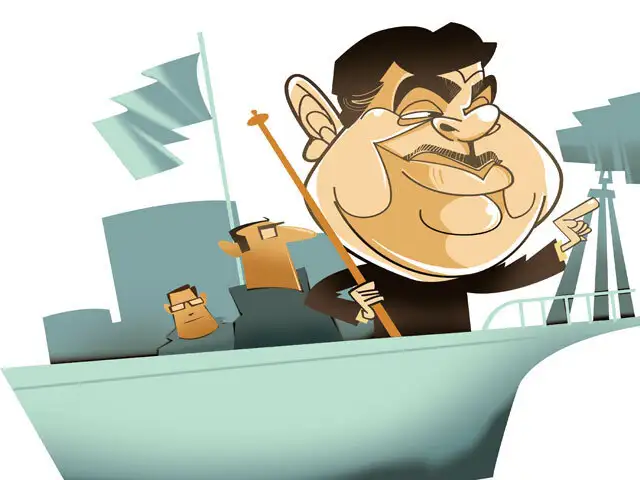
Shipping minister Nitin Gadkari is steering the Modi government’s most ambitious infrastructure push yet as he prepares to modernise India’s old and long ignored inland waterways.
Here are some of Gadkari’s big-ticket maritime projects
Shipping minister Nitin Gadkari is steering the Modi government’s most ambitious infrastructure push yet as he prepares to modernise India’s old and long ignored inland waterways.
Here are some of Gadkari’s big-ticket maritime projects


ADVERTISEMENT


