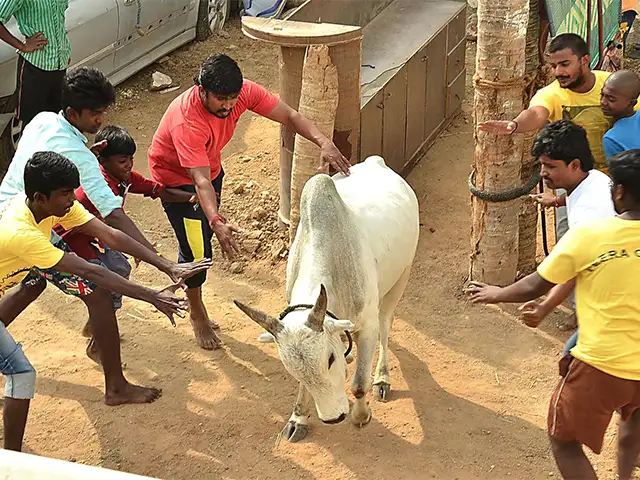
After protests in Tamil Nadu in favour of Jallikattu, people demanded resumption of traditional buffalo race in Karnataka called Kambala
By ET Bureau |
BCCL
After protests in Tamil Nadu in favour of Jallikattu, people demanded resumption of traditional buffalo race in Karnataka called Kambala
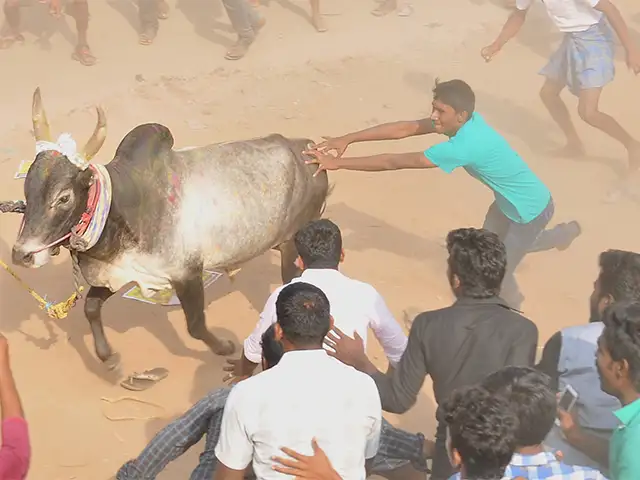
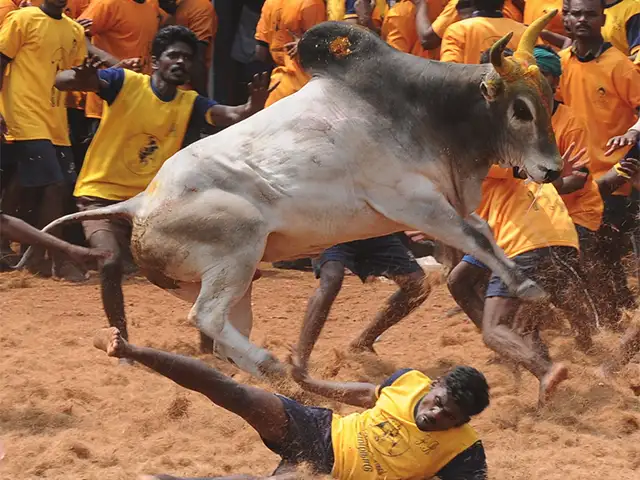
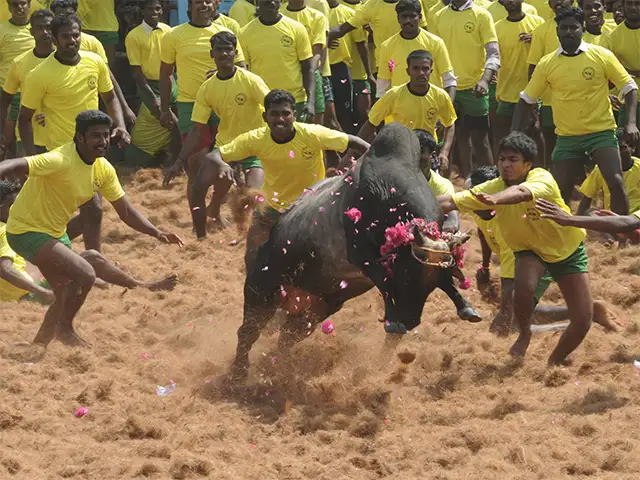
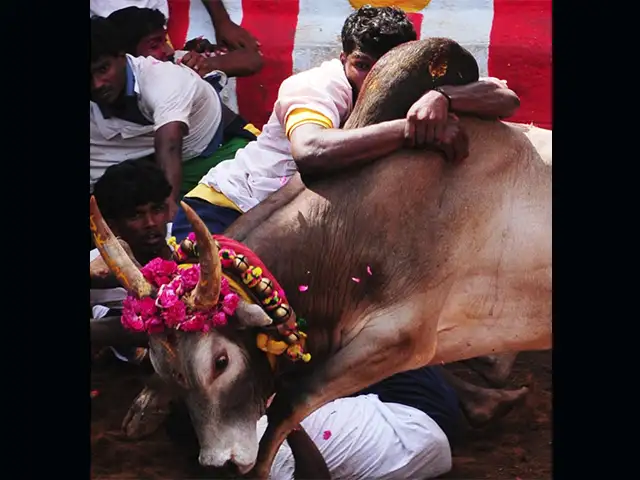
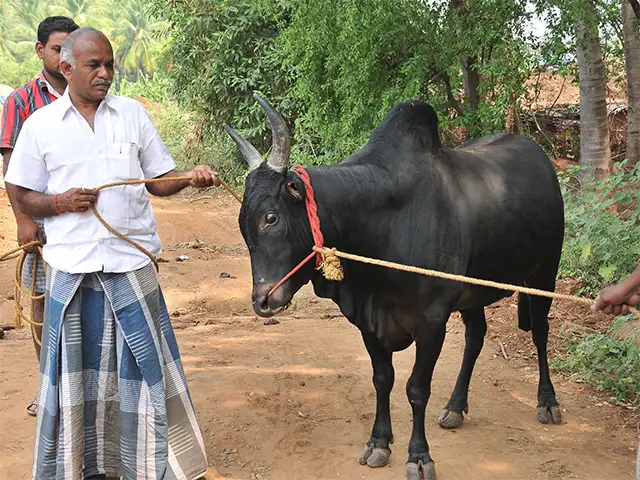
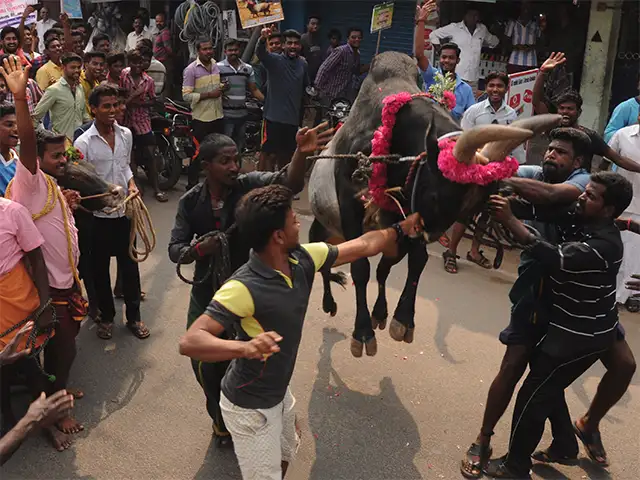
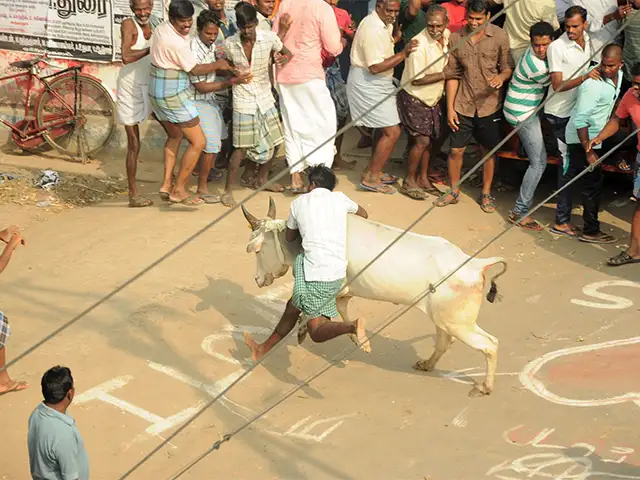
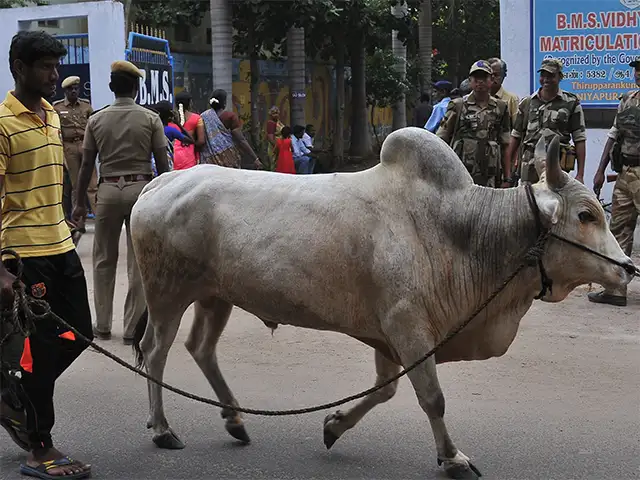
Jallikkattu
The ban on Jallikkattu saw thousands of young men and women turn up at Marina Beach in Chennai earlier this month to demand the right to hold the annual events that had been banned by the Supreme Court in 2014 as it found the custom led to torture of bulls
The buffalo race (two buffalos tied to a plough and a jockey races as a team on muddy fields) popular in southern in Karnataka, was banned in an interim order of the Karnataka High Court in November 2016. People turned out this week to protest the ban. Unlike Jallikkattu, so far no human casualties have been reported in the buffalo race
The popular custom of building a human pyramid to reach a container of curd, often at a height of thirty to forty feet in Maharashtra faced severe restrictions with the Bombay High Court saying 20 feet is the maximum height allowed. Usually a boy in early teens or even younger is used for the final assault. The court order laid down 18 as the minimum age. Large number of young men and women participate in the festival, usually held in August-September
Bullock-cart racing in Maharashtra
The bullock cart races of Maharashtra have also been banned under the same laws and rules that led to ban on Jallikkattu and Kambala. There is an increasing clamour for removal of the ban. A Shiv Sena MP has already asked for the removal of the ban and the state’s Animal husbandry minister Mahadev Jankar has promised to find a legal remedy
Ready to wait campaign
ADVERTISEMENT
During the agitation for allowing women entry into the Lord Ayappa temple of Sabarimala, a counter agitation was started which saw women posting their photos with a poster saying “Ready to Wait” indicating that as per custom they were ready to wait till attaining age 50 to enter the temple. The group also moved the Supreme Court to be a party to the legal proceedings
Nagpanchami at Battis Shirala
This popular festival on Nagpanchami entails catching cobras and worshipping them on Nagpanchami day in August. Catching of cobras, was banned by the Supreme Court in 2014. Voters from the village in Maharashtra have threatened to boycott all elections if the ban is not lifted
Triple Talaq and UCC
On Friday, AIMIM chief Asaduddin Owaisi called on Muslims to take inspiration from Tamilians and show their support for triple talaq. This statement comes in the backdrop of the courts examining the validity of triple talaq. In November 2016, Sidiqullah Chowdhury, the education minister in Mamata Banerjee’s government in West Bengal, was instrumental in getting thousands of young students from madrasas to attend a rally in Kolkata, organised by the All India Muslim Personal Law Board (AIMPLB) against the Uniform Civil Code and in support of triple talaq.
No bullshit: How Jallikattu makes a good business sense
1/9
Jallikattu, the bull-taming sport of Tamil Nadu banned by the Supreme Court due to cruelty to the animals, is not just a folk sport.
It has spawned an economy of its own in rural parts of the state that has far-reaching implications.
Below are the ways the economy and business of Jallikattu works:
Jallikattu, the bull-taming sport of Tamil Nadu banned by the Supreme Court due to cruelty to the animals, is not just a folk sport.
It has spawned an economy of its own in rural parts of the state ..
Read More
Bulls that are reared for Jallikattu are an asset class of sorts. For instance, a poor farmer buys a bull calf for Rs 15,000.
He raises it to make it strong. The feeding and maintenance of the bull costs him nearly Rs. 300 a day. The calf matures after one-and-a-half years.
If the farmer makes it perform in Jallikattus, he can win prizes if it performs well. That also raises its price to a few lakhs. Good bulls provide a very high return on investment.
Bulls that are reared for Jallikattu are an asset class of sorts. For instance, a poor farmer buys a bull calf for Rs 15,000.
He raises it to make it strong. The feeding and maintenance of the bull ..
Read More
The Supreme Court's decision to ban Jallikattu has brought down prices of the sport bulls. From Rs 2 lakh to Rs 3 lakh, they began selling at mere Rs 5,000.
The Supreme Court's decision to ban Jallikattu has brought down prices of the sport bulls. From Rs 2 lakh to Rs 3 lakh, they began selling at mere Rs 5,000.
Apart from the cultural angle, there is a small economy involved. Rearing of sport bulls not only give small farmers and the rural poor a chance to make a low investment in a calf and get a big return if it performs well in a Jallikattu; rearing a Jallikattu bull also supports a range of rural poor who make accessories for the bull.
Apart from the cultural angle, there is a small economy involved. Rearing of sport bulls not only give small farmers and the rural poor a chance to make a low investment in a calf and get a big retur..
Read More
A lot of money is spent on a Jallikattu event. It ranges from Rs 50,000 to Rs. 20 lakh. Dozens of Jallikattus were oragnised before the legal intervention by PETA.
Jallikattus are big events that draw people in thousands. They generate a lot of consumption around them which is significant for the rural poor.
A lot of money is spent on a Jallikattu event. It ranges from Rs 50,000 to Rs. 20 lakh. Dozens of Jallikattus were oragnised before the legal intervention by PETA.
Jallikattus are big events that dr..
Read More
Decades ago, the government started discouraging rearing of native breeds of bulls through various laws.
Cows of the native breed yield far less milk than the cross-bred cows such as Jersey and Holstein Friesian. Increasing foreign cattle breeds was one government measure to raise milk yield in India. But supporters of native breeds argue that foreign breeds might not be a better option in the long run.
Native breeds require less expensive maintenance and are less vulnerable to diseases and viruses. Jersey cows also require more grazing pastures.
In the long run, native breeds are a better economic option. And Jallikattu is one big way people keep on rearing native cattle.
Decades ago, the government started discouraging rearing of native breeds of bulls through various laws.
Cows of the native breed yield far less milk than the cross-bred cows such as Jersey and Hols..
Read More
Since the government wanted to encourage cross-bred cattle, it had forcibly neutered native bulls to decrease the number of native cows or put stringent controls on breeding through native bulls.
The supporters of native breeds argue that this has led to foreign companies creating monopoly on semen. Artificial insemination, where semen from one bull can impregnate scores of cows, is criticised because it is believed to destroy the genetic diversity of cattle.
Since the government wanted to encourage cross-bred cattle, it had forcibly neutered native bulls to decrease the number of native cows or put stringent controls on breeding through native bulls.
Th..
Read More
Can we go against the logic of the market? If the cow of a native breed yields just three litres of milk a day and a Jersey cow yields 12 litres, people in dairy business will opt for Jersey cows.
Supporters of native breeds argue that dairy farmers can be allowed to keep the breed they want, but others might want to keep native breeds.
If they yield less milk, they also require less money on upkeep.
Can we go against the logic of the market? If the cow of a native breed yields just three litres of milk a day and a Jersey cow yields 12 litres, people in dairy business will opt for Jersey cows.
S..
Read More
Jallikattu supports small rural economy and helps preserve genetic diversity.
In the future, the low-yield milk of native cows can generate a huge demand as increasingly people perceive it to be more nutritious.
If native breeds are preserved, as Jallikattu does, it can lead to a new phenomenon in the dairy sector in future.
Jallikattu supports small rural economy and helps preserve genetic diversity.
In the future, the low-yield milk of native cows can generate a huge demand as increasingly people perceive it to be mor..



 Fresh fruits, creamy buffalo milk, no preservatives: This 55-year-old Mumbai shop sells handmade ice creams with over 50 flavours. How two brothers kept a family legacy alive through innovation and tradition2026-06-12T07:00:15Z

