Nuclear deal among five key takeaways from US President Barack Obama's India visit
Obama backed India to play a bigger role on global issues as he reiterated support to India's candidature for a permanent membership of UN security council.
By TNN | Updated:

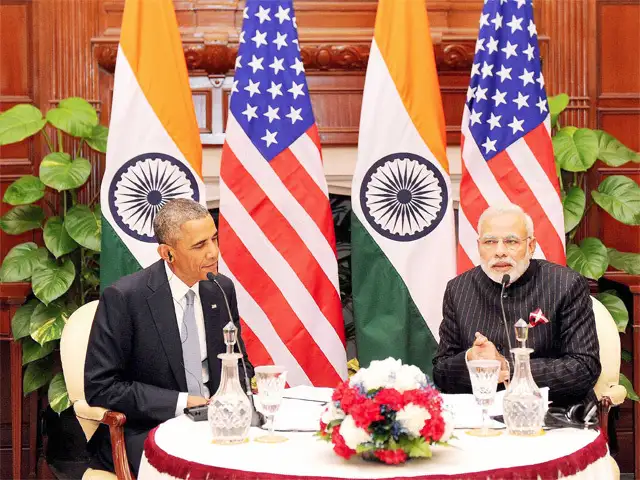
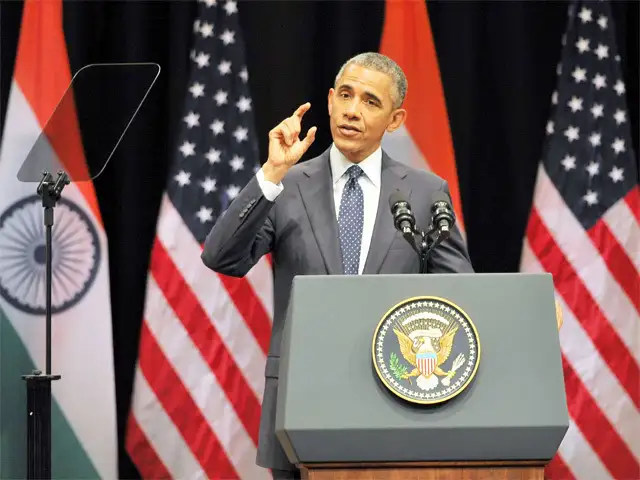
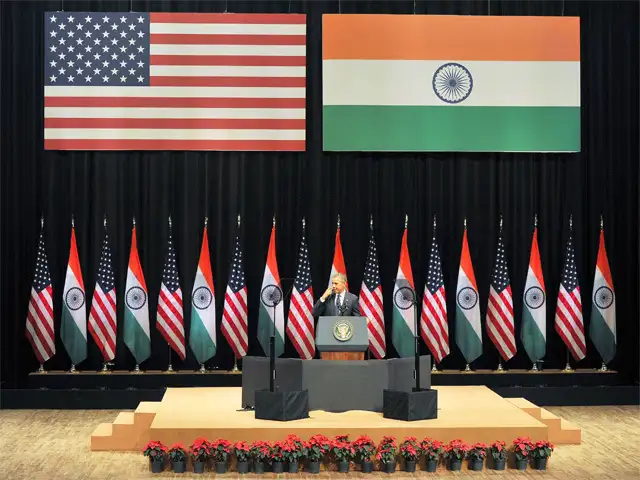
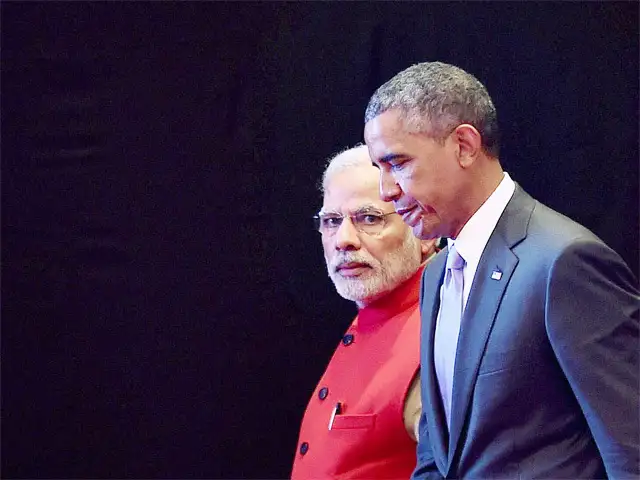
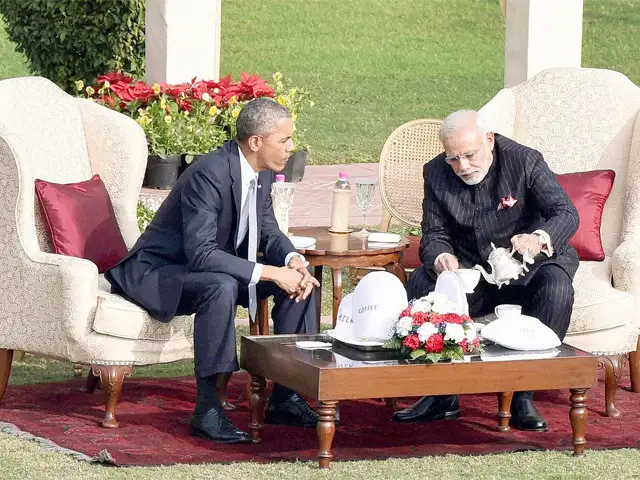
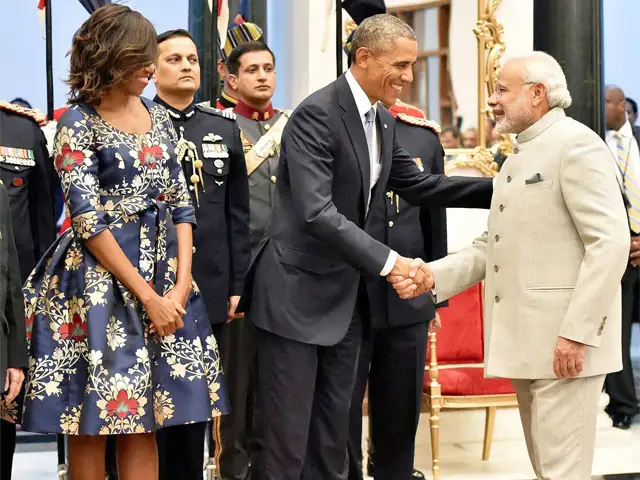
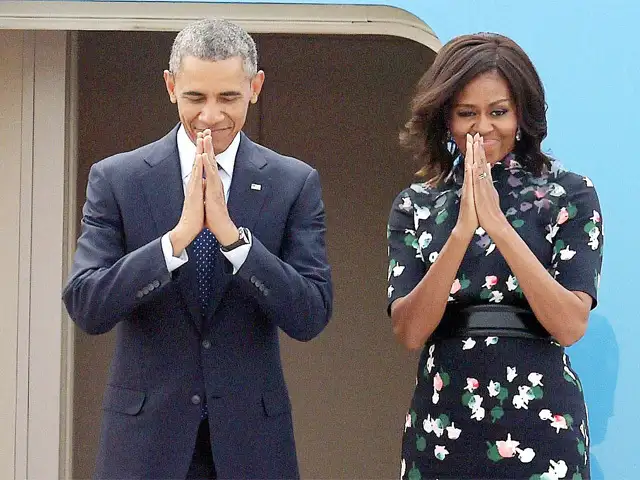
NEW DELHI: US President Barack Obama's India visit was initially seen as more about symbolism than substance, but as it turned out, this was one of the most substantive engagements between the two countries with senior foreign ministry officials describing it as historic. Obama backed India to play a bigger role on global issues as he reiterated support to India's candidature for a permanent membership of UN security council. The following are some of the most important takeaways:
Nuclear Deal
The end of the nuclear logjam was a big takeaway because it was alone acting as an impediment in deepening strategic ties. India didn't give in to any intrusive monitoring of its nuclear facilities and supplies and removed the liability hurdle through an insurance pool without diluting its liability law. It remains to be seen though if a nuclear accident victim retains the right to sue suppliers as envisaged in the law. But with the governments out of the way, it is over to businesses to do a cost-benefit analysis for building nuclear reactors in India.
Asia-Pacific Vision
The two governments issued a joint strategic vision for Asia Pacific and Indian Ocean in what may be one of the most significant foreign policy statements by the Modi government. Coupled with last year's Modi-Obama joint statement, it shows that Prime Minister Narendra Modi is not averse to an eventual amalgamation of India's Act East and US' Asia pivot. Modi is himself said to have been very keen on signing the China-centric strategic vision after he shared his fear of an "expansive" China with Obama. This is a considerable shift from the stand of the UPA administration which was more inhibited about endorsing the US pivot to Asia.
Defence Ties
India and the US renewed their broad 10-year defence framework, with the Defence Trade and Technology Initiative (DTTI) being the key new element. Under it, the two have chosen four relatively modest military products — Raven mini-UAVs, aircraft reconnaissance modules, mobile electric power sources & soldier protective gear — for co-development and production. Plus, the two nations have also agreed to set up two working groups to explore development of aircraft carrier technologies and jet engines, which are more high-end.
Best Partners
The decision to elevate the strategic partnership with a Declaration of Friendship strengthens and expands the relationship between India and the US. Among other things, it also envisages regular summit meets. Signaling the natural affinity enjoyed by the two nations, as the White House said in a press release, this declaration proclaims a higher level of trust and coordination that will "continue to draw the two governments and people together across the spectrum of human endeavour for a better world".
Thinly Veiled Warning
Obama may have handed another takeaway in the form of a thinly veiled warning that religious tolerance is imperative for India's success. Coming from a country the Modi government sees as indispensable for its own economic success and overall global standing, it may not be easy to just wish Obama's assertion away. If this leads Modi to, at some stage, publicly shun fringe elements associated with BJP and their controversial religious conversion programme, it will only help raise India's and his stature.
Nuclear Deal
The end of the nuclear logjam was a big takeaway because it was alone acting as an impediment in deepening strategic ties. India didn't give in to any intrusive monitoring of its nuclear facilities and supplies and removed the liability hurdle through an insurance pool without diluting its liability law. It remains to be seen though if a nuclear accident victim retains the right to sue suppliers as envisaged in the law. But with the governments out of the way, it is over to businesses to do a cost-benefit analysis for building nuclear reactors in India.
Asia-Pacific Vision
The two governments issued a joint strategic vision for Asia Pacific and Indian Ocean in what may be one of the most significant foreign policy statements by the Modi government. Coupled with last year's Modi-Obama joint statement, it shows that Prime Minister Narendra Modi is not averse to an eventual amalgamation of India's Act East and US' Asia pivot. Modi is himself said to have been very keen on signing the China-centric strategic vision after he shared his fear of an "expansive" China with Obama. This is a considerable shift from the stand of the UPA administration which was more inhibited about endorsing the US pivot to Asia.
Defence Ties
ADVERTISEMENT
India and the US renewed their broad 10-year defence framework, with the Defence Trade and Technology Initiative (DTTI) being the key new element. Under it, the two have chosen four relatively modest military products — Raven mini-UAVs, aircraft reconnaissance modules, mobile electric power sources & soldier protective gear — for co-development and production. Plus, the two nations have also agreed to set up two working groups to explore development of aircraft carrier technologies and jet engines, which are more high-end.
Best Partners
The decision to elevate the strategic partnership with a Declaration of Friendship strengthens and expands the relationship between India and the US. Among other things, it also envisages regular summit meets. Signaling the natural affinity enjoyed by the two nations, as the White House said in a press release, this declaration proclaims a higher level of trust and coordination that will "continue to draw the two governments and people together across the spectrum of human endeavour for a better world".
Thinly Veiled Warning
ADVERTISEMENT
Obama may have handed another takeaway in the form of a thinly veiled warning that religious tolerance is imperative for India's success. Coming from a country the Modi government sees as indispensable for its own economic success and overall global standing, it may not be easy to just wish Obama's assertion away. If this leads Modi to, at some stage, publicly shun fringe elements associated with BJP and their controversial religious conversion programme, it will only help raise India's and his stature.
Download
The Economic Times Business News App for the Latest News in Business, Sensex, Stock Market Updates & More.
The Economic Times Business News App for the Latest News in Business, Sensex, Stock Market Updates & More.
Download
The Economic Times News App for Quarterly Results, Latest News in ITR, Business, Share Market, Live Sensex News & More.
The Economic Times News App for Quarterly Results, Latest News in ITR, Business, Share Market, Live Sensex News & More.
Related Articles
 US President Donald Trump's showdown with Republican Senator Bill Cassidy: Inside the blow-up on Capitol Hill2026-06-25T04:27:26Z
- Quote of the Day by Abraham Lincoln: 'I would rather be a little nobody, than to be an...' - Former US President's timeless lesson on integrity and character2026-06-24T08:49:07Z
- Donald Trump Avenue: India now has a road named after US president. Here is where and why2026-06-24T04:46:23Z
Text: TNN
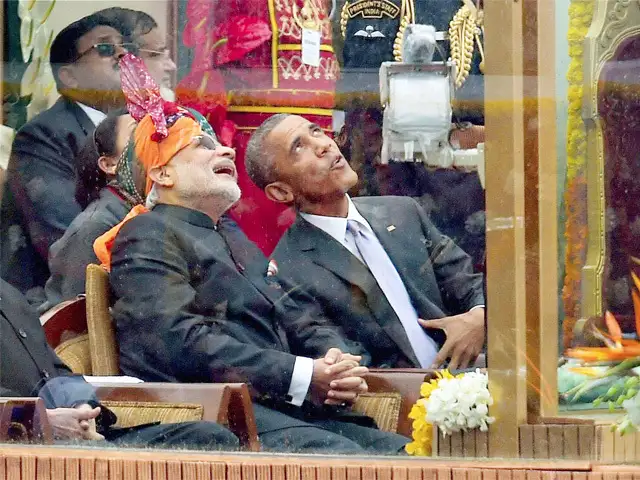
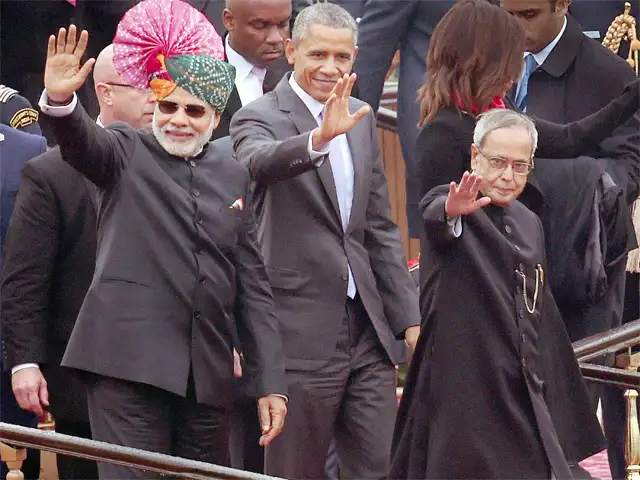
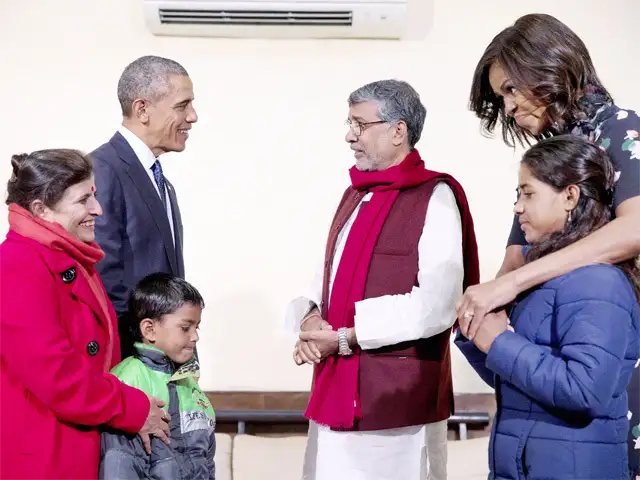
US President Barack Obama left India for Saudi Arabia on January 27 after a 3-day visit focused on improving relations between the world's largest democracies.
Both leaders managed to remove the hurdles to operationalize the civil nuclear deal besides deciding to jointly produce military hardware and stepping up economic engagement.
Here are 15 big pluses from the Modi-Obama arrangement:
US President Barack Obama left India for Saudi Arabia on January 27 after a 3-day visit focused on improving relations between the world's largest democracies.
Both leaders managed to remove the hurdles to operationalize the civil nuclear deal besides deciding to jointly produce military hardware and stepping up economic engagement.
Here are 15 big pluses from the Modi-Obama arrangement:

ADVERTISEMENT


