Mulayam vs Akhilesh: Was the fight just 'symbolic'?
By Subodh Ghildiyal, TNN | Updated:

Highlights
- Many feel that the bitterness marking the family feud cannot be entirely make believe.
- Mulayam never claimed there was a split in SP and did not file any affidavit on his support.
- Akhilesh has shown that he has inherited from Mulayam the subtle art of manoeuvring.
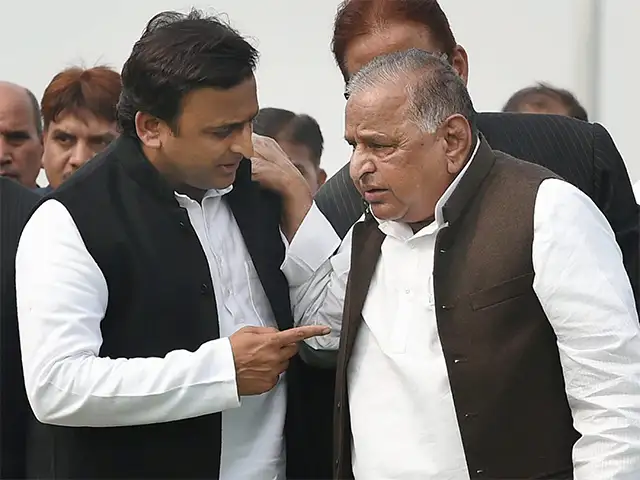
NEW DELHI: Samajwadi Party’s troubled founder Mulayam Singh Yadav, the man famed for running circles around friends and foes over decades, seemed to have been tripped by son Akhilesh in the twilight of his political career.
But as he licks his wounds, the canny politician continued to evoke suspicion of hidden stratagems - speculation swirled whether Mulayam had really taken on his son or found a way to hand him the 'cycle'.
With Mulayam’s labyrinthine mind famed to turning wheels within wheel, some things would never be known. Events remain susceptible to multiple interpretations though some feel the bitterness marking the family feud cannot be entirely make believe. On the other hand, there are those who argue that the EC has taken a decision Mulayam would never have been able to reach given the competing claims of family factions.
The Election Commission’s decision to award the "cycle" symbol to the "rebel" Akhilesh implies that the cycle of succession in Samajwadi Party, which started with Mulayam naming him chief minister of UP in 2012, is complete. For all practical purposes, Akhilesh has inherited, or usurped, the mantle from his father.
If SP is ousted from office in 2017 election, "Tipu" would be immune from palace intrigues which have featured covetous cousins and envious uncles. Shivpal, Amar Singh and even half brother Prateek may be history.
Where does EC's stripping of Mulayam of his political fief leave the Yadav chieftain?
The capital’s political grapevine anticipated that a claim of split in the SP before the poll watchdog would result in "freezing" of the "cycle" symbol. It was darkly hinted that the government is casting a long shadow on the developments.
This did not transpire and the 42 pages of the EC order tells why. Mulayam never claimed there was a split in SP and did not file any affidavit on his support in the legislature party and so failed to establish a dispute.
A lawyer present in the EC hearings expressed his befuddlement that shrewd Mulayam could take "such a silly line", an argument destined to fail.
The obvious faux pas has spawned questions if Mulayam was serious about countering his son. Or, was he so hopelessly outclassed in the SP legislature party that he had no case left in countering Akhilesh.
If Mulayam is the father wronged, it would be known in the days to come. Will he field candidates against Akhilesh’s nominees, rant against the son who stole the throne?
In winning the smoke and mirrors challenge of Samajwadi politics, Akhilesh has shown that he has inherited from Mulayam the subtle art of manoeuvring, holds and throws Yadavs have learnt in wrestling pits through generations.
And to think, it was Mulayam’s brother - and Akhilesh’s rival - Shivpal who sat at Mulayam’s feet as a student for decades.
But as he licks his wounds, the canny politician continued to evoke suspicion of hidden stratagems - speculation swirled whether Mulayam had really taken on his son or found a way to hand him the 'cycle'.
With Mulayam’s labyrinthine mind famed to turning wheels within wheel, some things would never be known. Events remain susceptible to multiple interpretations though some feel the bitterness marking the family feud cannot be entirely make believe. On the other hand, there are those who argue that the EC has taken a decision Mulayam would never have been able to reach given the competing claims of family factions.
The Election Commission’s decision to award the "cycle" symbol to the "rebel" Akhilesh implies that the cycle of succession in Samajwadi Party, which started with Mulayam naming him chief minister of UP in 2012, is complete. For all practical purposes, Akhilesh has inherited, or usurped, the mantle from his father.
If SP is ousted from office in 2017 election, "Tipu" would be immune from palace intrigues which have featured covetous cousins and envious uncles. Shivpal, Amar Singh and even half brother Prateek may be history.
Where does EC's stripping of Mulayam of his political fief leave the Yadav chieftain?
ADVERTISEMENT
The capital’s political grapevine anticipated that a claim of split in the SP before the poll watchdog would result in "freezing" of the "cycle" symbol. It was darkly hinted that the government is casting a long shadow on the developments.
This did not transpire and the 42 pages of the EC order tells why. Mulayam never claimed there was a split in SP and did not file any affidavit on his support in the legislature party and so failed to establish a dispute.
A lawyer present in the EC hearings expressed his befuddlement that shrewd Mulayam could take "such a silly line", an argument destined to fail.
The obvious faux pas has spawned questions if Mulayam was serious about countering his son. Or, was he so hopelessly outclassed in the SP legislature party that he had no case left in countering Akhilesh.
ADVERTISEMENT
If Mulayam is the father wronged, it would be known in the days to come. Will he field candidates against Akhilesh’s nominees, rant against the son who stole the throne?
In winning the smoke and mirrors challenge of Samajwadi politics, Akhilesh has shown that he has inherited from Mulayam the subtle art of manoeuvring, holds and throws Yadavs have learnt in wrestling pits through generations.
ADVERTISEMENT
And to think, it was Mulayam’s brother - and Akhilesh’s rival - Shivpal who sat at Mulayam’s feet as a student for decades.
Download
The Economic Times Business News App for the Latest News in Business, Sensex, Stock Market Updates & More.
The Economic Times Business News App for the Latest News in Business, Sensex, Stock Market Updates & More.
Download
The Economic Times News App for Quarterly Results, Latest News in ITR, Business, Share Market, Live Sensex News & More.
The Economic Times News App for Quarterly Results, Latest News in ITR, Business, Share Market, Live Sensex News & More.


ADVERTISEMENT


