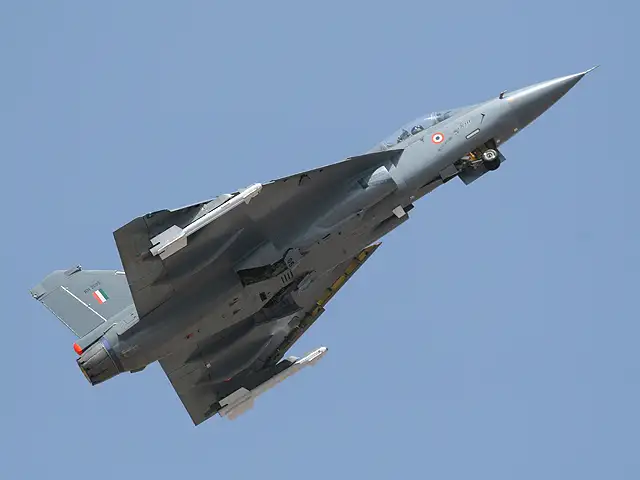
Light Combat Aircraft Tejas-PV1 equipped with new generation electronic warfare suite

An advanced electronic warfare (EW) suite developed by the DRDO was successfully tested onboard the country's Light Combat Aircraft Tejas-PV1 today.

Light Combat Aircraft Tejas-PV1 equipped with new generation electronic warfare suite
CHENNAI: An advanced electronic warfare (EW) suite developed by the DRDO was successfully tested onboard the country's Light Combat Aircraft Tejas-PV1 today.

"After obtaining due flight clearances and certification, the first flight sortie of LCA PV1 with the EW equipment operational took place today. The equipment was noted to be detecting radar signals operating in and around the flight path," a Defence Research Development Organisation (DRDO) release said here.

In addition to the Radar Warner, the EW suite, tested in Bengaluru, was also equipped with a jammer, which gives to the pilot an additional capability of nullifying the effect of detected radar threat by appropriate mode of jamming.

Existing EW systems fitted on various combat aircraft were basic equipment - Radar Warner Receiver to provide warning to the aircraft pilot in case of detection of a radar threat.

The advanced EW suite was developed by Defence Avionics Research Establishment ( DARE), a DRDO laboratory specialising in avionics and electronic warfare systems for combat aircraft, the release added.
Download
The Economic Times Business News App
for the Latest News in Business, Sensex, Stock Market Updates & More.
Download
The Economic Times News App
for Quarterly Results, Latest News in ITR, Business, Share Market, Live Sensex News & More.
Make-in-India: Plan to develop 5th-generation fighter aircraft
1/10
Rajat Pandit, TNN

India plans to kick-off its own fifth-generation fighter aircraft (FGFA) development project this year to build on the expertise gained in the long developmental saga of the indigenous Tejas light combat aircraft.

The aim is to fly the first twin-engine AMCA prototype by 2023-2024, which will be around the time deliveries of Tejas Mark-II fighters will be underway.
Rajat Pandit, TNN

India plans to kick-off its own fifth-generation fighter aircraft (FGFA) development project this year to build on the expertise gained in the long developmental saga ..
Read More
IAF is slated to get its first Tejas Mark-I in March this year, over 30 years after the LCA project was first approved in August 1983.

But the Tejas Mark-II jets, with more powerful engines, will start to come only by 2021-2022, as was first reported by TOI.

In pic: Tejas, Image by DRDO
IAF is slated to get its first Tejas Mark-I in March this year, over 30 years after the LCA project was first approved in August 1983.

But the Tejas Mark-II jets, with more powerful engines, ..
Read More
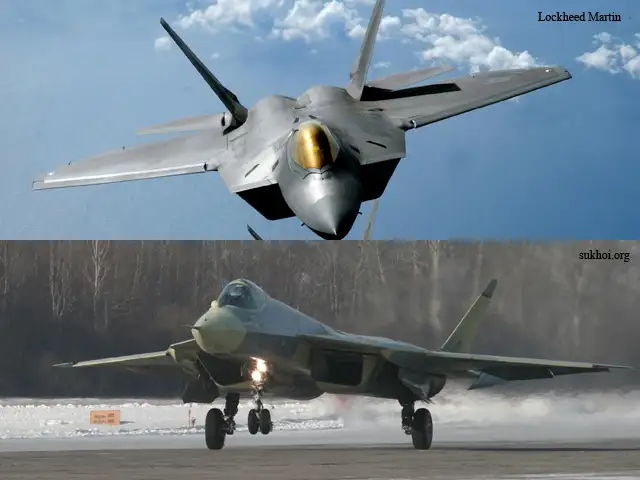
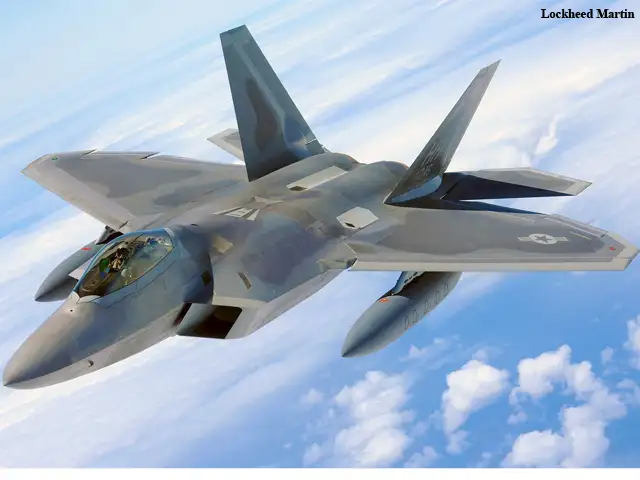
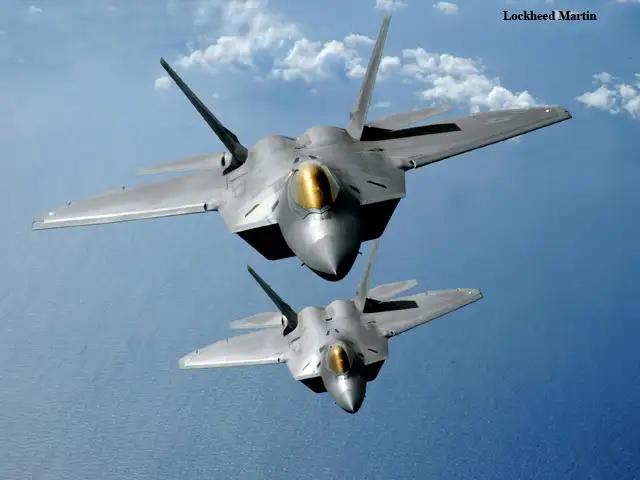
Fifth generation fighters are multi-role or swing-role but also incorporate advanced stealth technology, composite materials, supercruise (achieve supersonic cruise speeds without use of afterburners), thrust-vectoring & multi-sensor integrated avionics.

In pic: F/A-22 Raptor
Fifth generation fighters are multi-role or swing-role but also incorporate advanced stealth technology, composite materials, supercruise (achieve supersonic cruise speeds without use of afterburners..
Read More
The only fully operational fifth-generation fighter at present is the American F/A-22 Raptor, developed for $28 billion, with each fighter costing $350-400 million extra.

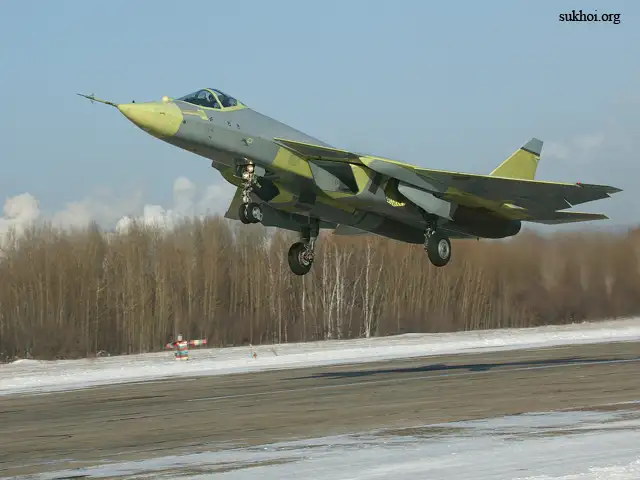
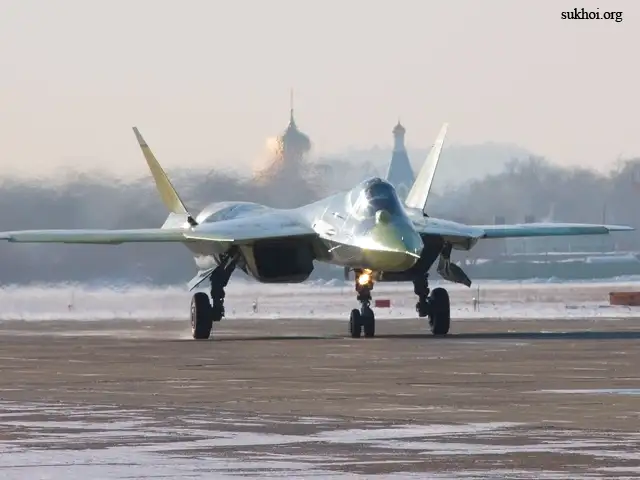
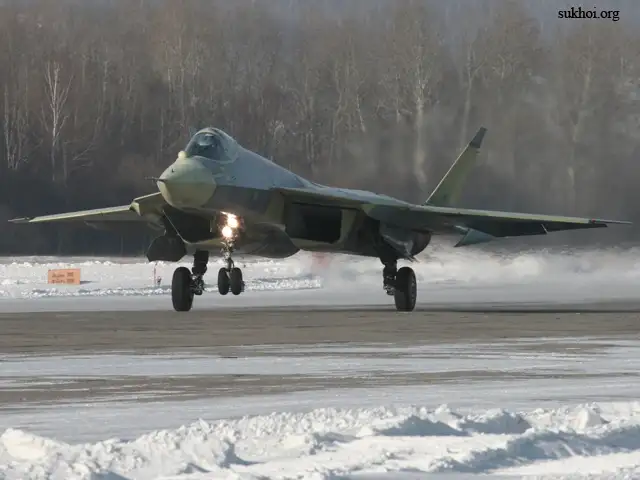
Two FGFA in pipeline are America's F-35 Lightning-II Joint Strike Fighter & Russian Sukhoi T-50 or PAK-FA.

In pic: Russian Sukhoi T-50
The only fully operational fifth-generation fighter at present is the American F/A-22 Raptor, developed for $28 billion, with each fighter costing $350-400 million extra.

Two FGFA in pipeline..
Read More
India is also trying to sort out its differences with Russia over their proposed joint development of the Indian "perspective multi-role fighter" based on the latter's under-development FGFA called Sukhoi T-50 or PAK-FA.

India, in fact, had told Russia it cannot wait till 2024-2025 to begin inducting 127 of these single-seat fighters, which will entail an overall expenditure of around $25 billion. But India also wants its own home-grown AMCA project in the long-run for strategic and economic reasons.

In pic: Russian Sukhoi T-50
India is also trying to sort out its differences with Russia over their proposed joint development of the Indian "perspective multi-role fighter" based on the latter's under-development FGFA called S..
Read More
A swing-role FGFA basically combines advanced stealth, supercruise (capability to achieve supersonic cruise speeds without use of afterburners), super-maneuverability, data fusion and multi-sensor integration on a single fighter.

In pic: Russian Sukhoi T-50
A swing-role FGFA basically combines advanced stealth, supercruise (capability to achieve supersonic cruise speeds without use of afterburners), super-maneuverability, data fusion and multi-sensor in..
Read More
But the 20-year long development of the American F/A-22 "Raptor", the only fully-operational FGFA in the world today, has shown that such a project is an extremely complex and costly affair.

The US shut down the production of Raptors in 2012 after inducting 188 of them at an overall cost of $67 billion due to huge costs, technical glitches and time overruns.

In pic: F/A-22 Raptor
But the 20-year long development of the American F/A-22 "Raptor", the only fully-operational FGFA in the world today, has shown that such a project is an extremely complex and costly affair.

T..
Read More
First generation jet fighters (1940s-1950s) used turbojets for propulsion, instead of earlier piston-driven aircraft (Messerschmitt-Me262, Mystere-IV, MiG-15 etc)

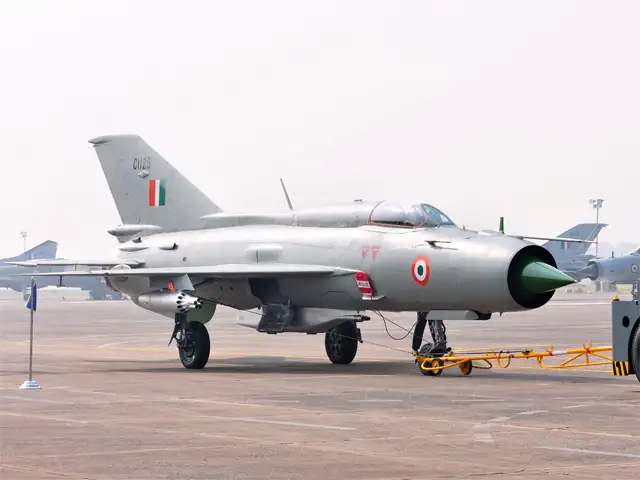
Second generation fighters (1950s-1960s) integrated new technologies, swept or delta wings & guided missiles for BVR (beyond visual range) combat (MiG-21, sukhoi-7, F-104 Starfighter etc)

In pic: MiG-21
First generation jet fighters (1940s-1950s) used turbojets for propulsion, instead of earlier piston-driven aircraft (Messerschmitt-Me262, Mystere-IV, MiG-15 etc)

Second generation fighters (1..
Read More
Third generation fighters (1960s-1970s) inducted improved radars, missiles & avionics (Mirage-III, MiG-25, F-4 Phantom-II etc)

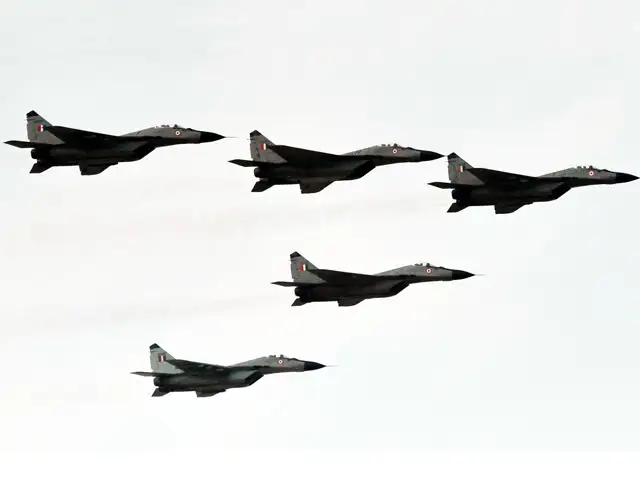
Fourth generation fighters (1970s-1990s) incorporated fly-by-wire controls & multi role capabilities (Mirage-2000, MiG-29, Sukhoi-27, Tornado, F-16 Fighting Falcon etc)

In pic: MiG-29
Third generation fighters (1960s-1970s) inducted improved radars, missiles & avionics (Mirage-III, MiG-25, F-4 Phantom-II etc)

Fourth generation fighters (1970s-1990s) incorporated fly-by-wire..
Read More
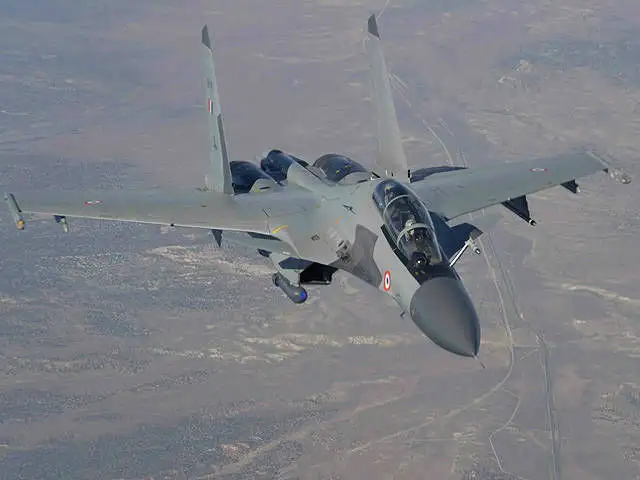
4.5 generation fighters (1990s onwards) use more advanced avionics & electronics, with some stealth. (Sukhoi-30 MKI, Gripen, Eurofighter Typhoon, F-16F Desert Falcon, F/A-18 Super Hornet etc)

In pic: Sukhoi-30 MKI, Image by IAF
4.5 generation fighters (1990s onwards) use more advanced avionics & electronics, with some stealth. (Sukhoi-30 MKI, Gripen, Eurofighter Typhoon, F-16F Desert Falcon, F/A-18 Super Hornet etc)

..
Read More
READ MORE
ADVERTISEMENT

READ MORE:

LOGIN & CLAIM

50 TIMESPOINTS

More from our Partners

Loading next story
Business News › News › Politics › Light Combat Aircraft Tejas-PV1 equipped with new generation electronic warfare suite
Text Size:AAA
Success
This article has been saved

*

+