LCA Tejas achieves rare technological breakthrough

The Light Combat Aircraft (LCA) Tejas has achieved a rare technological breakthrough with three consecutive start ups of its engine in extreme sub-zero temperatures of Ladakh region in Jammu and Kashmir.

LCA Tejas achieves rare technological breakthrough
NEW DELHI: The Light Combat Aircraft (LCA) Tejas has achieved a rare technological breakthrough with three consecutive start ups of its engine in extreme sub-zero temperatures of Ladakh region in Jammu and Kashmir.

"With three consecutive start-ups of its engine after overnight soak in extreme cold around minus 15 degrees Celsius conditions of Laddakh winter without any external assistance, Tejas, the Indian Light Combat Aircraft has achieved yet another and a rare distinction," an official statement said.

Starting the fighter aircraft under such extreme conditions without any external assistance or heating is a technology challenge, it said.

The requirements become further stringent when the starting is to be done three times consecutively with a partially charged battery.

"The team LCA has achieved a technological breakthrough," Dr P S Subramanyam PGD (CA) and Director, Aeronautical Development Agency (ADA) said.

Prior to aircraft tests, the Jet Fuel Starter (JFS) was extensively tested on test rig to meet starting conditions across the operating altitudes including Leh (10,700 ft.) and Khardung La (18300 ft.), a high mountain pass located in the region.
ADVERTISEMENT

The control software of JFS was fine tuned to work at all operating altitudes with no adjustments from cockpit.

The engine starter is developed indigenously by HAL Aero Engine Research and Design Centre (AERDC), Bangalore.

Download
The Economic Times Business News App
for the Latest News in Business, Sensex, Stock Market Updates & More.
Download
The Economic Times News App
for Quarterly Results, Latest News in ITR, Business, Share Market, Live Sensex News & More.
Eight major defence achievements for India in 2014
1/9
Economictimes.com & Agencies

The need to have robust defence capabilities in today's day and age cannot be overstated. India has been aggressively pushing to enhance its ability to deter attacks and up its defence prowess.

2014 saw multiple steps being taken in that direction and India saw many new additions to its defence fleet. We take a look at eight achievements that deserve a special mention:
Economictimes.com & Agencies

The need to have robust defence capabilities in today's day and age cannot be overstated. India has been aggressively pushing to enhance its ability to dete..
Read More
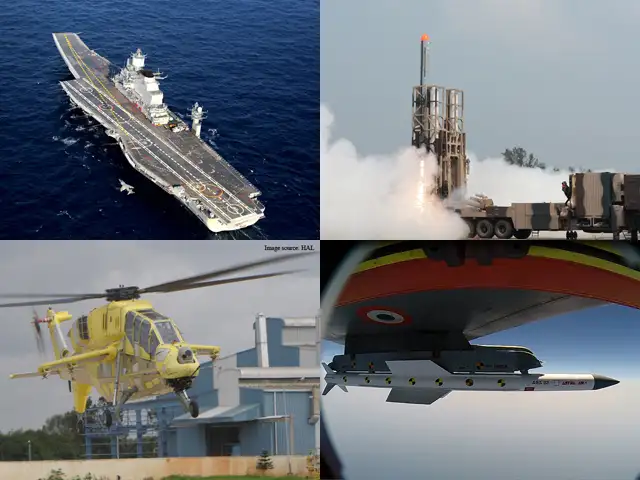
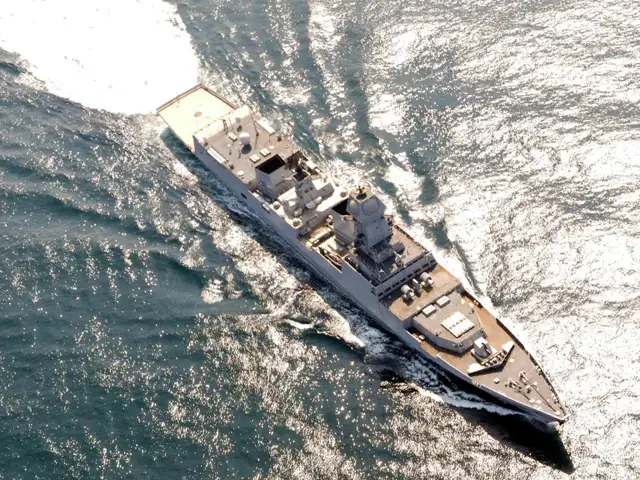
The 6,800-tonne INS Kolkata, the largest-ever warship to be built in India, was commissioned in August 2014. The warship is country's biggest and most powerful guided missile-destroyer.

The INS Kolkata is 60 per cent indigenous and has very good stealth capabilities and includes state-of-the-art surveillance and weapon systems. INS Kolkata, which is the first of the three warships under the Project-15B, was sanctioned at Rs 3,051 crore and now the project cost is pegged at Rs 11,662 crore.

INS Kolkata is part of the 44 warships currently on order in Indian shipyards, as part of the endeavour to steadily build a three-dimensional blue-water Navy capable of taking care of India's huge strategic interests in the region stretching from the Persian Gulf to the Malacca Strait.

Image by Indian Navy
The 6,800-tonne INS Kolkata, the largest-ever warship to be built in India, was commissioned in August 2014. The warship is country's biggest and most powerful guided missile-destroyer.

The IN..
Read More
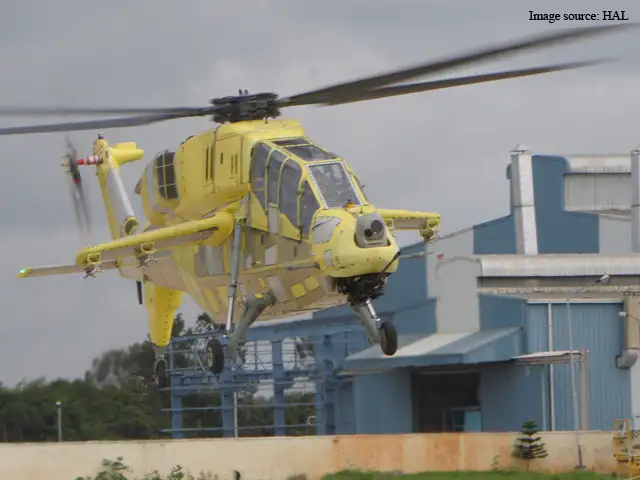
Giving a boost to India's defence, the Light Combat Helicopter (LCH) Technology Demonstrator TD-3 recently made its successful maiden flight. LCH is an indigenous attack helicopter development programme being undertaken by Hindustan Aeronautics Limited (HAL).

According to HAL, LCH was proposed to meet IAF's requirement of a dedicated light helicopter for combat operations. HAL claims that the LCH TD-3 will be an effective weapon platform to deliver precision strikes at high altitude.

HAL has already developed two prototypes of the LCH - the Technology Demonstrator (TD1) and the TD2.

Image by HAL
Giving a boost to India's defence, the Light Combat Helicopter (LCH) Technology Demonstrator TD-3 recently made its successful maiden flight. LCH is an indigenous attack helicopter development progra..
Read More
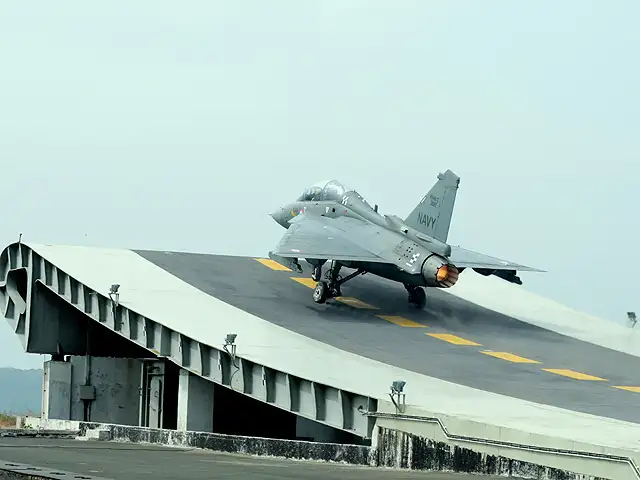
In a big boost to India's defence capabilities, and specially that of the Navy, a Light Combat Aircraft (LCA) Prototype 1 recently had a successful test flight from a Shore Based Test Facility in Goa.

LCA (Navy) is an indigenously designed and developed 4th plus generation combat aircraft, meant to operate from the decks of aircraft carriers.

LCA (Navy) is designed with stronger landing gears to absorb forces exerted by the ski jump ramp during take-off, to be airborne within 200 m as against 1000 m required for normal runways, says DRDO.

Image from DRDO
In a big boost to India's defence capabilities, and specially that of the Navy, a Light Combat Aircraft (LCA) Prototype 1 recently had a successful test flight from a Shore Based Test Facility in Goa..
Read More
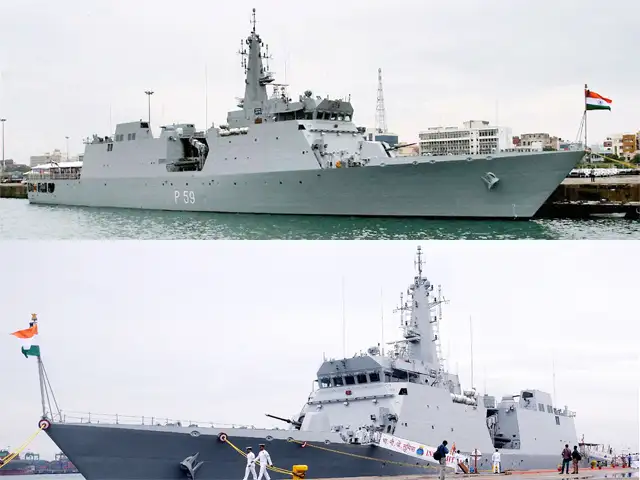
INS Sumitra, an indigenously built naval offshore patrol vessel (NOPV), was commissioned into the naval fleet in September. This is the Navy's largest offshore patrol vessel.

The 2200-tonne vessel is the biggest NOPV to be developed at Goa Shipyard. The vessel is the fourth in the series of indigenous NOPV developed for Indian Navy.

It also has medium and short range weapons installed in it. They include 76mm guns, Close-in Weapon System (CIWS), electronic support and a communication intelligence system. It has a helipad to operate one light weight Dhruv helicopter.
INS Sumitra, an indigenously built naval offshore patrol vessel (NOPV), was commissioned into the naval fleet in September. This is the Navy's largest offshore patrol vessel.

The 2200-tonne v..
Read More
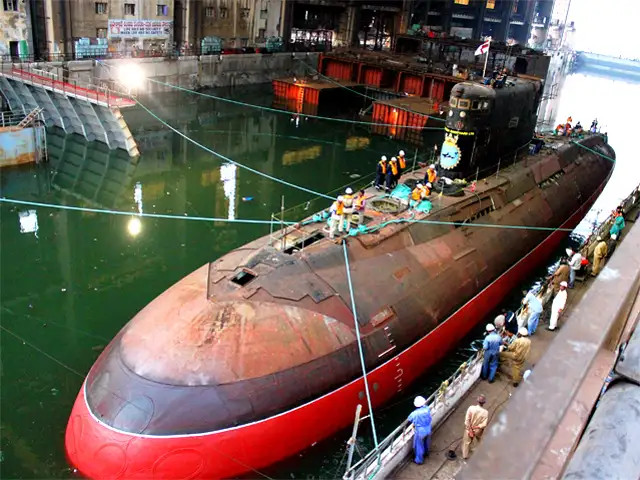
In a major boost for both, the Indian Navy and Hindustan Shipyard Limited (HSL), the Sindhughosh-class diesel-electric submarine - INS Sindhukirti, which has been undergoing a medium refit at HSL, was undocked at the yard.

According to senior HSL officials, the submarine is expected to be handed over to the Indian Navy in the next few months after it undertakes trials at sea.

The medium refit, which is estimated to have cost around Rs 800-900 crore, took nearly seven years for the submarine to be undocked at the shipyard.
In a major boost for both, the Indian Navy and Hindustan Shipyard Limited (HSL), the Sindhughosh-class diesel-electric submarine - INS Sindhukirti, which has been undergoing a medium refit at HSL, wa..
Read More
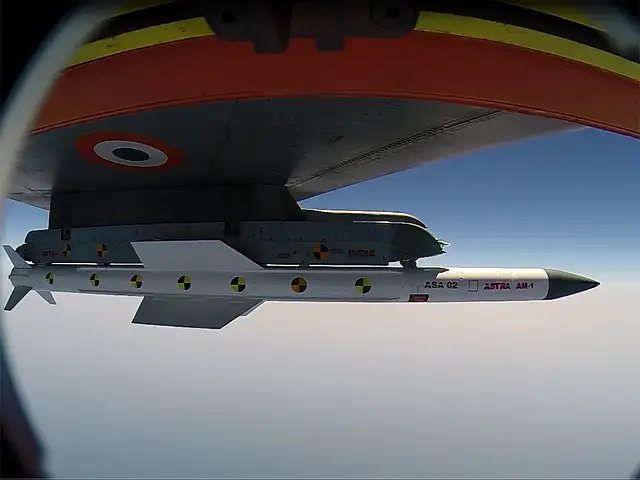
India's first indigenously developed Beyond Visual Range (BVR) Air-to-Air missile 'Astra' was tested successfully in 2014. The indigenously developed missile from the DRDO is an all-weather weapon with active Radar terminal guidance.

According to DRDO, the missile boasts of excellent ECCM features, smokeless propulsion and process improved effectiveness in multi-target scenario.

The Astra missile was test fired from a Sukhoi Su-30MKI. The missiles have undergone rigorous testing on Su-30 in the captive mode for avionics integration and seeker evaluation in 2013.

Image by: DRDO
India's first indigenously developed Beyond Visual Range (BVR) Air-to-Air missile 'Astra' was tested successfully in 2014. The indigenously developed missile from the DRDO is an all-weather weapon wi..
Read More
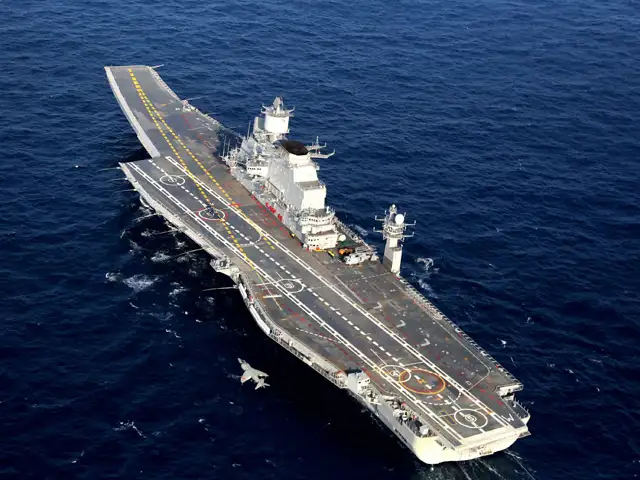
After a gap of over two decades, India is operating two aircraft carriers in its maritime zone with the arrival of its largest warship INS Vikramaditya in the Arabian Sea where it is now operating with INS Viraat.

The Indian Navy has two aircraft carriers at sea after over 20 years. INS Vikramaditya is designed to boost India's maritime capabilities.

In Indian Navy, the warship with a length of 284m will have MiG-29K naval combat aircraft along with Kamov 31 and Kamov 28 anti-submarine warfare and maritime surveillance helicopters.

Image by Indian Navy
After a gap of over two decades, India is operating two aircraft carriers in its maritime zone with the arrival of its largest warship INS Vikramaditya in the Arabian Sea where it is now operating wi..
Read More
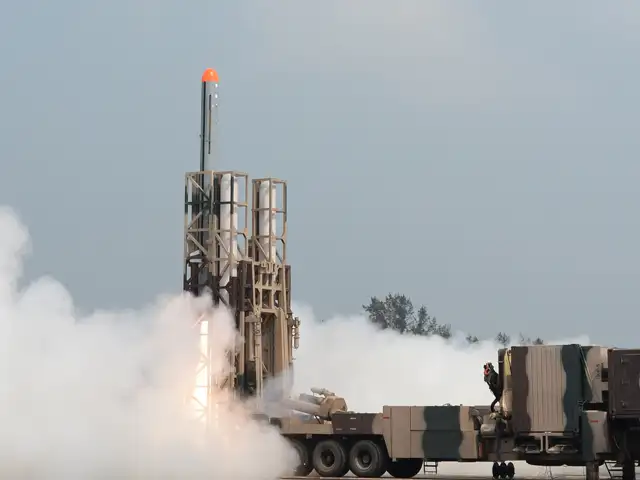
In October, India successfully test-fired its first indigenously designed and developed long-range subsonic cruise missile 'Nirbhay' with a strike range of over 1,000 kms from the Integrated Test Range (ITR).

The 1000-km-class cruise missile capable of striking deep into enemy territory, has been designed and developed by DRDO at it's aeronautics R&D laboratory ADE (Aeronautical Development Establishment) based in Bengaluru.

The missile is yet another giant step forward in India's technological capabilities for design development and leading to production sophisticated weapons platforms and equipment for the armed forces, officials have said.

Image by: DRDO
In October, India successfully test-fired its first indigenously designed and developed long-range subsonic cruise missile 'Nirbhay' with a strike range of over 1,000 kms from the Integrated Test Ran..
Read More
READ MORE
ADVERTISEMENT

READ MORE:

LOGIN & CLAIM

50 TIMESPOINTS

More from our Partners

Loading next story
Business News › News › Politics › LCA Tejas achieves rare technological breakthrough
Text Size:AAA
Success
This article has been saved

*

+