ISRO to undertake biggest commercial launch on July 10
With the overall lift-off mass of the five satellites amounting to about 1,440 kg, this mission becomes the heaviest commercial mission ever.
By PTI | Updated:

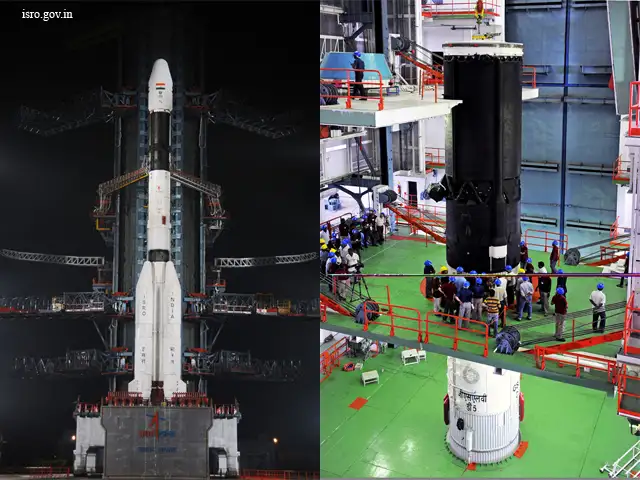
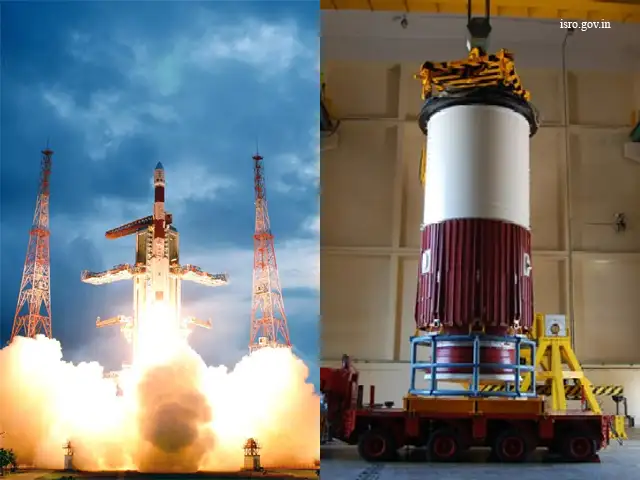
BENGALURU: In the heaviest ever commercial mission undertaken by ISRO and its commercial arm Antrix, the country's workhorse the Polar Satellite Launch Vehicle ( PSLV) will put in orbit five foreign satellites from the spaceport of Sriharikota in Andhra Pradesh on July 10.
With the overall lift-off mass of the five satellites amounting to about 1,440 kg, this mission becomes the heaviest commercial mission ever undertaken by Antrix/ISRO, the Indian space agency said.
In its 13th flight, PSLV-C28 will launch three identical DMC3 optical earth observation satellites built by Surrey Satellite Technology Limited (SSTL), United Kingdom (UK).
The three DMC3 satellites, each weighing 447 kg, will be launched into a 647 km Sun-Synchronous Orbit (SSO) using the high-end version of PSLV (PSLV-XL), ISRO said on its website. PSLV-C28 will be the ninth flight of PSLV in 'XL' configuration.
In addition, the rocket will also carry two auxiliary satellites from UK - CBNT-1, a technology demonstrator earth observation micro satellite built by SSTL, and De-OrbitSail, a technology demonstrator nano satellite built by Surrey Space Centre, it said.
Accommodating the three DMC3 satellites each with a height of about 3 metre within the existing payload fairing of PSLV, was a challenge, ISRO said.
To mount these satellites onto the launcher, a circular Launcher adaptor called L-adaptor and a triangular deck called Multiple Satellite Adapter-Version 2 (MSA-V2), were newly designed and realised by ISRO for this specific purpose.
With the overall lift-off mass of the five satellites amounting to about 1,440 kg, this mission becomes the heaviest commercial mission ever undertaken by Antrix/ISRO, the Indian space agency said.
In its 13th flight, PSLV-C28 will launch three identical DMC3 optical earth observation satellites built by Surrey Satellite Technology Limited (SSTL), United Kingdom (UK).
The three DMC3 satellites, each weighing 447 kg, will be launched into a 647 km Sun-Synchronous Orbit (SSO) using the high-end version of PSLV (PSLV-XL), ISRO said on its website. PSLV-C28 will be the ninth flight of PSLV in 'XL' configuration.
In addition, the rocket will also carry two auxiliary satellites from UK - CBNT-1, a technology demonstrator earth observation micro satellite built by SSTL, and De-OrbitSail, a technology demonstrator nano satellite built by Surrey Space Centre, it said.
Accommodating the three DMC3 satellites each with a height of about 3 metre within the existing payload fairing of PSLV, was a challenge, ISRO said.
ADVERTISEMENT
To mount these satellites onto the launcher, a circular Launcher adaptor called L-adaptor and a triangular deck called Multiple Satellite Adapter-Version 2 (MSA-V2), were newly designed and realised by ISRO for this specific purpose.
Download
The Economic Times Business News App for the Latest News in Business, Sensex, Stock Market Updates & More.
The Economic Times Business News App for the Latest News in Business, Sensex, Stock Market Updates & More.
Download
The Economic Times News App for Quarterly Results, Latest News in ITR, Business, Share Market, Live Sensex News & More.
The Economic Times News App for Quarterly Results, Latest News in ITR, Business, Share Market, Live Sensex News & More.
Related Articles
 ISRO invites proposals from Indian researchers to study XPoSat Mission data2026-06-22T14:00:48Z
- Missed JEE Advanced by 2 marks, now ISRO scientist: Meerut youth who studied on YouTube without costly coaching will help power India’s space programme2026-06-21T03:41:33Z
- In 1981, when ISRO carried its APPLE on bullock cart for just Rs 150, the world laughed; Today, the same story is hailed as a masterstroke of innovation2026-06-19T04:42:15Z
Hari Pulakkat, ET Bureau
ISRO has its hands full with new projects, some of which pushing up the potential use of space technology significantly. These include new heavy launch vehicles, cryogenic and semi-cryogenic engines, a moon and a solar mission and, if there is enough government support, human space missions as well.
Plus, you have air-breathing and reusable launch vehicles. And the turnaround seems to be complete...
ISRO has its hands full with new projects, some of which pushing up the potential use of space technology significantly. These include new heavy launch vehicles, cryogenic and semi-cryogenic engines, a moon and a solar mission and, if there is enough government support, human space missions as well.
Plus, you have air-breathing and reusable launch vehicles. And the turnaround seems to be complete...

ADVERTISEMENT


