India, US defence officials to draw roadmap for collaboration
The Indian side too is expected to name its lead, following which the joint working group would formally become operational.
By PTI | Updated:

WASHINGTON: Top Indian and US defence officials will meet in New Delhi this week to draw a roadmap to fast track the implementation of four projects identified for co-development and co-production and formation of a joint working group on aircraft carriers.
US Under Secretary of Defence for Acquisition, Technology and Logistics (AT&L), Frank Kendall, who is in India, will announce the name of the official who would lead the American side in this joint working group.
The Indian side too is expected to name its lead, following which the joint working group would formally become operational.
The idea of co-operation in the field of aircraft carrier was first discussed in early September leading up to Prime Minister Narendra Modi's US visit in September last year.
"We laid the ground work in September and October and then it became part of the (India US) joint statement in January (after US President Barack Obama's India trip)," the official said, adding that the working group would explore opportunities for co-operation in aircraft carrier capabilities and techniques in construction.
India is embarking on a next generation aircraft carrier construction, and there are potentially multiple areas that would be of mutual interest in discussing it, the official said.
"We need to understand what they are interested in...because of the complexities of the platform we are proposing a working group. What we are committed to do in this trip is to bring name forward who would be our lead on the US side from the US Navy to lead that working group. We hope to receive the name of India's lead of the working group," the official said.
During the meeting, the two sides will discuss various initiatives, including the 'Cheel' project to manufacture unmanned aircraft system.
A senior defence department official said the 'Cheel' project is expected to be the quickest one, with the two countries likely to announce this week setting up of a small working group to "develop a business model" to move forward with co-development and co-production of the mini-Raven.
While the Lockheed Martin's 'Roll On and Roll Off Kits' project for C-130s and other aviation platforms project could be seen entering phase of developing a business plan by year end, Pentagon officials hoped that India will finally join it on two other projects of developing mobile electric hydro power source and next generation chemical biological protection suit.
"I see this (joint working group) as a significant first step to fulfilling the vision under DTTI (Defence Trade and Technology Initiative), which is this joint government and industrials relationship to mutually develop capability and put that capability into production," a senior Defence Department official said.
The official, who spoke on condition of anonymity, described these projects as "a proof of concept" which would serve as a significant pathfinder and eventually lead to co-development and co-production of projects of much higher technologies.
"The project is very mature...what we need is to secure Indian interest moving forward," he added.
To that end one of the key Pentagon objectives on this visit is to seek a commitment by Indians colleagues to "form a very small working group to develop a business plan" to qualify the requirements and capabilities of min-Raven, the unmanned aircraft system, said the US official.
"This draft business plan, would not only finalise specifications for the plan but also finalise the roles of each of those stake holders," the official said.
"This is the critical next step. Our key objective specific to Cheel is to get a commitment from India's Defence Secretary to actually form this group to complete this business plan and present it....not later than their next high level meeting in August-September," the official said.
"At the moment, we do not have the requirement (Cheel), but that does not mean that we would not have in the future," the official said when asked if US would be purchasing these drones.
US Under Secretary of Defence for Acquisition, Technology and Logistics (AT&L), Frank Kendall, who is in India, will announce the name of the official who would lead the American side in this joint working group.
The Indian side too is expected to name its lead, following which the joint working group would formally become operational.
The idea of co-operation in the field of aircraft carrier was first discussed in early September leading up to Prime Minister Narendra Modi's US visit in September last year.
"We laid the ground work in September and October and then it became part of the (India US) joint statement in January (after US President Barack Obama's India trip)," the official said, adding that the working group would explore opportunities for co-operation in aircraft carrier capabilities and techniques in construction.
India is embarking on a next generation aircraft carrier construction, and there are potentially multiple areas that would be of mutual interest in discussing it, the official said.
ADVERTISEMENT
"We need to understand what they are interested in...because of the complexities of the platform we are proposing a working group. What we are committed to do in this trip is to bring name forward who would be our lead on the US side from the US Navy to lead that working group. We hope to receive the name of India's lead of the working group," the official said.
During the meeting, the two sides will discuss various initiatives, including the 'Cheel' project to manufacture unmanned aircraft system.
A senior defence department official said the 'Cheel' project is expected to be the quickest one, with the two countries likely to announce this week setting up of a small working group to "develop a business model" to move forward with co-development and co-production of the mini-Raven.
While the Lockheed Martin's 'Roll On and Roll Off Kits' project for C-130s and other aviation platforms project could be seen entering phase of developing a business plan by year end, Pentagon officials hoped that India will finally join it on two other projects of developing mobile electric hydro power source and next generation chemical biological protection suit.
ADVERTISEMENT
"I see this (joint working group) as a significant first step to fulfilling the vision under DTTI (Defence Trade and Technology Initiative), which is this joint government and industrials relationship to mutually develop capability and put that capability into production," a senior Defence Department official said.
The official, who spoke on condition of anonymity, described these projects as "a proof of concept" which would serve as a significant pathfinder and eventually lead to co-development and co-production of projects of much higher technologies.
ADVERTISEMENT
A joint venture between India's Dynamatic Technologies and AeroVironment of the US, the 'Cheel' project to develop the next-generation unmanned aircraft system is a very promising one, and has a lot of export potential, the official said."The project is very mature...what we need is to secure Indian interest moving forward," he added.
To that end one of the key Pentagon objectives on this visit is to seek a commitment by Indians colleagues to "form a very small working group to develop a business plan" to qualify the requirements and capabilities of min-Raven, the unmanned aircraft system, said the US official.
"This draft business plan, would not only finalise specifications for the plan but also finalise the roles of each of those stake holders," the official said.
"This is the critical next step. Our key objective specific to Cheel is to get a commitment from India's Defence Secretary to actually form this group to complete this business plan and present it....not later than their next high level meeting in August-September," the official said.
"At the moment, we do not have the requirement (Cheel), but that does not mean that we would not have in the future," the official said when asked if US would be purchasing these drones.
The proposal includes something as low-tech as palatalisation to more complex mission sets, which includes the capabilities to monitor the environment and respond to things such as natural disasters like fires, wherein one has the capability of digital palatalise system that is equipped for fighting fires, the official said.
"Because it is a multi-faceted proposal, we are still working through all the final details. And my hope is to deliver that information in a very detailed and comprehensive presentation to Indians in April," the official said.
"This would not be a very quick turnaround, because of the complexities of the platform. So the working group needs to convene, hopefully within the next three months or so and begin exploring areas of mutual interest in aircraft carrier collaboration and co-operation. Ideally by the next principles meeting in August-September, we can have an initial sense of the discussion," he said.
The next two initiatives clubbed together into fourth project is based on feedback from the services, the official said.
The Pentagon provided the list of such projects in early December and by early January, India expressed interest in two particular projects - mobile electric hydro power source, which is a marine corps programme, and the next generation chemical biological protection suit, which are lighter and more comfortable.
ADVERTISEMENT
The leads of the two projects are accompanying Kendall to Delhi.
"For both of these projects, India has asked for more information. We will go forward with these projects whether India signs on or not. The good news is they are expected to start within 12 months, 2016 and beyond, which gives India time to think about it and sign up or not sign up. If India does not sign up, US will go ahead. At the moment US Marines and Army are committed to these projects and are happy to invite India in it.
"We have a timeline, we have a budget and we have to move ahead," he said.
Noting that both the projects are in very early design and engineering phase, the official said this is a great opportunity for India to be partner.
ADVERTISEMENT
"We are hopeful that India would pick one or both or join us," the official said, adding that unlike Cheel or Roll-on-Roll off this does not involve industry at this point.
"This is a government to government relationship at this point. It is in its infancy in research and design work," he said.
ADVERTISEMENT
Under DTTI, in all the US has so far proposed some 22 different proposals to India for co-development and co-production.
Some of these projects include jet engine technology, aviation platforms, and enhancing soldier capability programs.
In addition to continuing discussion on the projects identified in the joint statement, US officials along with the DRDO leadership would do a "programme review" of 11 areas of science and technology research.
Download
The Economic Times Business News App for the Latest News in Business, Sensex, Stock Market Updates & More.
The Economic Times Business News App for the Latest News in Business, Sensex, Stock Market Updates & More.
Download
The Economic Times News App for Quarterly Results, Latest News in ITR, Business, Share Market, Live Sensex News & More.
The Economic Times News App for Quarterly Results, Latest News in ITR, Business, Share Market, Live Sensex News & More.
Text: PTI & Agencies
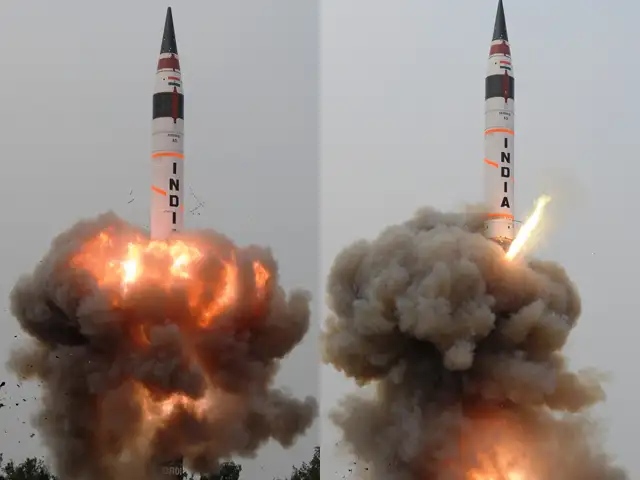
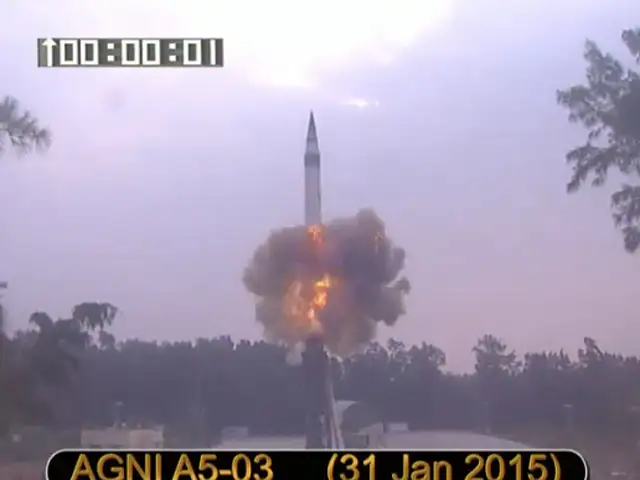
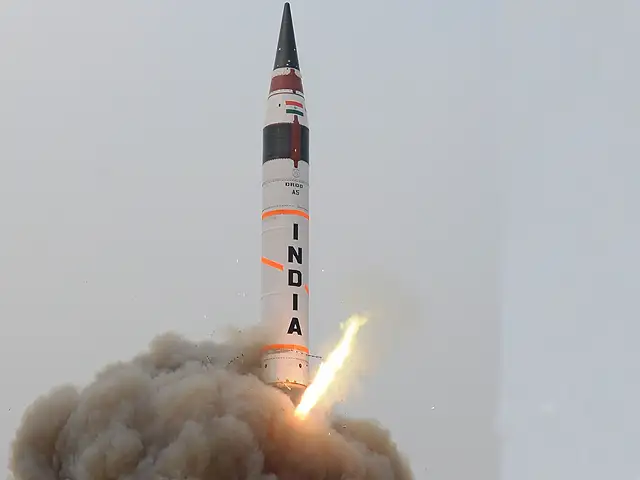
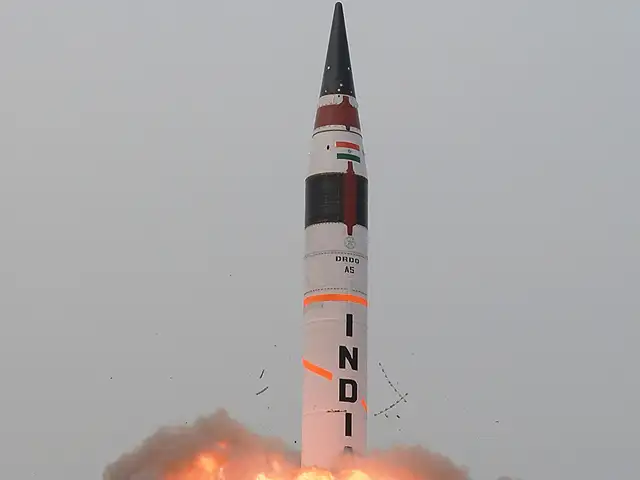
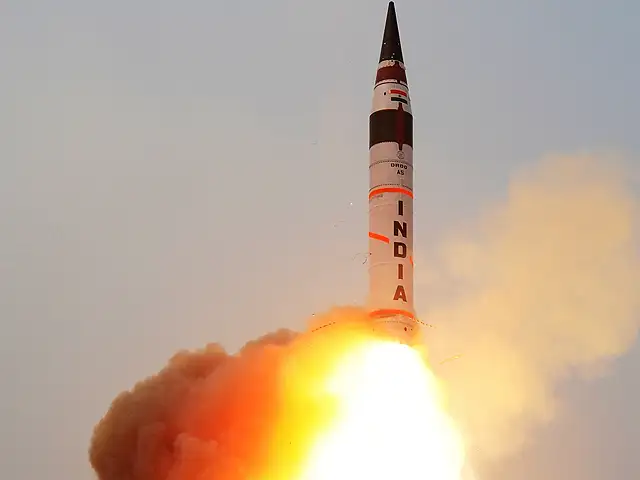
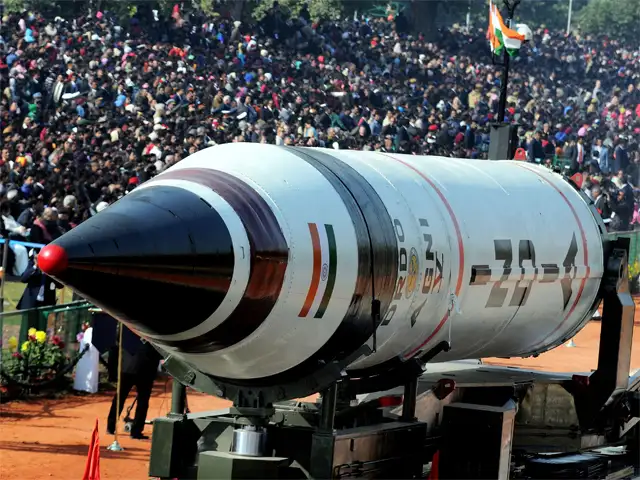
In a huge boost to India's defence sector, the maiden canister-based trial of the country's most potent missile Agni-V was conducted.
Image by DRDO
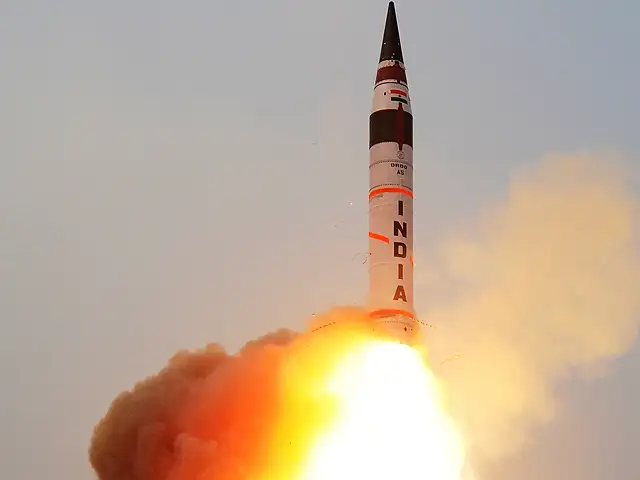
In a huge boost to India's defence sector, the maiden canister-based trial of the country's most potent missile Agni-V was conducted.
Image by DRDO


ADVERTISEMENT


