India test-fires indigenously developed sub-sonic cruise missile Nirbhay
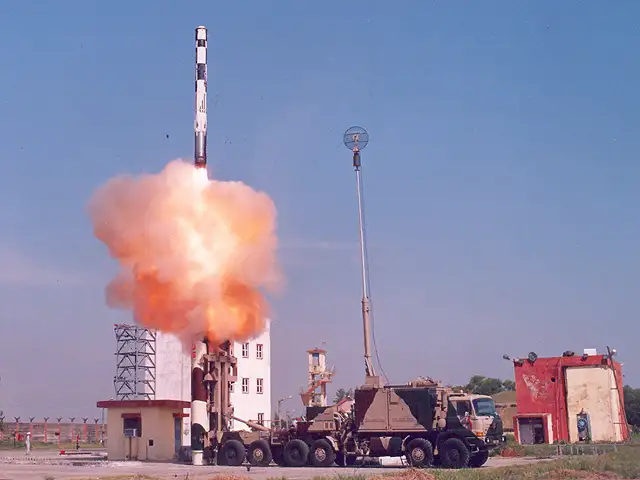
India's indigenously developed nuclear capable sub-sonic cruise missile 'Nirbhay' was today test-fired from a test range at Chandipur.
By PTI | Updated:

BALASORE: India today successfully test-fired its first indigenously designed and developed long- range subsonic cruise missile 'Nirbhay' with a strike range of over 1,000 kms from the Integrated Test Range (ITR) near here.
Describing the test as a complete success, Defence Research and Development Organisation (DRDO) said, "The entire mission, from lift-off till the final splash down, was a perfect flight achieving all the mission objectives."
The missile was test-fired from a mobile launcher positioned at launch pad 3 of ITR at about 1005 hours.
Prime Minister Narendra Modi lauded the scientists for the successful test-firing of Nirbhay, saying this meant a "great impetus" to the country's defence capabilities.
Defence Minister Arun Jaitley congratulated Avinash Chander, Scientific Advisor to the Raksha Mantri, Secretary Department of Defence R&D and DG DRDO and the DRDO team on the successful flight trial of the missile, a DRDO release said.
Cruise missile Nirbhay, powered by a solid rocket motor booster developed by Advanced Systems Laboratory (ASL) took off majestically from a mobile launcher specifically designed for it by the Vehicles R&D Establishment (VRDE), it said.
As it achieved designated altitude and velocity, the booster motor got separated, the turbofan engine automatically switched on taking over the further propulsion and the wings opened up by the commands generated by the onboard computer (OBC) stabilising the flight. Guided by a highly advanced inertial navigation system indigenously developed by Research Centre Imarat (RCI), the missile continued it's flight that lasted a little over one hour and 10 minutes.
Throughout it's path, the weapon system was tracked with the help of ground-based radars and it's health parameters were monitored by indigenous telemetry stations by a team of professionals from DRDO's ITR and LRDE (Electronics & Radar Development Establishment). Additionally, the performance of Nirbhay was closely watched by personnel onboard an Indian Air Force aircraft.
"The missile maintained an accuracy better than 10 metres throughout its path and covered more than 1000 kms," said Avinash Chander after completion of the mission.
"The successful indigenous development of Nirbhay cruise missile will fill a vital gap in the war-fighting capabilities of our armed forces," he said.
The 1000-km-class cruise missile capable of striking deep into enemy territory, has been designed and developed by DRDO at it's aeronautics R&D laboratory ADE (Aeronautical Development Establishment) based in Bengaluru.
The missile is yet another giant step forward in India's technological capabilities for design development and leading to production sophisticated weapons platforms and equipment for the armed forces, officials said.
Describing the test as a complete success, Defence Research and Development Organisation (DRDO) said, "The entire mission, from lift-off till the final splash down, was a perfect flight achieving all the mission objectives."
The missile was test-fired from a mobile launcher positioned at launch pad 3 of ITR at about 1005 hours.
Prime Minister Narendra Modi lauded the scientists for the successful test-firing of Nirbhay, saying this meant a "great impetus" to the country's defence capabilities.
Defence Minister Arun Jaitley congratulated Avinash Chander, Scientific Advisor to the Raksha Mantri, Secretary Department of Defence R&D and DG DRDO and the DRDO team on the successful flight trial of the missile, a DRDO release said.
Cruise missile Nirbhay, powered by a solid rocket motor booster developed by Advanced Systems Laboratory (ASL) took off majestically from a mobile launcher specifically designed for it by the Vehicles R&D Establishment (VRDE), it said.
ADVERTISEMENT
As it achieved designated altitude and velocity, the booster motor got separated, the turbofan engine automatically switched on taking over the further propulsion and the wings opened up by the commands generated by the onboard computer (OBC) stabilising the flight. Guided by a highly advanced inertial navigation system indigenously developed by Research Centre Imarat (RCI), the missile continued it's flight that lasted a little over one hour and 10 minutes.
Throughout it's path, the weapon system was tracked with the help of ground-based radars and it's health parameters were monitored by indigenous telemetry stations by a team of professionals from DRDO's ITR and LRDE (Electronics & Radar Development Establishment). Additionally, the performance of Nirbhay was closely watched by personnel onboard an Indian Air Force aircraft.
"The missile maintained an accuracy better than 10 metres throughout its path and covered more than 1000 kms," said Avinash Chander after completion of the mission.
"The successful indigenous development of Nirbhay cruise missile will fill a vital gap in the war-fighting capabilities of our armed forces," he said.
ADVERTISEMENT
The 1000-km-class cruise missile capable of striking deep into enemy territory, has been designed and developed by DRDO at it's aeronautics R&D laboratory ADE (Aeronautical Development Establishment) based in Bengaluru.
The missile is yet another giant step forward in India's technological capabilities for design development and leading to production sophisticated weapons platforms and equipment for the armed forces, officials said.
ADVERTISEMENT
The maiden flight had to be terminated for safety reasons due to malfunction of a component, after deviation from the intended path was observed, it said.
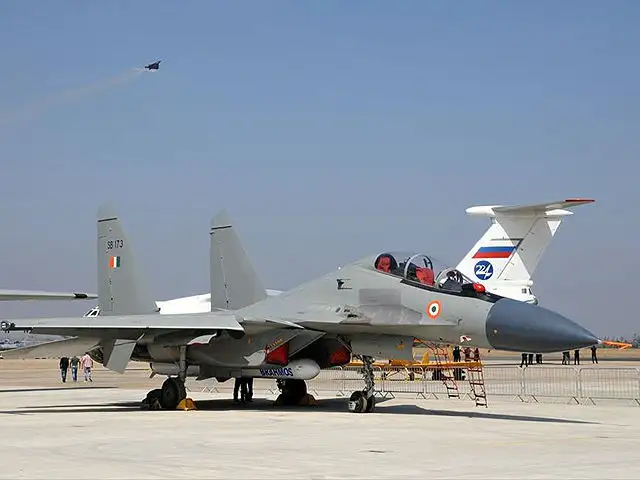
India has in its arsenal the 290-km-range supersonic "BrahMos" cruise missile which has been jointly developed by India and Russia. But 'Nirbhay' with the long-range capability is a different kind of missile being developed by DRDO.
Nirbhay has good loitering capability, good control and guidance, high degree of accuracy in terms of impact and very good stealth feature, the officials said.
Earlier, the launch preparations and plans were authorised after thorough review by experts led by Chander, under whose guidance the launch process was executed, the release said.
P Srikumar, Director ADE, as the mission director led the launch operations. The launch preparations were planned and supervised by Vasanth Sastri, Project Director of 'Nirbhay' project.
ADVERTISEMENT
The launch was witnessed by K Tamilmani, DG Aeronautical Systems, V G Sekran, DG Missiles and Strategic Systems, Vice Admiral Dinesh Prabhakar (retd.), DG ATVP, Satish Reddy, DS and Director, RCI, Tessy Thomas, Director ASL, MVKV Prasad, Director ITR and senior DRDO scientists, it added.
Download
The Economic Times Business News App for the Latest News in Business, Sensex, Stock Market Updates & More.
The Economic Times Business News App for the Latest News in Business, Sensex, Stock Market Updates & More.
Download
The Economic Times News App for Quarterly Results, Latest News in ITR, Business, Share Market, Live Sensex News & More.
The Economic Times News App for Quarterly Results, Latest News in ITR, Business, Share Market, Live Sensex News & More.
Related Articles
 DRDO successfully conducts flight-test of Long Range Land Attack Cruise Missile2026-06-15T13:15:34Z
- Rafale fires MICA NG missile: All about the next-generation weapon built to target stealth aircraft, drones and cruise missiles2026-06-05T18:04:44Z
- Is US military running out of Tomahawk cruise missiles, Patriot, THAAD interceptors after using advanced weapons in Iran war? Analysis reveals shocking findings2026-05-27T13:50:29Z
ET Bureau & Agencies
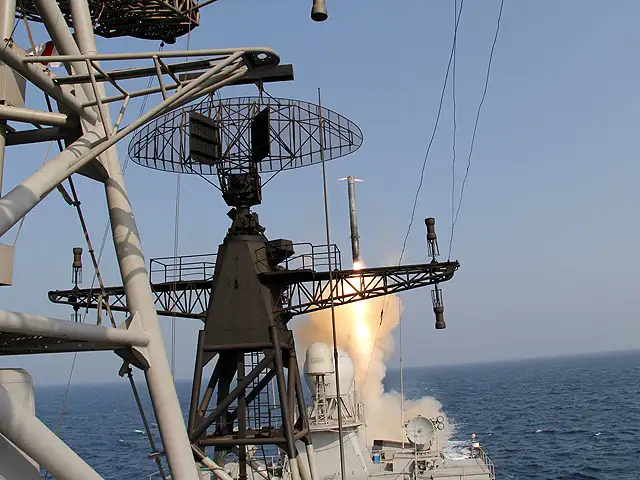
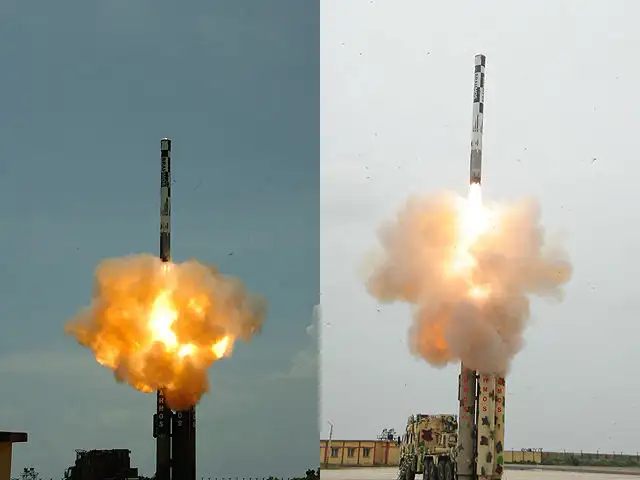
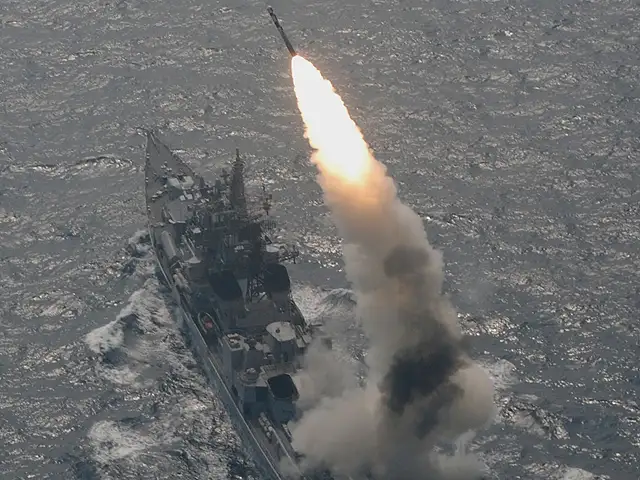
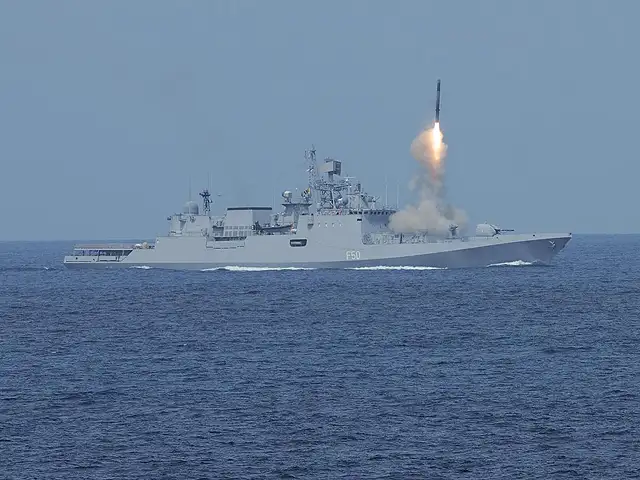
The Modi government is quietly working on a plan to export defence equipment and armaments produced in India to friendly countries. A beginning could be made by exporting BrahMos missiles to Southeast Asia and South American countries.
Vietnam, Indonesia and Venezuela have expressed willingness to procure the supersonic missile jointly produced by India and Russia, sources indicated to ET.
Image: DRDO/BrahMos
The Modi government is quietly working on a plan to export defence equipment and armaments produced in India to friendly countries. A beginning could be made by exporting BrahMos missiles to Southeast Asia and South American countries.
Vietnam, Indonesia and Venezuela have expressed willingness to procure the supersonic missile jointly produced by India and Russia, sources indicated to ET.
Image: DRDO/BrahMos

ADVERTISEMENT


