India key pillar in collaborative global efforts to fight COVID-19: WEF chief
Schwab, who founded WEF over 50 years ago, said COVID-19 is the most devastating and immediate crisis the world is facing, but we are equally going through the worst environmental crisis in human history as well.
By PTI | Updated:

BCCL
New Delhi: India stands out as an essential component to a concrete global action plan being readied to fight COVID-19, including for large-scale vaccine manufacturing, World Economic Forum's Founder and Chairman Klaus Schwab has said. Besides, India has a very important role to play for ensuring greater international cooperation in the post-COVID-19 world to fight any future pandemic and for addressing some other serious global challenges including those posed by climate change and economic inequality, he said.
Schwab, who founded WEF over 50 years ago, said COVID-19 is the most devastating and immediate crisis the world is facing, but we are equally going through the worst environmental crisis in human history as well.
"And socio-economically, the division and inequalities we are facing are the worst in a generation. To deal with it incrementally will not suffice. We need a Great Reset -- a fundamental rethinking of our economies and of our societies. We must not only repair the damage but address major deficiencies in our economic and social systems which were apparent before the pandemic broke out," Schwab told in an interview from Geneva.
"One of the priorities for the Great Reset is to re-define our social contract. That is particularly relevant for emerging economies like India, who have not yet built up social welfare systems to the same degree as some countries in Europe, such as the Scandinavian countries," he said.
The WEF, which describes itself as an international organisation for public-private partnership, has been playing a key role in bringing together the public and private sectors in dealing with this pandemic.
Asked about these efforts by the WEF, Schwab said, "We have indeed worked with all our global partners to accelerate the health response, and India certainly stands out."
"Concretely, we have been working with the Developing Country Vaccine Manufacturing Network (DCVMN) on a potential Vaccines Manufacturers Alliance. And of this DCVMN, about 80 per cent of capacities are in India," he said.
Schwab further said, "We received a letter of support from Prime Minister Narendra Modi, about the principles of global equitable access to COVID-19 vaccines, and this was very important.
"This new mechanism could take the form of a large multi-country contract manufacturing network to be built, with the goal of increasing the global manufacturing volumes to an additional capacity in line with the enormous global demand. India should be the essential hub of this network."
Schwab has recently co-authored a book, titled 'The Great Reset', which deals with top priorities before business leaders and policymakers around the world in the wake of the coronavirus pandemic.
The book also talks about whether the world should get back to where it was before, or should it take the opportunity to make society fairer, smarter and greener, and get humanity off the road to climate catastrophe.
Asked what are the most important steps that businesses and governments need to take to make them ready for such pandemics in the future, Schwab said businesses and governments should devote a lot of their time and energy to make sure that the decisions they are making today, are not only helping them weather the current crisis, but allow them to build a more sustainable, resilient and inclusive system for the long-term future.
"Governments have a small window to ensure that the USD 10 trillion that they are spending in response to the crisis, bring about the 'Great Reset' they are seeking. One way to invest smartly is to embed climate and environmental resilience into stimulus packages and recovery programmes," he said.
He also said the pandemic has highlighted our fraught relationship with the natural world.
"We only have one planet and we know that climate change could be the next global disaster with even more dramatic consequences for humankind. We need to decarbonize the economy in the short window which is still available," he said.
Schwab cautioned that those who will be affected most by climate change are the least well off and we need to ensure existing inequalities are not exacerbated as result.
"Resetting the environment should not be seen as a cost, but rather an investment that will generate economic activity and employment opportunities, and there should be no contradiction between the need to protect nature and the need to reinvigorate the economy," he said.
Schwab further said businesses need to move from shareholder capitalism to stakeholder capitalism in the post-COVID-19 world, as those who invest in society and for the long-term, instead of prioritising short-term profit gains, will perform much better.
"In achieving the Great Reset, and to really address the global challenges posed by climate change, epidemics, and economic inequality, and many more issues, a very important role lies with India when it hosts the G20 presidency in 2022, after Saudi Arabia this year, and Italy next year. None of the above issues can be solved without increased cooperation," he noted.
Schwab said "we have to start the Great Reset, rebuilding the Post-COVID world, immediately, but 2022 will be a particularly crucial year."
"It will hopefully be the first year when the world can say that it has mastered the COVID-19 virus. It can then devote its full energy not only to rebuild its economic and social system, but to turn to a more future-oriented mindset, and to take care of its responsibility towards the next generations," he said.
The WEF's 50th annual meeting, held in January 2020 in Davos, was the last major global event before almost the entire world got locked down due to the pandemic. The next annual meeting has now been postponed to May 2021 and will be held in Lucerne-Burgenstock in Switzerland, instead of Davos.
Schwab, who founded WEF over 50 years ago, said COVID-19 is the most devastating and immediate crisis the world is facing, but we are equally going through the worst environmental crisis in human history as well.
"And socio-economically, the division and inequalities we are facing are the worst in a generation. To deal with it incrementally will not suffice. We need a Great Reset -- a fundamental rethinking of our economies and of our societies. We must not only repair the damage but address major deficiencies in our economic and social systems which were apparent before the pandemic broke out," Schwab told in an interview from Geneva.
"One of the priorities for the Great Reset is to re-define our social contract. That is particularly relevant for emerging economies like India, who have not yet built up social welfare systems to the same degree as some countries in Europe, such as the Scandinavian countries," he said.
The WEF, which describes itself as an international organisation for public-private partnership, has been playing a key role in bringing together the public and private sectors in dealing with this pandemic.
Asked about these efforts by the WEF, Schwab said, "We have indeed worked with all our global partners to accelerate the health response, and India certainly stands out."
ADVERTISEMENT
"Concretely, we have been working with the Developing Country Vaccine Manufacturing Network (DCVMN) on a potential Vaccines Manufacturers Alliance. And of this DCVMN, about 80 per cent of capacities are in India," he said.
Schwab further said, "We received a letter of support from Prime Minister Narendra Modi, about the principles of global equitable access to COVID-19 vaccines, and this was very important.
"This new mechanism could take the form of a large multi-country contract manufacturing network to be built, with the goal of increasing the global manufacturing volumes to an additional capacity in line with the enormous global demand. India should be the essential hub of this network."
Schwab has recently co-authored a book, titled 'The Great Reset', which deals with top priorities before business leaders and policymakers around the world in the wake of the coronavirus pandemic.
ADVERTISEMENT
The book also talks about whether the world should get back to where it was before, or should it take the opportunity to make society fairer, smarter and greener, and get humanity off the road to climate catastrophe.
Asked what are the most important steps that businesses and governments need to take to make them ready for such pandemics in the future, Schwab said businesses and governments should devote a lot of their time and energy to make sure that the decisions they are making today, are not only helping them weather the current crisis, but allow them to build a more sustainable, resilient and inclusive system for the long-term future.
ADVERTISEMENT
"Governments have a small window to ensure that the USD 10 trillion that they are spending in response to the crisis, bring about the 'Great Reset' they are seeking. One way to invest smartly is to embed climate and environmental resilience into stimulus packages and recovery programmes," he said.
He also said the pandemic has highlighted our fraught relationship with the natural world.
"We only have one planet and we know that climate change could be the next global disaster with even more dramatic consequences for humankind. We need to decarbonize the economy in the short window which is still available," he said.
Schwab cautioned that those who will be affected most by climate change are the least well off and we need to ensure existing inequalities are not exacerbated as result.
"Resetting the environment should not be seen as a cost, but rather an investment that will generate economic activity and employment opportunities, and there should be no contradiction between the need to protect nature and the need to reinvigorate the economy," he said.
Schwab further said businesses need to move from shareholder capitalism to stakeholder capitalism in the post-COVID-19 world, as those who invest in society and for the long-term, instead of prioritising short-term profit gains, will perform much better.
"In achieving the Great Reset, and to really address the global challenges posed by climate change, epidemics, and economic inequality, and many more issues, a very important role lies with India when it hosts the G20 presidency in 2022, after Saudi Arabia this year, and Italy next year. None of the above issues can be solved without increased cooperation," he noted.
Schwab said "we have to start the Great Reset, rebuilding the Post-COVID world, immediately, but 2022 will be a particularly crucial year."
"It will hopefully be the first year when the world can say that it has mastered the COVID-19 virus. It can then devote its full energy not only to rebuild its economic and social system, but to turn to a more future-oriented mindset, and to take care of its responsibility towards the next generations," he said.
The WEF's 50th annual meeting, held in January 2020 in Davos, was the last major global event before almost the entire world got locked down due to the pandemic. The next annual meeting has now been postponed to May 2021 and will be held in Lucerne-Burgenstock in Switzerland, instead of Davos.
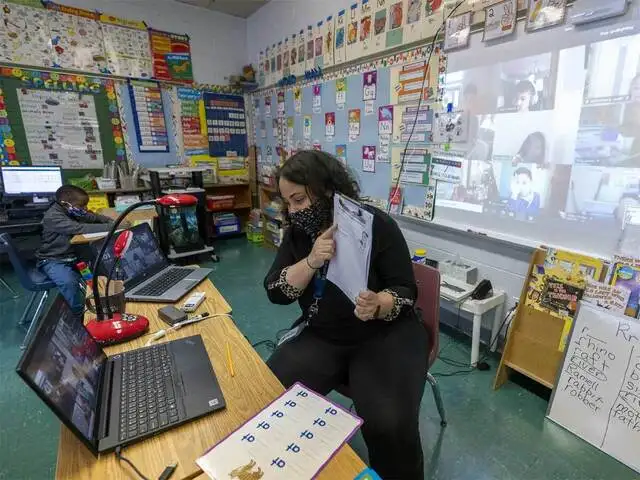
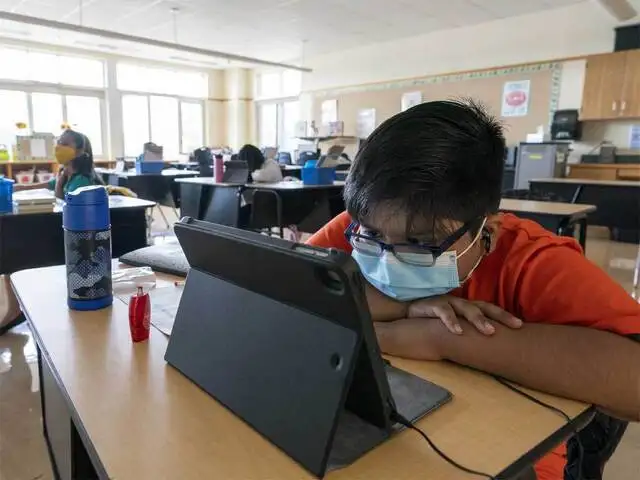
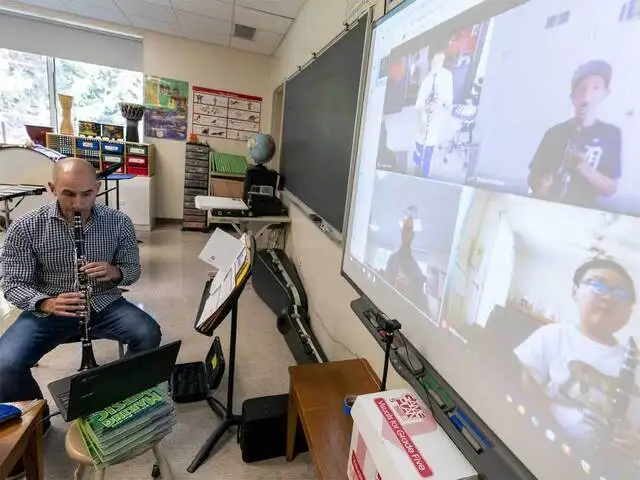
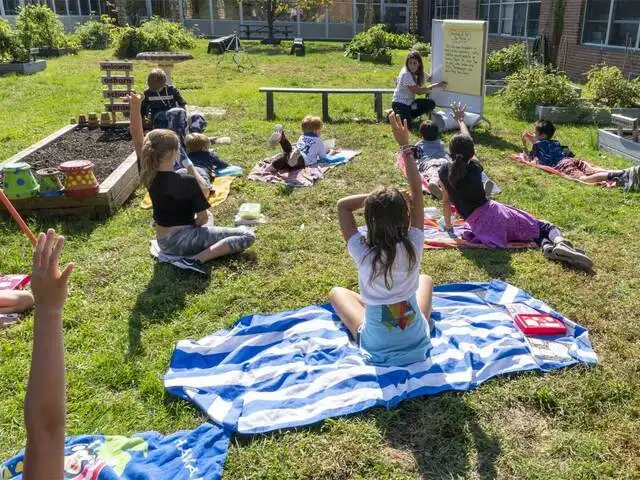
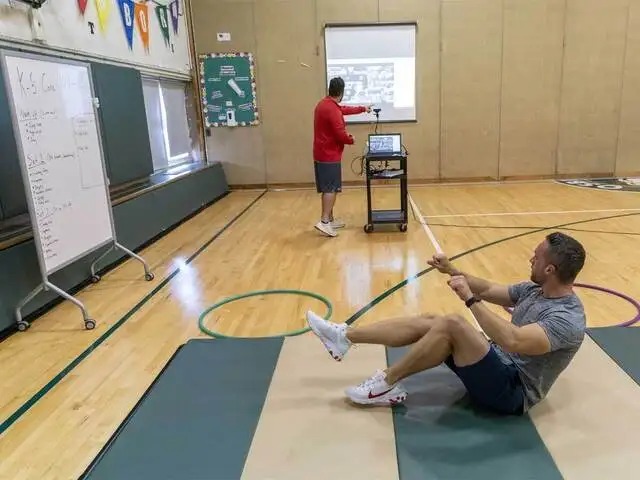
When New York schools reopened in September it was anything but business as usual. With state guidelines for social distancing making it impossible for all students to attend classes in person at the same time, educators prepared for a hybrid model of instruction.

Download
The Economic Times Business News App for the Latest News in Business, Sensex, Stock Market Updates & More.
The Economic Times Business News App for the Latest News in Business, Sensex, Stock Market Updates & More.
Download
The Economic Times News App for Quarterly Results, Latest News in ITR, Business, Share Market, Live Sensex News & More.
The Economic Times News App for Quarterly Results, Latest News in ITR, Business, Share Market, Live Sensex News & More.
ADVERTISEMENT


