Hold elections in J&K by September 30 next year: SC directs Election Commission
"We direct that steps be taken by EC to conduct elections of J&K Assembly by September 30, 2024," said Chief Justice of India Chandrachud in its ruling. The Court also directed the government to restore the statehood of J&K. "We direct that resto...
By ET Online | Updated:
Article 370 verdict: SC upholds abrogation; asks to restore J&K's statehood, hold elections ASAP
In a landmark judgment on Article 370, the Supreme Court today ordered the Election Commission to hold elections in Jammu and Kashmir by September 30, 2024. Supreme Court said this while delivering its verdict on the constitutionality of the abrogation of Article 370 of the Indian Constitution, which gives the special status to J&K.
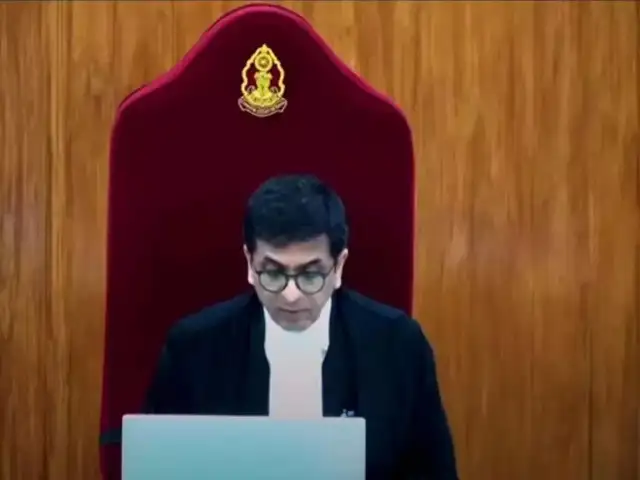
"We direct that steps be taken by EC to conduct elections of J&K Assembly by September 30, 2024," said Chief Justice of India Chandrachud in its ruling.
The Supreme Court Constitutional bench comprising Chief Justice of India (CJI) D Y Chandrachud and Justices Sanjay Kishan Kaul, Sanjiv Khanna, B R Gavai and Surya Kant Court also directed the government to restore the statehood of J&K. "We direct that restoration of statehood in Union Territory of J&K shall be done at the earliest," said CJI. However, the court upheld the carving out of Ladakh as a Union Territory.

The Court said that the state of Jammu and Kashmir does not have internal sovereignty different from other states of the country. "... all provisions of the Indian Constitution can be applied to J-K," the CJI said.
"We hold the exercise of presidential power to issue constitutional order abrogating Article 370 of Constitution as valid," CJI Chandrachud said.
“The Constituent Assembly of J&K was never intended to be a permanent body,” the CJI emphasised.
Article 370, which was abrogated on August 5, 2019, was an interim arrangement due to war conditions in the erstwhile state, Justice Chandrachud said.
The princely state had become an integral part of India and this is evident from Articles 1 and 370, the CJI said.
"We direct that steps be taken by EC to conduct elections of J&K Assembly by September 30, 2024," said Chief Justice of India Chandrachud in its ruling.
The Supreme Court Constitutional bench comprising Chief Justice of India (CJI) D Y Chandrachud and Justices Sanjay Kishan Kaul, Sanjiv Khanna, B R Gavai and Surya Kant Court also directed the government to restore the statehood of J&K. "We direct that restoration of statehood in Union Territory of J&K shall be done at the earliest," said CJI. However, the court upheld the carving out of Ladakh as a Union Territory.
A five-judge bench of the Supreme Court, led by CJI DY Chandrachud, has unanimously upheld the Centre's decision to abrogate provisions of Article 370 bestowing special status to the erstwhile state of Jammu and Kashmir. Ending a decades long debate, the Constitution bench delivered three concurring judgements upholding abrogation of the Constitutional schemes that provided special status to Jammu and Kashmir when it was annexed to the Union of India in 1947.


The Court said that the state of Jammu and Kashmir does not have internal sovereignty different from other states of the country. "... all provisions of the Indian Constitution can be applied to J-K," the CJI said.
"We hold the exercise of presidential power to issue constitutional order abrogating Article 370 of Constitution as valid," CJI Chandrachud said.
ADVERTISEMENT
Jammu and Kashmir became an integral part of India and this is evident from Articles 1 and 370, he said while pronouncing the judgment.“The Constituent Assembly of J&K was never intended to be a permanent body,” the CJI emphasised.
Article 370, which was abrogated on August 5, 2019, was an interim arrangement due to war conditions in the erstwhile state, Justice Chandrachud said.
The princely state had become an integral part of India and this is evident from Articles 1 and 370, the CJI said.
ADVERTISEMENT
The apex court had reserved its verdict in the matter on September 5 after a 16-day hearing on a batch of petitions challenging the abrogation of the provisions of Article 370.In Video:
Article 370 verdict: SC upholds abrogation; asks to restore J&K's statehood, hold elections ASAP
Download
The Economic Times Business News App for the Latest News in Business, Sensex, Stock Market Updates & More.
The Economic Times Business News App for the Latest News in Business, Sensex, Stock Market Updates & More.
Download
The Economic Times News App for Quarterly Results, Latest News in ITR, Business, Share Market, Live Sensex News & More.
The Economic Times News App for Quarterly Results, Latest News in ITR, Business, Share Market, Live Sensex News & More.
Related Articles
 National Conference's facade of fighting for Article 370 is over: PDP2025-12-17T09:53:16Z
- Congress worked hard to erase Sardar Patel from history, says Nadda; slams Nehru for Article 3702025-11-29T10:55:33Z
- Justice Surya Kant, who gave landmark rulings on Article 370 and corruption, takes oath as Chief Justice of India2025-11-24T04:40:37Z
ADVERTISEMENT


