Can't disclose if any KGB records on Netaji Subhas Chandra Bose were searched: Government
The note itself tagged as "secret" is widely available on the internet. However, the action taken on the proposal remains a mystery.
By PTI | Updated:

NEW DELHI: The Centre has refused to divulge whether declassified archives of the erstwhile Soviet spy agency KGB were ever searched for any information on Netaji Subhas Chandra Bose's alleged death in a plane crash 70 years ago.
The denial comes despite repeated promises by the NDA government about disclosure of Netaji files.
The External Affairs Ministry has refused to provide any information on the action taken on a 19-year-old proposal from its Joint Secretary (East Europe) R L Narayan, who had suggested requesting the Russian authorities to search KGB archives and inform India "if there is any evidence of Netaji's stay in the Soviet Union".
Narayan's note, written on January 12, 1996, was referred to Secretary, Ministry of External Affairs. The then External Affairs Minister Pranab Mukherjee had written a noting on it, asking the Secretary and Narayan to discuss the proposal "urgently" on January 14, 1996.
The Ministry first responded, saying the information was not available in a particular division. Later, when the RTI application was again filed with same queries, the Ministry said "Under section 8(1)(a) of the RTI Act 2005, the information on the subject cannot be disclosed."
The clause of the Right to Information law cited by the CPIO and Under Secretary (East Asia) Bayyapu Sandeep Kumar allows the government to withhold information the disclosure of which would prejudicially affect the sovereignty and integrity of India, the security, strategic, scientific or economic interests of the State, relation with foreign State or lead to incitement of an offence.
Ironically, the note itself tagged as "secret" is widely available on the internet. However, the action taken on the proposal remains a mystery.
The denial of information by the Ministry comes in the backdrop of a recent notice issued by the Central Information Commission to Prime Minister's Office on the issue of declassification of files related to mysterious disappearance of Netaji. The transparency panel will hear a petition filed in a separate case on the disclosure of the files on August 26.
In his note, Narayan had said that from time to time various articles have appeared in the Soviet/Russian press insinuating, though without actual proof, that Netaji in fact stayed/was incarcerated in the Soviet Union after 1945 when he went missing in an alleged plane crash.
"In January 1992, we had received a disclaimer from the Russian Foreign Ministry to the effect that 'according to the data in the Central and Republican Archives, no information whatsoever is available on the stay of the former President of the Indian National Congress Netaji Subhas Chandra Bose, in the Soviet Union in 1945 and thereafter," the note said.
It said a group of scholars from India had visited Moscow in 1995 to research this issue.
"Again no proof of Netaji's stay in the Soviet Union was adduced, it was mentioned that a number of personalities whom the team met 'had suggestive words to ventilate', and that 'the people of this country and all over the globe are very much interested to know about the cloud that had been created around Netaji concerning Russia," it said.
Narayan said there are three kinds of archives which may be of relevance- papers relating to the Stalinist period (KGB archives), which are kept separately and were not accessed till 1996 when the note was written, by foreign and even Russian scholars, and papers related to post-Stalinist period, which he said fall in two categories-- Government and Politburo--that are kept separately.
According to Narayan, the Russian Foreign Ministry Note Verbale suggested that their disclaimers about Netaji may be based essentially on perusal of the archives of post-Stalinist period (post-1953).
Narayan had suggested that while it would be unrealistic for India to expect that Russian authorities would allow Indian scholars to access KGB archives, "what we can do is to request the Russian authorities to conduct a search into these archives and let us know if there is any evidence of Netaji's stay in the Soviet Union".
The appellant had sought a copy of Narayan's note, action taken on it, and file notings, besides Netaji files destroyed by the MEA.
He had also asked for a complete list of files on Bose with MEA which have been sent to the National Archives and communications exchanged between the Prime Minister's Office and the then India Ambassador to Russia S Radhakrishnan on Subhas Chandra Bose or Azad Hind Fauj.
The denial comes despite repeated promises by the NDA government about disclosure of Netaji files.
The External Affairs Ministry has refused to provide any information on the action taken on a 19-year-old proposal from its Joint Secretary (East Europe) R L Narayan, who had suggested requesting the Russian authorities to search KGB archives and inform India "if there is any evidence of Netaji's stay in the Soviet Union".
Narayan's note, written on January 12, 1996, was referred to Secretary, Ministry of External Affairs. The then External Affairs Minister Pranab Mukherjee had written a noting on it, asking the Secretary and Narayan to discuss the proposal "urgently" on January 14, 1996.
The Ministry first responded, saying the information was not available in a particular division. Later, when the RTI application was again filed with same queries, the Ministry said "Under section 8(1)(a) of the RTI Act 2005, the information on the subject cannot be disclosed."
The clause of the Right to Information law cited by the CPIO and Under Secretary (East Asia) Bayyapu Sandeep Kumar allows the government to withhold information the disclosure of which would prejudicially affect the sovereignty and integrity of India, the security, strategic, scientific or economic interests of the State, relation with foreign State or lead to incitement of an offence.
ADVERTISEMENT
Ironically, the note itself tagged as "secret" is widely available on the internet. However, the action taken on the proposal remains a mystery.
The denial of information by the Ministry comes in the backdrop of a recent notice issued by the Central Information Commission to Prime Minister's Office on the issue of declassification of files related to mysterious disappearance of Netaji. The transparency panel will hear a petition filed in a separate case on the disclosure of the files on August 26.
In his note, Narayan had said that from time to time various articles have appeared in the Soviet/Russian press insinuating, though without actual proof, that Netaji in fact stayed/was incarcerated in the Soviet Union after 1945 when he went missing in an alleged plane crash.
"In January 1992, we had received a disclaimer from the Russian Foreign Ministry to the effect that 'according to the data in the Central and Republican Archives, no information whatsoever is available on the stay of the former President of the Indian National Congress Netaji Subhas Chandra Bose, in the Soviet Union in 1945 and thereafter," the note said.
ADVERTISEMENT
It said a group of scholars from India had visited Moscow in 1995 to research this issue.
"Again no proof of Netaji's stay in the Soviet Union was adduced, it was mentioned that a number of personalities whom the team met 'had suggestive words to ventilate', and that 'the people of this country and all over the globe are very much interested to know about the cloud that had been created around Netaji concerning Russia," it said.
ADVERTISEMENT
Narayan said there are three kinds of archives which may be of relevance- papers relating to the Stalinist period (KGB archives), which are kept separately and were not accessed till 1996 when the note was written, by foreign and even Russian scholars, and papers related to post-Stalinist period, which he said fall in two categories-- Government and Politburo--that are kept separately.
According to Narayan, the Russian Foreign Ministry Note Verbale suggested that their disclaimers about Netaji may be based essentially on perusal of the archives of post-Stalinist period (post-1953).
Narayan had suggested that while it would be unrealistic for India to expect that Russian authorities would allow Indian scholars to access KGB archives, "what we can do is to request the Russian authorities to conduct a search into these archives and let us know if there is any evidence of Netaji's stay in the Soviet Union".
The appellant had sought a copy of Narayan's note, action taken on it, and file notings, besides Netaji files destroyed by the MEA.
He had also asked for a complete list of files on Bose with MEA which have been sent to the National Archives and communications exchanged between the Prime Minister's Office and the then India Ambassador to Russia S Radhakrishnan on Subhas Chandra Bose or Azad Hind Fauj.
Download
The Economic Times Business News App for the Latest News in Business, Sensex, Stock Market Updates & More.
The Economic Times Business News App for the Latest News in Business, Sensex, Stock Market Updates & More.
Download
The Economic Times News App for Quarterly Results, Latest News in ITR, Business, Share Market, Live Sensex News & More.
The Economic Times News App for Quarterly Results, Latest News in ITR, Business, Share Market, Live Sensex News & More.
Related Articles
 SC refuses plea to bring Netaji Subhas Chandra Bose’s ashes from Japan2026-03-12T09:08:58Z
- Netaji Subhas Chandra Bose epitomised courage, grit: PM Modi on Parakram Diwas2025-01-23T04:31:11Z
- Bank holiday today: Are banks open or closed on Jan 23 in your state for Netaji Subhas Chandra Bose Jayanti?2025-01-23T00:30:00Z

Text: PTI
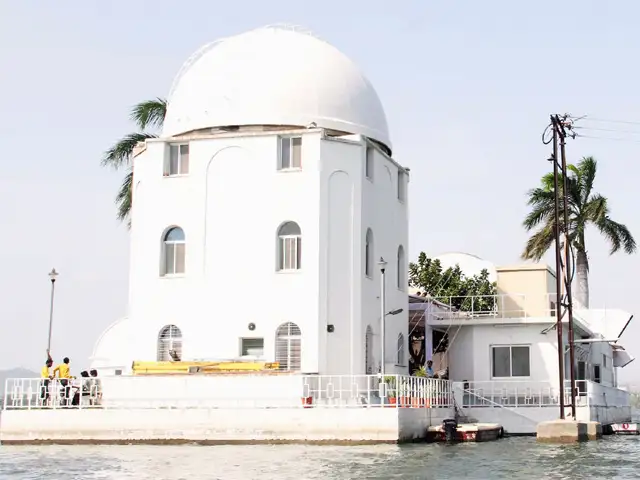
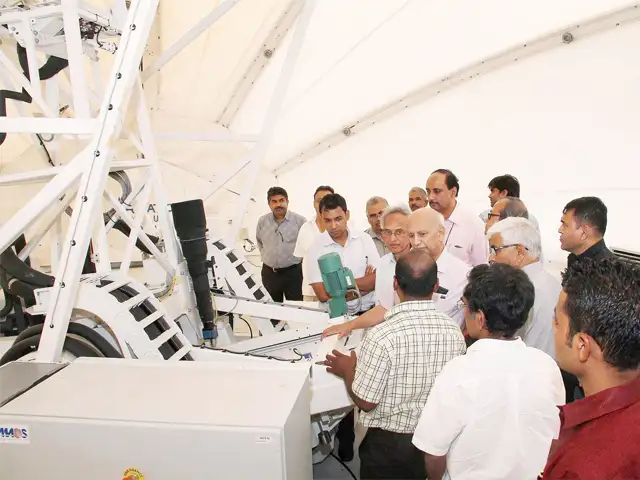
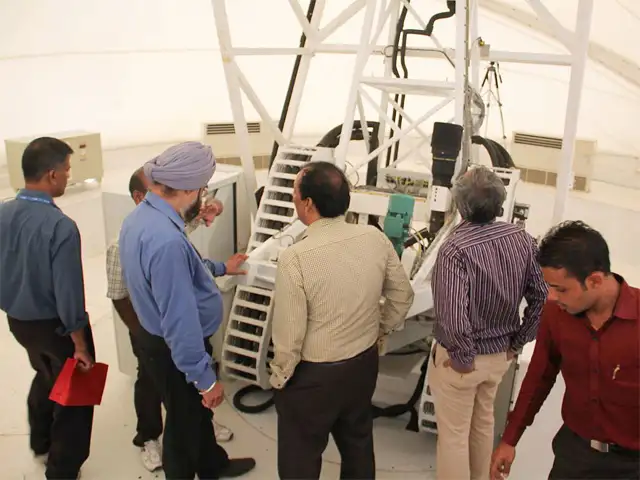
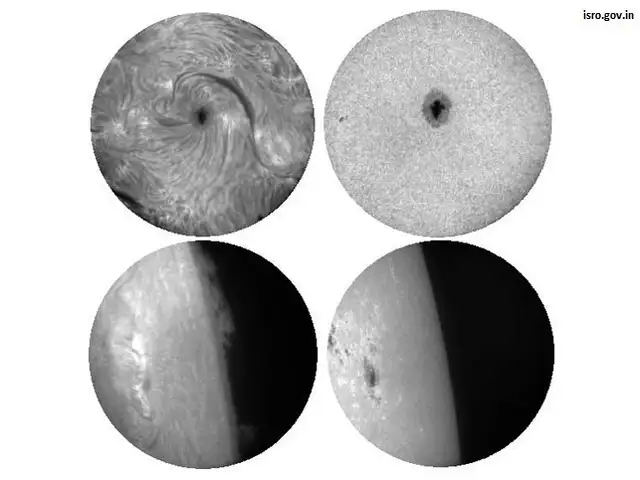
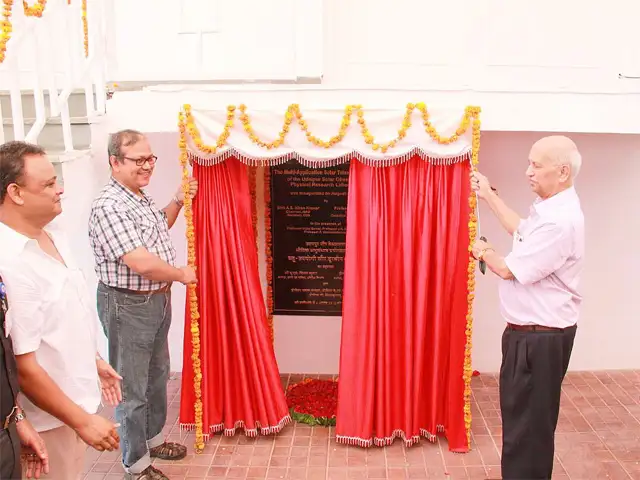
Udaipur Solar Observatory has operationalised a unique telescope 'Multi Application Solar Telescope' (MAST) for detailed study of solar activities which could facilitate space weather predictions in the future.
In pic: Multi Application Solar Telescope at the Udaipur Solar Observatory.
Udaipur Solar Observatory has operationalised a unique telescope 'Multi Application Solar Telescope' (MAST) for detailed study of solar activities which could facilitate space weather predictions in the future.
In pic: Multi Application Solar Telescope at the Udaipur Solar Observatory.


ADVERTISEMENT


