Advani, Modi and...Yogi? Why Adityanath's appointment is a political masterstroke by Modi
Political movements and parties that last cannot be built on consensus and me-too policies to the sound of gentle media applause and choir singing.
By Sriram Ramakrishnan, ET Bureau | Updated:

It was one of those brain storming sessions of the Gujarat government soon after Narendra Modi had taken charge of the state administration after his thumping victory in the 2002 assembly polls. Times were tough and the power situation in the state was grim. The officials had gathered to discuss the problem and how to best to solve it.
Chief minister Modi was present and so were some his cabinet members. For some time, the discussion meandered on. Loud debates and disagreements meant that many proposals did not find favour. Then, one engineer sitting in the back of the room spoke up.
Why not create a separate feeder line especially for farmers which will help them draw as much power,” he asked. The proposal was greeted with general laughter and derision. Most people in the room said this can never be done. Two people who remained silent during the discussion, Modi and the Gujarat power minister, later spoke up and wanted to know more. The engineer explained why he thought this idea will work. Modi listened and liked the idea. Despite the objection of the bureaucracy, the Gujarat government went ahead and decided to construct a separate feeder line to give farmers uninterrupted power.
Flash forward to 2014. Its October and the BJP has just won the Maharashtra assembly elections. The BJP always fought the elections together with the Shiv Sena but this was first the time that they had fought alone. The party managed to emerge the single largest in the 288 member assembly besting the Sena and the Congress twins. In Mumbai, various caste factions had begun their hectic lobbying for the chief ministership post. Traditionally, the Marathas had enjoyed an upper hand when it came to the top position in the state and BJP Maratha leaders were perhaps confident that one of their own would be appointed CM. Imagine their shock when Modi picked Devendra Fadnavis, a Brahmin, as the candidate. The state has not seen a Brahmin chief minister since Manohar Joshi of the Shiv Sena in 1995, a reflection of the massive upsurge in Maratha and backward caste dominance in the state politics. But Mr Modi, now prime minister and BJP chief Amit Shah were clear it was Fadnavis they wanted. The decision was final.
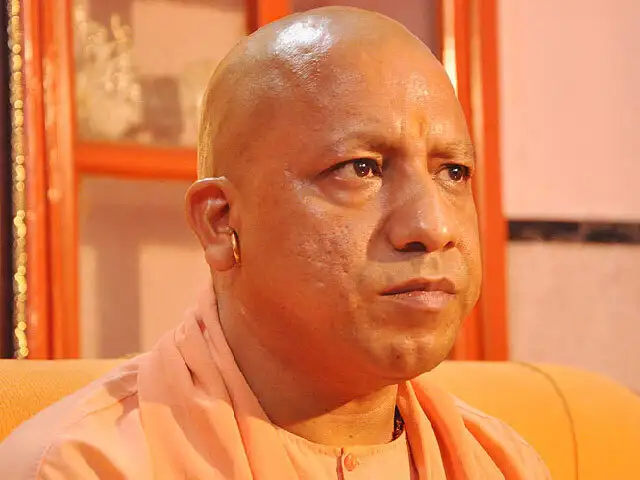
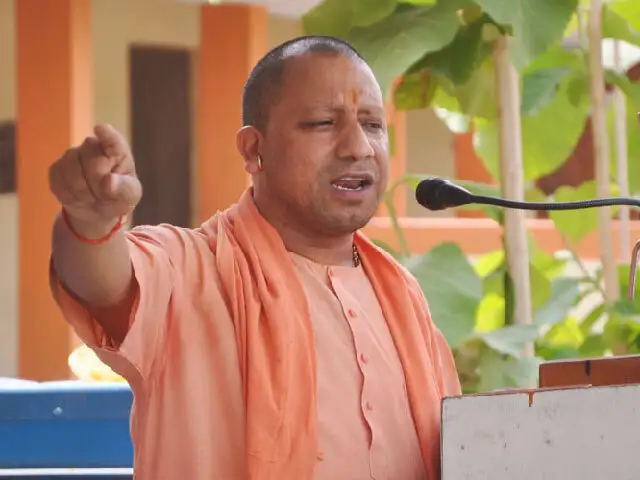
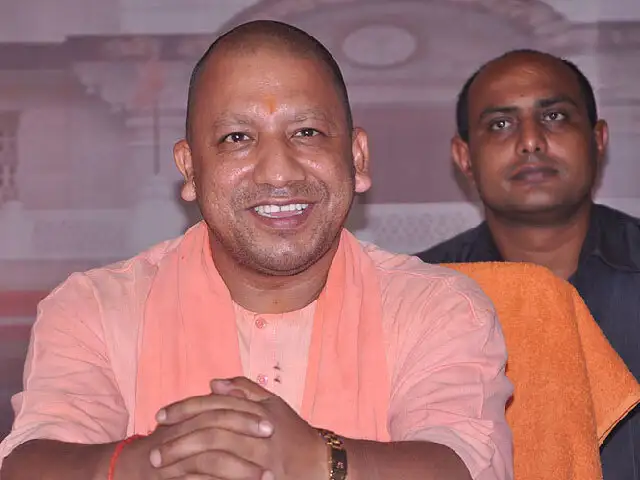
Screaming headlines in newspapers and breathless talking heads on TV since last Saturday will try and convince you that Yogi Adityanath, the newly elected chief minister of Uttar Pradesh, is some kind of a scary figure who should never come near any position of power or authority. He has been referred to as `Hindutva mascot’, `Hindutva warrior’ in newspaper headlines and copies and there are various references to incendiary speeches during his career as a five-term MP from Gorakhpur in eastern Uttar Pradesh. Well-known political and socio-economic commentator Pratap Bhanu Mehta called the appointment of Yogi Adityanath “an odious and ominous development”. He added that Adityanath is a mascot of militant Hindu sectarianism, reactionary ideas and thuggery in political discourse.”
Mehta’s hyperbole is typical of the left-liberal establishment to Adityanath and social media on Saturday buzzed with indignant journalists and political pundits expressing anguish over the move. Has the BJP mistaken a majority verdict for a majoritarian verdict, some asked.
Actually, the decision should not have been surprising if political pundits had been following prime minister Narendra Modi’s decisions closely since he took over in 2014. Modi has rigorously followed his instincts and his own ideas for reshaping the party based on a unique assessment of the political landscape, current and future. The above mentioned examples show Modi’s penchant for out-of-the-box thinking and he has followed up his bold Maharashtra experiment with similar `shock’ moves in other states.
For instance: Vijay Rupani, chief minister of Gujarat is a Jain baniya and belongs to the minority community, Raghubar Das, the chief minister of Jharkhand, is an OBC (other backward caste) from the Teli community in a predominantly tribal state, while ML Khattar, the chief minister of Haryana is Punjabi in a state where the Jats rule the roost.
Some say that this is Modi’s way of empowering minority castes and communities. Some others believe that this is a good way of keeping chief ministers in check as they would become wholly dependant on Modi without a power base of their own within the state.
The Yogi’s appointment however doesn’t fit both categories. He has a strong base of his own in UP not to mention a loyal and energetic band of followers. And he is certainly not from any of the lower, deprived castes that need to be empowered.
The logic therefore of appointing Yogi is different and is closely tied to BJP’s ascendancy and its ability to stay in a dominant position for a long time to come. Think about it this way. Modi knows more than anyone else that the BJP’s rise in the past few years to pre-eminent national status is due to strong state-level leadership and the work done by the chief ministers. He himself has been a big beneficiary of this model. Modi 2014 would never have happened without the Gujarat success.
Modi also knows that more high quality state-level leaders, that is leaders who combine charisma, mass appeal with administrative acumen, are needed if the BJP has to have any chance of progressing beyond 2019 as the nation’s dominant party. The Modi appeal may be shining bright as of now in the aftermath of tremendous success in UP but it could quickly get clouded by missteps and underperformance in key states. Key lieutenants who will helm top-level positions and deliver performance that can win elections are important.
Secondly, strong state-level leaders will also ensure that the party does not fall into the same trap that crippled the Congress party and reduced it to an also-ran status. The dependence on one family, the complete, near-total absence of quality regional leaders who can take the battle to the opposite camp, lack of direction and absence of message means that the Congress is at the edge of precipice. Any more state election losses (and there could be some in 2017 and 18), the party could start losing key people and be a shell of its former self.
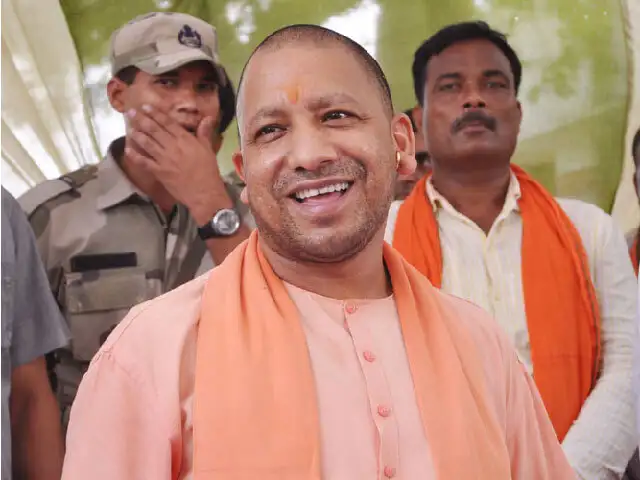
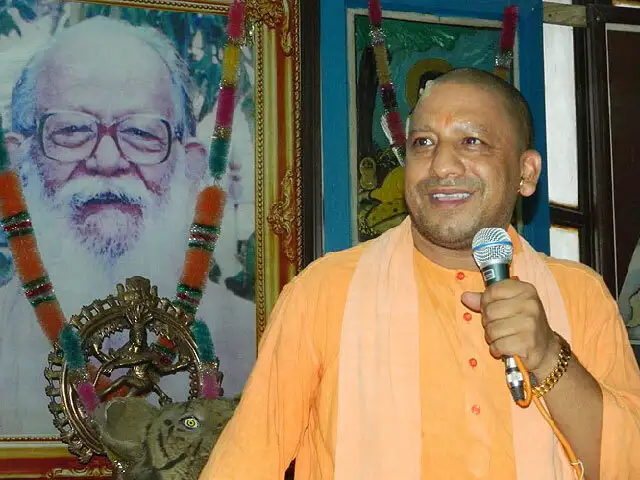
So, where does the Yogi Adityanath move fit in amidst all this. Firstly, he is extremely popular in UP, especially among the youth. He is incorruptible and his sanyasi status with no family ties sharply reduces the chances of family-led corruption that has brought many politicians to ruin. He is a Hindutva warrior, the head priest of the centuries-old Gorakhpur Shaivite sect. Unlike some other BJP leaders, he doesn't have to prove his Hindutva credentials to anyone. Add to all this, he is a five-term Gorakhpur MP who was winning elections when there was no Modi and the BJP’s popularity was at its nadir. The choice, on paper and the on the ground, was clear.
Critics have slammed Modi’s move claiming that Adityanath lacks administrative experience and is too polarising a figure. PB Mehta’s anguish stems largely from the fact that Modi, having won UP, has failed to appoint a consensus-driven, moderate to the top post and instead appointed an aggressive, in-your-face, Hindutva warrior.
This is just drivel and somebody of Mehta’s stature and intellect should know better. All politicians in India are polarising figures, whether it is Bal Thackeray, MK Karunanidhi, Kanshi Ram, Mulayam Singh Yadav, Lalu Prasad Yadav. Even Mamata Banerjee, whom many people believe will be Modi’s opponent in 2019, is an intensely polarising figure.
Political movements and parties that last cannot be built on consensus and me-too policies to the sound of gentle media applause and choir singing. The leader of a successful political movement must have the courage and conviction to articulate bold, controversial policies and go out and achieve success by persuading others of the justness of his cause. Great political movements and parties are built this way.
Former RSS leader Balasaheb Deoras recognised how this worked and set out to build the RSS ecosystem and spread the message of Hindutva in the 1970s and 1980s. LK Advani, as the leader of the rejuvenated BJP, built on it with the Ram Janmabhoomi movement in the late 1980s and early 1990s. Narendra Modi took Advani and Atal Behari Vajpayee’s work many levels higher with his theme of development and progress. All these people polarised public opinion but they are all accepted by the media and public at large. Why should Yogi Adityanath be any different?
In fact, after the collapse in UP, one would have thought that the intelligentsia and the public would avoid the topic of polarisation. If there is anything that this election proved, it showed how unpopular people were with the Akhilesh Yadav government. The SP govt had polarised public opinion to such an extent with its pro-Yadav, pro-Muslim policies, that the entire state took to the voting machines to throw them out with vengeance. If you want to talk about polarisation, talk about Akhilesh Yadav and his SP coterie.
The second major criticism against Adityanath that he lacks administrative skills is also a weak attack. Modi had little experience when he set out to be Gujarat chief minister in 2001 but he prospered and thrived. What is surprising is that the same people who are now crying hoarse about Adityanath skill sets were looking the other way when the younger Yadav was promoted to the CM post ahead of the 2012 elections. What experience did he have? What skill sets did he bring with him?
The correct way to examine Yogi Adityanath is whether he will follow in the footsteps of Advani and Modi by acquiring administrative skills and demonstrating a commitment to economic progress and prosperity. Whether he will make the transition from a consummate, political warrior with street-smart skills to one who can unite a state and help it out of the economic gloom and morass that it has been pushed into due to years of misgovernance and neglect. The answer to this question will shape BJP’s future and India’s economic growth prospects.
Chief minister Modi was present and so were some his cabinet members. For some time, the discussion meandered on. Loud debates and disagreements meant that many proposals did not find favour. Then, one engineer sitting in the back of the room spoke up.
Why not create a separate feeder line especially for farmers which will help them draw as much power,” he asked. The proposal was greeted with general laughter and derision. Most people in the room said this can never be done. Two people who remained silent during the discussion, Modi and the Gujarat power minister, later spoke up and wanted to know more. The engineer explained why he thought this idea will work. Modi listened and liked the idea. Despite the objection of the bureaucracy, the Gujarat government went ahead and decided to construct a separate feeder line to give farmers uninterrupted power.
Flash forward to 2014. Its October and the BJP has just won the Maharashtra assembly elections. The BJP always fought the elections together with the Shiv Sena but this was first the time that they had fought alone. The party managed to emerge the single largest in the 288 member assembly besting the Sena and the Congress twins. In Mumbai, various caste factions had begun their hectic lobbying for the chief ministership post. Traditionally, the Marathas had enjoyed an upper hand when it came to the top position in the state and BJP Maratha leaders were perhaps confident that one of their own would be appointed CM. Imagine their shock when Modi picked Devendra Fadnavis, a Brahmin, as the candidate. The state has not seen a Brahmin chief minister since Manohar Joshi of the Shiv Sena in 1995, a reflection of the massive upsurge in Maratha and backward caste dominance in the state politics. But Mr Modi, now prime minister and BJP chief Amit Shah were clear it was Fadnavis they wanted. The decision was final.
Screaming headlines in newspapers and breathless talking heads on TV since last Saturday will try and convince you that Yogi Adityanath, the newly elected chief minister of Uttar Pradesh, is some kind of a scary figure who should never come near any position of power or authority. He has been referred to as `Hindutva mascot’, `Hindutva warrior’ in newspaper headlines and copies and there are various references to incendiary speeches during his career as a five-term MP from Gorakhpur in eastern Uttar Pradesh. Well-known political and socio-economic commentator Pratap Bhanu Mehta called the appointment of Yogi Adityanath “an odious and ominous development”. He added that Adityanath is a mascot of militant Hindu sectarianism, reactionary ideas and thuggery in political discourse.”
Mehta’s hyperbole is typical of the left-liberal establishment to Adityanath and social media on Saturday buzzed with indignant journalists and political pundits expressing anguish over the move. Has the BJP mistaken a majority verdict for a majoritarian verdict, some asked.
ADVERTISEMENT
Actually, the decision should not have been surprising if political pundits had been following prime minister Narendra Modi’s decisions closely since he took over in 2014. Modi has rigorously followed his instincts and his own ideas for reshaping the party based on a unique assessment of the political landscape, current and future. The above mentioned examples show Modi’s penchant for out-of-the-box thinking and he has followed up his bold Maharashtra experiment with similar `shock’ moves in other states.
For instance: Vijay Rupani, chief minister of Gujarat is a Jain baniya and belongs to the minority community, Raghubar Das, the chief minister of Jharkhand, is an OBC (other backward caste) from the Teli community in a predominantly tribal state, while ML Khattar, the chief minister of Haryana is Punjabi in a state where the Jats rule the roost.
Some say that this is Modi’s way of empowering minority castes and communities. Some others believe that this is a good way of keeping chief ministers in check as they would become wholly dependant on Modi without a power base of their own within the state.
The Yogi’s appointment however doesn’t fit both categories. He has a strong base of his own in UP not to mention a loyal and energetic band of followers. And he is certainly not from any of the lower, deprived castes that need to be empowered.
ADVERTISEMENT
The logic therefore of appointing Yogi is different and is closely tied to BJP’s ascendancy and its ability to stay in a dominant position for a long time to come. Think about it this way. Modi knows more than anyone else that the BJP’s rise in the past few years to pre-eminent national status is due to strong state-level leadership and the work done by the chief ministers. He himself has been a big beneficiary of this model. Modi 2014 would never have happened without the Gujarat success.
Modi also knows that more high quality state-level leaders, that is leaders who combine charisma, mass appeal with administrative acumen, are needed if the BJP has to have any chance of progressing beyond 2019 as the nation’s dominant party. The Modi appeal may be shining bright as of now in the aftermath of tremendous success in UP but it could quickly get clouded by missteps and underperformance in key states. Key lieutenants who will helm top-level positions and deliver performance that can win elections are important.
ADVERTISEMENT
Secondly, strong state-level leaders will also ensure that the party does not fall into the same trap that crippled the Congress party and reduced it to an also-ran status. The dependence on one family, the complete, near-total absence of quality regional leaders who can take the battle to the opposite camp, lack of direction and absence of message means that the Congress is at the edge of precipice. Any more state election losses (and there could be some in 2017 and 18), the party could start losing key people and be a shell of its former self.
So, where does the Yogi Adityanath move fit in amidst all this. Firstly, he is extremely popular in UP, especially among the youth. He is incorruptible and his sanyasi status with no family ties sharply reduces the chances of family-led corruption that has brought many politicians to ruin. He is a Hindutva warrior, the head priest of the centuries-old Gorakhpur Shaivite sect. Unlike some other BJP leaders, he doesn't have to prove his Hindutva credentials to anyone. Add to all this, he is a five-term Gorakhpur MP who was winning elections when there was no Modi and the BJP’s popularity was at its nadir. The choice, on paper and the on the ground, was clear.
Critics have slammed Modi’s move claiming that Adityanath lacks administrative experience and is too polarising a figure. PB Mehta’s anguish stems largely from the fact that Modi, having won UP, has failed to appoint a consensus-driven, moderate to the top post and instead appointed an aggressive, in-your-face, Hindutva warrior.
This is just drivel and somebody of Mehta’s stature and intellect should know better. All politicians in India are polarising figures, whether it is Bal Thackeray, MK Karunanidhi, Kanshi Ram, Mulayam Singh Yadav, Lalu Prasad Yadav. Even Mamata Banerjee, whom many people believe will be Modi’s opponent in 2019, is an intensely polarising figure.
Political movements and parties that last cannot be built on consensus and me-too policies to the sound of gentle media applause and choir singing. The leader of a successful political movement must have the courage and conviction to articulate bold, controversial policies and go out and achieve success by persuading others of the justness of his cause. Great political movements and parties are built this way.
Former RSS leader Balasaheb Deoras recognised how this worked and set out to build the RSS ecosystem and spread the message of Hindutva in the 1970s and 1980s. LK Advani, as the leader of the rejuvenated BJP, built on it with the Ram Janmabhoomi movement in the late 1980s and early 1990s. Narendra Modi took Advani and Atal Behari Vajpayee’s work many levels higher with his theme of development and progress. All these people polarised public opinion but they are all accepted by the media and public at large. Why should Yogi Adityanath be any different?
In fact, after the collapse in UP, one would have thought that the intelligentsia and the public would avoid the topic of polarisation. If there is anything that this election proved, it showed how unpopular people were with the Akhilesh Yadav government. The SP govt had polarised public opinion to such an extent with its pro-Yadav, pro-Muslim policies, that the entire state took to the voting machines to throw them out with vengeance. If you want to talk about polarisation, talk about Akhilesh Yadav and his SP coterie.
The second major criticism against Adityanath that he lacks administrative skills is also a weak attack. Modi had little experience when he set out to be Gujarat chief minister in 2001 but he prospered and thrived. What is surprising is that the same people who are now crying hoarse about Adityanath skill sets were looking the other way when the younger Yadav was promoted to the CM post ahead of the 2012 elections. What experience did he have? What skill sets did he bring with him?
The correct way to examine Yogi Adityanath is whether he will follow in the footsteps of Advani and Modi by acquiring administrative skills and demonstrating a commitment to economic progress and prosperity. Whether he will make the transition from a consummate, political warrior with street-smart skills to one who can unite a state and help it out of the economic gloom and morass that it has been pushed into due to years of misgovernance and neglect. The answer to this question will shape BJP’s future and India’s economic growth prospects.
Download
The Economic Times Business News App for the Latest News in Business, Sensex, Stock Market Updates & More.
The Economic Times Business News App for the Latest News in Business, Sensex, Stock Market Updates & More.
Download
The Economic Times News App for Quarterly Results, Latest News in ITR, Business, Share Market, Live Sensex News & More.
The Economic Times News App for Quarterly Results, Latest News in ITR, Business, Share Market, Live Sensex News & More.
Here is a timeline of events that have shaped his political career.

ADVERTISEMENT


