Here's everything you need to know before ISRO's Chandrayaan-3 launch on 13th July
Chandrayaan-3 serves as a follow up to the Chandrayaan-2 mission, which unfortunately experienced an unsuccessful landing on September 6, 2019. During Chandrayaan-2, the Vikram lander failed to achieve a soft landing, resulting in the mission's se...
By ET Online | Updated:

ANI
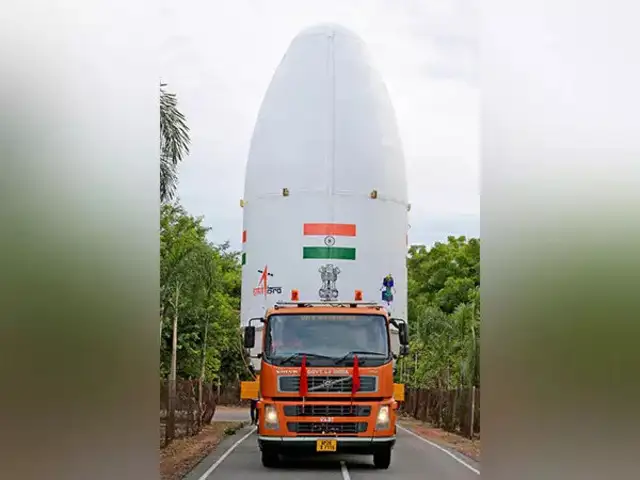
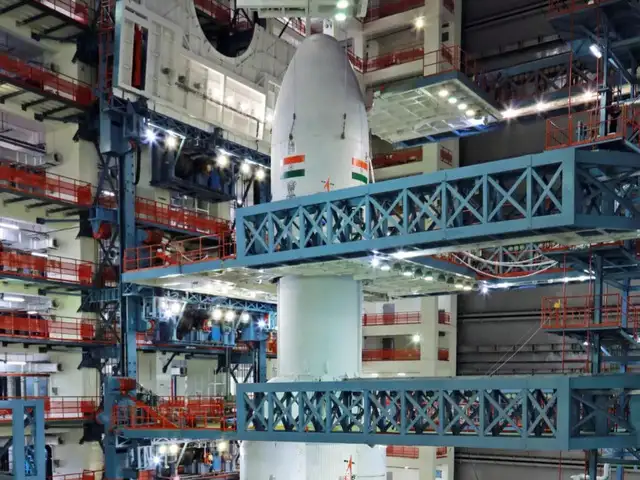
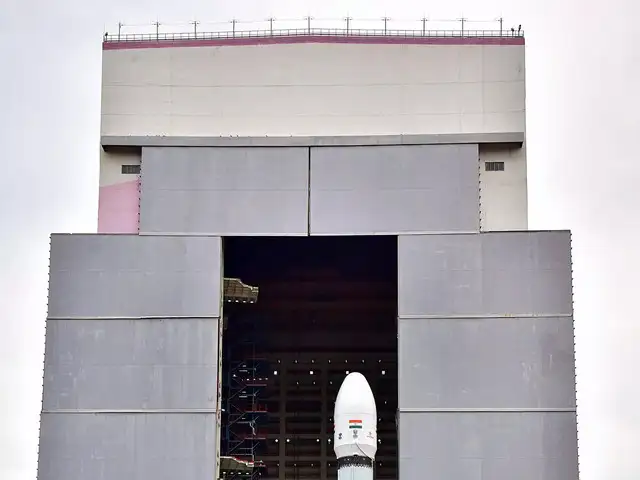
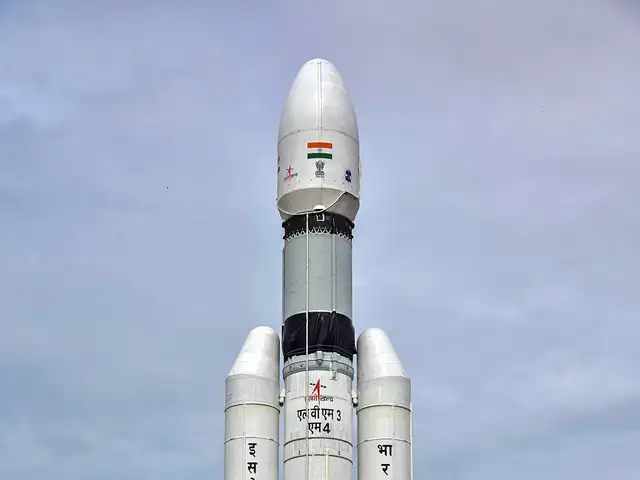
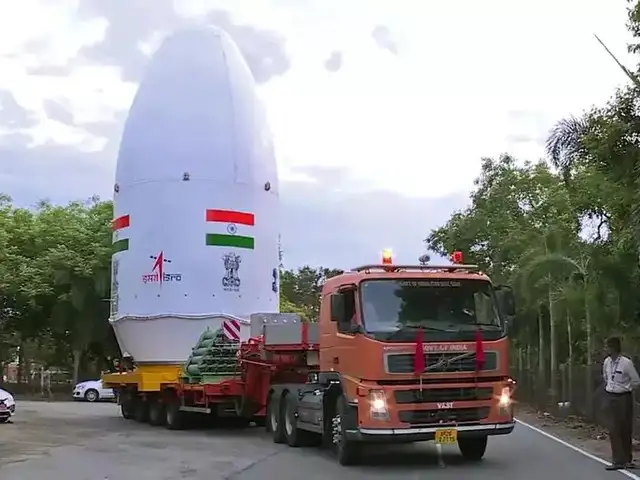
Indian Space Research Organisation (ISRO) has announced that it has successfully integrated the Chandrayaan-3 spacecraft with the Launch Vehicle Mark-III (LVM3). The integration was conducted at the Sathish Dhawan Space Centre in Sriharikota ahead of its launch, which is scheduled to take place at 2:30 pm on 13th July.
Here is everything you need to know about the mission.
Objective of the Chandrayaan-3 mission
The primary objective of the Chandrayaan-3 mission is to demonstrate the capability of soft landing on the Moon by delivering a lander and a rover to the lunar surface.
Chandrayaan-3 spacecraft
Chandrayaan-3 serves as a follow up to the Chandrayaan-2 mission, which unfortunately experienced an unsuccessful landing on September 6, 2019. During Chandrayaan-2, the Vikram lander failed to achieve a soft landing, resulting in the mission's setback. The upcoming Chandrayaan-3 mission aims to rectify this setback and successfully execute a soft landing on the lunar surface. So far, only three countries—the United States, the erstwhile Soviet Union, and China—have achieved successful moon landings.
The Chandrayaan-3 spacecraft comprises three components: the lander module, the propulsion module, and a rover. The lander module is designed to accomplish a soft landing at a predetermined location on the Moon and deploy the rover. The rover will conduct chemical analyses of the lunar surface and carry various scientific payloads for experiments.
The propulsion module plays a crucial role in transporting the lander and rover from the "launch vehicle injection" stage to a 100-kilometer circular polar lunar orbit before separating from the other modules. Additionally, the propulsion module itself carries a scientific payload that will commence operations after separation.
Chandrayaan-3's LVM-3
The Launch Vehicle Mark-III (LVM-3), previously known as GSLV Mark III, serves as the launch vehicle for the Chandrayaan-3 mission. Developed by ISRO, LVM-3 is the most powerful rocket in the organization's fleet. Standing at a height of 43.5 meters and with a diameter of 4 meters, it has a lift-off mass of 640 tonnes.
The LVM-3 can transport payloads of up to 8,000 kilograms to a low-Earth orbit and approximately 4,000 kilograms to a geostationary transfer orbit. It utilizes a cryogenic upper stage powered by CE-20, India's largest cryogenic engine. To facilitate takeoff, the rocket employs two S200 solid rocket boosters for the necessary thrust. The core stage is propelled by two L110 liquid-stage Vikas rockets.
With the successful integration of the Chandrayaan-3 spacecraft and LVM-3, ISRO is gearing up for the highly anticipated launch scheduled on July 13. The mission aims to not only showcase India's technological prowess in lunar exploration but also contribute to scientific advancements through the analysis of the Moon's surface.
As the launch date approaches, excitement builds among scientists, engineers, and space enthusiasts worldwide, eager to witness the next chapter of India's lunar exploration journey. The Chandrayaan-3 mission holds the promise of achieving a successful soft landing on the Moon and expanding our understanding of Earth's celestial neighbor.
Related FAQs
Here is everything you need to know about the mission.
Objective of the Chandrayaan-3 mission
The primary objective of the Chandrayaan-3 mission is to demonstrate the capability of soft landing on the Moon by delivering a lander and a rover to the lunar surface.
Chandrayaan-3 spacecraft
Chandrayaan-3 serves as a follow up to the Chandrayaan-2 mission, which unfortunately experienced an unsuccessful landing on September 6, 2019. During Chandrayaan-2, the Vikram lander failed to achieve a soft landing, resulting in the mission's setback. The upcoming Chandrayaan-3 mission aims to rectify this setback and successfully execute a soft landing on the lunar surface. So far, only three countries—the United States, the erstwhile Soviet Union, and China—have achieved successful moon landings.
ADVERTISEMENT
The Chandrayaan-3 spacecraft comprises three components: the lander module, the propulsion module, and a rover. The lander module is designed to accomplish a soft landing at a predetermined location on the Moon and deploy the rover. The rover will conduct chemical analyses of the lunar surface and carry various scientific payloads for experiments.
The propulsion module plays a crucial role in transporting the lander and rover from the "launch vehicle injection" stage to a 100-kilometer circular polar lunar orbit before separating from the other modules. Additionally, the propulsion module itself carries a scientific payload that will commence operations after separation.
Chandrayaan-3's LVM-3
The Launch Vehicle Mark-III (LVM-3), previously known as GSLV Mark III, serves as the launch vehicle for the Chandrayaan-3 mission. Developed by ISRO, LVM-3 is the most powerful rocket in the organization's fleet. Standing at a height of 43.5 meters and with a diameter of 4 meters, it has a lift-off mass of 640 tonnes.
ADVERTISEMENT
The LVM-3 can transport payloads of up to 8,000 kilograms to a low-Earth orbit and approximately 4,000 kilograms to a geostationary transfer orbit. It utilizes a cryogenic upper stage powered by CE-20, India's largest cryogenic engine. To facilitate takeoff, the rocket employs two S200 solid rocket boosters for the necessary thrust. The core stage is propelled by two L110 liquid-stage Vikas rockets.
With the successful integration of the Chandrayaan-3 spacecraft and LVM-3, ISRO is gearing up for the highly anticipated launch scheduled on July 13. The mission aims to not only showcase India's technological prowess in lunar exploration but also contribute to scientific advancements through the analysis of the Moon's surface.
ADVERTISEMENT
As the launch date approaches, excitement builds among scientists, engineers, and space enthusiasts worldwide, eager to witness the next chapter of India's lunar exploration journey. The Chandrayaan-3 mission holds the promise of achieving a successful soft landing on the Moon and expanding our understanding of Earth's celestial neighbor.
Related FAQs
- What is the objective of the Chandrayaan-3 mission?
The primary objective of the Chandrayaan-3 mission is to demonstrate the capability of achieving a soft landing on the Moon by delivering a lander and a rover to its surface. - What is LVM-3, and how is it used in the mission?
LVM-3, or Launch Vehicle Mark-III (LVM-3), is a three-stage medium-lift launch vehicle developed by ISRO. It is the most powerful rocket in ISRO's arsenal and serves as the launch vehicle for the Chandrayaan-3 mission. With a height of 43.5 meters and a diameter of 4 meters, it has a lift-off mass of 640 tonnes. - What is the payload capacity of LVM-3?
LVM-3 has the capability to carry payloads of up to 8,000 kilograms to a low-Earth orbit and approximately 4,000 kilograms to a geostationary transfer orbit.
Download
The Economic Times Business News App for the Latest News in Business, Sensex, Stock Market Updates & More.
The Economic Times Business News App for the Latest News in Business, Sensex, Stock Market Updates & More.
Download
The Economic Times News App for Quarterly Results, Latest News in ITR, Business, Share Market, Live Sensex News & More.
The Economic Times News App for Quarterly Results, Latest News in ITR, Business, Share Market, Live Sensex News & More.
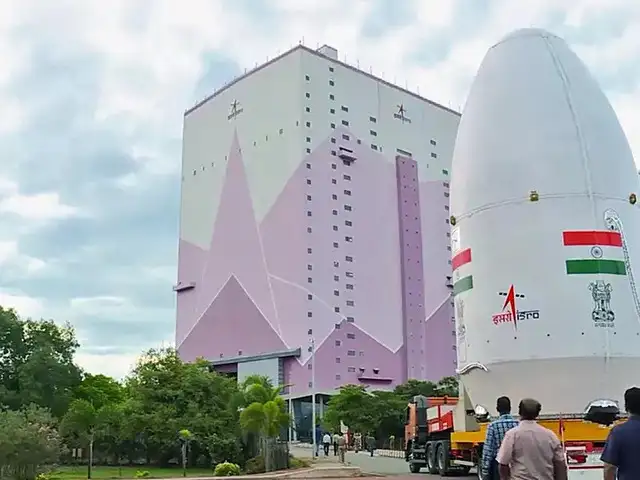
Indian Space Research Organisation (ISRO) has announced a new launch date for Chandrayaan-3 -- July 14. Meanwhile, the space agency has successfully integrated the Chandrayaan-3 spacecraft with the Launch Vehicle Mark-III (LVM3) at the Sathish Dhawan Space Centre in Sriharikota.

ADVERTISEMENT


