Demystifying Bharat NCAP: Your roadmap to safer car selection
The Ministry of Road Transport and Highways in India has introduced the Bharat New Car Assessment Programme (Bharat NCAP) to improve road safety. The program evaluates the safety performance of passenger vehicles and assigns star ratings based on ...
By ET Online | Updated:

BCCL
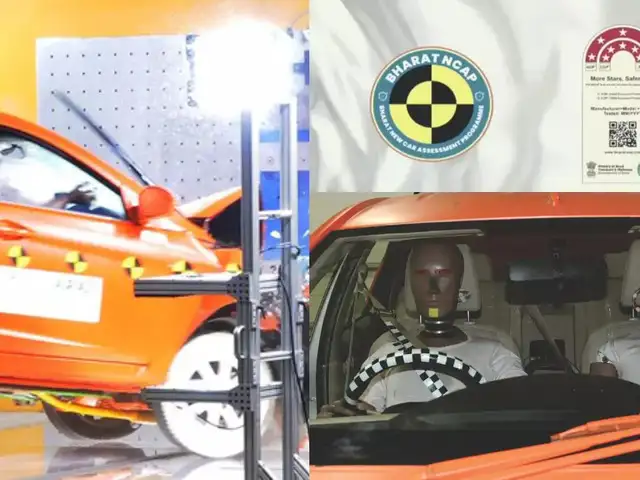
In a bid to enhance road safety, the Ministry of Road Transport and Highways in India has introduced a game-changing initiative – the Bharat New Car Assessment Programme (Bharat NCAP). This program is all about evaluating the safety performance of passenger vehicles designed to carry up to eight passengers and not exceed a weight limit of 3.5 tonnes. The overarching goal is to harmonize India's safety standards with those of countries like the US, Europe, Japan, Australia, and Latin America, all of which have their own NCAPs. The evaluation process involves comprehensive crash tests and assessments, culminating in the allocation of star ratings to vehicles, with the coveted five stars representing the highest level of safety.
Why does the Bharat NCAP rating matter?
The Bharat NCAP is a dynamic platform that empowers consumers as primary decision-makers. It equips potential car buyers with the tools to make well-informed choices by taking into account the star ratings assigned to different vehicles. Beyond this, the initiative fuels a healthy competitive spirit among original equipment manufacturers (OEMs) in India, encouraging them to produce vehicles that meet elevated safety standards. On a global scale, road traffic accidents are a leading cause of fatalities, especially among individuals aged 15 to 49. Annually, approximately 1.3 million lives are lost due to such accidents. This program squarely addresses this concern, given that over 90% of these fatalities take place in low- and middle-income countries. India contributes significantly to this grim statistic, accounting for around 11% of the world's road traffic deaths.
How are vehicle safety ratings determined?
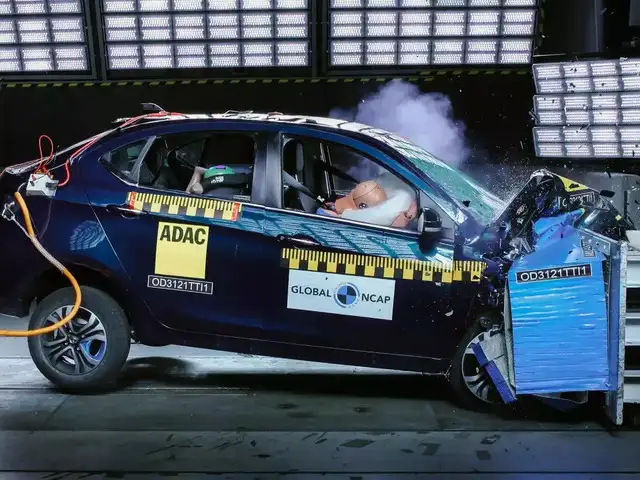
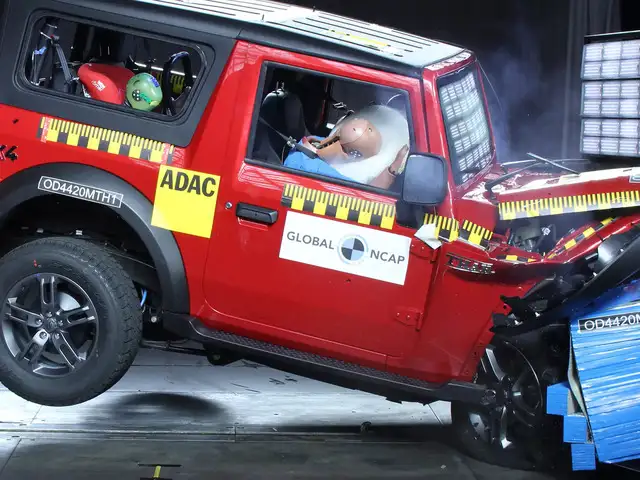
Vehicle safety ratings are the outcome of a meticulous sequence of crash tests, encompassing frontal, side, and pole-side impact assessments. The frontal crash test unfolds at a velocity of 64 kmph, while side and pole-side tests occur at 50 kmph and 29 kmph, respectively. The star ratings are based on two pivotal criteria: adult safety for front occupants and child safety for those at the back. For a vehicle to secure a 5-star rating in adult safety, it must score a minimum of 27 out of a possible 32 points.
Akin to this, a 5-star child safety rating is bestowed upon vehicles that accumulate a minimum of 41 out of 49 points. Supplementary points are allocated for features like ISOFIX anchorages, which reinforce child restraint systems.
Is participation in the Bharat NCAP obligatory?
Unlike in certain developed nations where participation is largely voluntary, the Bharat NCAP does not impose mandatory participation. The objective behind such programs is to incentivize manufacturers to surpass the rudimentary safety standards and promote a culture of competition in integrating advanced safety features. For example, to achieve a minimum of 3 stars, vehicles must be equipped with electronic stability control and curtain airbags – features that are not obligatory for initial approval.
ADVERTISEMENT
Several manufacturers have proactively incorporated these features as standard even before the program's official launch. Hyundai's Exter and Kia's Carens are leading the way in this regard. Maruti, too, now includes electronic stability control as a standard feature in many of its car models.How did Indian OEMs assess their cars before Bharat NCAP?
Prior to the introduction of the Bharat New Car Assessment Programme, Indian automakers subjected their vehicles to testing under the Global New Car Assessment Program (GNCAP), a process that was both time-consuming and financially demanding.
Historically, Global NCAP assessed cars through a solitary frontal crash test. This test, known as the (Front) Offset Deformable Barrier (ODB) test, involved crashing a vehicle into a deformable barrier at a speed of 64 kmph with 40% overlap. However, Global NCAP has since refined its criteria for evaluating chest load measurements on crash test mannequins to ensure consistent precision.
Download
The Economic Times Business News App for the Latest News in Business, Sensex, Stock Market Updates & More.
The Economic Times Business News App for the Latest News in Business, Sensex, Stock Market Updates & More.
Download
The Economic Times News App for Quarterly Results, Latest News in ITR, Business, Share Market, Live Sensex News & More.
The Economic Times News App for Quarterly Results, Latest News in ITR, Business, Share Market, Live Sensex News & More.
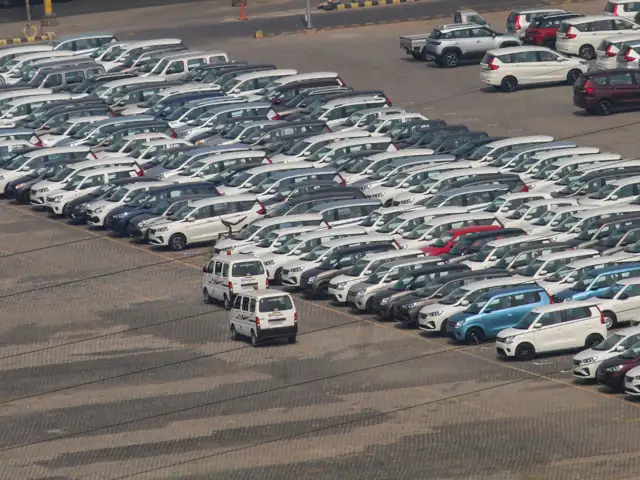
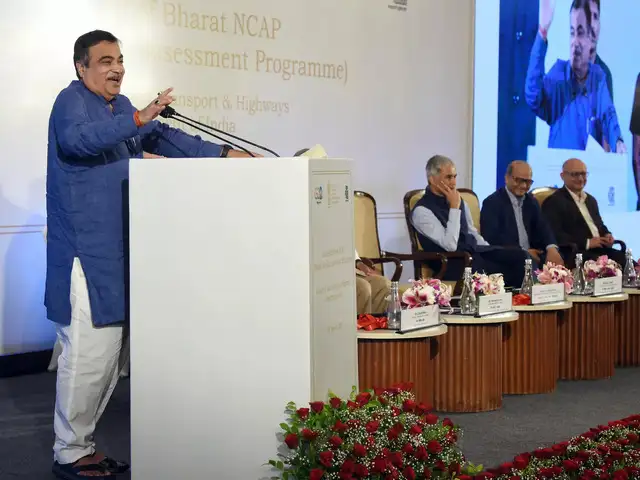
Union minister Nitin Gadkari on Tuesday launched the country's first crash testing programme Bharat NCAP, which is aimed at improving road safety standards of motor vehicles up to 3.5 tonnes. The Bharat NCAP empowers consumers by providing star ratings for vehicle safety, enabling informed choices. It will be effective from October 1 this year.


ADVERTISEMENT


