
Thirsty Singapore taps into innovation to secure its water future
1/5
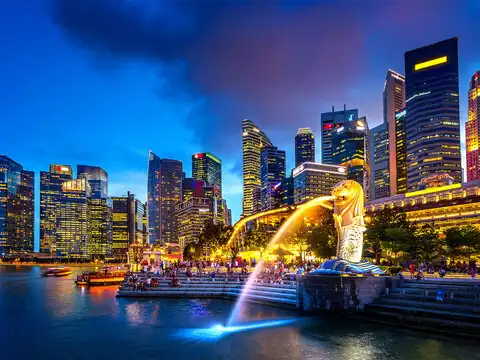
Securing their liquid future
Every day after his morning run, Adam Reutens-Tan washes under a half-full camping shower hooked on the ceiling of his bathroom.
The modified shower, which uses just four litres of water, is one of several ways the Reutens-Tans family conserve water as part of a countrywide push to cut Singapore's daily consumption by 8% by 2030.
The nation currently uses 141 litres per person each day - about enough for two typical eight-minute U.S. showers, according to Harvard University statistics.
Singapore, a steamy, low-lying island city-state, is the fifth most likely country in the world to face extremely high water stress by 2040, according to the U.S.-based World Resources Institute. And it is hardly alone.
U.N. data shows 2 billion people - a quarter of the world's population - now use water much faster than the planet can replenish natural sources, such as groundwater.
The modified shower, which uses just four litres of water, is one of several ways the Reutens-Tans family conserve water as part of a countrywide push to cut Singapore's daily consumption by 8% by 2030.
The nation currently uses 141 litres per person each day - about enough for two typical eight-minute U.S. showers, according to Harvard University statistics.
Singapore, a steamy, low-lying island city-state, is the fifth most likely country in the world to face extremely high water stress by 2040, according to the U.S.-based World Resources Institute. And it is hardly alone.
U.N. data shows 2 billion people - a quarter of the world's population - now use water much faster than the planet can replenish natural sources, such as groundwater.
2/5
Liquid stream coming in from Malaysia
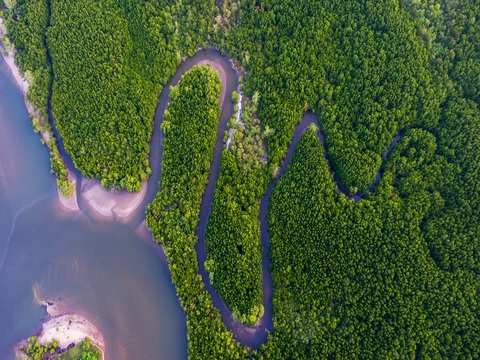
Singapore gets about half of its water from neighbouring Malaysia, according to local water experts, importing supplies from the Johor River under deals dating back to 1927.
But the current import agreement is due to expire in 2061 - and the price Singapore pays for Malaysian water has been a source of friction between the neighbours for years. Singapore buys river water from Malaysia for 3 sen - less than a tenth of a U.S. cent - per 1,000 gallons, then treats it and sells some of it back to Malaysia's Johor state at 50 sen per 1,000 gallons.
Malaysia's Prime Minister has called the price Singapore pays to import Malaysian water "ridiculous."
Earlier this year, leaders from both countries agreed to consider arbitration to end months of political squabbling over the water deal.
But the current import agreement is due to expire in 2061 - and the price Singapore pays for Malaysian water has been a source of friction between the neighbours for years. Singapore buys river water from Malaysia for 3 sen - less than a tenth of a U.S. cent - per 1,000 gallons, then treats it and sells some of it back to Malaysia's Johor state at 50 sen per 1,000 gallons.
Malaysia's Prime Minister has called the price Singapore pays to import Malaysian water "ridiculous."
Earlier this year, leaders from both countries agreed to consider arbitration to end months of political squabbling over the water deal.
3/5
Scarcity of water common
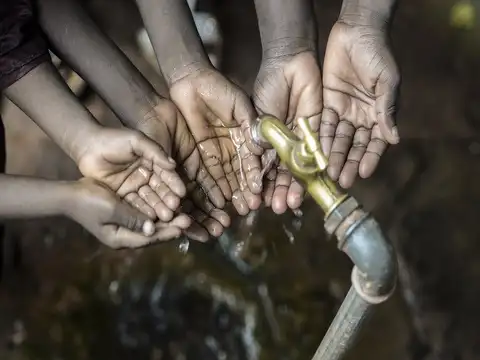
Such stresses over water are increasingly common in Asia, where almost half of the population lives in the basins of just 10 rivers - and four of those are expected to dry significantly in the next 50 years, according to think tank China Water Risk.
From water supply disputes between countries along the Mekong River to groundwater threats in India and growing scarcity in megacities such as Jakarta and Manila, water is becoming a bigger point of political contention in the region.
From water supply disputes between countries along the Mekong River to groundwater threats in India and growing scarcity in megacities such as Jakarta and Manila, water is becoming a bigger point of political contention in the region.
Amazon Top Deals
POWERED BY

Crompton Ozone 75 Litres Desert Air Cooler for home | Large & Easy Clean Ice Chamber | 4-Way Air Deflection | High Density Honeycomb Pads | Everlast Pump | Auto Fill| 3 Year Brand Warranty
₹9,798Buy Now43%
OFF

LG 32 L Convection Microwave Oven (MC3286BRUM, Black, 360° Motorised Rotisserie for Bar-be-queing, 301 Auto Cook Menu, Stainless steel cavity, Indian Cuisine, Tandoor Se, Steam Clean & Diet Fry)
₹19,090Buy Now20%
OFF
4/5
Find more, use less
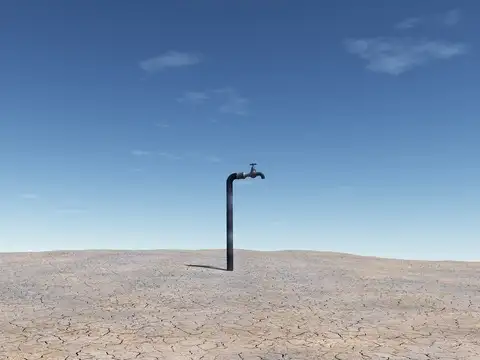
Faced with uncertainty about long-term water imports, and with more irregular rainfall linked to climate change, Singapore is now working to supply much of the water it needs at home.
It is doing that through a combination of stringent conservation, re-use and innovative technology.
Since 2006, the Southeast Asian nation - one of the region's wealthiest - has committed almost half a billion dollars to improving water technologies.
It also runs ongoing public awareness campaigns on the need to conserve water.
They urge people not to use a hose to wash the car, not to leave the tap running when washing dishes, not to keep the shower on while soaping up.
It is doing that through a combination of stringent conservation, re-use and innovative technology.
Since 2006, the Southeast Asian nation - one of the region's wealthiest - has committed almost half a billion dollars to improving water technologies.
It also runs ongoing public awareness campaigns on the need to conserve water.
They urge people not to use a hose to wash the car, not to leave the tap running when washing dishes, not to keep the shower on while soaping up.

5/5
Water independence
Singapore currently uses about 1.95 billion litres per day - enough to fill 782 Olympic-sized swimming pools, according to national water agency PUB.
Just under half the water goes to households.
But during the next four decades, overall water demand is expected to almost double as the population grows.
Since independence over half a century ago, Singapore has recognised the importance of diversifying its water sources.
Today it has a national master-plan focusing on four "national taps": catching rainfall in reservoirs, recycling water, desalinating water, and imports.
Just under half the water goes to households.
But during the next four decades, overall water demand is expected to almost double as the population grows.
Since independence over half a century ago, Singapore has recognised the importance of diversifying its water sources.
Today it has a national master-plan focusing on four "national taps": catching rainfall in reservoirs, recycling water, desalinating water, and imports.