Nepal earthquake: Why Newari houses fell so easily to quake
Kathmandu to Bhaktapur, Patan to Sankhu -the four cultural seats of the country -it's mostly the old era, mud-brick and mortar homes that fell.
By Deeptiman Tiwary, TNN | Updated:

KATHMANDU: From public structures to homes, Nepal may be unfortunately paying the price for preserving its architectural heritage.
Kathmandu to Bhaktapur, Patan to Sankhu -the four cultural seats of the country -it's mostly the old era, mud-brick and mortar homes that fell. In these cities' newer parts, where modern construction practices have been used, there's little or no destruction.
Although the Newari architectural culture has a history of quake-resistant houses, the older ones with rotting wooden beams and withering bricks couldn't have withstood a 7.9 quake. "It was a disaster waiting to happen," says a Nepal Armed Police officer engaged in rescue work at Sankhu. "Had these been reinforced, fewer would have died. We would've saved the character of our cities."
Sankhu, a city of 10,000 around 20 km from Kathmandu, consists almost entirely of Newari homes. More than 60 died there, over half the houses collapsed. Among those standing, 30% are unlivable, their damages irreparable.
Shankar Manshreshtha, 47, tries to retrieve valuables from a mound of bricks that was once his home in Sankhu. "My father was born here. So was I. We never thought it'd fall to a quake," he says.
Punya Sagar Marhatta, architecture and urban planning scholar in Tribhuvan University has an explanation for the vulnerability of Newari homes to quakes. He wrote that records show traditional buildings using timber have failed to resist quake impacts.
"Timber members have rotted or been permeated with insect holes. Such situations may have been overlooked by traditional artisans or they may have developed their own technologies to get rid of such situation. But such technologies and knowledge are unwritten. This added vulnerability to traditional buildings."
Commander Gopal of Nepal Armed Police at Sankhu, says: "Government was aware these over-acentury old homes won't sustain a strong quake. People were told to reinforce old homes." Then he conceded, "You need a fat cheque for that."
Kathmandu to Bhaktapur, Patan to Sankhu -the four cultural seats of the country -it's mostly the old era, mud-brick and mortar homes that fell. In these cities' newer parts, where modern construction practices have been used, there's little or no destruction.
Although the Newari architectural culture has a history of quake-resistant houses, the older ones with rotting wooden beams and withering bricks couldn't have withstood a 7.9 quake. "It was a disaster waiting to happen," says a Nepal Armed Police officer engaged in rescue work at Sankhu. "Had these been reinforced, fewer would have died. We would've saved the character of our cities."
Sankhu, a city of 10,000 around 20 km from Kathmandu, consists almost entirely of Newari homes. More than 60 died there, over half the houses collapsed. Among those standing, 30% are unlivable, their damages irreparable.
Shankar Manshreshtha, 47, tries to retrieve valuables from a mound of bricks that was once his home in Sankhu. "My father was born here. So was I. We never thought it'd fall to a quake," he says.
Punya Sagar Marhatta, architecture and urban planning scholar in Tribhuvan University has an explanation for the vulnerability of Newari homes to quakes. He wrote that records show traditional buildings using timber have failed to resist quake impacts.
ADVERTISEMENT
"Timber members have rotted or been permeated with insect holes. Such situations may have been overlooked by traditional artisans or they may have developed their own technologies to get rid of such situation. But such technologies and knowledge are unwritten. This added vulnerability to traditional buildings."
Commander Gopal of Nepal Armed Police at Sankhu, says: "Government was aware these over-acentury old homes won't sustain a strong quake. People were told to reinforce old homes." Then he conceded, "You need a fat cheque for that."
Download
The Economic Times Business News App for the Latest News in Business, Sensex, Stock Market Updates & More.
The Economic Times Business News App for the Latest News in Business, Sensex, Stock Market Updates & More.
Download
The Economic Times News App for Quarterly Results, Latest News in ITR, Business, Share Market, Live Sensex News & More.
The Economic Times News App for Quarterly Results, Latest News in ITR, Business, Share Market, Live Sensex News & More.
Related Articles
 Nepal Earthquake: Magnitude 4.0 earthquake strikes Nepal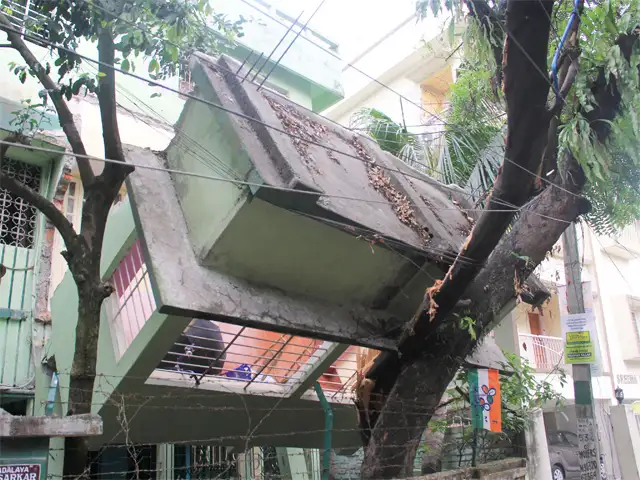
ET Bureau
The devastating earthquake in Nepal has reignited the debate about earthquake safety in buildings across India, and how they can be made safer.
ET lists some top earthquake-proofing technologies in the world...
The devastating earthquake in Nepal has reignited the debate about earthquake safety in buildings across India, and how they can be made safer.
ET lists some top earthquake-proofing technologies in the world...

ADVERTISEMENT


