
NASA spacecraft starts trip back to Earth after collecting asteroid samples
1/5
Back home
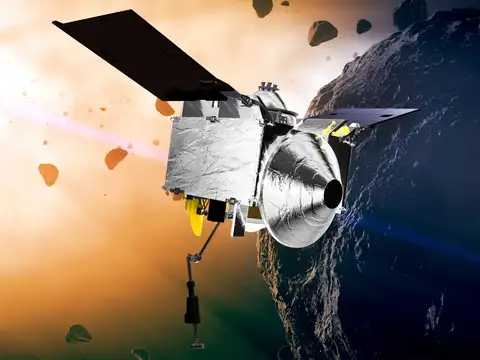
NASA's spacecraft OSIRIS-REx has began its two-year journey back to Earth after collecting samples from an asteroid. Its mission was to visit Bennu, which is a skyscraper-sized asteroid more than 300 million km away from Earth. Their objective was to survey the asteroid and collect samples to deliver them back.
2/5
Trip to Bennu
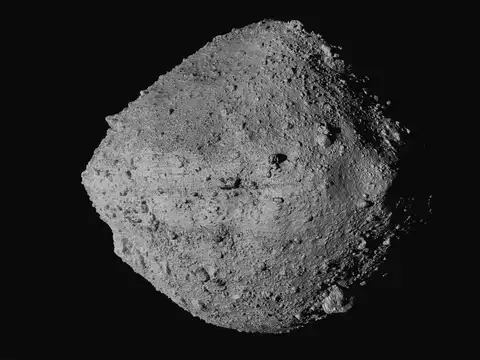
The space agency celebrated as OSIRIS-REx pushed away from Bennu, after having landed in 2018. The asteroid was formed in the early days of our solar system, say experts.
3/5
Recipe for life
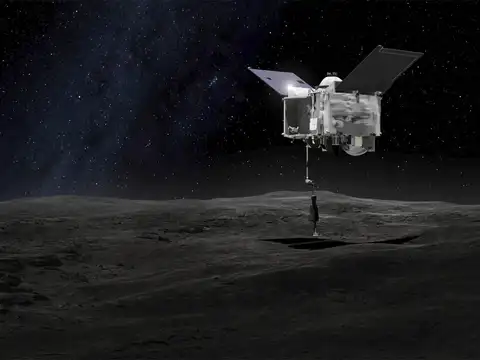
According to those involved in the project, traces of hydrogen and oxygen molecules were found embedded on Bennu's surface, the recipe for water and also, life. OSIRIS-REx will make its way back in about two years, after which they will eject a capsule containing the samples, which will land in Utah.
Amazon Top Deals
POWERED BY

Crompton Ozone 75 Litres Desert Air Cooler for home | Large & Easy Clean Ice Chamber | 4-Way Air Deflection | High Density Honeycomb Pads | Everlast Pump | Auto Fill| 3 Year Brand Warranty
₹9,798Buy Now43%
OFF

atomberg Studio Smart+ 1200mm BLDC Ceiling Fan with IoT & Remote | BEE 5 star Rated Energy Efficient Ceiling Fan | High Air Delivery with LED Indicators | 3 Year Warranty (Earth Brown)
₹5,882Buy Now36%
OFF

LG 32 L Convection Microwave Oven (MC3286BRUM, Black, 360° Motorised Rotisserie for Bar-be-queing, 301 Auto Cook Menu, Stainless steel cavity, Indian Cuisine, Tandoor Se, Steam Clean & Diet Fry)
₹19,340Buy Now19%
OFF
4/5
For posterity
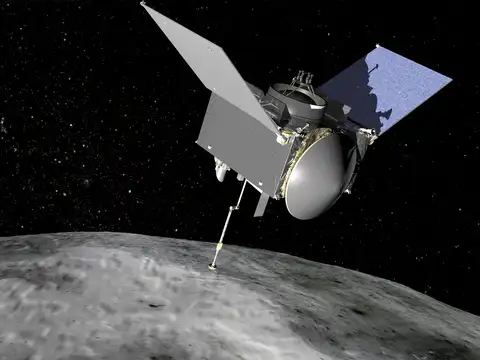
While the samples will be distributed across the globe for studies, 2/3rds of it will remain at the Johnson Space Center for people to study the rock in the future, as the technology to study it has not been created yet.
5/5
Answering tough questions
OSIRIS-REx was launched in 2016 to collect and return pristine asteroid material. The spacecraft is worth roughly $800 million. This sample could hold the clues to how we came to be on Earth as these asteroids are part of the debris from the creation of our solar system, which was formed about 4.5 billion years ago.