
Coronavirus outbreak: What are super-spreaders and what do they do?
1/5
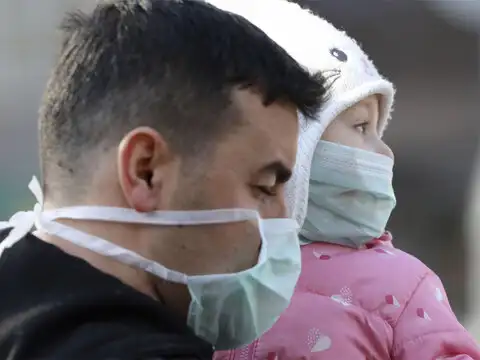
Can a single COVID-19 patient infect others?
Although transmission rates in the current outbreak appear to be far lower, a variety of factors can lead to an individual infecting many.
2/5
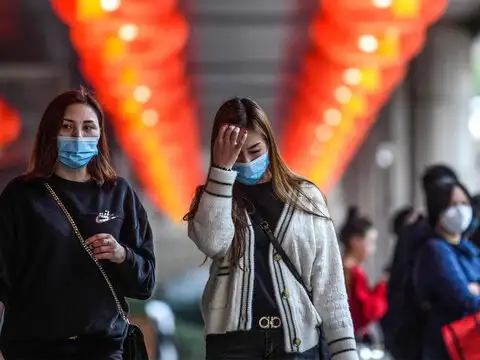
What is "super-spreading"?
The term "super-spreader" implies that a particular person may be inherently more able than others to pass on disease, but virus experts say there is no evidence to show that is the case.

3/5
What WHO says?
The World Health Organization says it does not use "super-spreading" as a technical term. It adds, however, that "there can be incidents of transmission where a large number of people can become infected from a common source".
Amazon Top Deals
POWERED BY

Crompton Ozone 75 Litres Desert Air Cooler for home | Large & Easy Clean Ice Chamber | 4-Way Air Deflection | High Density Honeycomb Pads | Everlast Pump | Auto Fill| 3 Year Brand Warranty
₹9,798Buy Now43%
OFF

atomberg Studio Smart+ 1200mm BLDC Ceiling Fan with IoT & Remote | BEE 5 star Rated Energy Efficient Ceiling Fan | High Air Delivery with LED Indicators | 3 Year Warranty (Earth Brown)
₹5,882Buy Now36%
OFF

LG 32 L Convection Microwave Oven (MC3286BRUM, Black, 360° Motorised Rotisserie for Bar-be-queing, 301 Auto Cook Menu, Stainless steel cavity, Indian Cuisine, Tandoor Se, Steam Clean & Diet Fry)
₹19,340Buy Now19%
OFF
4/5
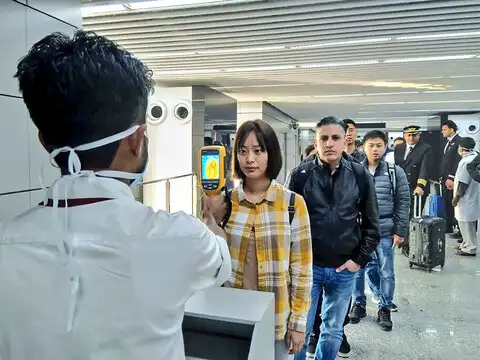
Is a "super-spreader" a person or an event?
It's both. The spread of a virus like the new coronavirus depends on a range of environmental and epidemiological factors that ultimately lead to transmission in individual cases or clusters. These include the patient and what stage of disease they are in, their behaviour, their environment, and the amount of time spent in that environment.
5/5
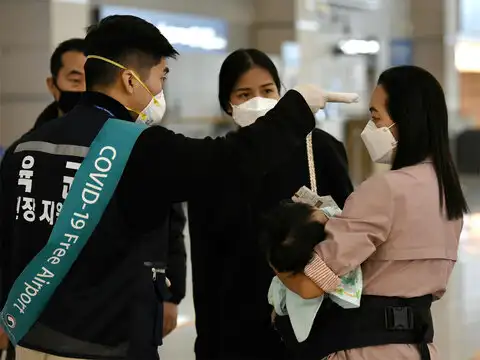
Have there been "super-spreaders" in the Covid-19 Outbreak?
The WHO described the South Korea outbreak as a "cluster" of cases and reiterated that it does not use super-spreading as a technical term. A WHO spokesman, asked about groups of infections in Singapore, France, Britain, Germany and elsewhere, said: "We don't have enough evidence to confirm a case involving a super-spreading event in the COVID-19 outbreak".