What can blind people see? What people who have vision problems should know about sight
The blind are not homogenous; instead, they do not have the same black curtain in front of their eyes as is believed but have different levels of blindness which varies between central vision or peripheral vision loss.
By ET Spotlight Special |

Agencies
It is estimated around 12 million people in the USA are above 40 years, and 3 per cent of young people who are 18 and younger have blindness or a visual impairment, as per the Centers for Disease Control and Prevention (CDC).
Generalising blindness would set you on the wrong path, as each blind person might have a different opinion about their degree of blindness and what they are experiencing. Speaking to the staff of New View Oklahoma, a non-profit organisation that helps blind people in Oklahoma settle down and seek employment along with community programming.
According to Ashley Howard, the president of New View, many blind people have a perception of light, which allows them to see almost everything blurred. The shades of a light help to ascertain their knowledge about objects or people they see. The background and lighting of any particular thing determine what they see, and their memory or experience of those objects helps derive what they are confronting.
Visual memory is essential for those who have not been blind since birth. Their memory of what they saw with limited vision helps them to conjure their places or objects. However, this memory could be better; things sometimes go wrong if they rely on it too much. For example, a blind person who sees a retriever dog with partial vision can replicate that idea on all dogs. Nonetheless, visual memory does help the blind in their lives as they do their things.
Some who are blind feel and touch their way around in their dreams, as those sensations play a decisive role in their lives. Many are blind and don't have any dreams at all.
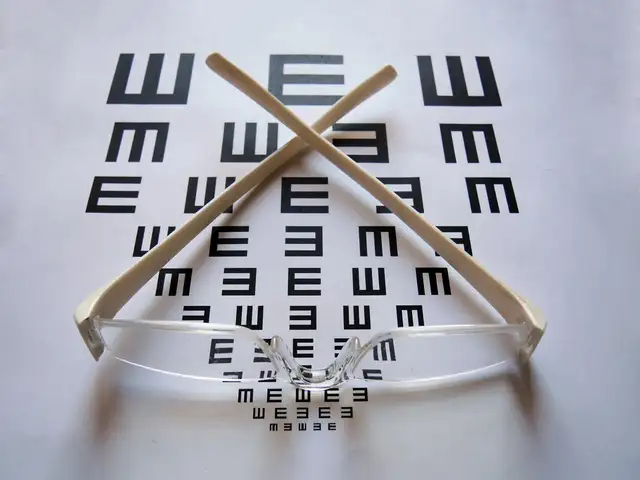
Blind people also wear them for social reasons so that society is not unfair to them and it is easily recognisable. Many blind people have macular degeneration, where the blind person looks to the side of the person who is being addressed. The blind person is using peripheral vision to ascertain the person in front in this case. This causes the person being addressed by a blind person to look behind or aside, thinking the blind person is talking to someone else. Generally, wearing a shade helps to avoid these discomforts.
Braille
Braille is a writing format used by the blind to read. This is their way to become literate. Older people lose the sensitivity of their fingers, and those who become blind when they get old have difficulty learning braille. For them, audio formats that are out due to technological advancements are a big help. JAWS is one such software for laptops and desktops that helps the blind. Text-to-speech also helps the blind in moving around and getting things done. Libraries are there for the blind who wish to get some reading done. Libraries like Oklahoma Library for the Blind and National Library for the Blind and Print Disabled also work fine.
Generalising blindness would set you on the wrong path, as each blind person might have a different opinion about their degree of blindness and what they are experiencing. Speaking to the staff of New View Oklahoma, a non-profit organisation that helps blind people in Oklahoma settle down and seek employment along with community programming.
Describing what the blind experience
Ronita Smalley of New View, Oklahoma, says there are two types of legal blindness. Those who suffer significant vision loss and those who suffer peripheral vision loss. The degree of loss should be 20/200 or worse in their corrected eye. Legally blind is also for those with less than 20 degrees of vision in their best-corrected eye, which would be like looking through a narrow pipe all the time. Blind people have various visual sharpness and sense, and many legally blind people have a visual perception at least.According to Ashley Howard, the president of New View, many blind people have a perception of light, which allows them to see almost everything blurred. The shades of a light help to ascertain their knowledge about objects or people they see. The background and lighting of any particular thing determine what they see, and their memory or experience of those objects helps derive what they are confronting.
Visual memory is essential for those who have not been blind since birth. Their memory of what they saw with limited vision helps them to conjure their places or objects. However, this memory could be better; things sometimes go wrong if they rely on it too much. For example, a blind person who sees a retriever dog with partial vision can replicate that idea on all dogs. Nonetheless, visual memory does help the blind in their lives as they do their things.
Do the blind dream?
Some do, and some don't. Generally, those who had partial vision earlier dream as their subconscious can draw on images of the past that occupy their memory. However, many blind-since-birth people dream as their mind improvises and imagines to formulate some picture.ADVERTISEMENT
Some who are blind feel and touch their way around in their dreams, as those sensations play a decisive role in their lives. Many are blind and don't have any dreams at all.
Researchers recently during a meta-analysis found that blindness and impairment of vision are closely associated with increased mortality risk. This has prompted a need to address global eye health disparities.

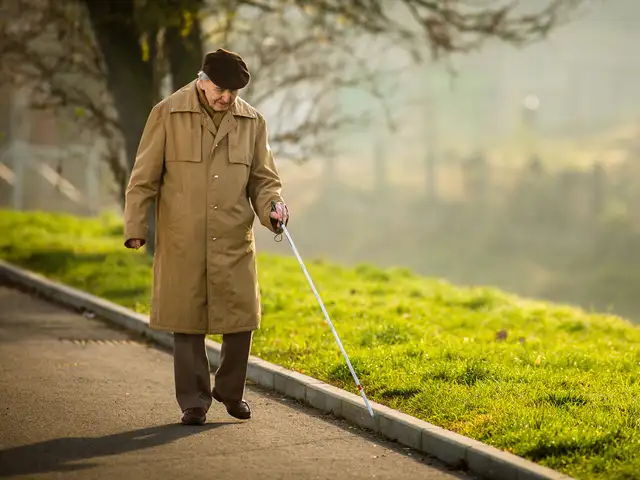
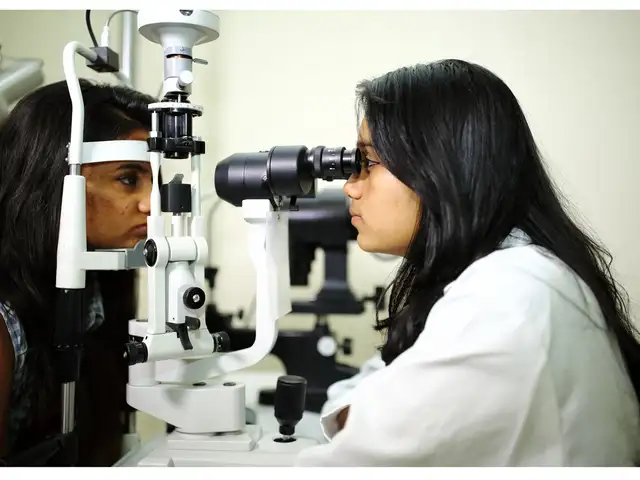


Wearing black shades helps them to move around in society
Those who are sensitive to light mostly wear dark glasses. Intense sunlight can be very irritating for blind people, and hence wearing shades helps them. Those with partial vision also wear shades to protect their eyes. Flies and other insects can affect their eyes and irritate them; hence wearing shades over them is always a help.Blind people also wear them for social reasons so that society is not unfair to them and it is easily recognisable. Many blind people have macular degeneration, where the blind person looks to the side of the person who is being addressed. The blind person is using peripheral vision to ascertain the person in front in this case. This causes the person being addressed by a blind person to look behind or aside, thinking the blind person is talking to someone else. Generally, wearing a shade helps to avoid these discomforts.
ADVERTISEMENT
Braille
Braille is a writing format used by the blind to read. This is their way to become literate. Older people lose the sensitivity of their fingers, and those who become blind when they get old have difficulty learning braille. For them, audio formats that are out due to technological advancements are a big help. JAWS is one such software for laptops and desktops that helps the blind. Text-to-speech also helps the blind in moving around and getting things done. Libraries are there for the blind who wish to get some reading done. Libraries like Oklahoma Library for the Blind and National Library for the Blind and Print Disabled also work fine.FAQs:
- Name a blind author from the USA.
Hellen Keller. - Name an actor who has visual impairments.
Johnny's Depp-left eye is blind, and near-sighted in the right eye.
Download
The Economic Times Business News App for the Latest News in Business, Sensex, Stock Market Updates & More.
The Economic Times Business News App for the Latest News in Business, Sensex, Stock Market Updates & More.
Download
The Economic Times News App for Quarterly Results, Latest News in ITR, Business, Share Market, Live Sensex News & More.
The Economic Times News App for Quarterly Results, Latest News in ITR, Business, Share Market, Live Sensex News & More.
Related Articles
 Eye drops to replace reading glasses? Vision problems could soon have a non-surgical solution
ADVERTISEMENT


