Travelling to Hong Kong? Here are new Covid-19 quarantine rules
Hong Kong decided to ease covid-related quarantine restrictions for international travelers. Starting on Friday, the seven days hotel quarantine has been reduced to three. Travelers will be under "home surveillance" for four days after this.
By ET Spotlight Special |

Agencies
In a further move toward loosening the tight pandemic laws that have isolated Asia's financial powerhouse, Hong Kong has decided to reduce the quarantine period for all travelers coming to the country. The mandatory Covid-19 hotel period has been reduced from seven days to three days.
John Lee, the Chief Executive of Hong Kong, today said the regulations would go into force on Friday.
Hong Kong's new Covid-19 quarantine rules
Visitors will be required to self-monitor for an additional four days, during which they will be prohibited from entering public places like restaurants, bars, and salons. They are also forbidden from visiting schools, gyms, and nursing homes and participating in activities where the mask has to be removed.
Quarantined individuals will receive a red code on a government-mandated app. Once they leave quarantine, this will change to a yellow code, indicating they cannot enter busy areas.
Lee further elaborated that once an individual tests negative on the rapid antigen test, they can start availing of public transportation, go to places of work, and visit shopping malls.
There are only a limited number of hotels available for quarantine.
Rooms are expensive and sometimes booked months in advance. Refunds are not granted until the government's policy changes or the flight is canceled.
The pandemic measures have significantly harmed Hong Kong's economy.
Since 2020, the city's border has been almost entirely sealed, and overseas arrivals are subject to rigorous quarantine and testing measures. It is one of the remaining places in the world that still requires travelers to undergo quarantine.
After the announcement, shares of Cathay Pacific Airways surged as much as 3.5% to HK$8.77, the most significant daily percentage increase since June 28.
Hong Kong's tight pandemic regulations have caused a 98 percent decline in Cathay's passenger counts in the past two years.
John Lee, the Chief Executive of Hong Kong, today said the regulations would go into force on Friday.
Hong Kong's new Covid-19 quarantine rules
Visitors will be required to self-monitor for an additional four days, during which they will be prohibited from entering public places like restaurants, bars, and salons. They are also forbidden from visiting schools, gyms, and nursing homes and participating in activities where the mask has to be removed.
Quarantined individuals will receive a red code on a government-mandated app. Once they leave quarantine, this will change to a yellow code, indicating they cannot enter busy areas.
Lee further elaborated that once an individual tests negative on the rapid antigen test, they can start availing of public transportation, go to places of work, and visit shopping malls.
ADVERTISEMENT
Previously, quarantine would last up to three weeks. All passengers must spend a minimum of one week in hotel quarantine, submit periodic testing orders, provide feces samples for infants, and fill out numerous documents.There are only a limited number of hotels available for quarantine.
Rooms are expensive and sometimes booked months in advance. Refunds are not granted until the government's policy changes or the flight is canceled.
The pandemic measures have significantly harmed Hong Kong's economy.
ADVERTISEMENT
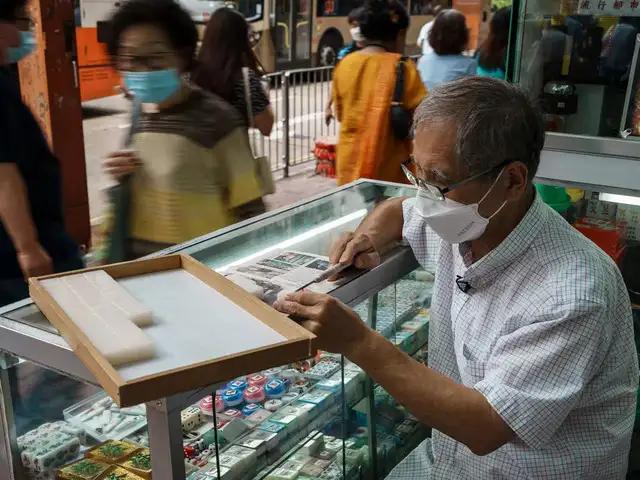
Eyebrows furrowed in careful concentration as he chisels images and Chinese characters onto mahjong tiles, 70-year-old Cheung Shun-king is one of the last craftsmen of his kind in Hong Kong.






Since 2020, the city's border has been almost entirely sealed, and overseas arrivals are subject to rigorous quarantine and testing measures. It is one of the remaining places in the world that still requires travelers to undergo quarantine.
ADVERTISEMENT
This year, more than 100 flights were canceled, a significant inconvenience for businesses and citizens used to quickly and easily moving from the city.After the announcement, shares of Cathay Pacific Airways surged as much as 3.5% to HK$8.77, the most significant daily percentage increase since June 28.
Hong Kong's tight pandemic regulations have caused a 98 percent decline in Cathay's passenger counts in the past two years.
Download
The Economic Times Business News App for the Latest News in Business, Sensex, Stock Market Updates & More.
The Economic Times Business News App for the Latest News in Business, Sensex, Stock Market Updates & More.
Download
The Economic Times News App for Quarterly Results, Latest News in ITR, Business, Share Market, Live Sensex News & More.
The Economic Times News App for Quarterly Results, Latest News in ITR, Business, Share Market, Live Sensex News & More.
ADVERTISEMENT


