Spot brighter and bigger Jupiter after 59 years from Earth. Find out how and when
According to NASA, Jupiter will seem brighter and larger in the sky during this event, providing a fantastic opportunity to grab a glance.
By ET Spotlight Special |

Agencies
According to NASA, on Monday, September 26, Jupiter will make its first close approach to Earth in 59 years.
NASA first declared Jupiter would make its closest approach to Earth in 70 years before recognizing its error and changing its statement, according to a NASA official.
NASA estimates that there will be a distance of around 367 million miles (590.6 million kilometers) between Jupiter and Earth. At its furthest, Jupiter is located roughly 600,000,000 miles (965.6,000,000 kilometers) from Earth.
NASA says you can see the planet's bands with binoculars or a telescope.
The gaseous planet, Jupiter, according to Patrick Hartigan, an astronomy and physics professor at Rice University in Houston, would rise around sunset and would be visible without a telescope.
Ray, who is also NASA's investigator scientist for REASON (the Radar for Europa Assessment and Sounding: Ocean to Near-surface), explained that because neither Jupiter nor Earth orbits the Sun in a perfectly round path, each opposition has a little different distance.
According to EarthSky, Jupiter is in opposition around every 13 months, or the period it takes the Earth to orbit the Sun relative to Jupiter.
1.When will Jupiter come closest to Earth?
According to NASA, on Monday, September 26, Jupiter will make its first close approach to Earth in 59 years.
2.Are there more such events we can witness this year?
The Farmer's Almanac predicts that there will be another three full moons this year:
• 10th October: Hunter's moon
• 7th December: A cold moon
The Farmer's Almanac also predicts that a partial solar eclipse and one more total lunar eclipse will occur in 2022. People in parts of Iceland, Greenland, most of Europe, western and central Asia, and northeast Africa will be able to see the partial solar eclipse on 25th October.
The total lunar eclipse on 8th November can be observed between 3:02 and 8:56 a.m. ET in Australia, Asia, the Pacific, North America, and South America. However, the moon will be setting at that time for those in Eastern North America.
EarthSky's 2022 meteor shower guide lays out the upcoming meteor shower episodes you can observe in the remaining months of 2022:
• October 8-9: Draconids
• October 20–21: Orionids
• 5th November: South Taurids
• 12th November: North Taurids
• November 17-18: Leonids
• December 13–14: Geminids
• December 22–23: Ursids
NASA first declared Jupiter would make its closest approach to Earth in 70 years before recognizing its error and changing its statement, according to a NASA official.
NASA estimates that there will be a distance of around 367 million miles (590.6 million kilometers) between Jupiter and Earth. At its furthest, Jupiter is located roughly 600,000,000 miles (965.6,000,000 kilometers) from Earth.
NASA says you can see the planet's bands with binoculars or a telescope.
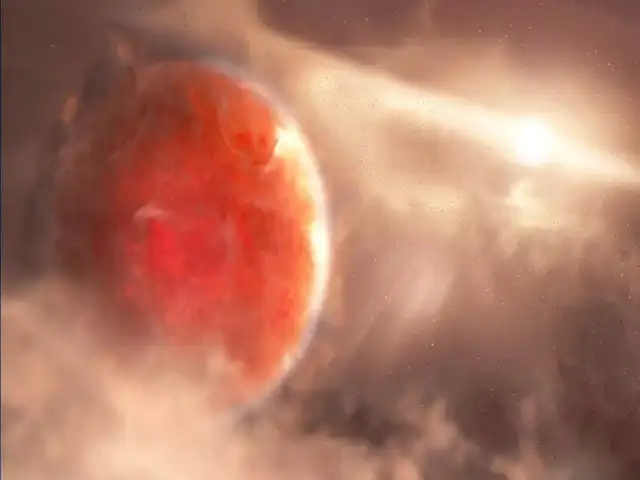
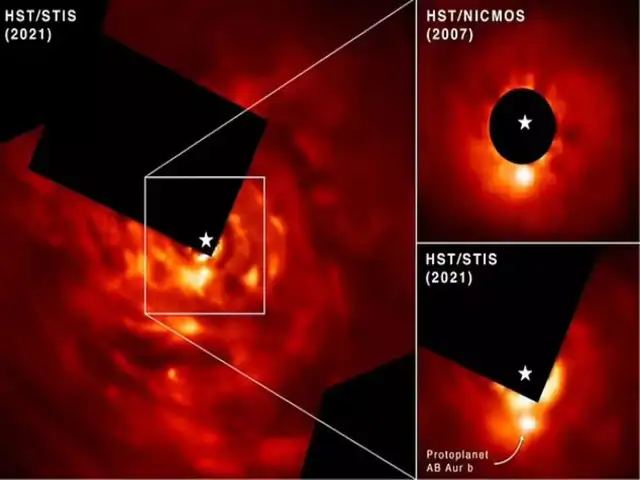
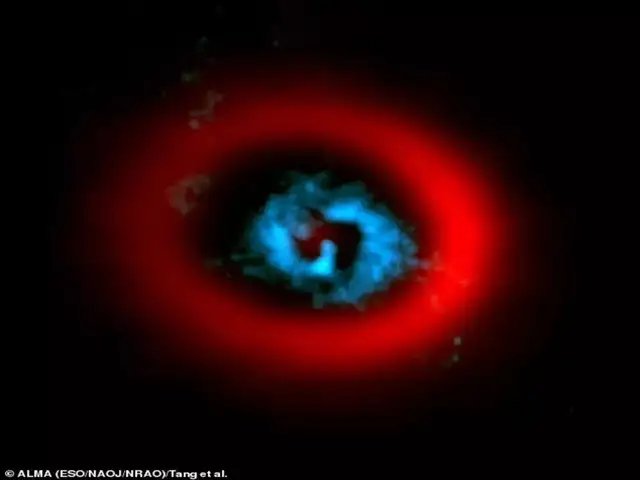
Scientists have observed an enormous planet about nine times the mass of Jupiter at a remarkably early stage of formation. They describe it as 'still in the womb'.
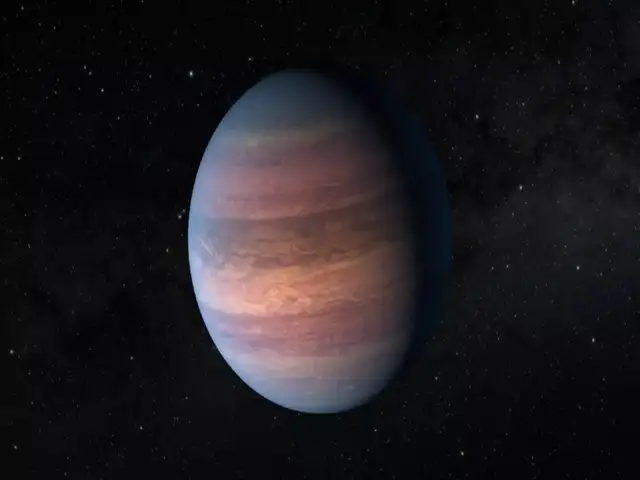
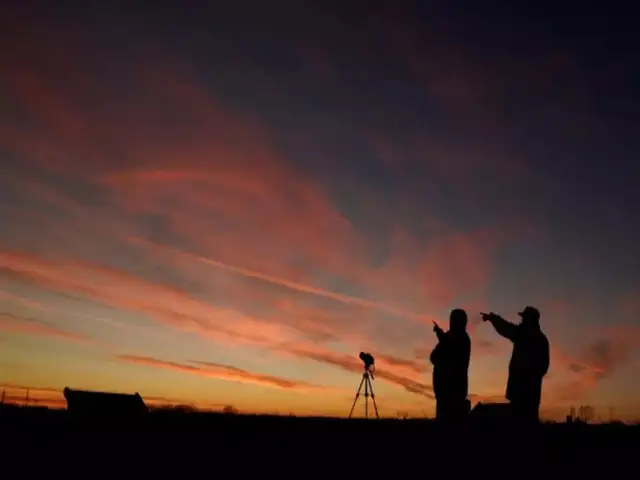

The gaseous planet, Jupiter, according to Patrick Hartigan, an astronomy and physics professor at Rice University in Houston, would rise around sunset and would be visible without a telescope.
ADVERTISEMENT
Ray, who is also NASA's investigator scientist for REASON (the Radar for Europa Assessment and Sounding: Ocean to Near-surface), explained that because neither Jupiter nor Earth orbits the Sun in a perfectly round path, each opposition has a little different distance.
According to EarthSky, Jupiter is in opposition around every 13 months, or the period it takes the Earth to orbit the Sun relative to Jupiter.
Frequently Asked Questions
1.When will Jupiter come closest to Earth?
According to NASA, on Monday, September 26, Jupiter will make its first close approach to Earth in 59 years.
ADVERTISEMENT
2.Are there more such events we can witness this year?
The Farmer's Almanac predicts that there will be another three full moons this year:
• 10th October: Hunter's moon
ADVERTISEMENT
• 8th November: Beaver moon • 7th December: A cold moon
The Farmer's Almanac also predicts that a partial solar eclipse and one more total lunar eclipse will occur in 2022. People in parts of Iceland, Greenland, most of Europe, western and central Asia, and northeast Africa will be able to see the partial solar eclipse on 25th October.
The total lunar eclipse on 8th November can be observed between 3:02 and 8:56 a.m. ET in Australia, Asia, the Pacific, North America, and South America. However, the moon will be setting at that time for those in Eastern North America.
EarthSky's 2022 meteor shower guide lays out the upcoming meteor shower episodes you can observe in the remaining months of 2022:
• October 8-9: Draconids
• October 20–21: Orionids
• 5th November: South Taurids
• 12th November: North Taurids
• November 17-18: Leonids
• December 13–14: Geminids
• December 22–23: Ursids
Download
The Economic Times Business News App for the Latest News in Business, Sensex, Stock Market Updates & More.
The Economic Times Business News App for the Latest News in Business, Sensex, Stock Market Updates & More.
Download
The Economic Times News App for Quarterly Results, Latest News in ITR, Business, Share Market, Live Sensex News & More.
The Economic Times News App for Quarterly Results, Latest News in ITR, Business, Share Market, Live Sensex News & More.
Related Articles
 Weekly Horoscope for ♐ SAGITTARIUS (June 20 - June 26, 2026): Powerful Jupiter Energy Opens Doors to New Success and Growth2026-06-20T07:06:04Z
- Upcoming Planetary Events Guide June 2026: Sun in Cancer, Mercury Retrograde, Full Moon & Jupiter's Big Move2026-06-19T09:14:56Z
- Jupiter Nakshatra Transit 2026 Begins June 18: 5 Zodiac Signs Could See Massive Money Growth, Career Gains & Financial Luck2026-06-17T12:32:22Z
ADVERTISEMENT


