Russia closes airspace over St Petersburg airport. Check reason
The main airport in St Petersburg, Russia has been closed after an unidentified flying object was spotted.
By The Feed |
Agencies
Russia has closed down the airspace over the Pulkovo Airport in St Petersburg after an unidentified flying object was spotted, according to reports. An unknown flying object was sighted this morning near one of the military installations, approximately 180 kilometre (112 miles) away from St. Petersburg, hometown of Vladimir Putin. It further adds that, as per recommendation of the Russian Ministry of Defence - Pulkovo Airport was shut, as per reports.
The city, which has not experienced any attacks during the ongoing conflict and is located 550 miles away from the closest point of Ukraine, saw fighter jets deployed to safeguard against potential threats from a possible drone attack.
Reports indicate that there were five Russian military planes in the air, heading towards the drone for interception. Local news outlet 112 has stated that two types of fighters, the Su-35 and MiG-31, were among the aircraft deployed.
The unidentified object was reportedly spotted in the direction of the Gulf of Finland, although its exact nature remains unknown. Unverified accounts suggest that the object was a "large drone", with some local media outlets attributing responsibility to NATO without any substantiated evidence.
A journalist has claimed that similar drone sightings have been observed in other regions such as the North Caucasus and Belogrod. Aviation authorities reportedly implemented the 'Carpet' plan following the sighting of an unidentified object in Russian airspace.
Russia-Ukraine war: Key moments, one year on
1/13
On February 24, Putin orders tens of thousands of Russian troops to enter Ukraine from the north, east, and south as part of what he calls a "special military operation." Russian forces advance on Kyiv, hoping for an immediate victory, but are ultimately compelled to leave.
February 24: Antonov airport battle: The Russians' first significant victory was the seizure of the Antonov airfield, a significant cargo airport located just north of Kyiv. But things didn't turn out the way Moscow had hoped.
Russian soldiers were surrounded inside the airport and had no chance to quickly call in reinforcements. The airport was so badly damaged by the time Ukrainian troops left the area that Russia was unable to use it for supply. During the conflict, the Antonov An-225, the largest plane in the world, was damaged.
On February 24, Putin orders tens of thousands of Russian troops to enter Ukraine from the north, east, and south as part of what he calls a "special military operation." Russian forces advance on Ky..
Read More
In the first 24 hours following the military assault, at least 100,000 people, according to the UNHCR, had left their homes. People waited days in line in thousands of cars at the borders to enter Poland. A wide range of agricultural exports are prohibited by Ukraine's government as the conflict worsens the world food crisis. In March, global food prices reach a new high.
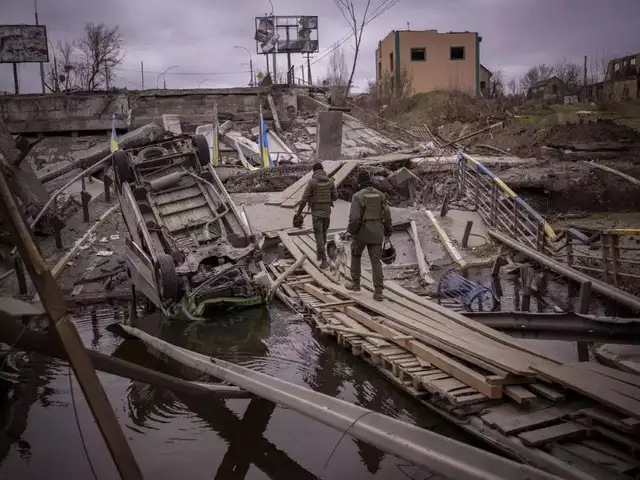
March 6: Evacuation of the Irpin Bridge: Evacuations were challenging because the main bridge over the Irpin River was destroyed by Ukrainians in an effort to stop a Russian advance. The Ukrainian authorities claim that hundreds of civilians lost their lives while trying to flee.
March 9: Attack on the Mariupol maternity hospital
A Russian missile struck a maternity hospital in Mariupol, a city in Ukraine’s southeast. Russia agreed to a 12-hour suspension of hostilities to allow refugees to flee, but the attack still took place.
March 16: Bombing of the Mariupol theatre
One of Russia's most heinous acts against civilians was the bombing of the Drama Theater in Mariupol. According to Ukrainian officials, 1,300 people were taking refuge in the theatre in the middle of the city, which had been under invasion for weeks at that point. Authorities estimated that day's death toll at 300.
In the first 24 hours following the military assault, at least 100,000 people, according to the UNHCR, had left their homes. People waited days in line in thousands of cars at the borders to enter Po..
Read More
In a missile attack on a train station in Kramatorsk, dozens of people end up dying. It was crowded with elderly, children, and women who were attempting to flee the fighting.
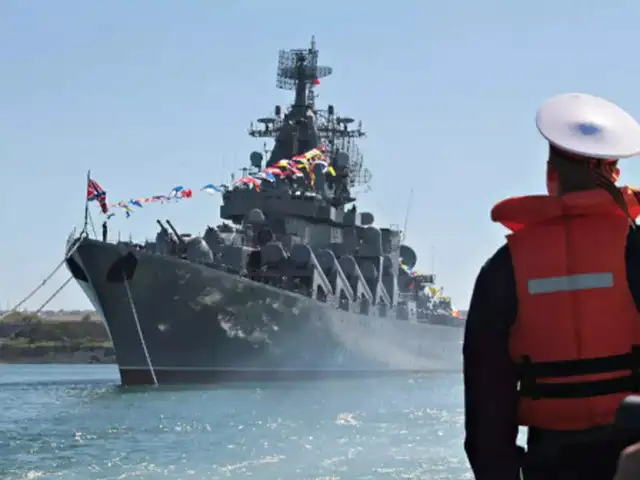
April 14: Sailing ship Moskva sunk: According to Ukraine, it fired anti-ship cruise missiles at the Moskva, causing a fire that set ammunition on storage ablaze. Russia laid the blame on an unidentified fire. Whatever the cause, Russia suffered its biggest wartime naval ship loss in forty years with the loss of the guided-missile cruiser.
In a missile attack on a train station in Kramatorsk, dozens of people end up dying. It was crowded with elderly, children, and women who were attempting to flee the fighting.April 14: Sailing ship ..
Read More
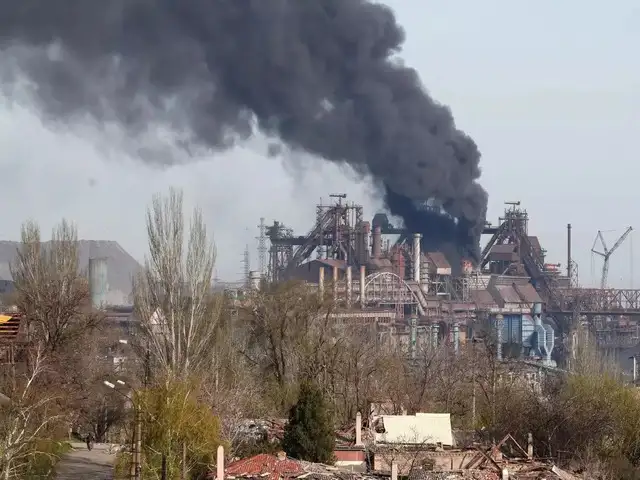
May 17: Defenders of the Mariupol Steel Plant: The expansive Azovstal steel plant in Mariupol became yet another representation of Ukrainian resistance against a much more powerful foe. Before finally giving up in May, the plant's defenders withstood weeks of relentless Russian bombardment. According to Ukrainian officials, the fighters' tenacious defence of the complex had stalled Russian forces and stopped them from capturing the farther-western city of Zaporizhzhia.
May 17: Defenders of the Mariupol Steel Plant: The expansive Azovstal steel plant in Mariupol became yet another representation of Ukrainian resistance against a much more powerful foe. Before finall..
Read More
At least 16 people are killed when Russian missiles strike a crowded mall in the city of Kremenchuk. Additional financing totaling $1.49 billion was approved by the World Bank to assist in covering public sector employees' salaries. The European Union's decision to phase out Russian oil in part, according to Russia, was likely to cause instability in the world's energy markets and was a "self-destructive" move. By the end of the year, EU leaders have agreed in principle to reduce their reliance on Russian oil by 90%.
At least 16 people are killed when Russian missiles strike a crowded mall in the city of Kremenchuk. Additional financing totaling $1.49 billion was approved by the World Bank to assist in covering p..
Read More
Russian forces take Lysychansk in their quest to take over eastern Ukrainian province of Luhansk.
Russian forces take Lysychansk in their quest to take over eastern Ukrainian province of Luhansk.
A southern counter-offensive is launched by Ukrainian forces around Kherson, the sole land entry point to Crimea. Targets include a Crimean air base, Russian supply routes, and ammunition storage facilities.
A southern counter-offensive is launched by Ukrainian forces around Kherson, the sole land entry point to Crimea. Targets include a Crimean air base, Russian supply routes, and ammunition storage fac..
Read More
September 1: Russian forces leave the region of Kharkiv: Large areas of territory were reclaimed by the Ukrainian military in eastern Ukraine in September after a fierce counteroffensive, which forced Moscow to try and characterise the hasty retreat as "regrouping." But in a sign of just how severe things were for Russia, a number of prominent Kremlin supporters, including Chechen leader Ramzan Kadyrov, who provided thousands of fighters to the offensive, publicly criticised the military.
September 21: Russia begins its partial mobilisation: On September 21, Putin declared Russia's first mobilisation since World War II, following a string of humiliating losses in Ukraine. Unusual for Russia, the contentious draught led to protests and a flight of men of fighting age from the nation.
September 1: Russian forces leave the region of Kharkiv: Large areas of territory were reclaimed by the Ukrainian military in eastern Ukraine in September after a fierce counteroffensive, which force..
Read More
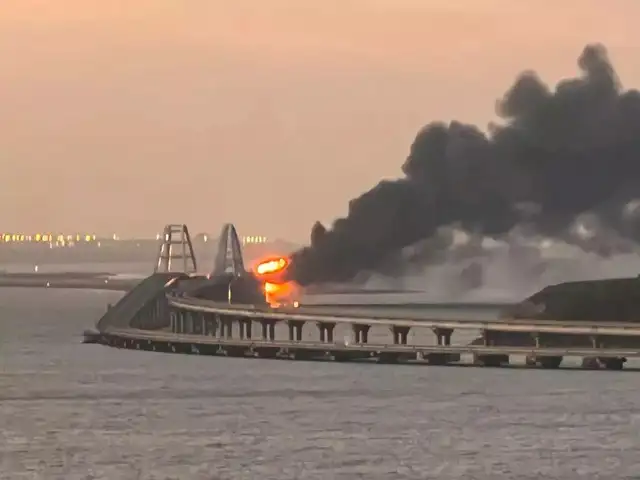
October 8: Bridge attack in Crimea: Another significant setback for Moscow came when an explosion severely damaged the only bridge spanning the Crimean Peninsula from Russia.In 2018, four years after Russia forcibly annexed Crimea from Ukraine, Putin officially opened it.
October 10: Kyiv blackout: Russia launched the first of several waves of missile attacks on Ukraine's vital energy infrastructure, ushering in a new phase of the conflict. Moscow started attacking Ukrainian power plants with missiles, artillery rounds, and drones made in Iran, leaving large parts of the nation without water and electricity.
October 8: Bridge attack in Crimea: Another significant setback for Moscow came when an explosion severely damaged the only bridge spanning the Crimean Peninsula from Russia.In 2018, four years after..
Read More
November 12: Liberation scenes in Kherson: Given that Kherson was the only Ukrainian regional capital that Russian forces had taken control of, Moscow's hasty retreat from the west bank of the Dnipro River was another big boost for Kyiv. Just a few weeks prior to the withdrawal of his troops, Putin himself had formally proclaimed Kherson to be Russian territory.
November 12: Liberation scenes in Kherson: Given that Kherson was the only Ukrainian regional capital that Russian forces had taken control of, Moscow's hasty retreat from the west bank of the Dnipro..
This plan typically involves grounding all civilian aircraft, except for those of military or rescue origin, and is typically put into effect when an unknown object is detected in the Russian Federation's airspace, crosses its state border, or is targeted by the RF Armed Forces' weaponry.
The air warning led to the closure of airspace within a 125-mile radius of St Petersburg's airport. The Russian Ministry of Defence later confirmed that the incident was part of a training exercise in which fighter jets were deployed in the country's western airspace.
The incident coincided with a major hacking event that affected multiple regions across Russia, causing disruptions in TV and radio broadcasts warning of a potential missile strike. This marked the second such hacking incident to occur within a six-day period.
Millions of people were reportedly urged to take immediate shelter in nuclear bunkers as warning sirens blared across Russia. Broadcasts on both TV and radio issued an alert stating, "Attention, attention! Everyone immediately go to shelter! Missile attack threat, everyone immediately to shelter!"
ADVERTISEMENT
In response to the warning, the Russian Ministry of Defence released a statement denouncing the alert as a hoax. The ministry confirmed that the warning was triggered by a hack of radio and TV station servers in multiple regions across the country and urged the public to remain calm, assuring them that there was no actual missile threat.