Polar satellite, experimental heat shield for enabling humans' presence on Mars travel to space aboard Atlas V rocket. See details
The polar satellite launched earlier in the day from Vandenberg Space Force Base in Lompoc, California, looks to reveal promising information.
By ET Spotlight Special | Updated:

Agencies
United Launch Alliance Atlas V rocket, which had a polar satellite and a heat shield onboard, was launched early on Thursday from Space Launch Complex-3 at Vandenberg Space Force Base in Lompoc, California. The lift off was originally set to November 1, but a faulty battery on the rocket’s upper stage caused a delay. Engineers exchanged and retested the battery to reset the launch date. The successful launch of the experimental heat shield brings us closer to the possibility of humans landing on Mars.
The National Oceanic and Atmospheric Administration (NOAA) and the National Aeronautics and Space Administration (NASA) have been launching weather satellites since 1960. The JPSS-2 is the third of NOAA’s latest generation of polar-orbiting environmental satellites. It will join two other satellites, the Suomi National Polar-orbiting Partnership and NOAA-20, that comprise the Joint Polar Satellite System.

The second hitchhiker on the Atlas V rocket launched on Thursday is NASA’s Low-Earth Orbit Flight Test of an Inflatable Decelerator technology demonstration, or LOFTID. It is an inflatable aeroshell or heat shield, which was designed to test whether scientists can land human crewed missions on Mars and larger robotic missions on Venus or Saturn’s moon Titan.
Since the atmosphere on Mars is just 1% the density of Earth’s atmosphere, sending robotic explorers or humans can be challenging with current heat shields. That’s why NASA decided to launch a large inflatable aeroshell like LOFTID, which could put on the brakes while traveling down through the Martian atmosphere. It also prevents some of the super-intense heating, which increases its chances of survival. According to experts, something like LOFTID could land between 20 to 40 metric tons (44,092 to 88,184 pounds) on Mars as compared to the current capacity of one metric ton.
Polar Satellite and Heat Shield: What are these?
The polar satellite launched earlier in the day aboard Atlas V rocket is called the Joint Polar Satellite System-2, or JPSS-2, which is designed to improve weather forecasting. Once it’s in orbit, the satellite will revolve around the planet from the North Pole to the South Pole, observing every spot on Earth at least twice a day, to give the weather information on phone.The National Oceanic and Atmospheric Administration (NOAA) and the National Aeronautics and Space Administration (NASA) have been launching weather satellites since 1960. The JPSS-2 is the third of NOAA’s latest generation of polar-orbiting environmental satellites. It will join two other satellites, the Suomi National Polar-orbiting Partnership and NOAA-20, that comprise the Joint Polar Satellite System.
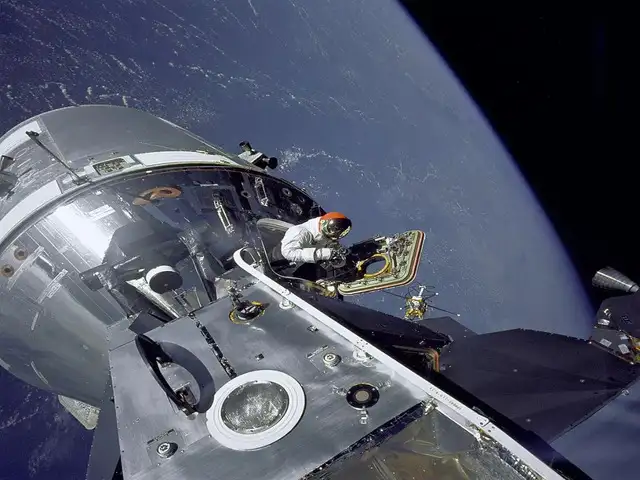
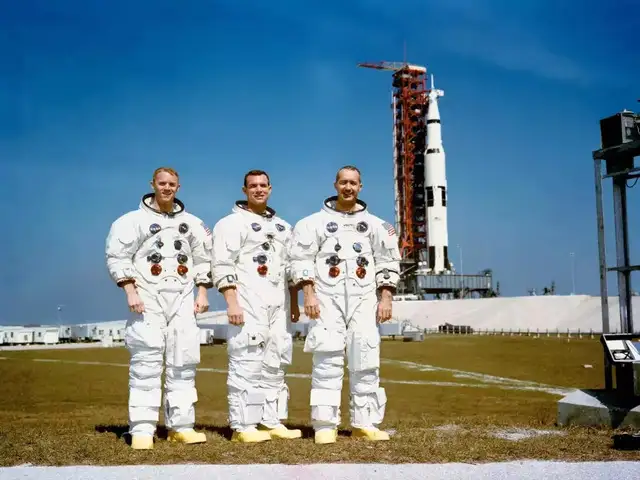
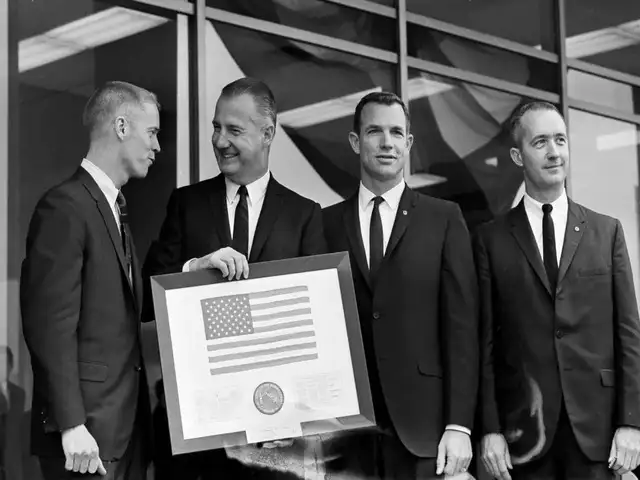
James A McDivitt, who commanded the Apollo 9 mission testing the first complete set of equipment to go to the moon, died at the age of 93 in Tucson, Arizona. McDivitt was also the commander of 1965's Gemini 4 mission, where his best friend and colleague Ed White made the first US spacewalk.


The second hitchhiker on the Atlas V rocket launched on Thursday is NASA’s Low-Earth Orbit Flight Test of an Inflatable Decelerator technology demonstration, or LOFTID. It is an inflatable aeroshell or heat shield, which was designed to test whether scientists can land human crewed missions on Mars and larger robotic missions on Venus or Saturn’s moon Titan.
Since the atmosphere on Mars is just 1% the density of Earth’s atmosphere, sending robotic explorers or humans can be challenging with current heat shields. That’s why NASA decided to launch a large inflatable aeroshell like LOFTID, which could put on the brakes while traveling down through the Martian atmosphere. It also prevents some of the super-intense heating, which increases its chances of survival. According to experts, something like LOFTID could land between 20 to 40 metric tons (44,092 to 88,184 pounds) on Mars as compared to the current capacity of one metric ton.
ADVERTISEMENT
FAQs:
- Can humans ever live on Mars?
Not as of now, as there’s almost no oxygen. - What year will humans go to Mars?
NASA plans to send a human crew to Mars by 2037.
Download
The Economic Times Business News App for the Latest News in Business, Sensex, Stock Market Updates & More.
The Economic Times Business News App for the Latest News in Business, Sensex, Stock Market Updates & More.
Download
The Economic Times News App for Quarterly Results, Latest News in ITR, Business, Share Market, Live Sensex News & More.
The Economic Times News App for Quarterly Results, Latest News in ITR, Business, Share Market, Live Sensex News & More.
Related Articles
 Weekly Horoscope for ♏ SCORPIO (June 27 - July 3, 2026): Powerful Mars Energy Creates New Opportunities for Success2026-06-27T04:00:16Z
- This NASA rover Perseverance just logged 26.2 miles on Mars. What it found could be even bigger2026-06-24T17:30:35Z
- Mars will pass the Seven Sisters this week and it won't happen again until 2034 - here's how to see it and other night sky events you must not miss2026-06-22T17:21:45Z
ADVERTISEMENT


