Man finds 82-feet-long dinosaur's ribs in Portugal
A man found the ribs of a dinosaur that span 82 feet in length in Portugal in his backyard. Fox News reports that the remains could be of the biggest dinosaur ever. An international research team is investigating and uncovering the remains.
By ET Spotlight Special | Updated:

BCCL
A man in Portugal has discovered the remains of possibly the biggest dinosaur ever in his backyard. The man found a dinosaur's ribs which are 82 feet in length. Reports suggest that the man has been noticing the fossils for years. The story was in the making. The Portuguese man in Pombal was doing construction work in his yard in 2017 and stumbled upon dinosaur bones. Researchers initially started their work then.
Strange
In the University of Lisbon's press release, a researcher, Elisabete Malafaia, said it was impressive how intact the remains were. She said it is unusual to find all the ribs of a dinosaur, like they have been found in their original anatomical position. The preservation mode is uncommon in dinosaurs' fossil record, particularly for sauropods.
As We Stand
Only the vertebrae and ribs have been uncovered till now. However, paleontologists believe they will find the rest of the skeleton nearby and are hoping for future excavations to tell the whole story.
Sauropods were herbivores and lived 100-160 million years ago. They had long tails and necks.
FAQs
Q. Where have the remains or fossils of the Sauropod been found?
A. The remains or fossils of the Sauropod have been found in Pombal in Portugal.
Q. What is so unusual about this discovery?
A. A researcher, Elisabete Malafaia, said it was impressive how intact the remains were. She said it is unusual to find all the ribs of a dinosaur, like they have been found in their original anatomical position.
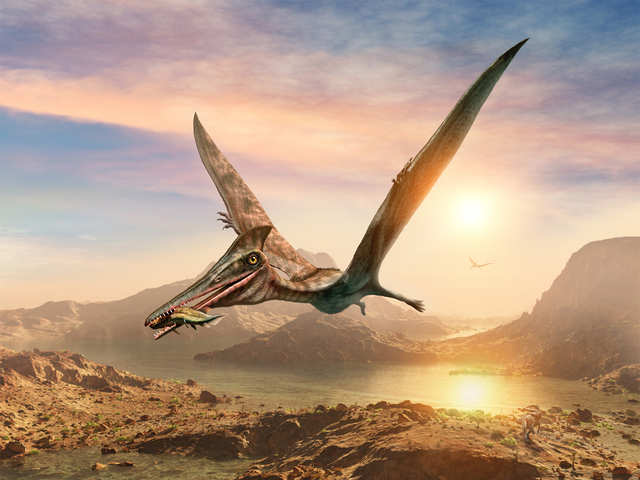
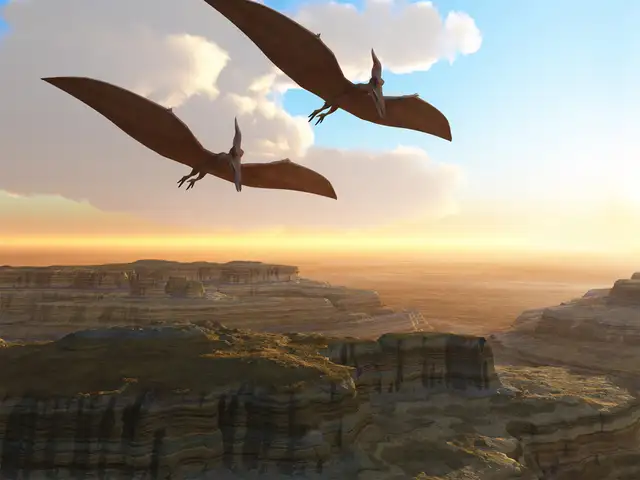
Pterosaurs are flying reptiles that ruled the skies at the same time that dinosaurs dominated the land about 220 million years ago. They were fully developed for flight and had wings formed by a membrane extending from the ankles to an exceptionally elongated fourth finger, studies suggested. While starting relatively small, pterosaurs eventually achieved huge dimensions, with wingspans reaching 35 feet (10.7 meters).

Strange
In the University of Lisbon's press release, a researcher, Elisabete Malafaia, said it was impressive how intact the remains were. She said it is unusual to find all the ribs of a dinosaur, like they have been found in their original anatomical position. The preservation mode is uncommon in dinosaurs' fossil record, particularly for sauropods.
As We Stand
Only the vertebrae and ribs have been uncovered till now. However, paleontologists believe they will find the rest of the skeleton nearby and are hoping for future excavations to tell the whole story.
Sauropods were herbivores and lived 100-160 million years ago. They had long tails and necks.
ADVERTISEMENT
FAQs
Q. Where have the remains or fossils of the Sauropod been found?
A. The remains or fossils of the Sauropod have been found in Pombal in Portugal.
Q. What is so unusual about this discovery?
ADVERTISEMENT
A. A researcher, Elisabete Malafaia, said it was impressive how intact the remains were. She said it is unusual to find all the ribs of a dinosaur, like they have been found in their original anatomical position.
Download
The Economic Times Business News App for the Latest News in Business, Sensex, Stock Market Updates & More.
The Economic Times Business News App for the Latest News in Business, Sensex, Stock Market Updates & More.
Download
The Economic Times News App for Quarterly Results, Latest News in ITR, Business, Share Market, Live Sensex News & More.
The Economic Times News App for Quarterly Results, Latest News in ITR, Business, Share Market, Live Sensex News & More.
Related Articles
 FIFA World Cup 2026 Day 17 in pictures: Best moments from England, Argentina, Portugal and DR Congo as Round of 32 begins2026-06-28T06:23:22Z
- FIFA World Cup: Colombia and Portugal advance after no-bore draw in Miami2026-06-28T01:50:49Z
- Portugal vs Colombia FIFA World Cup 2026: Match time in India, live streaming, predicted lineups, venue, TV Channels and team news2026-06-27T19:23:58Z
ADVERTISEMENT


